
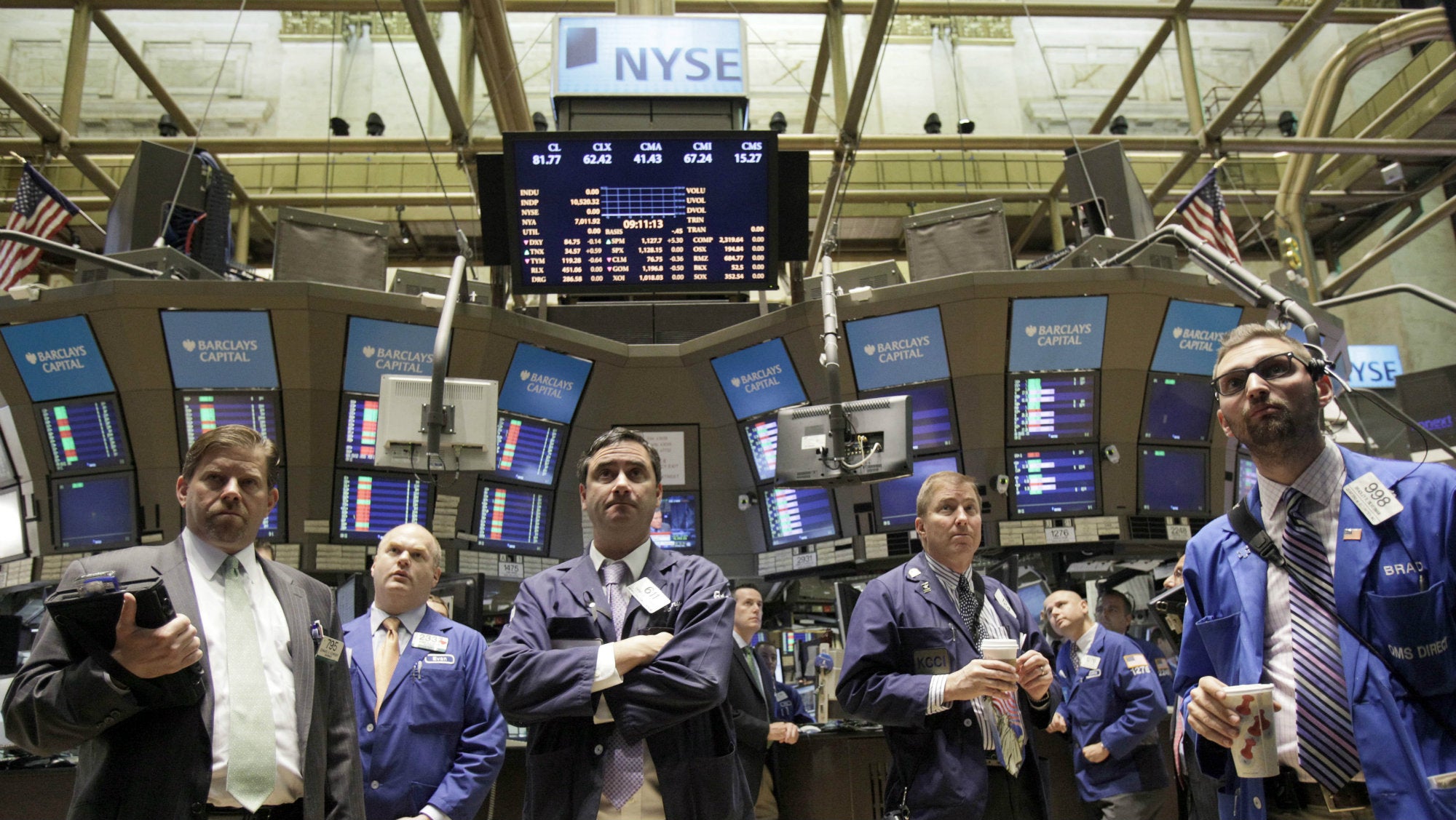
The post-election rally has hit a massive speed bump. Stocks tumbled on Tuesday as soaring Treasury yields spooked investors, sending the Dow Jones Industrial Average crashing more than 400 points. The message from the bond market is clear: the “easy money” days aren’t back yet.
The optimism that fueled the market’s recent highs evaporated this morning. Wall Street faced a sharp sell-off as traders reacted to a sudden jump in interest rates, dragging major indices deep into the red.
According to live market data reported by CNBC, the Dow Jones Industrial Average dropped 430 points, or roughly 1%, marking one of its worst sessions of the month. The S&P 500 and the tech-heavy Nasdaq Composite were not spared, sliding alongside the blue chips as selling pressure intensified across the board.
The “Yield” Trap: Why It Matters
The primary culprit for today’s bloodbath is the bond market. The yield on the benchmark 10-year Treasury note surged past 4.4%, a psychological danger zone for equity investors.
For the average investor, this metric might seem obscure, but it is the gravity that holds the stock market down. When bond yields rise, two things happen:
- Borrowing Costs Soar: It becomes more expensive for companies to borrow money for expansion, hiring, and research. This directly hurts future profit margins.
- Competition for Cash: Bonds become a legitimate alternative to stocks. Why risk money in a volatile tech stock when you can get a guaranteed 4.4% return from the U.S. government?
As noted by market analysts, this spike is a direct signal that the market is worried the Federal Reserve may not cut interest rates as aggressively as previously hoped. The “soft landing” scenario—where inflation cools without a recession—is being questioned by the bond vigilantes.
Tech Stocks Take the Hardest Hit
As is typical during rate scares, the technology sector took the hardest punch. High-growth companies rely heavily on cheap debt to fund their massive infrastructure costs (especially in the AI race). When rates go up, the present value of their future earnings goes down.
Major market movers saw significant declines:
- Nvidia (NVDA): The AI darling faced heavy selling as investors locked in profits after a historic run.
- Microsoft (MSFT) and Apple (AAPL): Both faced pressure, dragging the broader Nasdaq index down by nearly 1.5%.
- Small Caps: The Russell 2000, which tracks smaller U.S. companies reliant on loans, underperformed significantly, signaling fear about the domestic economy.
“The market is waking up to a hangover,” one strategist noted in a report regarding the sudden volatility. “We priced in perfection regarding rate cuts, and now the bond market is telling us to get real.”
The Federal Reserve Dilemma
The sell-off comes at a delicate time for the Federal Reserve. Recent economic data has shown that the U.S. economy is surprisingly resilient, and inflation, while lower, is “sticky” above the Fed’s 2% target.
This puts the central bank in a bind. If they cut rates too soon, inflation could roar back (similar to the 1970s). If they keep rates high for too long, they risk breaking the housing market and causing a recession. Wall Street hates uncertainty, and right now, the path forward is anything but clear.
Is the “Trump Trade” Fading?
Another factor weighing on sentiment is the recalibration of the so-called “Trump Trade.” Following the election, markets rallied on promises of deregulation and tax cuts. However, the reality of potential tariffs and trade wars (such as the recent tensions with Europe over Greenland and duties on imports) is starting to price in.
Tariffs are generally inflationary. If the cost of goods rises, the Fed has to keep rates high to fight that inflation. This creates a feedback loop that hurts stock valuations.
What Investors Should Watch Next
Financial experts warn that volatility is back on the menu. With the Federal Reserve’s next meeting looming, every piece of economic data will be scrutinized.
Key indicators to watch this week:
- The 10-Year Yield: If it breaks the 4.5% barrier, automated trading algorithms could trigger a deeper sell-off.
- Earnings Reports: Investors are looking for guidance from major retailers to see if the American consumer is slowing down.
- Oil Prices: Rising energy costs could further complicate the inflation picture.
For now, the trend is shaking. The advice from veteran traders is caution: cash is becoming king again until the bond market cools down.