
The old Japanese pickup still sells a fantasy modern trucks can’t quite fake. Small footprint. Thin pillars. A simple bed. Nothing extra. The trouble starts when the fantasy meets a real 2026 weekend: interstate miles, potholes, cabin gear, air conditioning, crash risk, and one long grade with a cooler in back. Chevrolet says the 2026 Colorado can tow up to 7,700 pounds, while IIHS keeps making the uncomfortable modern point that newer vehicles generally offer better crash protection than much older ones. That leaves a much better question than “which is cooler?” What still makes sense now?
Quick takeaways
- The old Japanese pickup still makes emotional sense if the point is simplicity, compact size, low-speed charm, and light-duty use.
- The modern midsize truck makes more real-world sense if the weekend includes highway miles, family use, towing, rough-weather comfort, or any serious safety concern.
- The old truck wins the first glance. The new truck usually wins the whole trip.
- Safety is the biggest mood-killer for the old-truck fantasy. IIHS keeps emphasizing that newer vehicles generally provide better crash protection than older ones.
- The real split is simple: old Japanese pickup for light, local, romantic use; modern midsize truck for actual travel work.
Why old Japanese pickups still hit people so hard
There is a reason these trucks have become harder to dismiss as just old beaters.
Hagerty’s 2023 Bull Market list said Toyota’s fourth-generation Pickup had finally achieved collector-car status after years of being treated as “just a used truck.” That is the cleanest sign that the old compact Japanese pickup now lives in two worlds at once:
- practical machine,
- and object of desire.
That makes sense because the appeal is obvious:
- compact exterior size,
- excellent sight lines,
- easy parking,
- simple controls,
- and an honest bed without a huge body around it.
Hagerty’s essay on a pair of Nissan pickups built 40 years apart lands on the same emotional truth. The old truck feels small and direct in a way the modern one does not. That matters more than spec sheets admit. An old Toyota Pickup or Nissan Hardbody can make a short back-road drive feel lighter and more alive than a much more capable modern truck.
This is where the old truck still makes perfect sense:
- cabin weekends close to home,
- hardware-store runs,
- beach-town errands,
- and the kind of ownership where the vehicle itself is part of the mood.
That is the first half of the article. It is real. It just is not the whole story.
Where the old-truck fantasy breaks down
The problem is not that old Japanese pickups became bad. The roads and expectations changed.
A real 2026 getaway usually means:
- 65 to 80 mph highway stretches,
- stop-and-go traffic before the fun road starts,
- air conditioning,
- potholes and patched pavement,
- a phone charging somewhere,
- and people expecting the truck to feel calm rather than charmingly agricultural.
This is where the old pickup starts charging back for its charm.
1) Safety
This is the biggest difference and the hardest one to romanticize away.
IIHS’s used-vehicle guidance keeps making the same point in different forms: late-model vehicles are generally safer than older ones, and that matters because older vehicles lack much of the crash protection and crash-avoidance technology buyers now take for granted.
That does not mean every old Japanese pickup is a death trap and every modern truck is a fortress. It does mean the old truck is asking the driver to accept a much older safety baseline for a vehicle that may now be used at modern speeds in modern traffic.
2) Highway comfort
An old compact pickup can feel great at 35 or 45 mph. At 75, the truth usually gets louder:
- more noise,
- more steering correction,
- more vibration,
- and less of that easy, low-effort cruising that makes a weekend vehicle work.
3) Heat, cold, and daily tolerance
Old-truck romance fades faster when the cab is small, the HVAC is weaker, the seat is flat, and the road is longer than the truck was ever really designed to enjoy.
This is the point where “simple” can stop feeling refreshing and start feeling sparse.
Why the modern midsize truck keeps winning the real trip
This is not because modern trucks are soulful. It is because they are much better at the parts of travel that repeat.
Take the 2026 Chevrolet Colorado. Chevrolet says it offers:
- up to 7,700 pounds of towing,
- a 310-hp / 430-lb-ft turbo four,
- standard Chevy Safety Assist,
- and much more serious bed, trailering, and camera tech than any old Japanese pickup can match.
That is the practical side of the case. The modern midsize truck is simply better prepared for:
- hauling heavier loads,
- towing,
- rough access roads,
- longer highway runs,
- and mixed-use weekends where the vehicle is not just a toy.
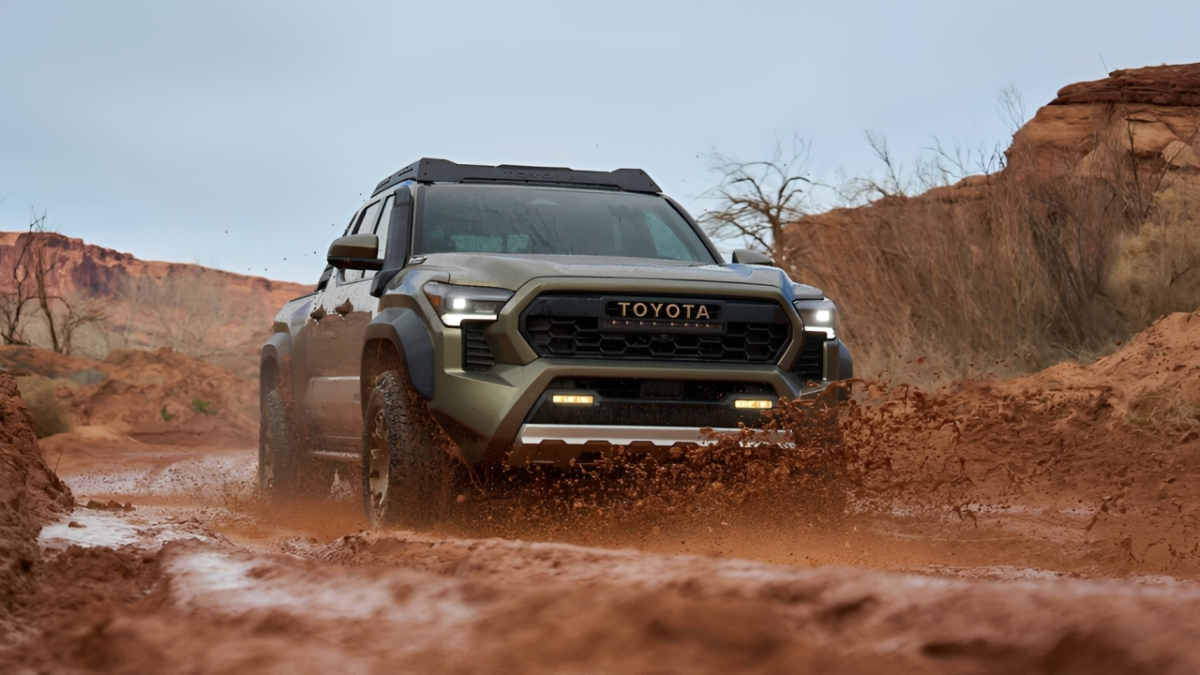
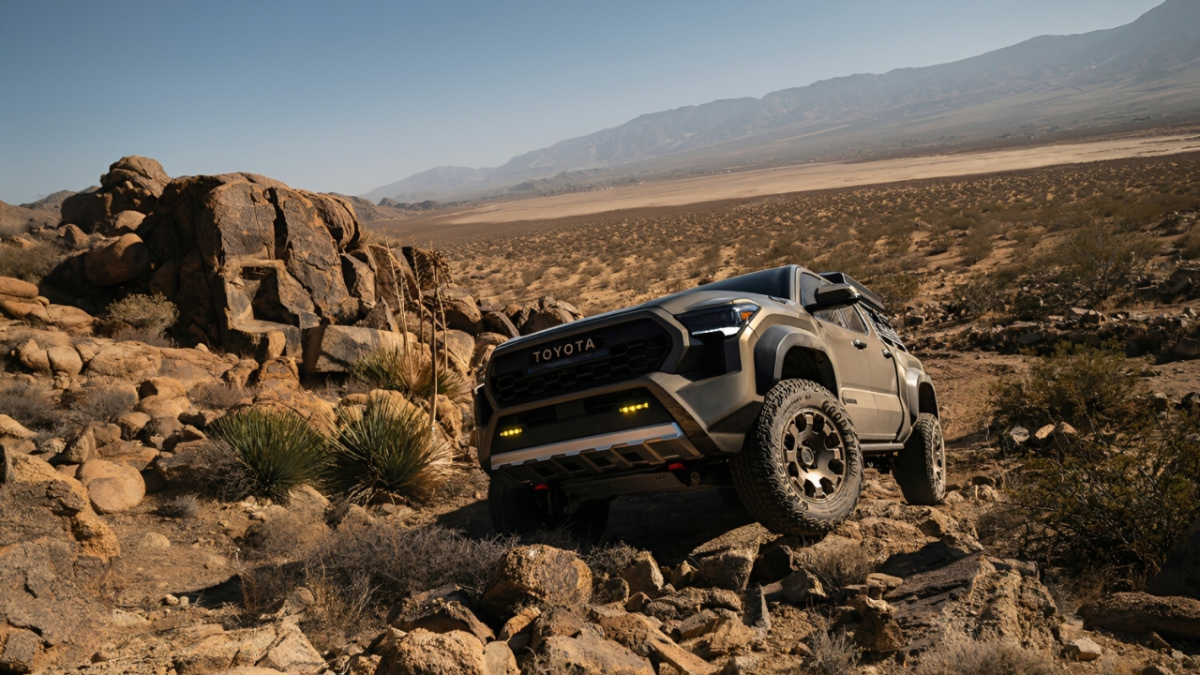
The same logic applies to the 2026 Toyota Tacoma. Toyota says the latest Tacoma can tow up to 6,500 pounds and offers either a turbo four or the i-FORCE MAX hybrid powertrain with much stronger torque than an old compact pickup can dream of. This is not only about numbers. It is about effort. A modern midsize truck works less hard doing modern truck things.
And then there is the part old-truck romantics often skip: the modern truck comes with the kind of safety and driver-assist baseline buyers now expect:
- automatic emergency braking,
- lane support,
- better crash structures,
- and much quieter cabs.
That is not romance. It is the reason the modern truck keeps winning the whole weekend.
The part old pickups still win
This article should not turn into “new truck always better.” That would be lazy and wrong.
The old Japanese pickup still wins in three real ways:
1) Size
Modern midsize trucks are not small. Chevrolet says the 2026 Colorado is 214 inches long. That is a lot of truck for grocery-store parking, cabin-lot maneuvering, and narrow older neighborhoods.
An old compact pickup often feels easier to place immediately.
2) Simplicity
There is less to break, less screen to deal with, less sense that the truck is trying to be a luxury object.
3) Character
This is the one thing modern trucks usually cannot fake. An old Japanese pickup has a very specific kind of honesty. It can feel like a tool without also feeling overbuilt.
That matters if the truck is a light-duty hobby vehicle or a second car. It matters much less if the truck is expected to be the family’s actual weekend machine.
What still makes sense in 2026
This is where the answer gets clean.
The old Japanese pickup still makes sense if…
- the trips are light and local,
- the point is charm and simplicity,
- the truck is not carrying family-road-trip expectations,
- and the buyer accepts the safety and comfort trade.
The modern midsize truck makes sense if…
- the truck has to do real truck work,
- highway comfort matters,
- safety matters,
- the route is longer,
- and the getaway is a real trip, not just an excuse to drive something nostalgic.
That is why the old pickup versus modern midsize question is not really about generations. It is about mission.
What this means in the U.S. and Canada
This topic lands differently but cleanly in both markets.
In the U.S., the old Japanese pickup still fits a very specific enthusiast lane:
- warm-weather use,
- shorter leisure drives,
- and buyers who want compact charm more than all-weather competence.
In Canada, the old-truck fantasy gets harder faster because the baseline travel reality often leans more toward:
- longer distances,
- rougher seasonal conditions,
- and a bigger need for modern heating, safety, and highway comfort.
The broad answer stays the same. The more serious the trip gets, the easier the modern midsize truck is to justify.
What drivers should check before buying
1) Be honest about speed.
A truck that feels fun at 40 mph can feel old in a hurry at 75.
2) Count the real payload and towing needs.
If the truck has to do real work, nostalgia gets expensive.
3) Decide whether the vehicle is a mood or a machine.
That usually answers the whole article.
4) Do not downplay safety.
This is the one trade most people regret too late.
5) Think about weather and distance.
The longer and less forgiving the route, the more the modern truck wins.
Bottom line
In 2026, the old Japanese pickup still makes sense as a charming, compact, light-duty truck for buyers who want simplicity more than speed, safety, or refinement. The modern midsize truck makes more sense almost everywhere else. That sounds unromantic, but it is the honest answer. Once the weekend includes interstate miles, real payload, changing weather, modern traffic, and the expectation that the vehicle will simply work, the old truck stops being the clean answer and starts becoming the hobby answer. For a lot of people, that is still enough. For a real getaway, it usually is not.