
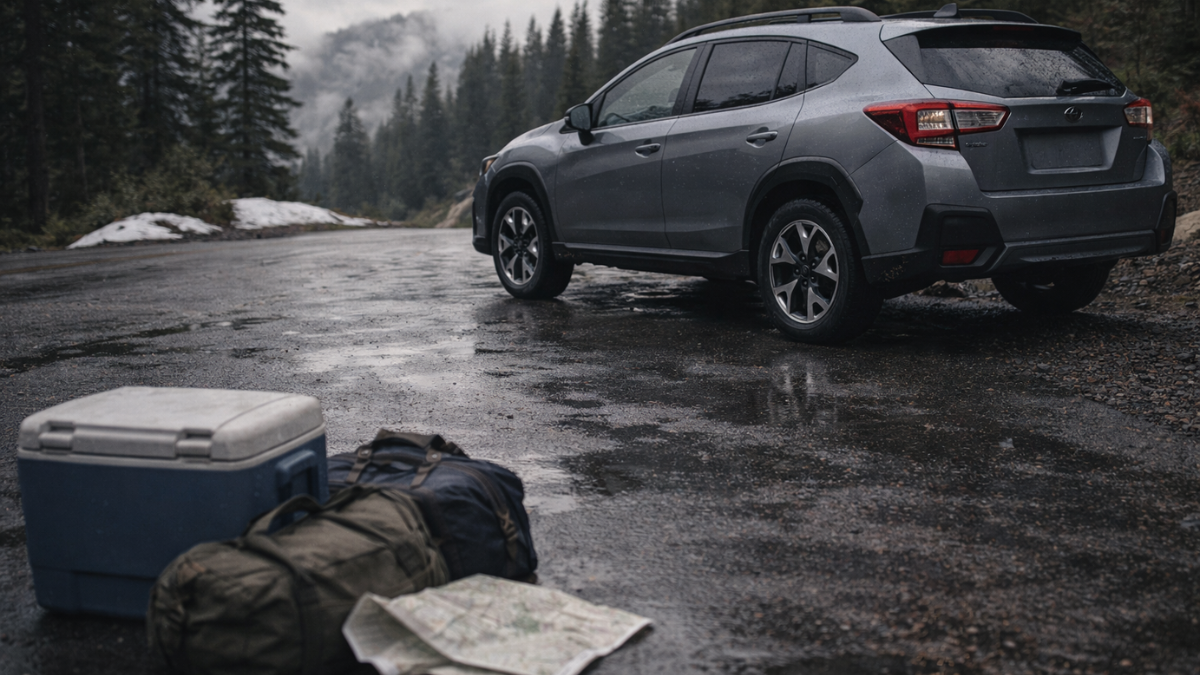
Spring is when a lot of drivers quietly tell themselves they’re finally using the AWD they paid for. Wet pavement. Cabin weekends. One muddy turnout. Maybe a late snow patch near the mountains. The expensive part is that most of those trips still happen on normal pavement, where all-wheel drive is more reassurance than requirement. Official specs make the trade visible: Honda’s 2026 CR-V drops from 28/33/30 mpg in 2WD to 27/31/29 in AWD, while Hyundai’s 2026 Tucson falls from 25/33/28 in FWD to 24/30/26 in AWD. In 2026, the real spring question is not whether AWD ever helps. It is where it actually earns its keep, and where drivers are mostly paying for a feeling.
Quick takeaways
- AWD is useful. It is just overbought for a lot of spring driving.
- The money leak starts with fuel economy. Honda’s 2026 CR-V and Hyundai’s 2026 Tucson both lose mpg when AWD is added.
- Wet pavement alone is not a magic case for AWD. Tires, tread depth, and driver inputs still matter more than badge confidence in a lot of spring conditions.
- Mountain chain rules are a reality check. Yosemite says drivers must carry chains or cables in chain-control areas even in a four-wheel-drive or rental vehicle.
- AWD makes the most sense when the route regularly includes mixed traction, steep access roads, or weather that changes faster than the road crew can fix it.
What the myth actually is
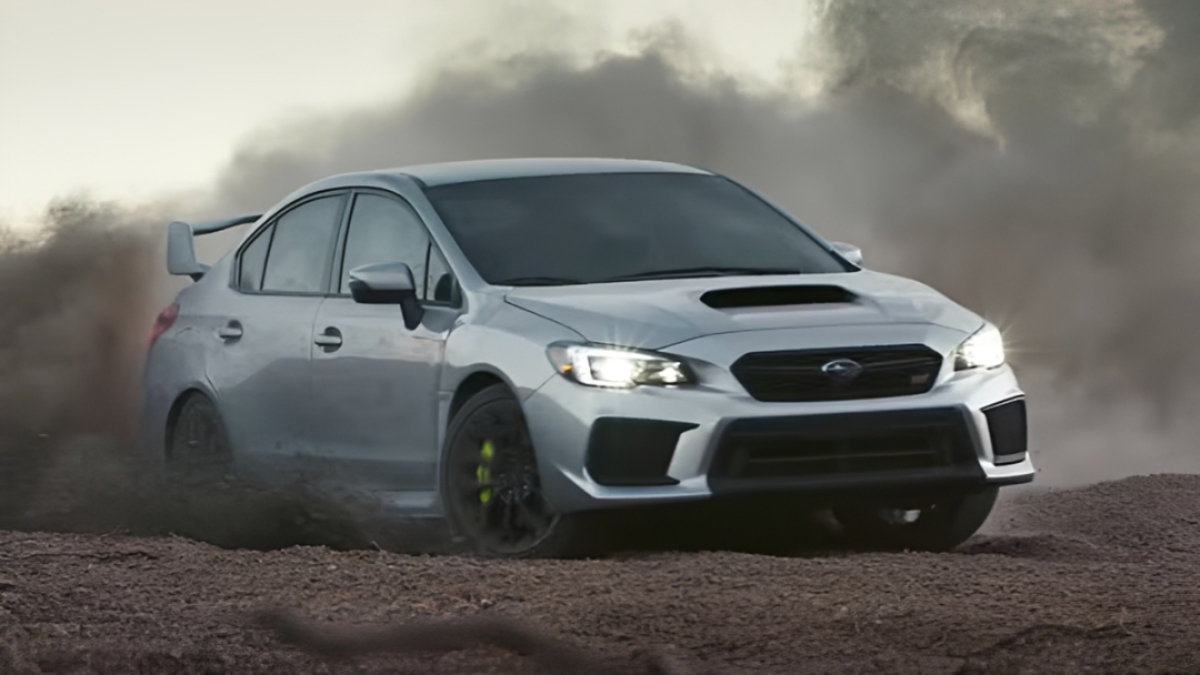
The AWD myth is not “AWD is fake.” That would be lazy, and it would be wrong.
The real myth is softer and more expensive:
a lot of drivers pay for AWD because spring feels slippery, but most spring driving still happens on maintained pavement where AWD does not change the trip as much as they think.
That matters because the cost is not only upfront. It can keep showing up through:
- lower mpg,
- slightly heavier hardware,
- and a habit of buying for the once-or-twice-a-year moment instead of the 30 ordinary weekends around it.
This is why spring is the right season for the article. Winter makes AWD feel obvious. Summer makes it easy to forget. Spring is where the badge often survives on memory and vibes.
Where AWD really does help
This part should be clear and fair.
Subaru’s official AWD explainer says AWD distributes varying amounts of torque to each axle as needed, and that is exactly why people like it in shoulder season. When the road changes quickly, AWD can help the vehicle put power down more cleanly:
- wet on-ramp,
- cold morning pavement,
- slushy shoulder,
- gravel turnout after rain,
- steep driveway with mixed traction.
That is real benefit, not marketing fog.
AWD also makes more sense when the route regularly includes:
- unpaved cabin roads,
- spring mud,
- late-season mountain weather,
- or roads where conditions can change mid-trip.
This is the strongest case for AWD. Not “it might rain.” More like “the last 15 miles can get messy, steep, or unpredictable, and they do it often enough to matter.”
Where drivers pay for AWD without using much of it
This is where the money part shows up.
Honda CR-V
Honda’s official 2026 CR-V specs put the gas model at 28 city / 33 highway / 30 combined in 2WD and 27 / 31 / 29 in AWD. The hybrid tells the same story: 43/36/40 in 2WD versus 40/34/37 in AWD on some trims.
That is not a catastrophic gap. It is exactly the kind of small, recurring gap people stop noticing until they have paid it for years.
Hyundai Tucson
Hyundai’s official 2026 Tucson overview is even cleaner: 25/33/28 in FWD and 24/30/26 in HTRAC AWD.
That difference matters because the spring myth usually lives in this exact kind of crossover. Not a Wrangler. Not a real trail rig. A normal compact SUV doing errands, school runs, and paved weekends with one muddy parking area in the mix.
The broad pattern
The AWD version often gives up a little:
- one or two mpg,
- a bit of simplicity,
- and sometimes a little cargo or weight efficiency.
On one tank, that feels small. Across commuting plus weekends, it starts acting like a subscription.
The spring reality check: AWD is not the same as winter proof
This is the part many buyers still blur.
Yosemite’s official chain rules say drivers must have tire chains or cables in their possession when entering a designated chain-control area, even if they are driving a four-wheel drive or rental vehicle. Caltrans says something similar in California’s chain-control guidance: AWD and 4WD vehicles still must carry traction devices in chain-control areas, and under stricter conditions all vehicles may need chains.
That matters because it punctures the emotional version of the AWD myth.
If the badge solved everything, mountain parks and state DOTs would not keep writing rules that say otherwise.
The broader point is simple:
- AWD helps you move,
- but it does not rewrite traction law,
- and it does not replace the job of the tire.
That is why wet spring pavement is such a sneaky overbuy case. Drivers feel safer because all four wheels can receive power. But the trip is still mostly about:
- tire condition,
- braking distance,
- visibility,
- and whether the road is actually bad enough to justify the hardware.
When AWD actually makes sense in spring
This is where the article earns its headline instead of just mocking buyers.
AWD makes the most sense when spring travel regularly includes:
- cabin roads that stay muddy,
- shoulder-season mountain routes,
- steep, unpaved access,
- mixed traction from rain, slush, and leftover snow,
- or a route that changes too quickly for the “I’ll just stay on pavement” plan to hold.
That is the clean distinction:
- AWD for recurring mixed-traction reality
- not AWD for generic spring anxiety
A good example of the other side is the Subaru Forester. Subaru’s 2026 Forester comes standard with AWD and still advertises up to 33 mpg highway. That makes the calculation different because the buyer is not usually cross-shopping a 2WD version of the same exact vehicle. The point is not “never buy AWD.” The point is “buy it when the route really uses it.”
What this means on a real weekend
If the weekend looks like this:
- two hours of highway,
- one rainy town,
- a maintained park road,
- a normal parking lot,
- and maybe one soft shoulder near the trailhead,
AWD often changes the story less than drivers think.
If the weekend looks like this:
- changing elevation,
- spring snow patches,
- muddy access,
- steep gravel climb,
- and uncertain weather on the way back,
AWD starts earning the bill.
That is the whole roadmapmag answer:
buy for the route, not the season label.
[[PUBLISHER NOTE: add a “buy for the route” module here – caption: “Spring by itself is not the reason. Mixed traction is the reason.” ]]
What this means in the U.S. and Canada
This topic lands on both sides of the border because spring overconfidence is not a U.S.-only problem.
In the U.S., the myth often shows up as:
- “it rains a lot here,”
- “I go to the mountains a few times,”
- or “I just feel better with AWD.”
In Canada, it often picks up a little more real use-case strength because shoulder-season slush, gravel access, and weather swings can show up more often depending on the province and route.
But the core decision stays the same in both markets:
- if the road is usually normal,
- AWD is often reassurance first and money second;
- if the road is repeatedly mixed, steep, or sloppy,
- AWD can be money well spent.
What drivers should check before paying for AWD
1) Count the real messy miles.
Not the imagined spring miles. The actual ones.
2) Check the mpg gap on the specific vehicle.
The CR-V and Tucson show how small yearly differences can become permanent.
3) Look at the tires first.
A worn tire on an AWD crossover is still a worn tire.
4) Read the mountain rules.
Yosemite and Caltrans are the reality check: AWD is not a chain-law loophole.
5) Buy for the last 15 miles only if those 15 miles keep happening.
That is usually where the honest answer lives.
Bottom line
The AWD myth that costs drivers money every spring is not the idea that AWD has no value. It is the idea that spring alone makes AWD worth paying for. Official mpg figures show the cost is real, even when it looks small. Official chain rules show the badge does not solve traction the way drivers sometimes imagine. And official AWD explainers show where the system actually earns its keep: mixed, changing, low-grip conditions that happen often enough to matter. If the trip is mostly wet pavement and normal roads, a lot of drivers are paying for peace of mind they barely use.