

The noise is the giveaway. Not the speed. Not the badge. A lot of drivers first notice the transmission question on a long climb, when the crossover is loaded, the grade gets steeper, and the engine suddenly hangs at one loud, stubborn rpm. That is the moment the old “CVTs save fuel” story collides with real road-trip comfort. In 2026, the useful question is not whether a CVT can do the job. It is why some crossovers feel calmer on a mountain pass while others slip into that rubber-band, always-working-too-hard sensation that makes a getaway feel longer than it should.
Quick takeaways
- The “screaming hybrid” problem is usually about sustained load and transmission behavior, not that the vehicle is broken.
- A conventional automatic often feels calmer on mountain grades because it gives the driver stepped shifts and more obvious pauses in engine speed.
- A CVT often feels worse to the ear before it feels worse on paper. The engine can sit at a high rpm and stay there, which makes the climb feel harsher than the stopwatch suggests.
- Not every CVT is the same. Subaru’s belt-type Lineartronic CVT is not the same thing as the e-CVT used in many hybrids such as the Mazda CX-50 Hybrid.
- The best mountain-pass transmission is usually the one that matches the route and the load, not the one that wins the city mpg argument.

First, the term cleanup most articles skip
This story gets messy fast because people say “CVT” as if there is only one kind.
There are really two broad versions that matter here:
Belt-style CVT
This is the transmission type most people mean when they complain about the rubber-band effect. Subaru’s 2026 Forester trim information lists a Lineartronic CVT, and Subaru’s 2026 Ascent still uses a CVT as well. These transmissions can simulate stepped shifts, but the underlying behavior is still geared around keeping the engine where the system wants it.
e-CVT in hybrids

This is different. Mazda’s 2026 CX-50 Hybrid explicitly uses an electronically controlled CVT (e-CVT), and Toyota-style hybrid systems work differently from a classic belt CVT. The problem is that to the driver’s ears, the effect can still sound similar on a long grade: the engine rises, holds, and drones instead of climbing and settling through conventional upshifts.
That distinction matters because a lot of “CVT hate” is aimed at the feel, not the mechanical design. A belt CVT and an e-CVT are not the same hardware. They can still trigger the same complaint from the cabin.
Why mountain passes make the problem louder
A flat highway hides a lot. A mountain pass exposes it.
On a long climb, the crossover is asking for:
- steady power,
- repeated load,
- and often a full cabin or cargo area.
That is exactly where CVT-style behavior becomes more obvious. The engine finds the rpm it needs and stays there, instead of working through a series of distinct gear changes that give the driver little breaks in noise and sensation.
This is why the effect feels so annoying. It is not always slower. It is often just less satisfying:
- more engine note,
- less sense of progress,
- and a cabin that sounds like it is working harder than the speedometer suggests.
Car and Driver’s current Subaru Ascent review puts this bluntly: the turbo four can be noisy under duress, and the CVT contributes to the racket. That is the exact feeling readers are trying to name when they say a crossover “screams” on a climb.
Why a conventional automatic feels better to a lot of drivers
The classic automatic still has one huge psychological advantage on a road trip: it sounds normal.
A conventional 6-, 8-, or 10-speed automatic tends to:
- drop to a lower gear,
- pull,
- then upshift,
- then settle again.
That rhythm matters more than a spec sheet admits. Even if the engine is making just as much effort, the climb feels more natural because the noise comes in waves instead of one long hold.
A clean modern example is the 2026 Hyundai Tucson Hybrid, which Hyundai says uses a 6-speed automatic transmission with SHIFTRONIC. Another is the 2026 Mazda CX-50 gas model, which Mazda says uses a 6-speed automatic transmission. The 2026 Honda Pilot stays with a 10-speed automatic.
Those vehicles can still be loud under load. They just tend to feel less trapped in one rpm band.
Which crossovers use CVTs, and which ones use conventional automatics
This is the practical decoder section readers actually need.
Common 2026 crossover/SUV examples using a CVT or e-CVT
- Subaru Forester: Lineartronic CVT.
- Subaru Ascent: CVT.
- Mazda CX-50 Hybrid: electronically controlled e-CVT.
- Toyota RAV4 Hybrid: hybrid e-CVT-type behavior, and Car and Driver says the four-cylinder is loud and buzzy under hard acceleration.
Common 2026 crossover/SUV examples using a conventional automatic
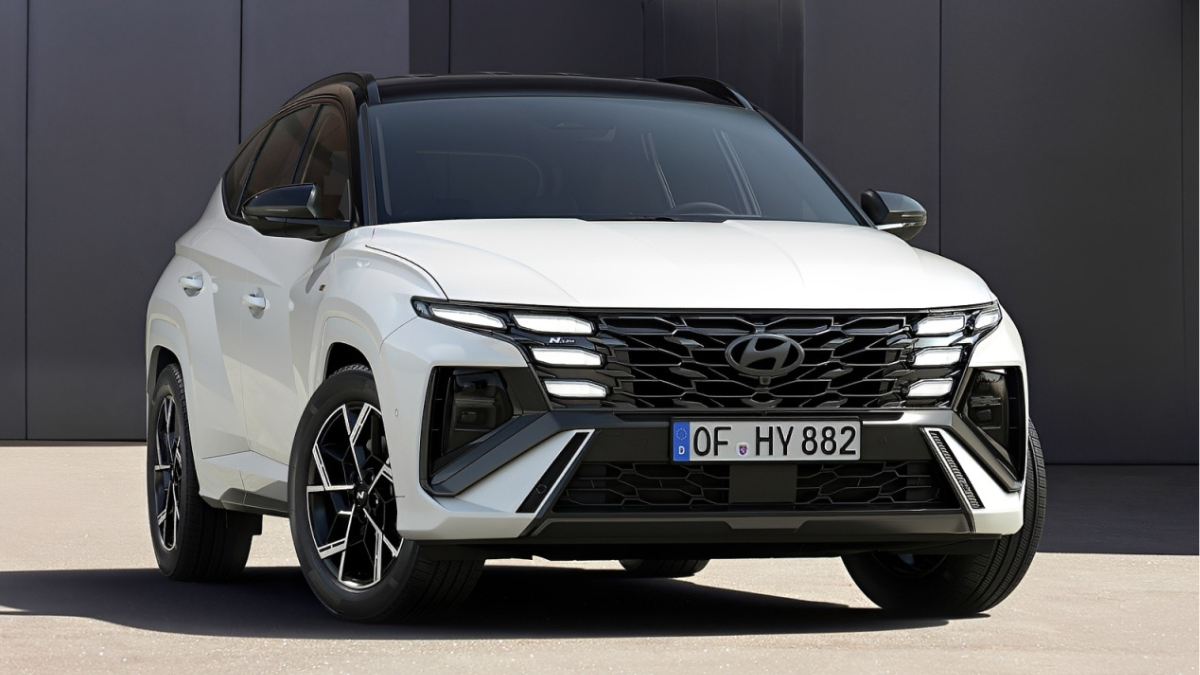
- Hyundai Tucson Hybrid: 6-speed automatic.
- Mazda CX-50 gas models: 6-speed automatic.
- Honda Pilot: 10-speed automatic.
That does not mean “automatic good, CVT bad.” It means the driver experience on mountain grades often changes a lot depending on which side of this list the vehicle is on.
The hybrid part of the problem
The angle is right: this topic hits hardest in hybrids.
Why? Because a hybrid crossover already prioritizes efficiency, and on a steep grade the system often stops feeling magical and starts feeling managerial. The engine comes in, the battery assists, and the transmission logic tries to keep the whole thing in an efficient power band. To the driver, that can translate into one unpleasant sensation:
the car sounds like it is slipping, even when it is actually doing exactly what it is designed to do.
Car and Driver’s 2026 RAV4 Hybrid review is a good example. The magazine says the four-cylinder is loud and buzzy under hard acceleration and recorded 75 decibels at wide-open throttle, louder than the CR-V Hybrid in its testing.
On the other side, Car and Driver’s hybrid compact-SUV comparison said the Honda CR-V Hybrid had a quiet interior at speed, and its earlier CR-V Hybrid vs CX-50 Hybrid comparison praised Honda’s greater refinement and transparent hybrid powertrain.
That split explains the whole article:
- some hybrid CVT/e-CVT setups feel polished enough that the behavior fades into the background,
- some make the mountain pass feel like a sustained complaint.
Where the CVT still makes sense
This should not turn into anti-CVT wallpaper.
A CVT or e-CVT still makes good sense when:
- the route is mostly city or suburban,
- fuel economy matters more than theater,
- the grades are modest,
- and the driver values smoothness over “shift feel.”
Subaru keeps using CVTs for a reason. Mazda and Toyota keep using e-CVT-style hybrid setups for a reason. They work well in the broad efficiency mission.
The trouble starts when the mission changes:
- full cabin,
- hot weather,
- mountain grade,
- repeated passing,
- and a driver who wants the vehicle to feel relaxed.
That is when the conventional automatic often starts sounding worth the mpg trade.
How to manage the climb better
This is the practical value the article needs.
1) Do not chase speed with huge throttle swings
On a climb, stabbing the throttle harder can lock the engine into the exact noisy zone drivers hate most. A steadier pedal often makes the whole event less dramatic.
2) Use the drive mode intelligently
If the crossover has Eco, Normal, and Sport, try the mode that reduces mushy throttle behavior. In some vehicles, Sport can make the response more predictable even if it sounds counterintuitive for comfort.
3) Leave more passing room than you think
A mountain pass is not the place to discover whether the drivetrain feels strained. If the transmission tends to hang high in the revs, give the vehicle more space and time.
4) Understand what you bought
If the vehicle uses a CVT or e-CVT, the noise does not automatically mean harm. It often means the system is holding the engine where it can make steady power.
5) Buy for the route, not the mpg headline
If mountain passes are a real part of life, a conventional automatic crossover may make more sense even if the city mpg number looks less shiny.
What this means in the U.S. and Canada
This is not a niche Western-U.S. problem.
In the U.S., the issue shows up anywhere spring and summer trips include:
- mountain passes,
- high-speed climbs,
- loaded family travel,
- or long grades on interstates and park roads.
In Canada, the same problem can feel even more familiar because elevation, weather swings, and long regional drives often make drivetrain behavior more noticeable.
The broader answer does not change:
- if the trip regularly climbs,
- the transmission matters more than the city fuel label suggests.
Bottom line
The “screaming hybrid” on a mountain pass is usually not a mystery and usually not a defect. It is the sound of a CVT or e-CVT style powertrain doing exactly what it was designed to do under sustained load. The reason drivers hate it is not that it fails. It is that it feels worse than a conventional automatic while doing the same job. If the route regularly includes mountain passes, a crossover with a traditional automatic often makes the getaway feel calmer, quieter, and more natural. If the route is mostly flatter everyday driving, the CVT trade can still make sense. The trick is not confusing those two use cases.
SOURCES
- 2026 Forester
- 2026 Forester Sport
- 2026 Subaru Ascent
- 2026 Mazda CX-50
- 2026 Mazda CX-50: Pricing and Packaging
- 2026 Mazda CX-50 Gas SUV Hybrid SUV
- 2026 TUCSON Hybrid
- Blue SE
- 2026 Honda Pilot | Features & Specifications
- Tested: 2026 Toyota RAV4 Hybrid Makes Progress but Doesn’t Go Far Enough
- Comparison Test: Honda CR-V Hybrid, Mazda CX-50 Hybrid, Subaru Forester Hybrid, and Toyota RAV4 Hybrid
- Comparison Test: Honda CR-V Hybrid vs. Mazda CX-50 Hybrid