
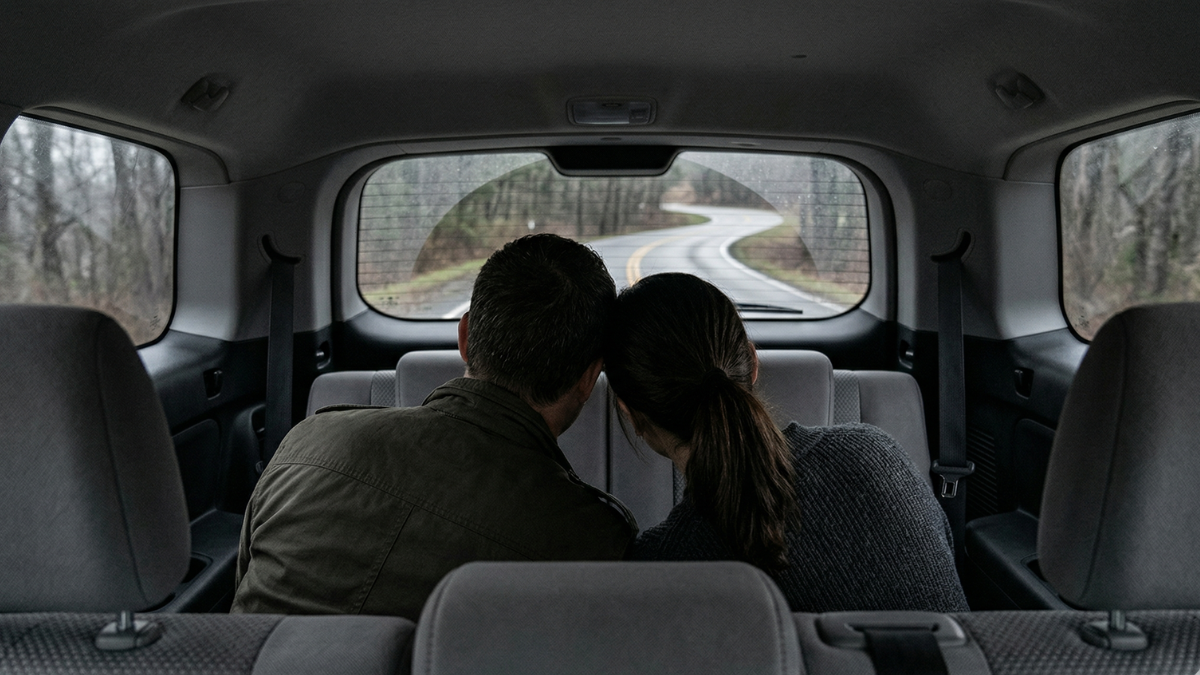
The family SUV seats seven. The brochure says everyone fits. Then the third row passengers start complaining somewhere around hour two, and nobody can figure out why the expensive crossover is making otherwise road-trip-tolerant adults feel sick. The answer is not a defect, and it does not show up anywhere on the spec sheet. It is a geometry problem, and it is built into the architecture of most midsize three-row SUVs sold today.
Quick Takeaways
- In most midsize SUVs, the third row sits at or behind the rear axle — the worst possible location for absorbing road inputs without amplifying them
- Physics: when a rear wheel hits a bump, the vehicle body pivots over the axle. Passengers ahead of the axle move up slightly; passengers behind the axle swing up more, like the far end of a seesaw
- This amplified vertical and lateral motion falls exactly in the frequency range most associated with motion sickness — low, repetitive, and hard to anticipate
- Limited visibility through small rear quarter windows compounds the problem: the inner ear senses motion the eyes cannot confirm
- Wheelbase-to-overall-length ratio predicts how much room an engineer had to push the third row forward, closer to the axle or between the axles
- Three vehicles with better third-row geometry than most midsize competitors: Volkswagen Atlas, Toyota Grand Highlander, and the full-size Chevrolet Suburban
The Feature Nobody Tests at the Dealership
Buying a three-row SUV usually involves a test drive in which two people sit in the first row, maybe one in the second, and nobody rides in the third for more than ten minutes in a parking lot. The geometry problem only shows up at highway speed over real road surfaces with actual human beings in every seat for several hours.
By then, the papers are signed.
The third row of a midsize crossover SUV is a different physical experience from the first and second rows in ways that go beyond legroom and headroom. The first row is isolated from most road inputs by suspension design, by seating position, and by the driver’s ability to anticipate and compensate for the road ahead. The second row is close to the vehicle’s center of gravity — the point around which all of the vehicle’s rotational motions occur. The third row is often at or beyond the rear axle, at the far end of the vehicle, where everything that happens in the suspension gets magnified.
The Car Seat Lady, a child car seat safety resource, puts it plainly: for minivans and SUVs, keeping motion-sick passengers in the second row rather than the third is a basic mitigation strategy, because the third row is bumpier. A Girl’s Guide to Cars, a family vehicle resource, explains the principle more directly: the closer a passenger is to the vehicle’s center of gravity, the less motion they feel.
Understanding why the third row is different starts with understanding what the rear axle does to passengers behind it.
The Lever Arm in Plain Language
A vehicle’s wheelbase is the distance between the centers of the front and rear axles. Think of the wheelbase as the foundation. The vehicle body pivots over and around that foundation every time a wheel encounters a road input — a bump, a seam, a rut, a curve.
When the rear wheel hits a bump, the rear axle is the pivot point for the vertical body motion at that corner. Passengers seated ahead of that pivot point — between the axles — move upward by a small amount, damped by the suspension doing its job. Passengers seated behind that pivot point — in the rear overhang, beyond the axle — move upward by a larger amount. They are on the far end of a lever with the axle as the fulcrum.
The same logic applies to lateral inputs. Body roll during a corner rotates around the vehicle’s roll center, which runs roughly along the wheelbase axis. Third-row passengers, seated outboard and behind the rear axle, experience a larger arc of motion than passengers seated between the axles for the same road input.
This is not a specific flaw in any particular SUV. It is a consequence of where the seats are relative to the axle. And in most midsize three-row crossovers — vehicles built on compact or midsize platforms that carry a third row because the market demands it, not because the wheelbase naturally accommodates one — the third row sits very close to, at, or slightly behind the rear axle centerline.
The forum discussion among three-row SUV owners is consistent across brands and platforms: the instinct is correct and the physics supports it. Sit between the two axles. Less vertical motion. Like a bus. The third row is the back of the bus.
Why Midsize Crossovers Have This Problem More Than Full-Size SUVs
A body-on-frame full-size SUV like the Chevrolet Suburban, Ford Expedition, or Toyota Sequoia has a wheelbase of 130 inches or more. The Suburban’s wheelbase is 130 inches on the standard model, and the Expedition runs 122.5 inches. These platforms were designed to carry three rows of adult-sized passengers. The third row in a Suburban sits comfortably within the wheelbase span. The leverage problem is largely absent.
A midsize unibody crossover is a different starting point. The Toyota Highlander — a five-passenger commuter-oriented platform that was stretched to carry seven — has a wheelbase of 112.2 inches. The Hyundai Palisade has a 114.2-inch wheelbase. The Kia Telluride shares the same wheelbase. These are platforms built to prioritize front-row and second-row comfort, fuel economy, and maneuverability. The third row is added at the back, where space permits, not where suspension geometry ideally places it.
The Toyota Highlander’s standard model offers 27.7 inches of third-row legroom — notoriously tight, and reflective of how compressed that seat position is toward the rear of the vehicle. The Palisade offers approximately 32 inches. The Telluride is similar. These are not numbers that indicate a third row well positioned between the axles.
The result is that most midsize three-row crossovers ask third-row passengers to sit in a location that amplifies road inputs relative to the first two rows, in a seat position with limited visibility forward, with small rear quarter windows that offer little outside reference to the eyes. All three factors combine to produce exactly the conditions the research on motion sickness identifies as nauseogenic: low-frequency repetitive vertical and lateral oscillation the body cannot anticipate, combined with a mismatch between what the inner ear senses and what the eyes can see.
The Visibility Gap Nobody Talks About
Seat position relative to the rear axle is the structural cause of the problem. Limited visibility is what turns a bumpy ride into a carsick ride.
The mechanism behind motion sickness — a conflict between vestibular (inner ear) signals and visual input — is well established. The driver rarely gets carsick because the driver’s eyes are locked on the road ahead, anticipating every curve, bump, and deceleration before the body feels it. Rear passengers, particularly those with no forward view, receive the physical motion without the visual advance warning. The sensory mismatch is the trigger.
Third-row passengers in most midsize SUVs face two visibility disadvantages. First, the forward sightline through the first and second rows is heavily obstructed — the driver’s and front passenger’s headrests, the second-row headrests, and the B and C pillars all interrupt the view of the road ahead. Second, the rear quarter windows are typically small. The side windows at the third row are often narrow, deeply set within the body structure, and provide primarily a view of the road surface rather than the horizon. Looking at passing objects in the near field from a side window is more nauseogenic than looking at a distant, stable horizon.
The Car Seat Lady’s guidance is specific: for forward-facing passengers, the center of the back seat gives the least obstructed forward view. For minivans and SUVs, keep motion-sick passengers in the second row — the third row is bumpier and will make them feel sicker.
None of this information appears in the sales brochure for a $50,000 three-row SUV.
Three Vehicles With Better Third-Row Geometry
Not all three-row crossovers compress the rear seat into the same amount of overhang. Wheelbase length relative to overall vehicle length is the clearest signal of how much room the engineer had to work with when positioning the third row. A longer wheelbase within a given vehicle length means more cabin falls between the axles; a shorter wheelbase means more of the cabin is in the overhang.
Volkswagen Atlas
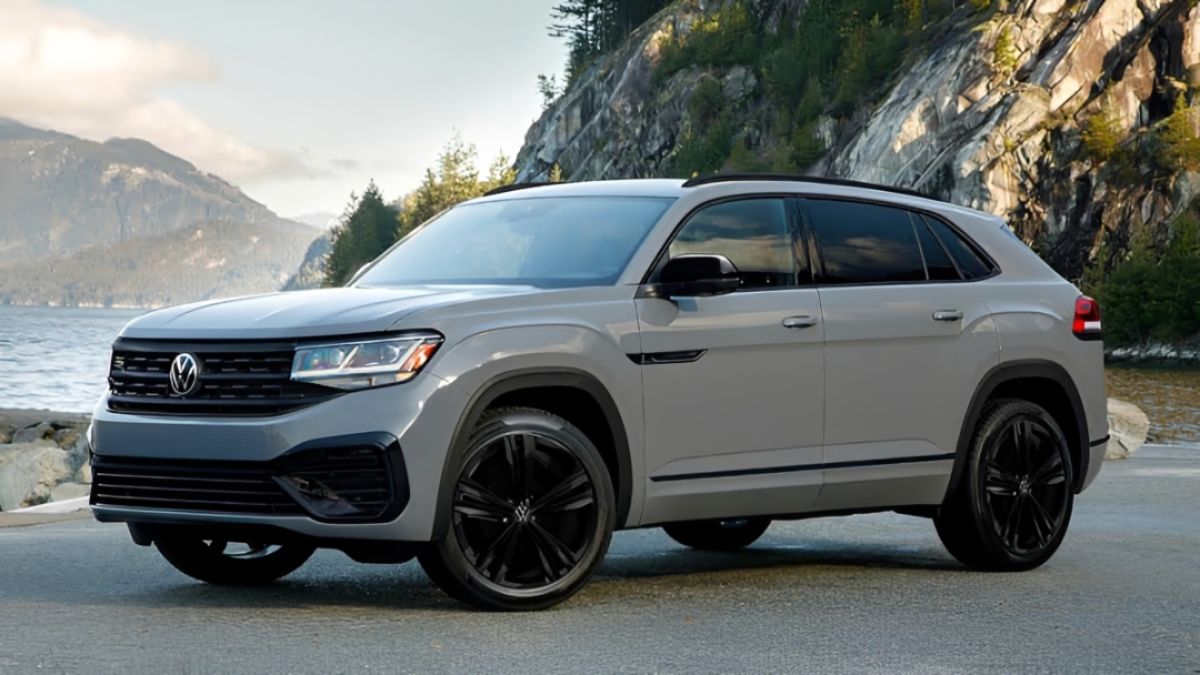
The Atlas was designed from the ground up with the American family SUV buyer as the primary target, and its third-row geometry reflects that. Its wheelbase runs 117.3 inches — the longest in the mainstream midsize SUV segment — within an overall length of 200.7 inches. It offers approximately 33.7 inches of third-row legroom, the most generous measurement in the segment. The longer wheelbase pushes more of the third row toward or within the wheelbase span, reducing the lever-arm effect that amplifies road inputs for the rearmost passengers. Multiple automotive comparison tests note the Atlas’s back rows benefit from this architecture.
Toyota Grand Highlander
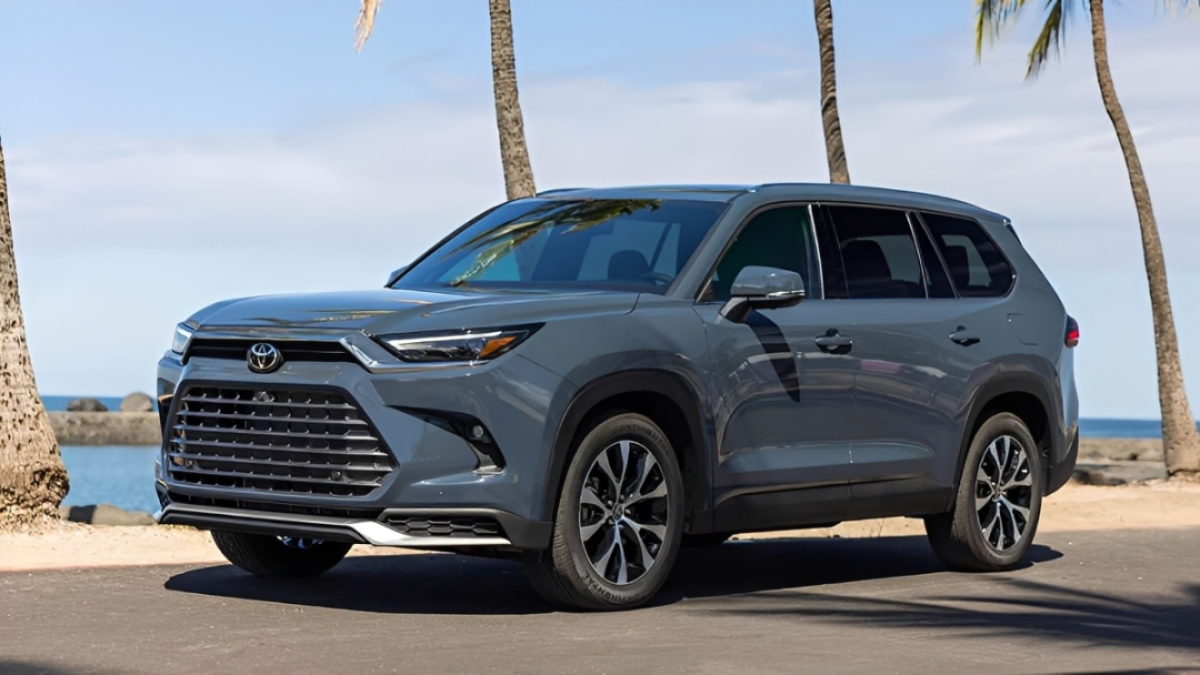
Toyota introduced the Grand Highlander specifically to address the limitations of the standard Highlander’s third row. The Grand Highlander is 6.5 inches longer than the standard Highlander, with a commensurately stretched wheelbase, and those extra inches were directed at third-row legroom and cargo space. Third-row legroom improves to 33.5 inches compared to the standard Highlander’s 27.7 inches. The stretched platform moves the third row into a more favorable position relative to the rear axle, producing a meaningfully different ride experience in the rear seats on long trips compared to the vehicle it replaced.
Chevrolet Suburban (and Expedition/Sequoia class)
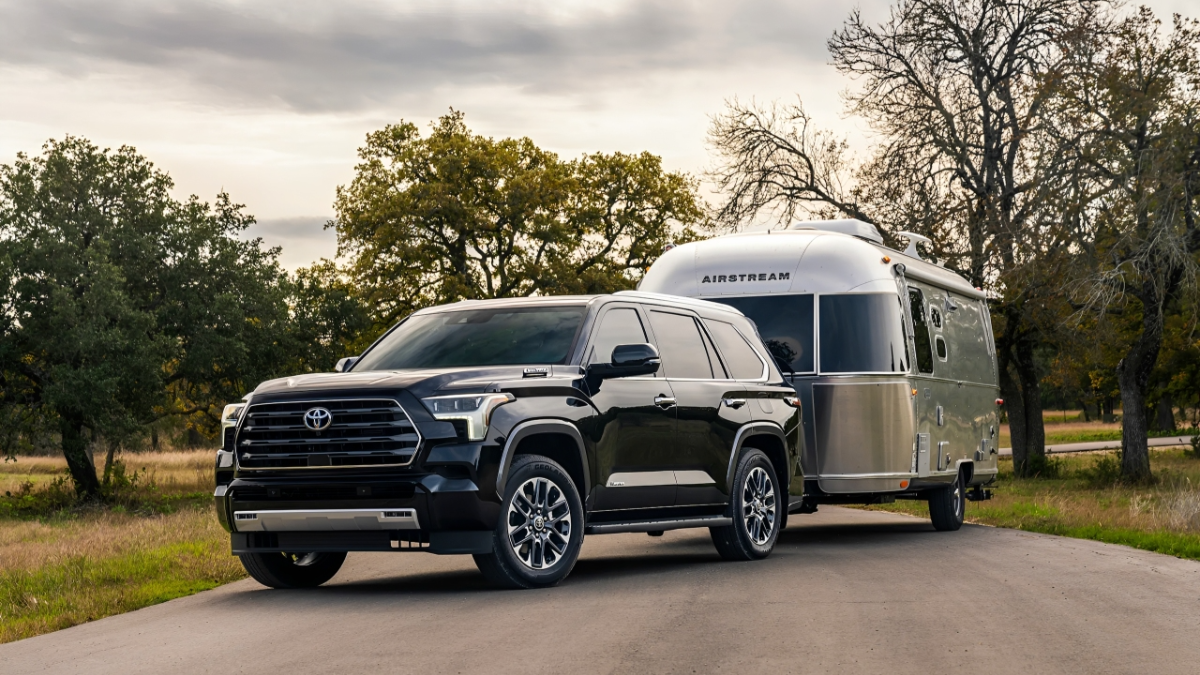
If third-row comfort on a long trip is the primary purchase criterion, the honest answer is that midsize crossovers are a compromise by construction, and full-size body-on-frame SUVs are not. The Suburban’s 130-inch wheelbase places its third row comfortably within the wheelbase span. The third-row experience in a well-maintained Suburban on a highway trip is categorically different from a midsize crossover. The tradeoffs — size, fuel cost, parking — are real, but so is the geometry advantage.
What Actually Helps Before and During the Trip
Understanding the geometry does not change where the seats are, but it does change how to use them on a long drive.
Seat the motion-sensitive passenger in the second row, not the third. This is the single highest-impact change. The second row in a midsize SUV sits close to the vehicle’s center of gravity. The road inputs are damped and filtered before reaching the passenger. On a three-hour trip with a passenger prone to motion sickness, the second row is the right seat — every time.
If the third row is occupied, prioritize forward visibility. The center third-row position has the best unobstructed sightline to the windshield and the road ahead. Placing a motion-susceptible passenger in the center rather than the outboard position helps with the visual-vestibular mismatch. Discourage screen time in the third row on rough road segments.
Rear climate control matters. A hot third-row cabin accelerates nausea in susceptible passengers. If the vehicle has dedicated rear climate controls or ceiling vents, use them. The third row is typically farthest from the front AC system; a warm, stuffy seat compounds the motion problem.
Use firmer suspension modes where available. Some SUVs with adjustable suspension — typically higher trims with electronically controlled dampers — produce less lateral sway in Sport or stiffer modes. Range Rover and Mercedes-Benz owners with adjustable setups report that firmer modes reduce the floaty rear-seat motion that triggers nausea. The default comfort-tuned mode that feels smooth to the front-seat driver may be doing the rear passengers no favors.
On shopping trips before the purchase: test the third row on a real highway segment, not a parking lot. Ask for 15 minutes at highway speed over normal pavement. Sit in the third row personally. Check the rear quarter windows — assess whether there is a usable horizon view. Note whether the seat is firmly located or whether it floats on bumps. That is the test that predicts a five-hour trip, not the dealer lot.
U.S. and Canada Note
The geometry issue is universal, but it shows up differently depending on where the vehicle is driven. On smooth interstate pavement in the Sun Belt, midsize crossover third rows are often adequate for a single trip. On the rough secondary highways of New England after spring, the Trans-Canada in northern Ontario, or the potholed rural routes that make up large stretches of the Prairie provinces, the difference between a third-row position at the axle and one between the axles becomes noticeable very quickly. Drivers whose routes include significant stretches of rough-surface secondary roads should weigh third-row geometry more heavily in the vehicle evaluation than buyers who primarily drive urban interstates.
SOURCES
- The Car Seat Lady: third row is bumpier in SUVs, keep motion-sick passengers in second row; visual-vestibular mismatch mechanism
- A Girl’s Guide to Cars: center of gravity proximity and motion reduction; third row experiences most movement; front visibility reduces sickness
- Whirlpool forum: “Like a bus, you want to sit between the two axles not outside of them — less vertical motion”; third-row passengers may be over the rear axle
- VW Atlas 117.3″ wheelbase vs. Highlander 112.2″; Atlas most spacious third row
- Palisade 114.2″ wheelbase vs. Atlas 117.3″; third-row legroom comparison
- Palisade wheelbase 114.2 inches / 2,900 mm confirmed; overall 196.1 inches
- Edmunds: Grand Highlander adult-friendly third row; Toyota Grand Highlander vs. standard Highlander third-row space comparison
- Grand Highlander third-row legroom 33.5 inches; standard Highlander 27.7 inches
- Grand Highlander 6.5 inches longer than standard Highlander; extra space directed at third row
- MotorBiscuit: seat height in SUVs, rear visibility limitations as carsickness contributors