
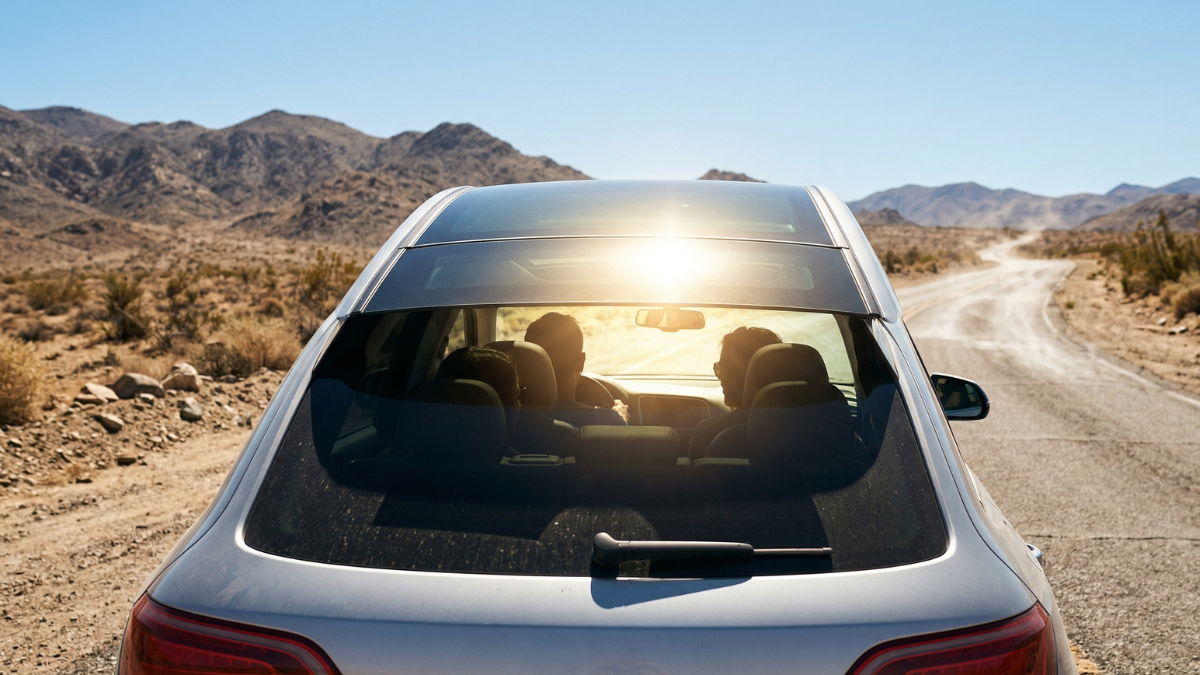
Panoramic sunroofs have become the default upsell on nearly every mid-trim SUV in North America. The pitch is always the same: light, space, openness, a premium feel for a modest price jump. What the pitch leaves out is what happens at noon in July on a five-hour drive through the Carolinas, the Texas Panhandle, or the interior of British Columbia — where that same glass panel turns the cabin into a solar oven and forces the air conditioning to run harder for longer. The physics are not complicated, and the headroom numbers are in the spec sheets. Most buyers just never see them before the check clears.
Quick Takeaways
- A panoramic roof is a horizontal glass surface — the worst possible angle for solar heat gain in summer, when the sun is high in the sky
- Clear glass has a solar heat gain coefficient of roughly 0.84, meaning it passes through most of the solar energy that hits it; even treated automotive glass passes through a significant portion
- Research on glass-heavy buildings found that radiant heat from large glass surfaces required AC to work substantially harder to maintain the same comfort level
- Edmunds confirms a typical headroom loss of 1–2 inches with panoramic sunroof hardware; the Chevrolet Traverse loses close to 2 inches front and rear, the Hyundai Santa Fe loses approximately 1 inch per row
- The panoramic roof adds 150–200 pounds to the vehicle, per Edmunds, all concentrated at roof level — the worst position for center of gravity and for heat management
- The shade panel does not fully solve the problem: it blocks light but not the radiant heat already absorbed by the glass above it
The Upgrade That Sounds Like Luxury
Walk through any SUV lot and the panoramic roof is the upsell that practically sells itself. The salesperson hits the button, the shade retracts, and the cabin floods with light. The vehicle feels bigger, airier, more expensive. The option costs $1,500 to $3,000 depending on the vehicle, per KBB’s breakdown of panoramic sunroof pricing across mainstream models, and the perceived value is immediate and obvious.
The tradeoff only shows up later.
At 75 mph in July with the sun near zenith, the physics of a panoramic roof work directly against cabin comfort. The glass surface sits horizontal — or very close to it — above the driver and the rear passengers. The air conditioning system, which is sized to cool the cabin under normal conditions, suddenly has a large pane of heated glass radiating heat downward onto the occupants continuously. The system compensates by running longer cycles and working harder, with consequences that show up in fuel consumption, cooling noise, and the temperature differential between what the front vents deliver and what rear passengers actually feel.
None of this is mentioned on the feature list.
Why the Angle Matters: Horizontal Glass in Summer
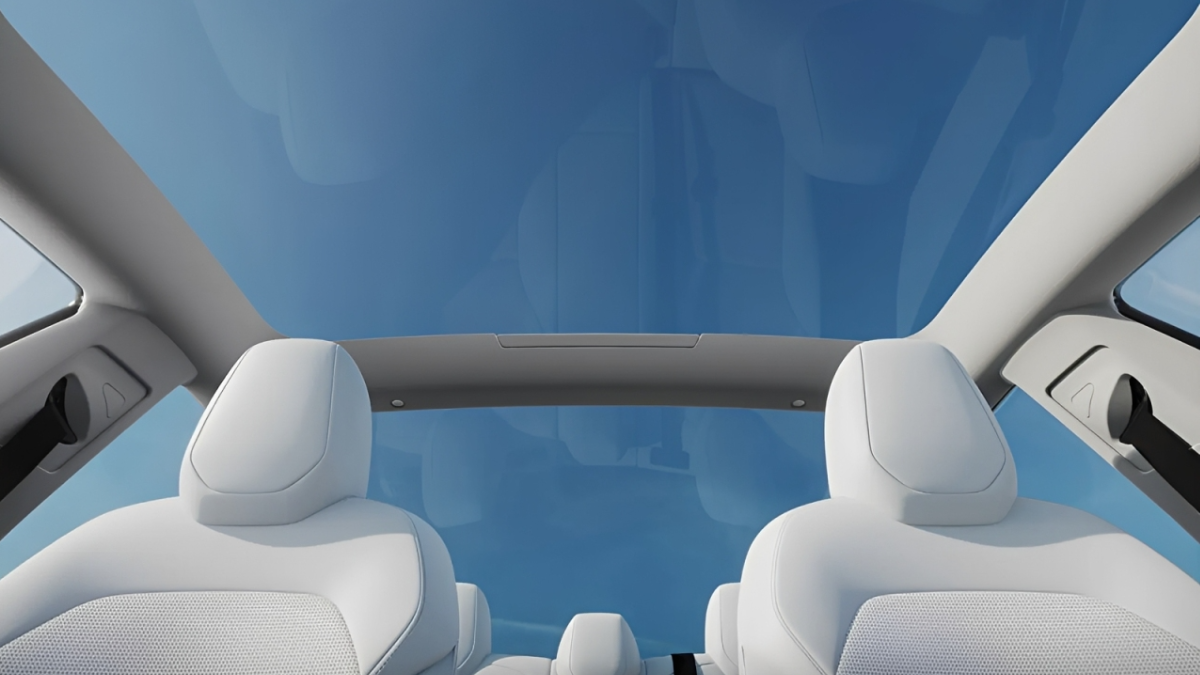
The sun’s angle relative to a surface determines how much solar energy hits it. A vertical window — like a side glass — receives near-perpendicular sun only during early morning or late evening when the sun is low. During midday hours, the sun hits a vertical surface at a shallower angle, reducing the solar load.
A horizontal glass panel is the opposite. In summer, when the sun reaches its highest point in the sky, a horizontal surface receives solar energy at close to a perpendicular angle — the maximum possible load. This is why glass skylights heat buildings dramatically in summer even when side windows are manageable. A panoramic roof is a skylight in a moving vehicle.
The Solar Heat Gain Coefficient (SHGC) is the standard measure of how much solar energy passes through glass as heat, on a scale of 0 to 1. Clear glass has an SHGC of approximately 0.84, meaning it transmits roughly 84 percent of the solar radiation that strikes it directly into the space below. Automotive glass with standard tinting does better — darker or reflective tints can reduce solar heat gain by 25 to 55 percent per research from the Florida Solar Energy Center — but it cannot eliminate the load. Glass that looks tinted and feels cool in a showroom can still transmit substantial solar energy under direct summer sun on a highway at noon.
The radiant heat problem compounds the air temperature problem. Even if the AC keeps the cabin air cool, the glass above the occupant continues to absorb and re-radiate heat downward onto exposed skin, shoulders, and the top of the head. Research on glass-heavy buildings found that radiant heat from large glass surfaces can push thermal conditions outside the comfort zone even when air temperature is at the target setting, requiring additional cooling capacity to compensate. The same mechanism applies in a vehicle cabin, where the distance between occupant and glass panel overhead is measured in inches.
What the Shade Panel Does and Does Not Do
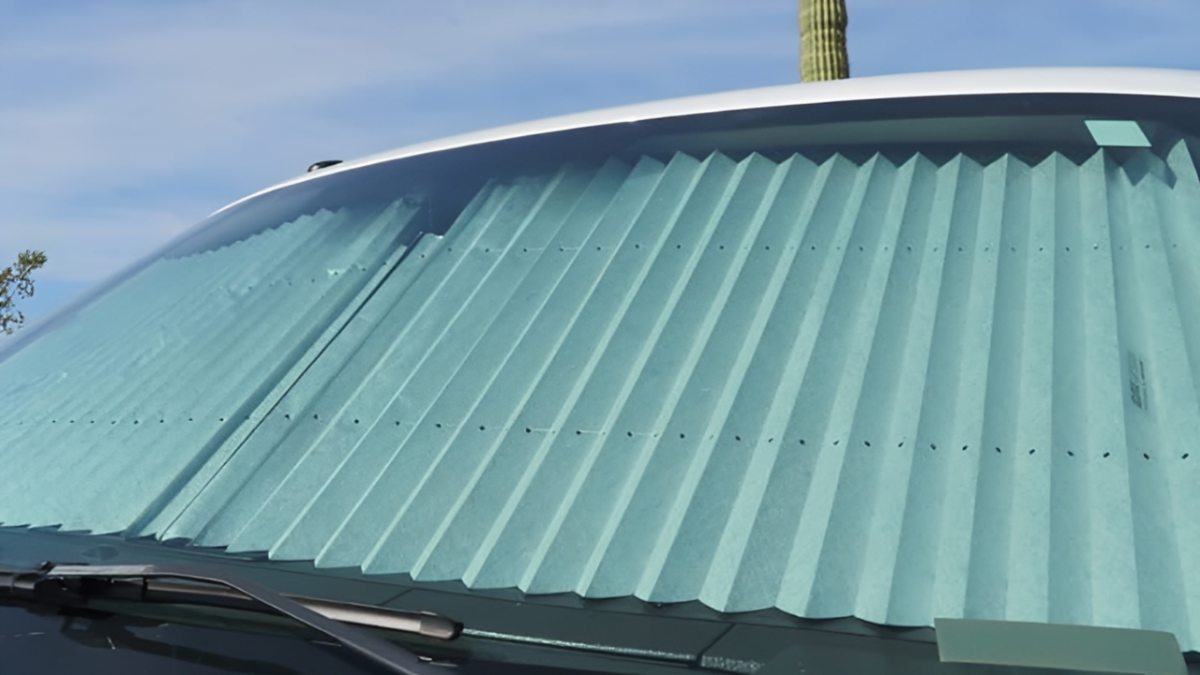
Every panoramic sunroof ships with a retractable or sliding shade panel. Most buyers operate it as the solution to the heat problem: close the shade, problem solved.
The shade reduces the light entering the cabin. It does not fully address the radiant heat problem.
Here is why. When sunlight hits the glass panel from above, the glass absorbs some of the solar energy and transmits the rest directly. The absorbed portion heats the glass. Once the glass is hot — which happens quickly on a summer day, whether the vehicle is moving or parked — it radiates heat downward by convection and long-wave infrared emission. The shade panel sits below this hot glass, not between it and the sun. The shade can interrupt some of that radiated heat from reaching occupants directly, but the glass above it is still warm, the shade itself absorbs heat from the glass above it, and the overall thermal load in that section of the cabin remains higher than with a metal roof.
This is why owners of vehicles in hot climates frequently describe the panoramic roof area as warmer than the rest of the cabin, even with the shade fully closed and the AC running. The glass and its heat have not gone away. The shade is an interior measure for an exterior source.
Premium low-emissivity and spectrally selective glass coatings — available on higher-end vehicles and through aftermarket film — do better. These coatings work by reflecting near-infrared radiation before it enters the glass rather than absorbing it, which genuinely reduces the heat transmitted downward. AGC, a major automotive glass supplier, has developed low-E glass specifically marketed for panoramic roofs, with the stated aim of eliminating the need for a sunshade altogether by reducing solar heat and cold transmission. But this technology appears primarily in premium vehicles or as a specific upgrade, not as a standard feature on mass-market mid-trim panoramic roofs.
For most buyers who tick the panoramic sunroof box on a mainstream compact or midsize SUV, what they get is standard automotive glass with a tint film — adequate for blocking UV, better than nothing for heat, but not a thermal solution for a long summer drive.
The AC Consequence
A vehicle’s air conditioning system is sized and calibrated for the thermal load of the standard vehicle configuration. Adding a large glass panel at the roof level increases that load.
The increase is not catastrophic on a cool overcast day. On a clear July afternoon with the sun at full angle, the AC is managing not just ambient air temperature but the radiant heat load from the glass above. The system runs longer cycles, the compressor works harder, and in vehicles with smaller or older AC systems, the temperature differential between front-vent output and rear-seat conditions can become noticeable.
There is no single published figure for exactly how much more AC load a typical panoramic roof adds in a mainstream SUV, and inventing one here would be bad sourcing. But the physics are unambiguous: a large horizontal glass surface in summer sun imposes additional cooling demand on the system. This shows up in two ways that drivers notice on a long trip. First, fuel economy drops slightly — the AC compressor is drawing more power, and the additional 150 to 200 pounds of glass and frame hardware at roof level (per Edmunds) adds load year-round. Second, rear passengers in particular may feel warmer than the front-row temperature suggests, because the glass above the rear seats is receiving the highest solar angle and the AC delivers air from the front.
The combination is the actual trip experience: driver relatively comfortable, front vents doing their job, rear passengers wondering why the car feels warm despite the AC running.
The Headroom Number Nobody Checks at the Dealership
The thermal issues are the main problem on summer trips, but there is a second penalty that affects tall drivers and passengers every single drive: headroom.
Panoramic sunroof hardware — the glass panel, frame, shade mechanism, motors, and rails — occupies space inside the roof structure that would otherwise belong to the headliner and the cabin space below it. The result is a lower interior ceiling than the same vehicle without the sunroof.
Edmunds documents specific examples. The Hyundai Santa Fe has 41.1 inches of front headroom without the panoramic roof; adding the glass reduces that by about 0.9 inches in front and 1 inch in the second row. The Chevrolet Traverse loses close to 2 inches in both the front and rear rows with the panoramic option. Edmunds’ general guidance: buyers typically lose an inch or more of headroom. TopGearbox notes the reduction can reach 50mm — about 2 inches — depending on the vehicle and mechanism design.
For passengers under about 5 feet 10 inches, this generally does not register as an issue. For drivers and passengers at or above 6 feet, an inch to two inches of headroom loss can change how the seat must be positioned: the driver may need to lower or recline the seat slightly to avoid contact with the headliner, and the adjusted seating position can affect steering wheel reach, pedal comfort, and lumbar support. On a five-hour drive, that forced compromise in seating position accumulates as fatigue and neck stiffness in a way that would not happen with a metal roof and the full headroom intact.
The spec sheet lists both headroom measurements — with and without sunroof — for vehicles where both configurations exist. Most buyers never compare them. The salesperson is rarely volunteering the information.
What the Glass Weighs and Where It Sits
Edmunds pegs a typical panoramic sunroof assembly — glass panels, frame, motor, shade mechanism, and rails — at 150 to 200 pounds. That mass sits at the top of the vehicle, at the highest possible point in the structure.
For most SUV buyers, this is not a handling concern at normal road speeds. The center-of-gravity effect is subtle on a body-on-frame or unibody crossover in straight highway driving. But it matters for the thermal budget separately from handling: all that glass at the top of the vehicle is the widest, most exposed surface to overhead sun, and it cannot be insulated the way a metal roof with a foam-and-insulation headliner sandwich can be.
A metal roof panel with a standard headliner provides a multilayer thermal barrier between the sun and the occupants. The assembly includes the metal panel itself, an air gap, insulation, and the headliner fabric. A glass panel provides one layer of glass — tinted or coated at best — and a shade below it. The insulating value of these two configurations is not comparable. A metal roof runs cooler at ceiling level on a summer day. The glass runs hotter.
What to Do on a Hot Trip
None of this means buyers should categorically avoid panoramic roofs. For drivers in the Pacific Northwest, Maritime Canada, or northern states where summer temperatures are moderate and overcast days are common, the heat penalty is mild and the experience-of-space benefit is real.
For buyers in the Sun Belt, Southern Ontario, Alberta in summer, or any region that regularly sees 95°F-plus highway conditions, the panoramic roof deserves more scrutiny before purchase than it typically gets. A few practical steps:
Check the glass specification before buying. Ask the dealer or look up the manufacturer’s spec sheet for the panoramic glass SHGC or solar control rating. Lower SHGC means less heat transmitted. If the vehicle’s glass is described as low-emissivity, infrared-blocking, or spectrally selective, it is meaningfully better than standard automotive tint. If no specification is offered, assume basic tint.
Test the rear seat specifically. On a test drive on a sunny day, sit in the rear seat with the shade panel closed and the AC running. The difference between rear-seat comfort in a panoramic-roof vehicle and a metal-roof vehicle is most obvious from the back. Front-row drivers often report the AC handling it well; their rear passengers frequently disagree.
Measure headroom in person. If any occupant in the household is 6 feet or taller, measure actual headroom in the rear seat with the panoramic roof variant, not just the front. The rear row is the first to lose headroom relative to the standard configuration, and rear passengers on a road trip have less ability to adjust their seating position for relief.
Use the shade panel on hot-sun driving and open it at dawn, dusk, or in shade. The feature works well in morning light, in overcast conditions, and at night. It works against cabin comfort when the sun is high and direct. Treating it as a selective-use tool rather than a permanent feature changes the experience.
Consider aftermarket ceramic window film on the panoramic glass. High-quality ceramic films can block 50 to 80 percent of solar heat and over 99 percent of UV, per industry specification data. Applied to an existing panoramic roof, this materially reduces the radiant heat load without darkening the visible appearance significantly. It does not recover the headroom, but it substantially improves the thermal picture.
U.S. and Canada Note
The heat penalty is regional by nature. A driver in coastal Oregon or Nova Scotia may find that the panoramic roof’s benefits outweigh the cooling penalty because high-sun summer heat is infrequent on their typical routes. The experience of a driver in Phoenix, Dallas, Sacramento, or Southern Ontario in July is a different calculation.
Canadian buyers in particular should note that while climate varies widely, the Trans-Canada corridor through Ontario and the Prairie provinces during July and August regularly produces conditions where direct overhead sun is both intense and sustained over long driving stretches. The panoramic roof performs at its worst on exactly those routes: long, flat, open highway, sun overhead for six-plus hours.
For buyers using their vehicle primarily in the southern or interior U.S. — where summer high-sun conditions are not occasional but routine — the panoramic roof tradeoff is worth calculating before signing, not discovering 200 miles into a July drive with kids in the back row.
SOURCES
- Edmunds: headroom loss data with specific vehicle examples — Traverse ~2 inches, Santa Fe ~1 inch; 150–200 lb weight figure; market overview
- KBB: panoramic sunroof pricing across mainstream models; headroom reduction “several inches” general warning
- TopGearbox: headroom reduction up to 50mm/2 inches; shade panel limitations; heat mechanism
- Concord Window Film: SHGC of clear glass = 0.84 benchmark; industry standard measurement explained
- Guardian Glass: SHGC definition — fraction of solar heat transmitted through glazing
- Florida Solar Energy Center: tinted glass can reduce solar heat gain by 25–55%; spectral selectivity; horizontal surface heat gain
- MDPI Buildings: glass curtain wall thermal comfort study — radiant heat from glass requiring AC to work harder to maintain comfort; 28% energy increase in glass-heavy buildings
- Just-Auto: AGC low-E glass for panoramic roofs — industry development to address heat/cold transmission, premium market
- OcTint Solutions: high-performance ceramic films block 50–80% solar heat and over 99% UV
- CarBuzz: sliding-panel mechanism lowers interior ceiling by up to 1.5 inches; panoramic roof types explained