
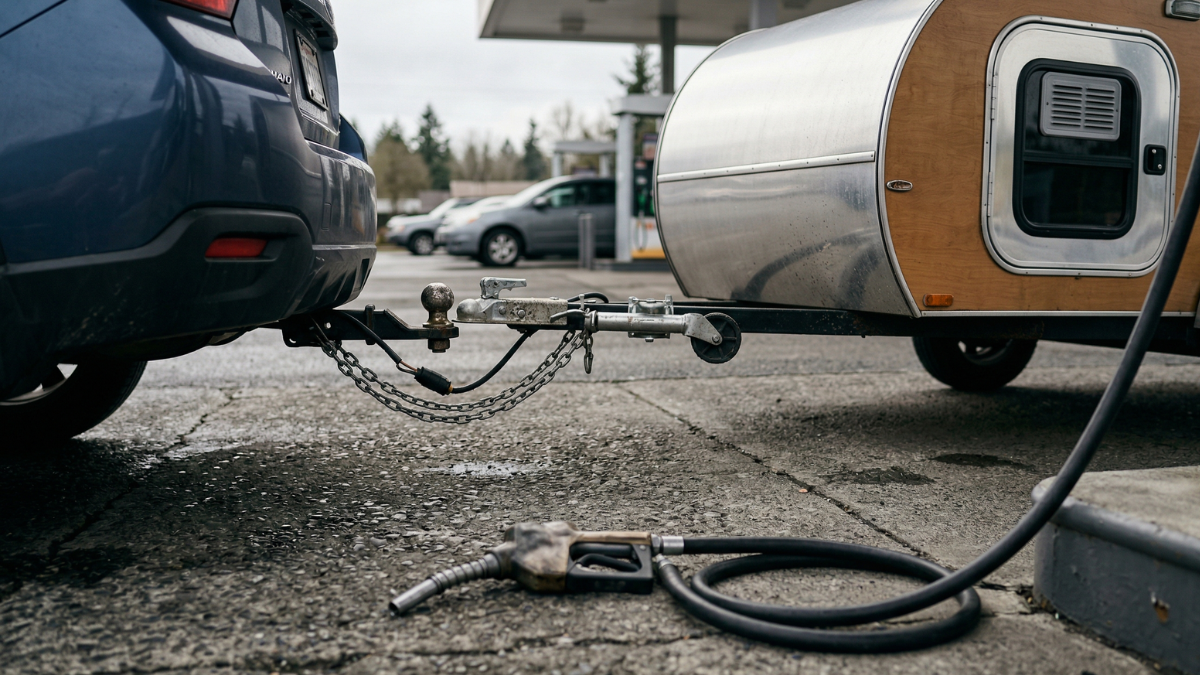
Compact SUVs sell well on the promise of doing everything. Commuting, road trips, light off-road, occasional towing. What the window sticker does not advertise is what happens to fuel economy the moment a trailer clips onto the hitch. Real-world data from vehicles like the Toyota RAV4 and Honda CR-V show highway mpg dropping 30 to 50 percent under even a modest camper load. For a lot of drivers, that number shows up for the first time at the gas pump on a Friday evening, 200 miles from home, doing math in their head that does not go the way they planned.
Quick Takeaways
- Towing a small camper (1,500–3,000 lbs) typically cuts highway mpg by 30 to 50 percent
- A RAV4 or CR-V rated around 30 mpg combined can drop to 17–22 mpg under a trailer at highway speed
- A 500-mile round trip costs $30 to $50 more in fuel when towing versus running unloaded at $3.50/gal
- Speed, grades, and headwinds push the penalty higher — 65 mph versus 75 mph makes a real difference
- Most buyers never run this calculation before they buy the camper
What the Sticker Does Not Show
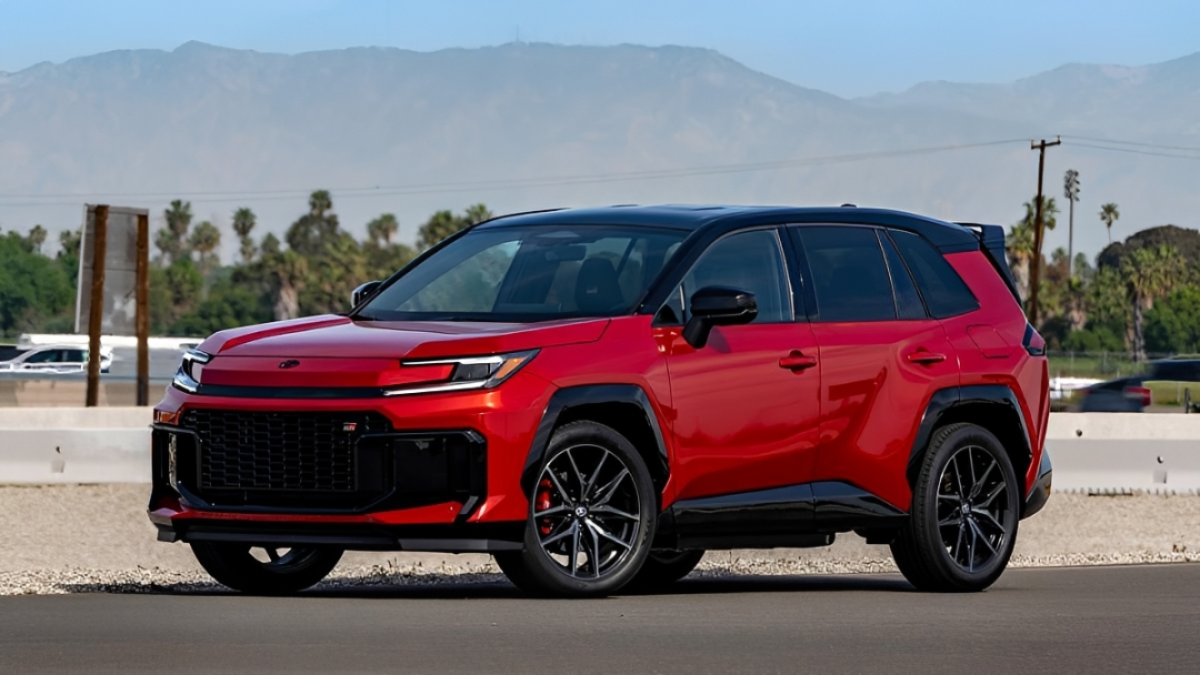
The EPA label on a 2024 Toyota RAV4 or Honda CR-V shows a combined fuel economy estimate in the neighborhood of 28 to 30 mpg. That number comes from controlled tests: no trailer, no roof load, standardized speed cycles, flat surface.
Attach a teardrop camper and the conditions change immediately. The engine works against two new forces it never faced during testing: rolling resistance from the added weight and aerodynamic drag from the trailer’s blunt face pushing through moving air at 60-plus mph. Fuel consumption rises. Miles per gallon fall.
Real-world towing reports from automotive publications and owner communities consistently place compact SUV fuel economy in the 17 to 22 mpg range when pulling a camper in the 1,500 to 3,000-pound class at highway speeds. That is a 25 to 45 percent reduction from the rated figure. On hilly routes or into sustained headwinds, the drop can push past 50 percent.
No label warns you. The fuel cost does not announce itself until the pump does.
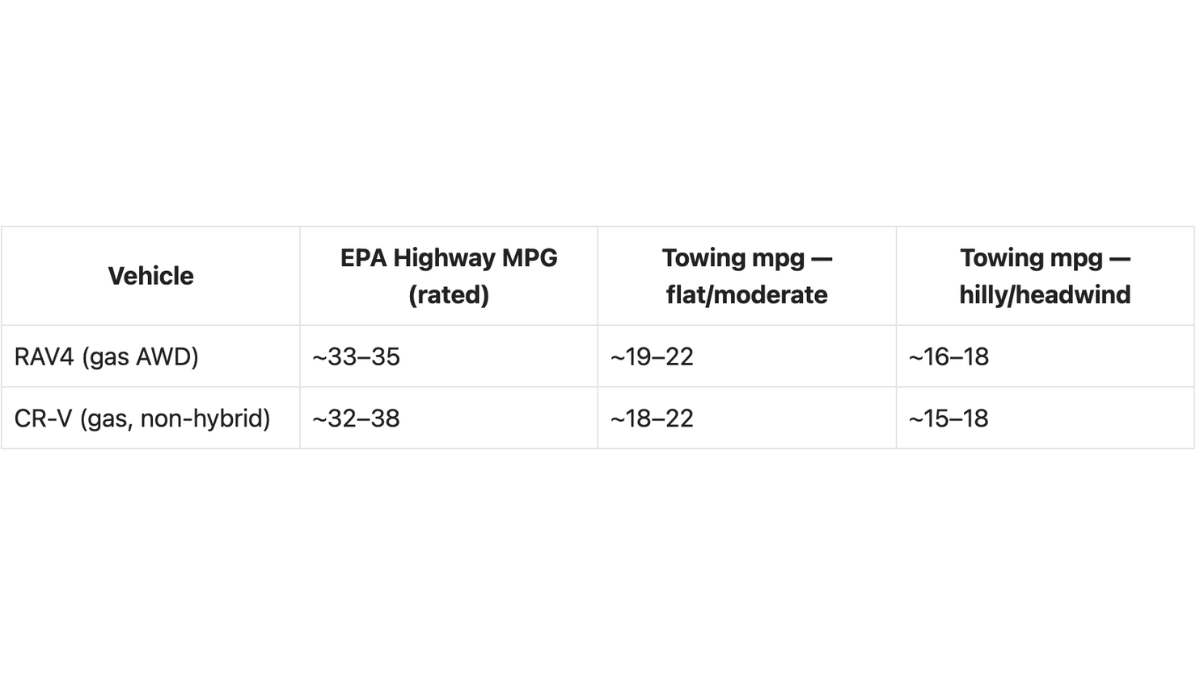
Towing ranges reflect compact SUVs pulling 1,500–2,000 lb trailers at highway speeds, based on owner-reported data and published automotive testing. Individual results vary by trailer shape, speed, route, and load.
Why a Teardrop Is Not as Light as It Sounds
The teardrop’s reputation as the easy, lightweight option is mostly deserved. But lightweight is relative when the baseline is a vehicle rated for 1,500 pounds.
A finished, road-ready teardrop — options like the nuCamp TAB 320, Scamp 13, or Bean Trailer — typically starts between 1,200 and 1,700 pounds dry. Add water, food, gear, and a battery system and the loaded weight climbs. Manufacturer dry weights are the minimum. Loaded weights are higher, and some buyers don’t learn the difference until the first weigh station.
The shape is the bigger fuel story. Even a rounded, streamlined trailer presents a flat or near-flat face to oncoming air at highway speed. Unlike a teardrop’s gentle roof slope, the trailer’s front profile creates a pressure zone the tow vehicle has to push through continuously. This is not a design flaw specific to any brand. It is physics, and it affects every trailer in this class at highway speeds.
The conclusion: even the most “tow-friendly” small campers impose a real fuel penalty, regardless of what the marketing materials suggest.
The Real Math on a Weekend Trip

Here is a straightforward fuel budget for a 500-mile round trip — a realistic distance for most cabin weekends, state park loops, or campground runs in the continental U.S.
Unloaded (EPA combined estimate): 500 miles ÷ 30 mpg = 16.7 gallons At $3.50/gal: ~$58
Towing a small camper — moderate conditions (est. 20 mpg): 500 miles ÷ 20 mpg = 25 gallons At $3.50/gal: ~$88
Towing on a hilly route or into headwinds (est. 17 mpg): 500 miles ÷ 17 mpg = 29.4 gallons At $3.50/gal: ~$103
Same vehicle. Same destination. Same driver. The fuel cost swings between $58 and $103 depending on load and conditions — a $45 spread that most buyers don’t model before the trip.
Across a six-weekend camping season, that unplanned gap compounds fast. Running unloaded at 30 mpg, a 500-mile trip costs around $58 in fuel and the season runs roughly $350 total. Hook up a trailer on flat, calm roads at around 22 mpg and the per-trip cost rises to about $80, putting the season closer to $480. Moderate towing at 20 mpg pushes a single trip to $88 and the season past $530. A hilly or headwind route at 17 mpg hits $103 per trip and roughly $620 for the summer.
The seasonal difference between the unloaded estimate and the real towing number: $170 to $270. Not catastrophic, but real enough to matter if it was not budgeted.
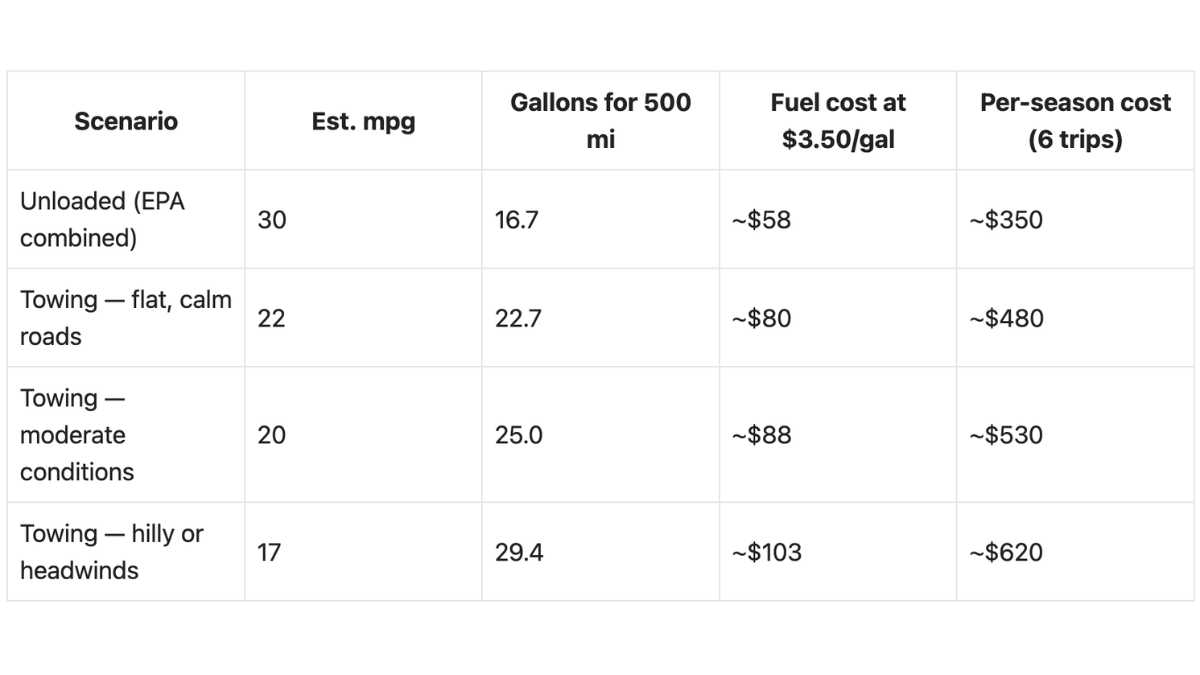
All costs at $3.50/gal. The seasonal fuel gap between unloaded and real towing conditions: $170–$270.
RAV4 and CR-V Under a Load
The Toyota RAV4 and Honda CR-V are two of the most common compact SUVs paired with small trailers in North America. Their EPA numbers sit close together. Their towing behavior is also similar in this weight class — and the gaps between them matter less than buyers often think.
The 2024 RAV4 (non-hybrid, all-wheel drive) carries an EPA estimate of approximately 27 to 29 mpg combined depending on trim. Its maximum tow rating reaches 3,500 pounds on properly equipped configurations, though base trims are rated lower. Under a 2,000-pound camper at highway speeds, owner-reported fuel economy for compact SUVs in this weight class typically ranges 17–22 mpg — consistent with reports from RAV4 owners on community forums who describe pulling lightweight trailers in the 1,500–2,000 lb range.
The 2024 CR-V (non-hybrid) carries a similar EPA range. On gas-powered trims — LX, EX, and EX-L — it is rated at 1,500 pounds towing capacity when properly equipped. Hybrid trims drop to 1,000 pounds. Either way, towing near that ceiling at highway speed produces fuel economy in comparable territory to the RAV4.
Neither vehicle is inefficient for what it was designed to do. They are commuter-first crossovers that can handle light trailer duty. What they are not is an efficient towing platform in any meaningful sense. There is no compact SUV that is — this is a physics problem, not a brand problem.
Before any towing trip, verify:
- Your specific trim’s actual rated tow capacity (not the class maximum)
- Whether your hitch and wiring are factory or aftermarket, and rated for the load
- Tongue weight — separate from total trailer weight, and often underestimated
What Makes the Drop Worse
Several factors push towing mpg below even the conservative estimates above.
Speed. Aerodynamic drag scales with the square of velocity. Moving from 60 mph to 75 mph while towing is not a proportional fuel increase — it is a substantial one. Dropping to 60 or 62 mph on flat highway stretches can recover 2 to 4 mpg compared to 70-plus, which matters on a long haul.
Elevation. Grade climbing burns fuel in proportion to load. A route through the Appalachians, Rockies, or any significant hill country will push consumption well past the flat-highway baseline. Plan for it rather than absorbing the surprise at the pump.
Headwinds. Wind is invisible fuel cost. A consistent 20 mph headwind while towing can reduce effective mpg by another 10 to 15 percent on top of the trailer penalty. Checking weather and wind direction before departure is not overthinking it.
Tire pressure. Underinflated tires increase rolling resistance on both the tow vehicle and the trailer. Both sets are worth checking before leaving.
Hitch height and trailer angle. A trailer running nose-high increases frontal drag. Proper setup — level or very slightly nose-down — keeps aerodynamic resistance where it belongs.
What to Do Before the Trip
A few steps that change the fuel math before departure rather than after arrival:
- Weigh the trailer loaded, not empty. Gear, water, food, and tools add several hundred pounds to manufacturer dry weights.
- Set a speed ceiling. Running 60 to 62 mph instead of 70 to 75 mph saves real money on a 400-plus-mile haul. It also reduces stress on the vehicle and improves trailer stability.
- Build the fuel budget on 18 to 21 mpg, not the window sticker. For hilly routes, use 16 to 18 mpg.
- Track your first towing trip. The real number for your specific combination of vehicle, trailer, load, and route is worth knowing. It will be more accurate than any estimate for all future planning.
- Check gas station spacing on the route. Towing reduces range significantly. A tank that normally covers 400 miles may cover 270 to 300 when loaded. Long gaps between stations matter more than they used to.
A Note for Canadian Drivers
The fuel cost math works the same way, with different units. A compact SUV rated at roughly 9.0 L/100 km on the highway will typically consume 12 to 15 L/100 km while towing a camper in the 1,500 to 3,000-pound range. At Canadian pump prices — which have varied broadly by province but have generally run between $1.50 and $1.80 per litre in many regions — the per-kilometre fuel cost climbs noticeably compared to unloaded driving.
For an 800-kilometre round trip, the fuel gap between running clean and towing a small camper can reach $45 to $75 CAD depending on province, current prices, and route terrain.
Provincial fuel prices vary enough that it is worth checking local averages rather than using a national number. GasBuddy and Natural Resources Canada both publish current regional data.
SOURCES
- 2024 Toyota RAV4 EPA fuel economy data — rated combined, city, and highway by trim)
- 2024 Honda CR-V EPA fuel economy data — rated combined, city, and highway by trim
- RAV4 World owner forum: owner-reported fuel economy towing small campers; 18.6 MPG referenced for RAV4 Hybrid towing small trailer; community discussion of 14–21 MPG range across trailer types and speeds; basis for compact SUV towing mpg range used in this article
- nuCamp TAB 320 teardrop specifications and dry weight
- Bean Trailer Stock specifications and dry weight
- Scamp 13 teardrop specifications and dry weight
- AAA: towing reduces fuel efficiency; wind resistance increases with speed — confirmed working URL for AAA towing and fuel economy guidance
- Natural Resources Canada fuel price tracker
- GasBuddy U.S. and Canada regional fuel prices