
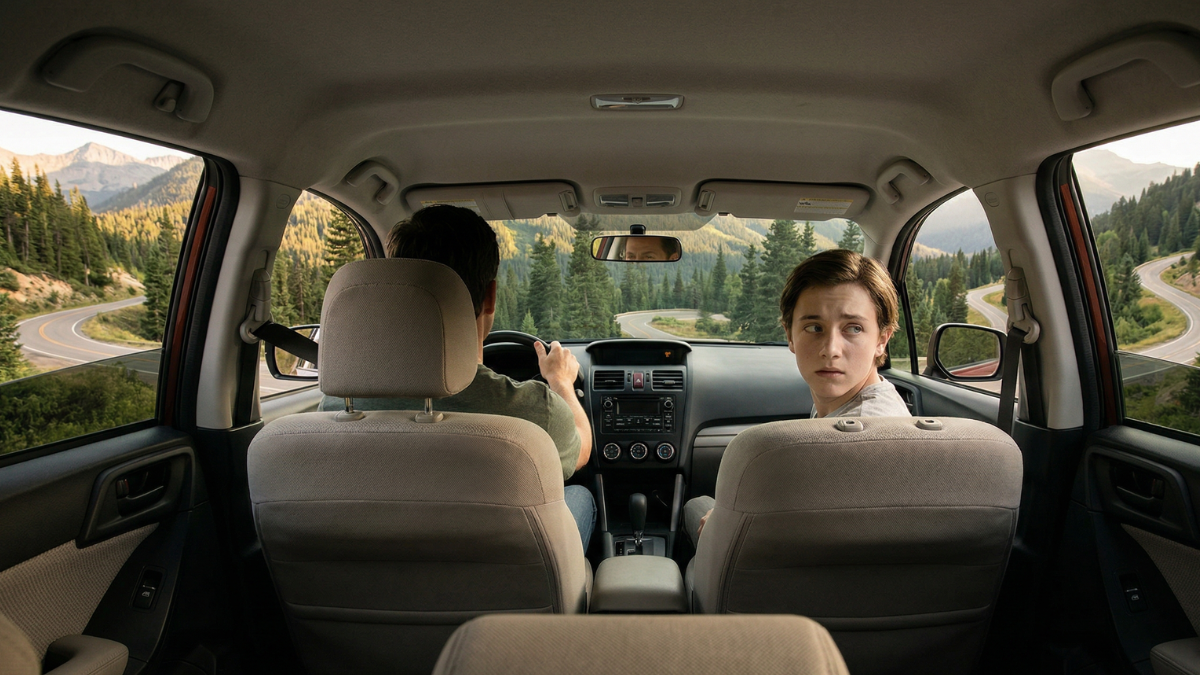
Mountain roads are a specific kind of problem for motion-sensitive passengers. Not the kind of problem that a better driver fixes, or that stopping for air resolves quickly, or that a reassuring window-down break fully resets. The lateral acceleration from a switchback at 30 mph sits almost precisely in the frequency range that the human vestibular system is most susceptible to — between 0.1 and 0.5 Hz — and it stays there for the entire route. The passenger cannot anticipate the next curve. The rear seat amplifies every input. The scenery moving through the side window rather than ahead is exactly the wrong visual cue for a brain trying to reconcile what it feels with what it sees.
None of this is solvable by vehicle choice alone. But a vehicle with the right rear suspension geometry, adequate seat visibility, and a soft-enough ride tune meaningfully reduces the severity of the experience. The wrong vehicle makes a manageable two-hour mountain route a miserable one. Most buyers never know which side of that line their car is on until they are already on the road.
Quick Takeaways
- Lateral acceleration between 0.1 and 0.5 Hz is the primary carsickness trigger on winding roads — the frequency range of a typical mountain curve taken at 25–40 mph, per published transportation research
- Rear passengers are consistently more susceptible than front passengers: published research in the British Journal of Psychology found motion sickness increases from front to rear within the vehicle regardless of vehicle type
- Rear suspension type is the most vehicle-specific variable that affects rear-seat oscillation: multilink independent suspension allows each rear wheel to absorb bumps separately; torsion beam ties both wheels together, transmitting more coupled side-to-side motion to rear occupants (→ see “Why Your Backseat Passengers Keep Getting Carsick” in this series)
- Visibility matters as much as suspension: passengers who can see the road ahead and anticipate upcoming curves have lower carsickness rates than those looking at side windows or down at devices
- Driving style is the single largest variable — smooth, predictable cornering reduces lateral jerk regardless of vehicle; abrupt inputs amplify it; the vehicle’s suspension is the second variable, not the first
- Two vehicle types specifically suited to mountain road motion sensitivity: those with independent rear suspension tuned for ride compliance (not sportiness), and those with tall glass and upright seating that give rear passengers a clear forward view
Why Mountain Roads Are Different
A straight highway at speed produces minimal lateral acceleration. The vestibular system registers forward motion, which is well-tolerated at virtually any frequency. Wind and tire noise may be annoying. Fatigue accumulates. But nausea is not the dominant complaint.
A mountain road at even moderate speed is a continuous source of lateral and longitudinal acceleration inputs. Each curve is a lateral acceleration event. The grade changes produce pitch inputs — the sensation of the nose rising or dropping. The combination, delivered at irregular intervals for two hours, accumulates in the vestibular system in a way that a single large curve does not.
The 0.1–0.5 Hz frequency range is specifically identified in transport research as the most nauseogenic for vehicle passengers — a finding consistent across ship, bus, and road vehicle studies. A switchback taken at 25–35 mph with a typical turning radius produces lateral acceleration cycles that fall directly in this range. Research published in transportation and occupational medicine journals confirms that fore-and-aft and lateral motions in this frequency range are the primary drivers of carsickness in road vehicles, while higher-frequency vibrations above 2 Hz cause discomfort or pain but not nausea specifically.
Published research in the British Journal of Psychology (Turner and Griffin, 1999) found that motion sickness and lateral motion both increase systematically from front to rear seats in buses and coaches on cross-country routes. The vehicle type showed no significant independent effect — the seating position within the vehicle mattered more. The implication for SUV passengers: third-row passengers in a three-row SUV on a switchback route face a more severe experience than the driver regardless of which vehicle is used.
This does not mean vehicle choice is irrelevant. It means the goal is to reduce the magnitude of lateral acceleration transmitted to rear seats — through suspension design that absorbs asymmetric inputs rather than coupling them — and to give rear passengers the visual access that allows anticipation of upcoming motion.
The Suspension Variable: What Actually Reaches the Rear Seat
The distinction between rear suspension architectures matters specifically for this use case, and it matters differently from how it is usually described.
In mainstream automotive coverage, multilink versus torsion beam suspension is typically discussed in terms of handling — how the vehicle corners, how stable it is under load. For motion-sensitive rear passengers on mountain roads, the relevant question is different: when the road surface is uneven and the vehicle is in a curve simultaneously, how much coupled oscillation reaches the rear seats?
A torsion beam rear suspension physically connects both rear wheels through a single beam. When one rear wheel encounters a bump in a curve — the road edge of a mountain switchback, a patch repair, a crowned road section — the beam transfers that input to the other wheel as well. The result is a lateral rocking motion superimposed on the cornering load. It is this coupled oscillation — vertical plus lateral, irregular and unpredictable — that sits in the nauseogenic frequency range and accumulates into carsickness on a two-hour mountain drive.
A multilink independent rear suspension allows each rear wheel to move through its travel independently. A bump on the right rear wheel is absorbed by that wheel’s links and springs without being transmitted through a connecting beam to the left rear wheel. The rear seat still receives the cornering load — the vehicle is still turning — but the superimposed rocking from road surface irregularities is substantially reduced.
Autoevolution’s analysis of suspension architecture confirms the mechanism: “Most cars today use MacPherson front struts and multi-link rear ends” for comfort-biased platforms. The outlet specifically notes that Toyota’s RAV4 — the best-selling SUV in the U.S. — uses a multi-link rear suspension as a key platform characteristic, and the 2026 RAV4 Wikipedia specifications confirm this: MacPherson-strut front and multi-link rear across all powertrain configurations.
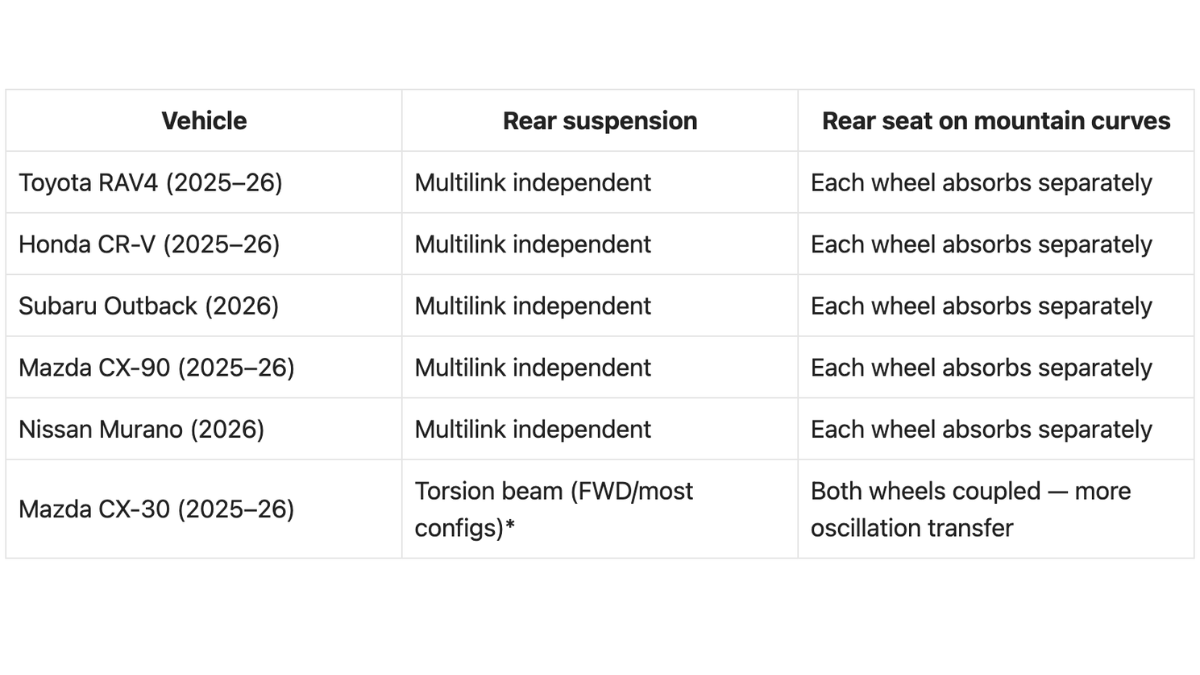
*Torsion beam is more common in smaller/lower-cost crossovers and does not disqualify a vehicle for mountain travel — but rear oscillation characteristics differ from multilink designs. CX-30 rear suspension may vary by market and AWD configuration — verify trim specification before purchase at mazda.com.
Four Vehicles That Address the Problem Well
Subaru Outback (2026) — Best Visibility for Rear Passengers
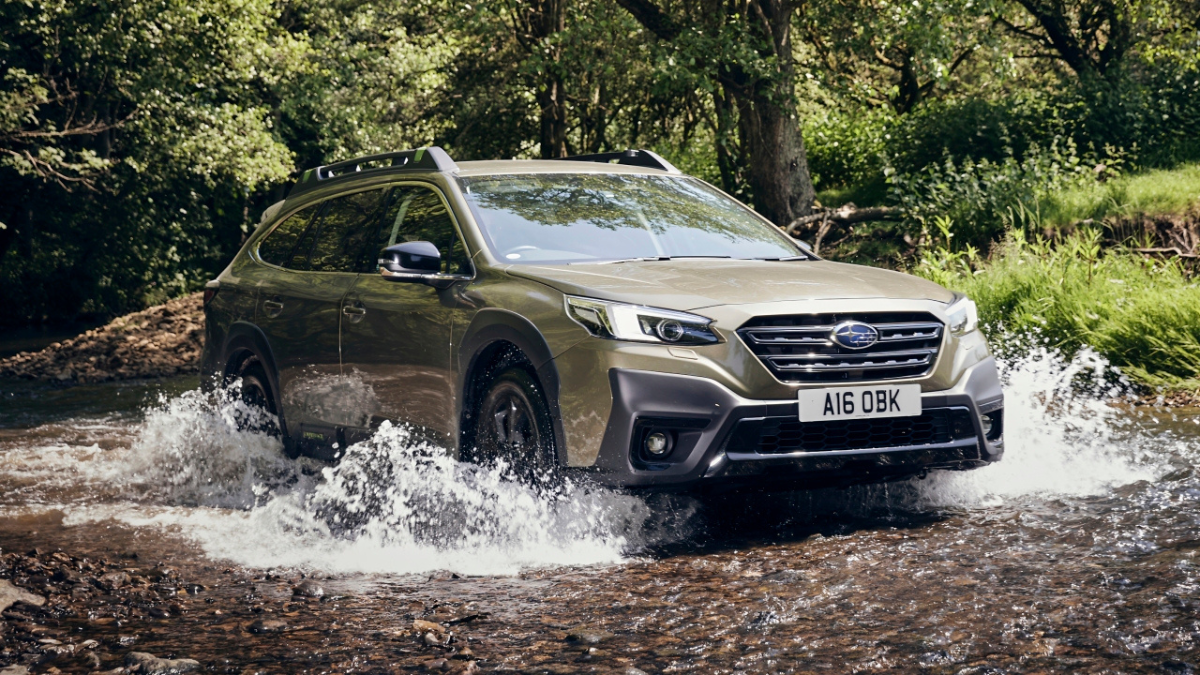
The Outback’s relevance to motion-sensitive passengers on mountain roads is not primarily its suspension — though that is sound — but its glass. The 2026 Outback was specifically cited by Edmunds as having “great visibility out of the cabin, which is no longer something you can take for granted in the world of stringent rollover safety standards.”
For rear passengers on a mountain road, upright glass and thin pillars mean a clear sightline forward and to both sides. The mechanism here is not comfort-in-general; it is carsickness-specific. Published research from the Royal College of Art’s transportation design group confirms that sickness is “further exacerbated by the inability to see out of the vehicle and the road ahead,” and that forward visual access is the primary means by which passengers can anticipate upcoming motion rather than react to it.
A rear passenger who can see the road bending left 200 meters ahead can prepare — shift weight slightly, brace, adjust visual focus. A passenger facing thick C-pillars and a small rear window cannot. The Outback’s architectural glass is a direct, carsickness-relevant advantage.
Standard AWD on all Outback trims eliminates the hesitation that can accompany a front-wheel-drive vehicle on a loose-surface mountain switchback — the slight tire slip before torque redistributes — which itself is an abrupt lateral input.
Suspension tune: The Outback’s ride calibration is comfort-first. Edmunds describes the chassis as one “that takes the edge off broken pavement.” On mountain roads, this translates to absorbed surface irregularities rather than transmitted ones.
Recommended trim for motion-sensitive passengers: Limited (~$42,000). Avoids the stiffer 19-inch wheels of the Touring XT while retaining the full glass and suspension compliance.
Nissan Murano (2026) — Softest Ride Tune in the Segment
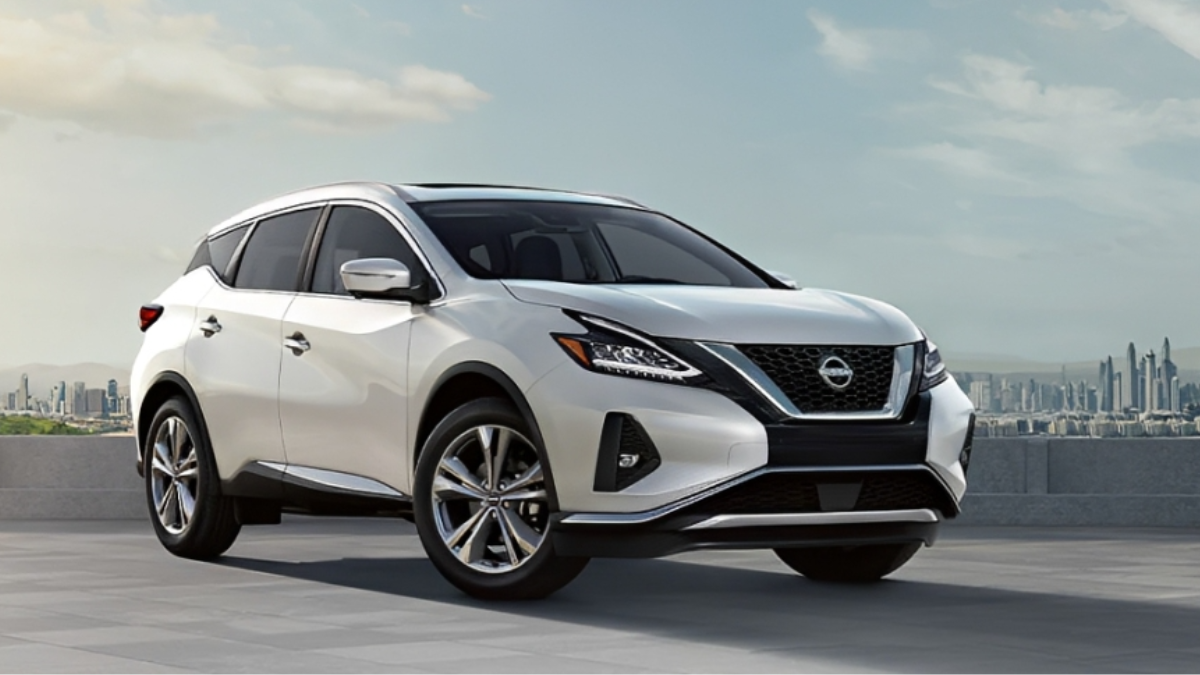
The Murano earns its place here on one specific criterion: its suspension is explicitly calibrated for occupant comfort over road engagement, in a way that most SUVs in this class are not.
Drive Chicago’s review of the 2026 Murano describes the suspension as “tuned on the softer side, absorbing bumps and road imperfections with a plushness that stands out in the segment.” Edmunds writes that “the suspension soaks up bumps and ruts in the road with ease.” This is not incidental — it is the design intent. The Murano is built for a driver who wants a serene, isolated ride rather than an engaged, sporty one.
For a motion-sensitive rear passenger, “serene and isolated” is the specification that matters. The Murano’s soft damper tune and generous suspension travel mean that surface inputs on a mountain road are absorbed rather than transmitted. Combined with multilink independent rear suspension, the Murano reduces the coupling effect of road irregularities on rear-seat lateral motion more effectively than a firmer-tuned vehicle with the same architecture.
A caveat about visibility: Edmunds specifically flags the Murano’s angled windshield as making it “harder to see out of the front of the Murano than some boxier and upright rivals.” For a motion-sensitive rear passenger without clear forward sightlines, this partial disadvantage is worth noting. However, the Murano Platinum includes a surround-view camera system and large side windows, which partially compensate.
Recommended trim for motion-sensitive passengers: SL (~$48,000). Full suspension compliance without the Platinum’s larger wheels, which may add some firmness.
Toyota RAV4 Hybrid (2026) — Smoothest Power Delivery on Grades
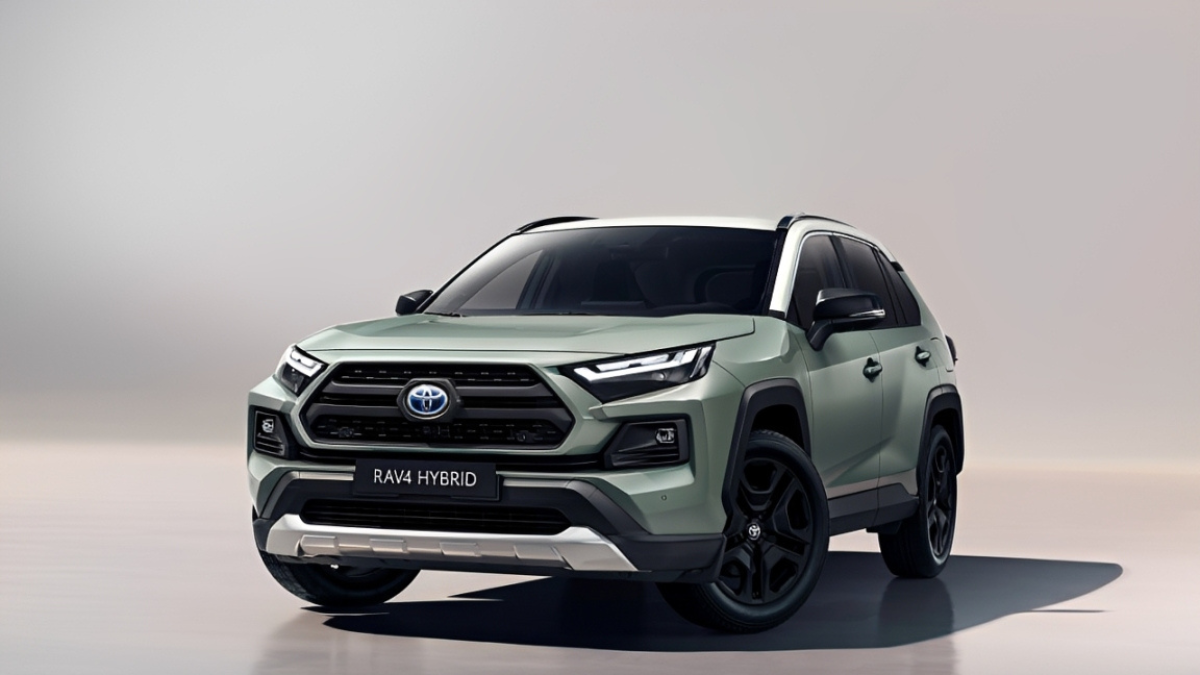
The 2026 RAV4 is now hybrid-only across its entire lineup, which turns out to be directly relevant to motion-sensitive passengers on mountain roads.
The hybrid powertrain’s electric motor delivers torque instantly and without the torque pulses of a gasoline engine on a grade. On a long climb or a descent with engine braking, the transition between motor modes is near-seamless. This matters because longitudinal jerk — the lurching sensation from an engine working hard on a grade, or from a transmission hunting for gears on a downhill — is an additional motion input that compounds lateral inputs from corners.
Wikipedia confirms the 2026 RAV4 retains the MacPherson strut front / multilink rear suspension architecture across all powertrains. The hybrid’s smooth power delivery — electric-priority at low speeds and in tight turns, combined gas/electric on grades — reduces the abruptness of propulsion inputs on exactly the kind of terrain that strains motion-sensitive passengers.
EPA estimates for the 2026 RAV4 Hybrid: up to 43 mpg combined. On a mountain road where fuel consumption rises with grade and speed variation, this range advantage translates into fewer stops — which themselves are abrupt deceleration events that trigger vestibular inputs.
Recommended trim: XLE Premium (~$38,000 estimated). Full multilink rear, hybrid powertrain standard, adequate visibility without optional larger wheels.
Mazda CX-90 — Most Sophisticated Suspension Architecture in the Class
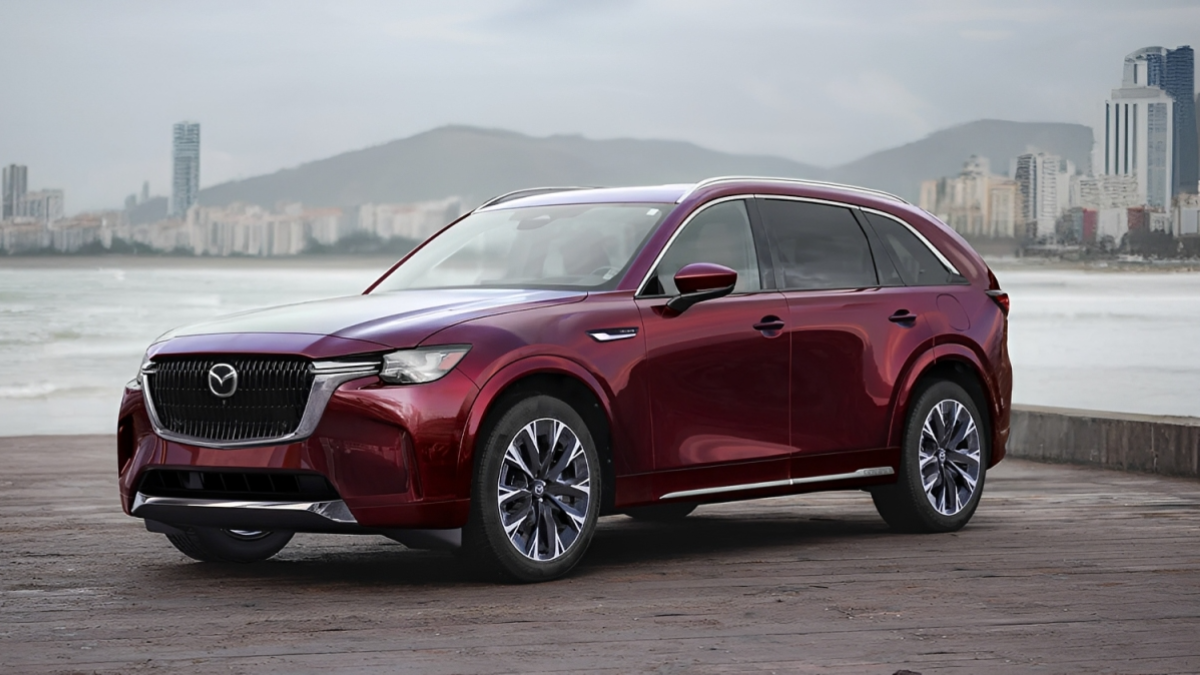
The CX-90 is the only mainstream midsize SUV in North America that pairs a double-wishbone front suspension with a multilink rear suspension — an architecture Autoevolution describes as “the holy grail of suspension design” for combining ride quality with wheel control.
Where the RAV4 and Outback use MacPherson struts at the front — a sound but simpler design — the CX-90 uses double wishbones, which allow more precise camber control through cornering. In a mountain road context, this means the front wheels maintain better contact and control through each curve, which in turn produces smoother, more consistent cornering loads rather than abrupt mid-curve adjustments.
For rear passengers, the downstream benefit is reduced cornering jerk. A vehicle that corners more smoothly at the front produces fewer correction inputs — which means fewer irregular lateral acceleration events in the rear seat.
Edmunds’ comfort review notes the CX-90 offers “impeccable cabin details” and a premium feel. Its ride calibration is on the firmer side of the class — sportier than the Murano — which means it transmits more road texture feedback. On a smooth mountain road this is largely irrelevant; on a chip-seal or potholed mountain surface it matters more.
Caveat: The CX-90 starts at around $47,000 and runs to $57,000 for upper trims. Its sport-tuned dampers at higher trim levels are measurably firmer than the Murano or Outback. For motion-sensitive passengers, the base-trim PHEV or standard gas engine provides better ride compliance than the 3.3T Turbo at Signature trim.
Recommended trim for motion-sensitive passengers: Premium Plus 3.3T AWD (~$49,000). Double wishbone + multilink architecture; standard ride calibration before sport-tuned upgrades appear.
The Driving Style Variable That Matters More Than the Vehicle
Published motion sickness research in automated vehicle systems confirms that a “road with flexible lateral manoeuvrability” — one that allows the driver to vary the line through corners — produces lower motion sickness severity than a fixed-path route, per a systematic review published in the ACM International Conference on Automotive User Interfaces proceedings. The practical translation: a driver who can take a wider line through a switchback, smoothing the arc rather than following the road’s edge precisely, reduces lateral acceleration magnitude for rear passengers regardless of the vehicle.
On mountain roads specifically, several technique changes reduce rear-seat carsickness without any change of vehicle:
Reduce speed through curves rather than at them. Braking into a switchback produces a longitudinal deceleration event followed immediately by lateral acceleration. Arriving at the curve already slowed eliminates the braking input and its vestibular sequencing with the cornering load.
Avoid the sport steering mode. Heavy steering in Sport mode requires more physical input and produces larger correction micro-inputs through the wheel. As the Sport Mode article in this series documents, steering weight in Sport mode increases sustained upper-body tension over time — the opposite of what reduces passenger oscillation (→ see “The Sport Mode Highway Trap” in this series).
Warn before initiating the curve. Research on automated vehicles confirms that anticipation of upcoming motion significantly reduces carsickness severity. A driver who says “big left turn coming” gives the rear passenger’s vestibular system 1–2 seconds to prepare rather than react. The intervention is free and requires no technology.
Keep the rear windows cracked rather than the front. Fresh air without strong airflow from the front reduces the risk that wind noise and pressure changes add to the sensory load.
What Rear Passengers Can Do That Helps
These are interventions passengers control regardless of which vehicle is used:
Front seat, not rear. The PubMed study is explicit: motion sickness severity increases from front to rear within the vehicle. When passenger allocation allows it, a motion-sensitive adult should be in a front seat, even if the rear seat is more spacious.
Look at the horizon, not the side windows. The Royal College of Art research identifies forward visual access as a primary mitigating factor. Looking at the road ahead rather than the scenery passing through the side window gives the brain the predictive motion information it needs.
No screens. A ScienceDirect systematic review confirms that in-vehicle activities — reading, watching video — rapidly accelerate carsickness onset on winding roads. The phone goes away for the mountain segment.
Eat lightly before, not heavily. This is outside vehicle scope, but the physiological reality is that full gastric content on a winding road compounds nausea severity.
U.S. and Canada Note
For Canadian drivers on mountain routes — Highway 99 through the Sea-to-Sky corridor, the Trans-Canada through the Rogers Pass, the Icefields Parkway, the Crowsnest Highway — the AWD question is less optional than in mild-climate U.S. use. Mountain roads in British Columbia, Alberta, and northern Quebec are subject to weather-related surface variation — frost heaves, wet chip-seal, late-season snow patches — that amplifies the suspension’s task on a motion-sensitive passenger drive.
The Subaru Outback’s standard symmetrical AWD and its compliance-tuned suspension are specifically well-matched to Canadian mountain conditions. The Toyota RAV4 Hybrid’s AWD and electric torque delivery are equally appropriate. For mountain drives specifically — particularly on wet or frost-affected switchbacks — the combination of AWD confidence, multilink rear suspension, and a comfort-focused ride tune is the specification worth prioritizing.
SOURCES
- ACM International Conference on Automotive User Interfaces: systematic review of motion sickness in automated vehicles; “road with flexible lateral manoeuvrability” produces lower sickness severity; fore-and-aft and lateral motions below 0.5 Hz highly correlated with MS; high-frequency motions above 1 Hz cause discomfort but not nausea
- Defence Research & Development Canada review: fore-and-aft and lateral motion in 0.1–0.5 Hz range is provocative for carsickness; vertical motion does not correlate with carsickness rate; posture and headrest influence susceptibility
- ScienceDirect, Transportation Research: lateral acceleration at 0.2 Hz in real driving conditions — greater lateral acceleration and less predictable vehicle path produce more severe carsickness; 24 volunteers in slalom session study
- PubMed / Ergonomics, Turner and Griffin: motion sickness increases from front to rear of each vehicle on cross-country routes; nausea greater on winding/cross-country routes with higher lateral motion; vehicle type had no significant independent effect on sickness rates
- Royal College of Art: winding roads and stop-start traffic are particularly provocative; sickness exacerbated by inability to see road ahead; forward visual access primary mitigation; passengers more susceptible than drivers due to inability to anticipate motion
- MotionSickLab: lateral motion 0.1–0.5 Hz is “provocative zone”; drivers less susceptible than passengers due to forward visual focus and motion anticipation; looking sideways amplifies disorientation; symptoms accumulate over time — catching them early matters
- Toyota RAV4: 2026 RAV4 — MacPherson-strut front / multi-link rear suspension confirmed across all powertrain configurations on GA-K platform
- Honda Info Center: CR-V MacPherson strut front and multi-link rear suspension — comfort and handling characteristics
- Autoevolution: multilink suspension described as “holy grail” for combining ride quality with wheel control; Mazda CX-30 and CX-50 use torsion beam; CX-90 uses double-wishbone front with multilink rear on Large Product Group platform; RAV4 multi-link rear confirmed
- Edmunds Murano: “suspension soaks up bumps and ruts with ease”; angled windshield noted as reducing forward visibility vs. boxier rivals
- Drive Chicago: Murano suspension “tuned on the softer side, absorbing bumps and road imperfections with plushness that stands out in the segment”
- Edmunds best midsize 2026: Subaru Outback — “great visibility out of the cabin, which is no longer something you can take for granted”
- Subaru Outback: seventh-generation 2026 Outback; multilink rear suspension confirmed via parts reference; EyeSight with hands-free assist; boxier design for increased height and visibility