
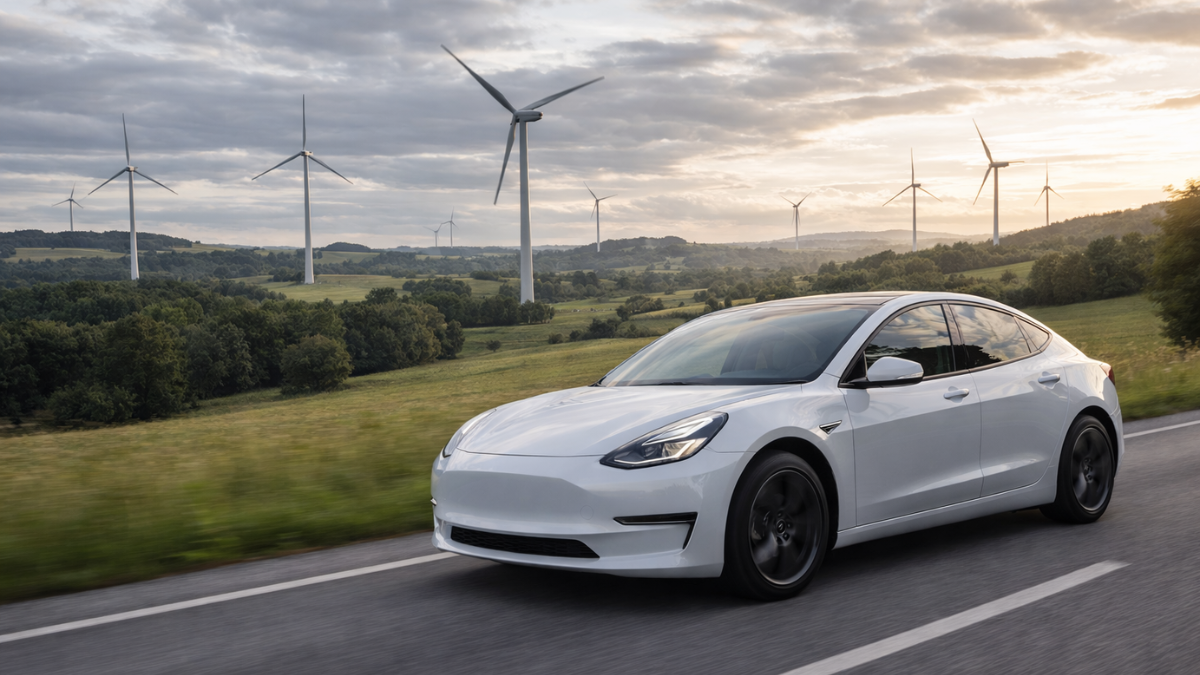
According to the National Park Service, its electric‑vehicle charging map (built with NREL) shows where EV charging exists inside park boundaries and in nearby gateway communities—useful context for trip planning because coverage can vary widely by park. The U.S. Department of Energy’s Alternative Fuels Data Center also maintains a national charging-station locator, which helps turn “I think there are chargers” into a checkable plan. The practical 2026 question is not whether an EV can do a national‑park weekend—it can—but whether it will feel like an easy trip or extra planning, especially in cold weather and in parks with long distances between services.
Quick takeaways
- EV is easiest when charging is “built into the weekend.” Use the NPS EV charging map for park/gateway coverage and DOE’s station locator for your route.
- Hybrid is easiest when the plan is “drive, park, hike.” Fewer variables: no charger dependency and fast refueling almost everywhere.
- Cold weather changes EV planning. DOE says EV range can drop up to 32% in freezing temperatures, and it often requires more frequent charging.
- Cold weather also hits hybrids. DOE says hybrid fuel economy can drop 20%–40% in city driving and 25%–45% on short trips in cold conditions.
- The right choice is mostly about trip shape: park distances, lodging access to outlets, and how much driving happens inside the park.
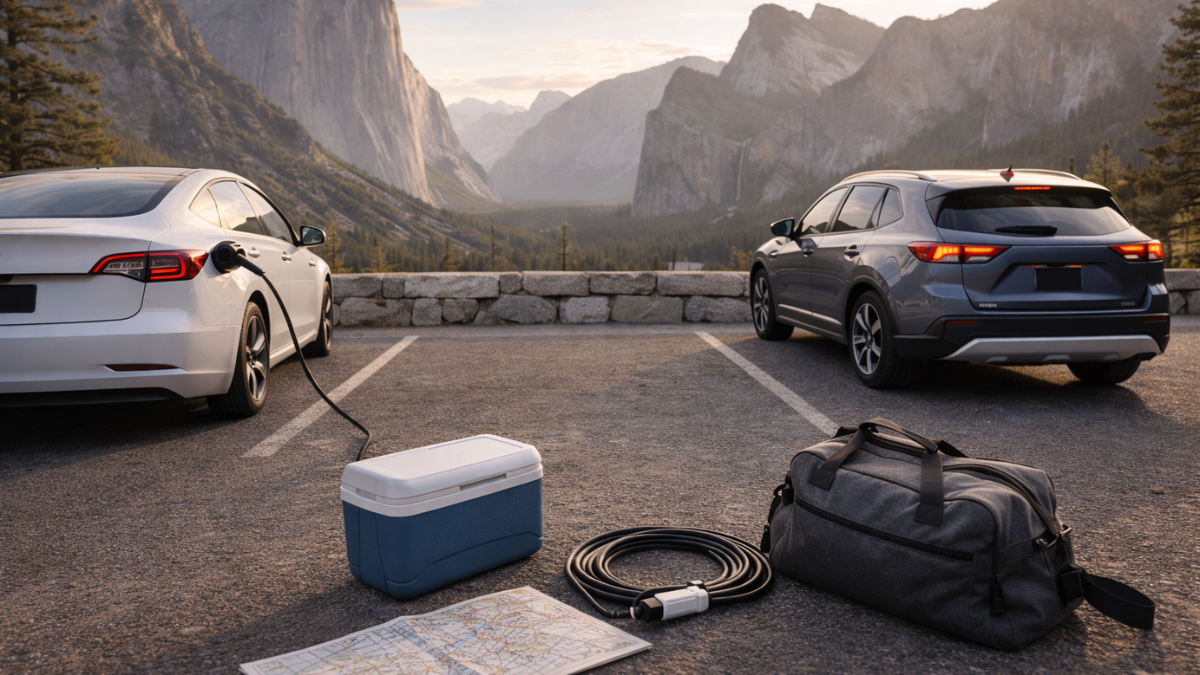
Step 1: What “National Park weekend” actually means for energy planning
A national-park weekend is not one drive. It’s a bundle of patterns:
- Gateway town → park entrance (often one long approach)
- In-park loops (short scenic drives, frequent stops)
- Return day (time pressure, fewer “optional” detours)
This matters because EV comfort depends on whether charging is available at the right points—overnight, at the gateway, or at the park—while hybrids mostly ignore those constraints.
Step 2: The EV planning reality in 2026 (it’s better, but still uneven)
The National Park Service highlights that its EV map shows charging stations within park boundaries and in some nearby gateway communities, and it’s built in collaboration with NREL. That single sentence is the key: some parks have chargers, some rely mostly on gateway towns, and some still have meaningful gaps.
The DOE Alternative Fuels Data Center (AFDC) station locator is the “second check.” It helps confirm what’s on the route, not just what’s in the park.
Practical weekend takeaway:
- EV travel is easy when charging is naturally aligned with where you sleep and where you stop anyway.
- EV travel becomes “extra planning” when you have to add a detour or wait just to make the weekend work.
Step 3: Cold weather is the stress multiplier (EV and hybrid—just differently)
Bad weather weekends are common: shoulder season, winter hikes, early starts.
EV: range and charging speed expectations
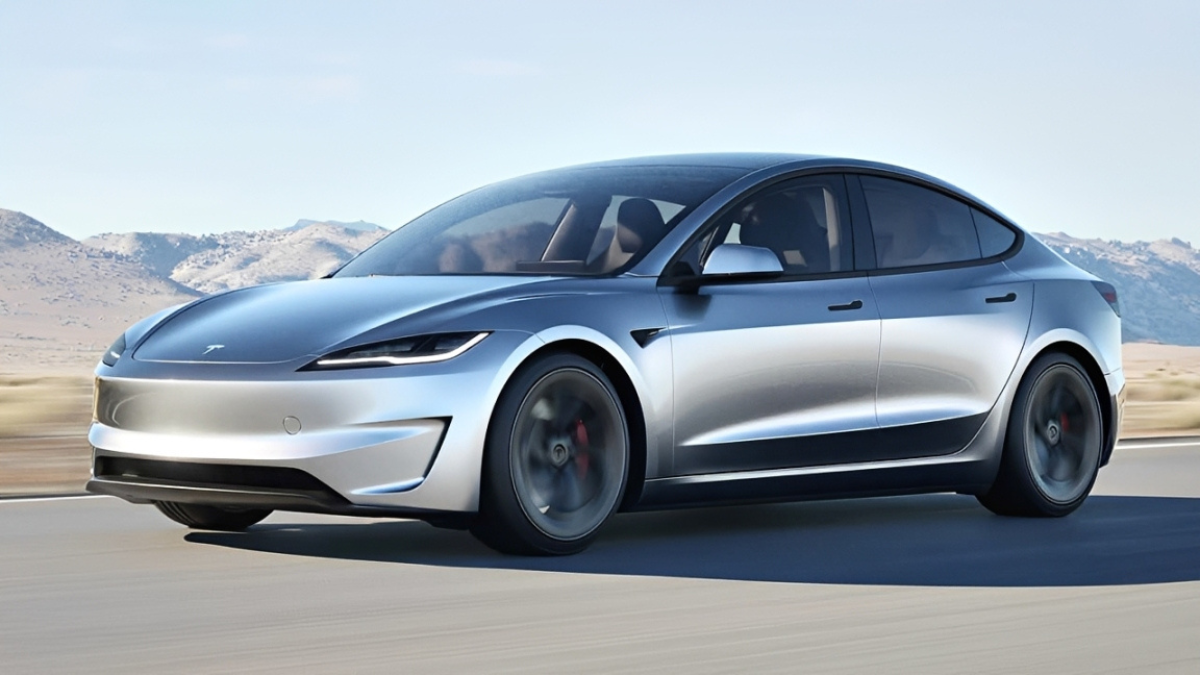
DOE’s Energy Saver guidance says EV range can drop up to 32% in freezing temperatures, which means more frequent charging may be needed. The EPA also notes EV range varies and can be lowered by factors such as cold weather, accessory use and high-speed driving.
This does not mean an EV is “bad for parks.” It means winter planning needs buffer:
- arrive with margin,
- avoid cutting it close at the last charger,
- and treat in-park driving (especially heater use) as a real energy load.
Hybrid: efficiency haircut on short, cold trips
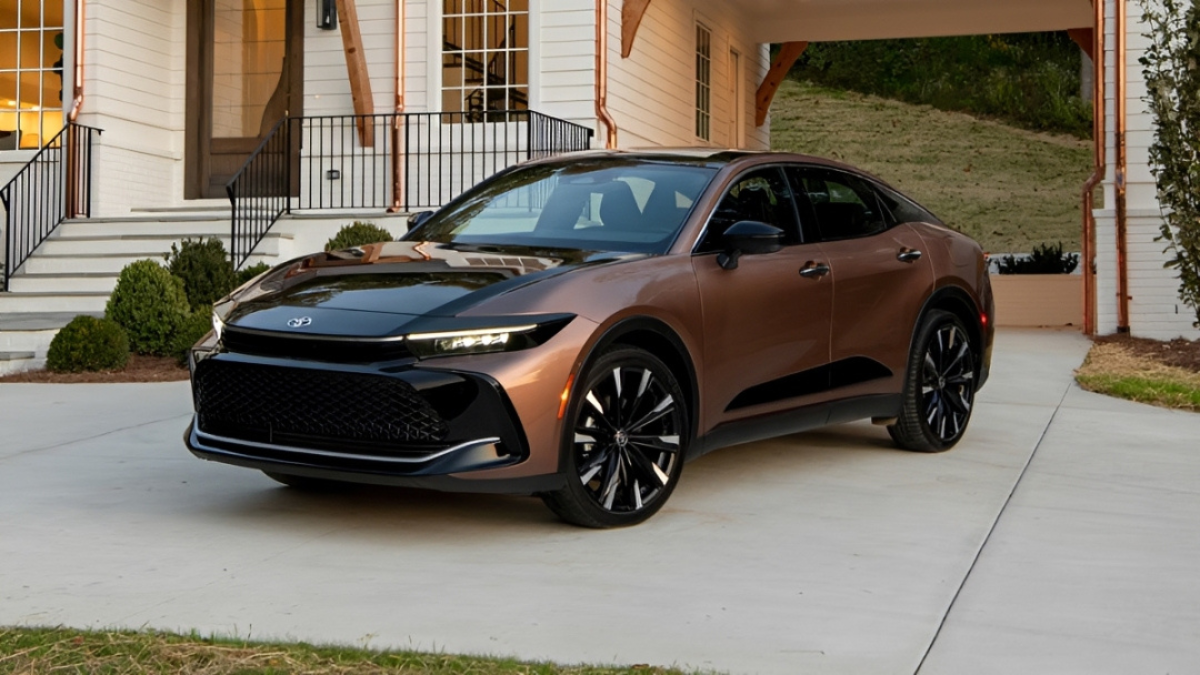
DOE’s cold-weather guidance says hybrid fuel economy can drop notably in cold conditions—20%–40% in city driving and 25%–45% on short trips—because short drives never fully warm up systems. A park weekend often includes lots of short hops: trailhead, overlook, visitor center.
The practical difference:
- EV stress is “Do we need a charge to make the return?”
- Hybrid stress is “Why is MPG worse than expected?” (but the trip still works)
Step 4: When an EV is the easiest national-park weekend choice
An EV is often the easiest choice when most of these are true:
1) Lodging aligns with charging
If your cabin/hotel has reliable charging (or even a simple overnight outlet), the weekend becomes effortless: arrive, plug in, wake up full.
2) The park’s driving is moderate, not massive
Some parks involve long scenic loops and large distances between services. EVs can still do them—but the weekend gets easier when in-park mileage is moderate and stops are predictable.
3) You enjoy “planned stops”
Many EV-friendly weekends naturally include a coffee stop, a grocery stop, and a dinner stop in a gateway town—exactly where charging often exists.
In this scenario, EV can feel like the calmer vehicle: quiet, smooth, and efficient at low speeds.
Step 5: When a hybrid is the easier national-park weekend choice
A hybrid tends to win “least planning” when:
1) Charging access is uncertain
If you cannot confirm overnight access and the park/gateway network is sparse, a hybrid avoids the uncertainty.
2) The itinerary is fluid
If you want the freedom to add an extra loop, chase sunset light, or take a detour to a second viewpoint without thinking about state of charge, hybrid reduces cognitive load.
3) The weather is cold and the schedule is tight
Cold-weather EV buffer is real. If the weekend is a fixed schedule with early starts and late returns, a hybrid can be the lower-drama choice.
What changed and what to watch next
Two 2026 developments matter for this decision:
- Better information tooling: NPS highlights a systemwide charging map that includes park and gateway stations, and AFDC’s locator continues to track public charging locations. That makes planning more transparent than it was a few years ago.
- Cold-weather planning is now mainstream: DOE and EPA both emphasize that cold weather affects EV range and hybrid efficiency. In practice, more drivers now plan with buffer—an improvement in “trip calm,” not just infrastructure.
What this means in the U.S.
U.S. national parks vary dramatically in:
- distances between services,
- gateway-town infrastructure,
- and winter conditions.
That’s why the “best” answer is not a vehicle preference. It’s a planning fit:
- EV is easiest where charging is present in gateways and lodging.
- Hybrid is easiest where charging is sparse or weather makes EV buffer feel costly.
What you can do: the 10-minute decision checklist
1) Check the park/gateway layer: use the NPS EV charging map.
2) Check the corridor layer: use DOE’s AFDC station locator on your route.
3) Decide your buffer: if it’s winter, plan with a meaningful range cushion (DOE notes winter range drops are real).
4) Match the vehicle to your weekend style:
- EV if you like planned stops and predictable loops.
- Hybrid if you want maximum flexibility and minimum dependencies.
5) Pick one “no-drama fallback”: - EV: one reliable backup charging stop in a gateway town.
- Hybrid: one reliable fuel stop before the long in-park loop.
6) Don’t build the weekend around perfect conditions. Assume cold, wind, and a busy charger can happen.
Bottom line
For a national-park weekend in 2026, an EV is an easy trip when charging fits naturally into your lodging and gateway stops—and becomes extra planning when you must hunt for charging in a sparse corridor or in cold weather. A hybrid is the lowest-drama choice when flexibility and uncertainty are the dominant factors, especially in winter and on long in-park loops.
The cleanest rule is simple: if you can confirm one reliable overnight option plus one reliable backup stop, EV weekends feel effortless. If you cannot, hybrid weekends feel simpler.