
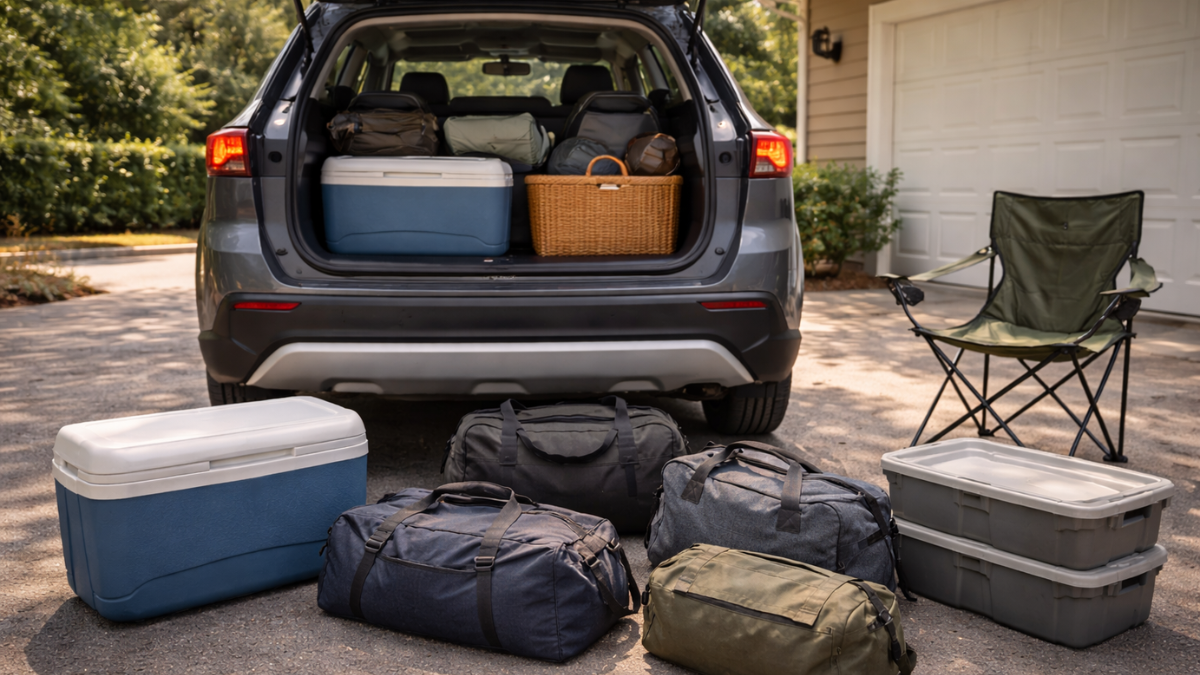
According to NHTSA safety guidance on securing cargo, loose items in a vehicle can become dangerous projectiles in a crash—one reason “just pile it in” packing can be a real risk, not just an inconvenience. In weekend travel, one of the most common self‑inflicted upgrades happens before anyone shops for a new vehicle: a single large, rigid cooler (plus a few awkward items) forces seat-folding, blocks rear visibility, or pushes bags into footwells—making a perfectly usable car feel suddenly “too small.” The fix is often not a bigger vehicle. It’s a different packing shape: modular, stackable, and easy to move at each stop. This guide explains why one oversized cooler can create a “bigger car” illusion—and the 12‑minute packing test that prevents it.
Quick takeaways
- The mistake: one big rigid cooler sets the shape of the whole cargo area and often forces seat folding or “cabin spillover.”
- The rule: if one item dictates where everything else must go, it’s not “you need a bigger car.” It’s a packing geometry problem.
- The fix that works most weekends: replace the single oversized hard cooler with modular pieces (smaller coolers/soft cooler + 3–4 soft bags + 1–2 stackable bins).
- The safety angle: NHTSA warns loose cargo can become dangerous in a crash—so keeping items contained and secured is part of “packing smarter,” not just comfort.
- Best method: run a 12‑minute seats-up packing test that checks rear visibility, footwells, and stop-cycle ease.
Why a “big cooler weekend” makes a car feel smaller than it is
Most weekend vehicles feel “big enough” until a single rigid item arrives. A large hard cooler creates three predictable problems:
1) It won’t compress. Soft bags can shape-shift; hard coolers can’t.
2) It steals the best real estate. The flattest, widest part of the cargo floor becomes “cooler territory.”
3) It triggers the domino effect. Once the cooler is placed, everything else is forced upward (stacking), sideways (door bins), or forward (on seats).
That domino effect is why families often say “we need a bigger car” after one or two trips—when the real issue is one uncooperative object.
The hidden cost: it breaks the “stop cycle”
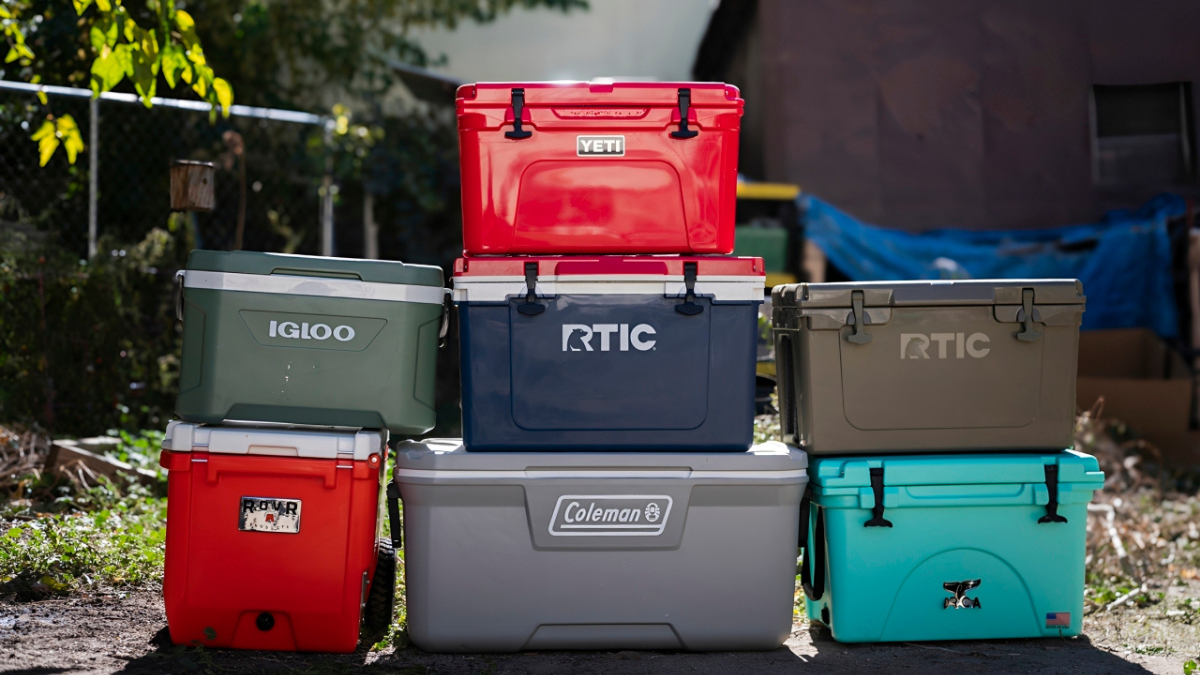
Weekend travel is not one load. It’s repeated stop cycles:
- groceries, coffee, trailhead, hotel check-in,
- and “grab one thing quickly without unloading everything.”
A single giant cooler often blocks access to:
- the spare space where small items should live,
- and the path to reach bags at the back.
So every stop becomes an unpack-repack moment. That is the stress people attribute to “small car,” even when the vehicle isn’t actually the limiting factor.
One big cooler vs four small bags (what changes in the cargo area)
This is about shape and flexibility, not brand or lifestyle.
One big cooler: rigid + awkward
- often forces a diagonal load
- encourages stacking above the window line
- makes it hard to keep a “quiet lane” for soft bags
- increases the chance that items end up in footwells
Four small bags: modular + stackable
- can sit around wheel wells and odd corners
- can be split by weight (easy to lift, easy to find)
- can be moved one at a time without unloading the whole vehicle
- makes it easier to keep rear visibility clear
The weekend result is simple: modular packing keeps the cabin calmer and reduces the sensation that you’ve outgrown your vehicle.
The “bigger car illusion” checklist (how to spot it fast)
If you recognize two or more of these, you’re likely seeing a packing problem—not a vehicle problem:
- The cooler requires folding a seat that you usually need for passengers.
- Bags end up on seats or in footwells.
- Rear visibility is blocked by stacked items.
- You can’t access a jacket/snack without removing the cooler.
- You avoid stops because unloading is annoying.
When those are true, a bigger vehicle will feel like a fix—but it may just be masking the same packing habit.
What changed in 2026: why this mistake is more common now
Two everyday trends make the “cooler mistake” show up more often:
- More families do short, gear-heavy weekends (food is part of the plan).
- More people pack “comfort extras” (bigger cooler, more snacks, more layers) because weather can change fast.
None of that requires a larger vehicle by default. It requires a packing system that stays stable across stops.
What this means in the U.S.
U.S. weekend travel often includes:
- a highway leg, then frequent short hops,
- tighter parking lots at destinations,
- and unpredictable weather (layers, wet gear).
That environment rewards a cargo setup that is:
- easy to load,
- easy to access,
- and easy to keep contained.
This is also where the safety guidance matters: NHTSA notes that unsecured loads can become hazardous. Packing in smaller, more stable units makes it easier to keep items secured and contained.
What you can do: the 12-minute packing test that prevents a vehicle upgrade
Run this test before you decide your car is “too small.”
Step 1: Build a standard “weekend kit”
- 4 small soft bags (duffels/backpacks)
- 1 medium cooler or soft cooler (not oversized)
- 1 stackable bin for loose items (snacks, chargers, wipes)
- optional: a second small bin for wet/dirty gear
Step 2: Set your seats the way you travel
- no folding seats you need for people
- child seats installed if applicable
Step 3: Pass/fail rules
- Pass: nothing in footwells, rear visibility stays clear, you can access one bag without unloading the whole trunk.
- Fail: cooler blocks access or forces stacking above the window line, or bags move into the cabin.
Step 4: If you fail, change the one item first
Before buying a bigger vehicle, change the single rigid object:
- downsize the cooler, or
- split it into two smaller coolers, or
- switch to a soft cooler for the “day use” portion.
Then rerun the test.
Bottom line
A surprising number of “we need a bigger car” moments are caused by one packing choice: an oversized rigid cooler that dictates cargo geometry and breaks stop-cycle access. Before upgrading vehicles, upgrade the packing system. Modular bags and a right-sized cooler often restore the calm—and keep seats usable—without changing the car.