
According to the JD Power 2026 U.S. Vehicle Dependability Study, long-term problems are still piling up around infotainment, software behavior, and other technology-heavy parts of modern vehicles, while gas-powered vehicles posted the lowest problem rate among major powertrain types. At the same time, Cox Automotive says affordability is still shaping buyer behavior in 2026, even after a mild improvement in new-car payments and rates. Add rising spring fuel prices, and the result is easy to see: for a lot of weekend drivers, the winning car is no longer the flashiest one on paper. It is the one that starts cleanly, packs easily, rides quietly, and asks for less patience on a Friday afternoon.
A few years ago, “more advanced” sounded like an easy sales pitch. Bigger screens. More drive modes. More driver-assist menus. More software updates arriving in the background like a phone app.
In 2026, that pitch still works in a showroom. It does not always work on a three-hour drive out of town.
For roadmapmag readers, the interesting shift is not really about horsepower or badges. It is about what people want from a weekend car once the novelty burns off. The sweet spot now looks simpler: easy fuel stops, easy packing, easy seating, easy controls, and fewer little headaches after the second hour on the road.
Quick takeaways
- The market is leaning harder toward vehicles that feel predictable, quiet, and low-drama on real trips.
- JD Power says infotainment remains the biggest long-term problem area, while gas-powered vehicles posted the best dependability result in its 2026 study.
- Cox Automotive says affordability still matters, even with slightly lower rates and a lower typical payment than late 2025.
- Rising spring fuel prices make “easy to live with” feel even more valuable for weekend use.
- For many buyers, the best weekend car in 2026 is not the most advanced one. It is the one with fewer friction points.
What “easy to live with” really means in 2026
This phrase can sound soft until it meets real life.
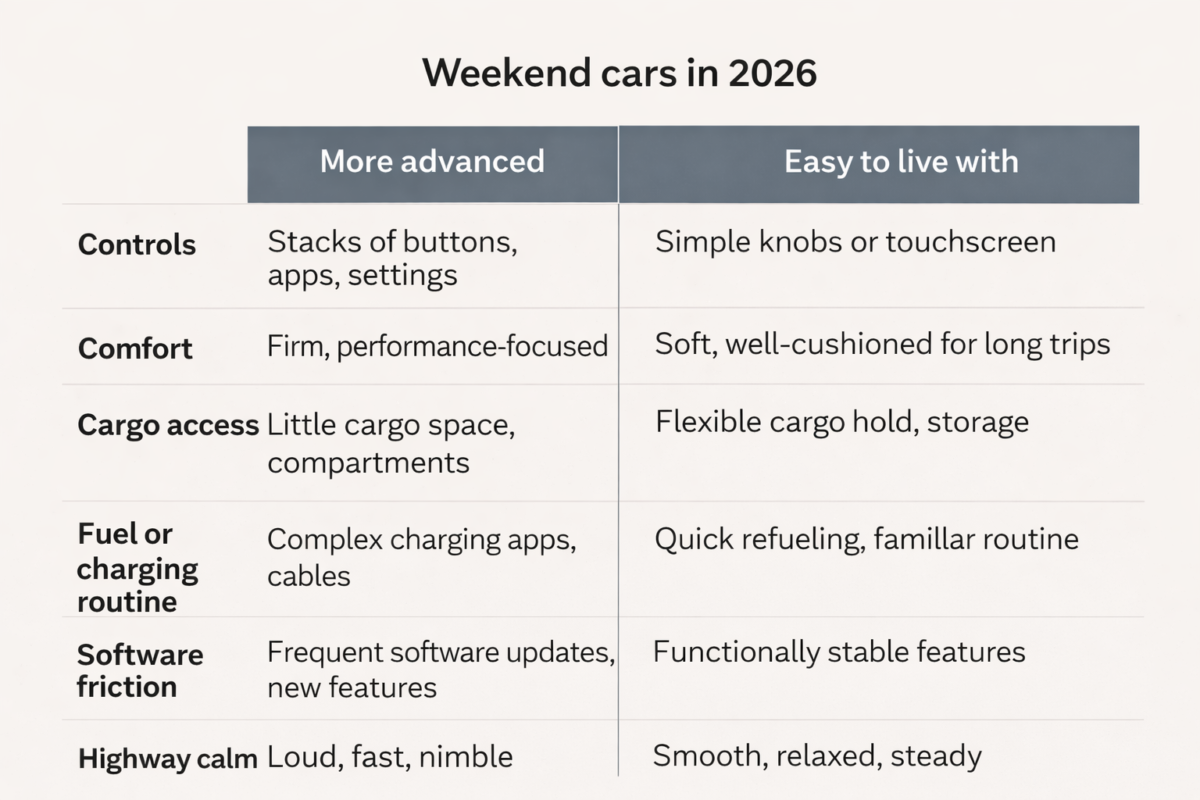
It means the seat still feels decent after 180 miles. It means the rear door opens wide enough when somebody is loading a duffel bag in a tight hotel lot. It means the climate controls do not hide basic functions behind three layers of glass. It means the phone connects without turning every stoplight into a troubleshooting session.
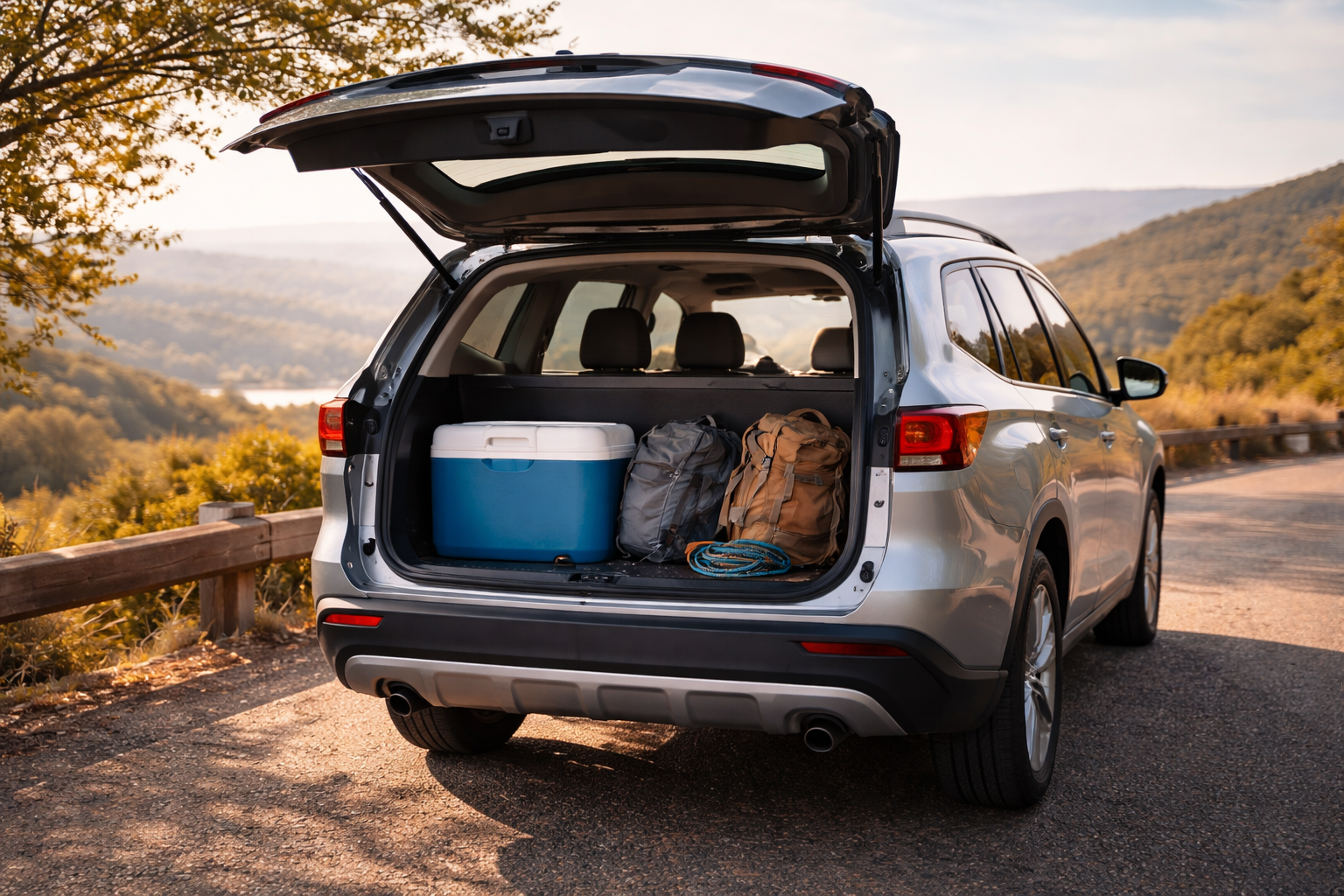
It also means the vehicle works for the trip that actually happens, not the fantasy trip from an ad. Most weekend travel is not a desert trail with a drone overhead. It is two adults, one cooler, a backpack, maybe a dog, maybe two kids, a stop for coffee, and a return drive when everyone is a little more tired than they were on Friday.
That is why ordinary strengths have become more valuable again. A clean driving position. Good outward visibility. Real cargo shape, not just a big cubic-foot number. A cabin that stays calm at highway speed. Physical controls in the places people expect them.
None of that looks dramatic in a launch event. All of it matters by Sunday afternoon.
Why “more advanced” is losing some of its shine
JD Power’s 2026 Vehicle Dependability Study offered a pretty blunt reminder: the industry’s overall problem count reached its highest level since the study was redesigned in 2022. Infotainment stayed the most troublesome category. Over-the-air software updates became more routine, but owners often said they saw little benefit from them.
That matters more for a weekend-use vehicle than it sounds.
A glitchy screen is annoying on a Tuesday commute. On a weekend trip, it can interfere with navigation, music, phone integration, or charging information right when the driver wants the cabin to feel settled. Fancy features are still attractive, but buyers are getting more selective about which ones actually improve the trip and which ones just add one more possible failure point.
Powertrain data points in the same direction. In the same JD Power study, gas-powered vehicles posted the lowest problem rate at 198 PP100, while hybrids, BEVs, and especially PHEVs showed more issues. That does not mean electrified vehicles are doomed. It does mean the practical buyer has a reason to ask a less glamorous question: is this setup easier to own over time, or just more impressive in the brochure?
That question has become central in 2026.
The money angle is pushing shoppers in the same direction
Cox Automotive’s January 2026 affordability update showed a little relief. The average new-vehicle price fell to $49,191, and the typical payment dropped to $756, the lowest since last March. That is better than where things stood late in 2025.
It is not exactly cheap.
Cox also said 2026 is likely to bring stronger demand for affordable vehicles, lower monthly payments, and used-vehicle options as buyers keep stretching budgets. In plain English: shoppers may have a bit more room to breathe, but they are still thinking carefully before they sign up for a complicated, expensive vehicle they do not fully trust.
Spring fuel prices add another nudge. EIA data shows the U.S. regular gasoline average moved from $3.015 per gallon on March 2 to $3.720 by March 16. AAA said prices at the pump climbed another 28 cents in the week leading into the spring equinox, with more seasonal demand arriving as more people hit the road.
When fuel suddenly feels expensive again, people tend to think less about “advanced” and more about “worth it.”
That changes the weekend-car conversation fast. A buyer who might have justified a bigger wheel package, a trick roof, or a more complicated powertrain in January may look at the same vehicle differently once spring trips start stacking up.
What shoppers are valuing instead
This does not mean buyers want boring cars. It means they want a clearer return on every feature.
For weekend travel, the winners in 2026 tend to share a few traits:
1. Simple, low-stress controls
A calm cabin beats a clever cabin. Easy audio, easy climate, easy charging, easy navigation.
2. Honest cargo usefulness
Flat load floors, wide openings, rear seats that fold without drama, and enough space for the bags people actually carry.
3. Good fuel or charging routine
Not the theoretical best number. The setup that makes the trip easier with the least planning.
4. Long-drive comfort
This includes seat support, quietness, and the small stuff. Cupholders in the right place. A center console that does not fight your elbow. Less tire roar after 75 mph.
5. Lower ownership drama
Fewer software hiccups. Fewer expensive surprises. More confidence that the vehicle will behave the same way on the fifth trip as it did on the first.
That is why mainstream compact and midsize SUVs still hold the center of gravity for this space. Wagons, minivans, and some used two-row SUVs also make a strong case. They are not always the coolest answer. They are often the answer that ages best.
What this means in the U.S. right now
For U.S. buyers, the shift is especially noticeable in spring because weekend travel picks up before many households feel financially loose. The road-trip season starts just as gas rises, insurance still feels heavy, and new-car prices remain large enough to punish a bad decision.
That creates a market where “good enough, every day” can beat “impressive, sometimes.”
It also helps explain why value-focused trims, proven gas models, and cleaner used options still have such strong appeal in 2026. People are not rejecting technology. They are just sorting it harder. If a feature reduces fatigue, saves time, or cuts the number of stops, it still wins. If it mostly adds cost or uncertainty, buyers are getting more willing to walk away.
What to watch next
This trend may get stronger before it cools down.
If fuel stays elevated into late spring, trip-minded buyers may move even harder toward vehicles with lower running costs and fewer expensive extras. If used supply stays tight, proven mainstream models could look even more attractive. And if infotainment and software complaints remain sticky, “easy to use” may become a more powerful shopping phrase than “fully loaded.”
That would be a real shift in tone.
For years, the market loved to reward what felt newest. In 2026, at least in the weekend-car lane, the smarter money looks more interested in what feels settled. That is less glamorous. It is also the kind of answer that tends to make more sense after 300 miles, one gas stop, and a parking lot full of luggage.
SOURCES
DISCLAIMER
This article is a general U.S. travel-utility explainer. Vehicle prices, incentives, insurance costs, and long-term ownership experience can vary by trim, region, and usage.