
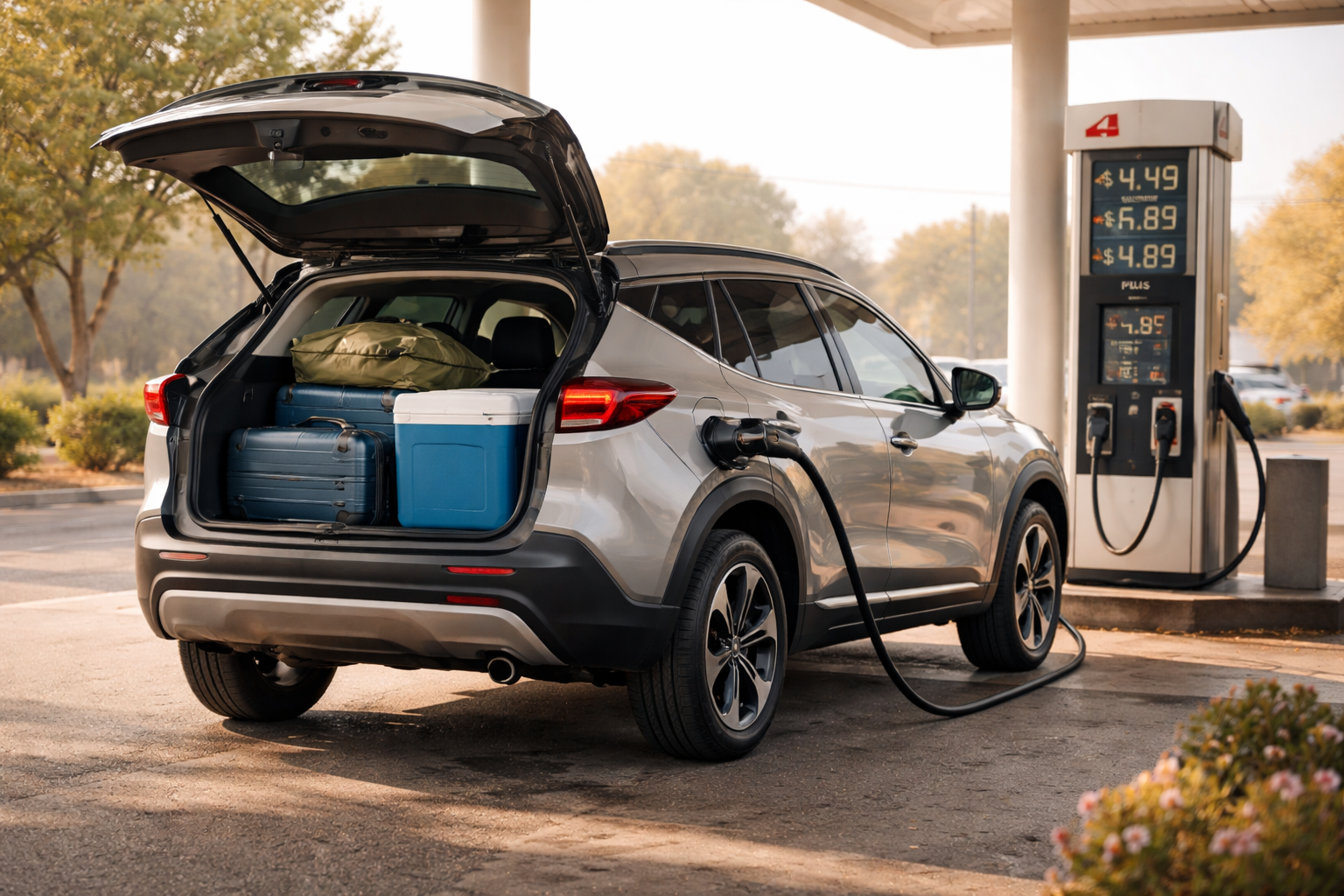
According to AAA, gas prices kept climbing into the spring equinox, with the national average up 28 cents from the prior week as warmer weather and early road-trip demand started to build. EIA’s daily prices page listed a U.S. average of $3.88 a gallon on March 18, 2026, which helps explain why a normal weekend getaway suddenly feels a little less casual at the pump. This does not mean every road trip needs to shrink. It does mean the old habit of choosing a destination first and doing the fuel math later looks less clever than it did a few weeks ago.
Quick takeaways
- Spring gas-price jumps are not random. They usually arrive with refinery maintenance, the move to summer-blend gasoline, and stronger road demand.
- A thirstier SUV feels the increase faster than a compact crossover or hybrid, especially on 300 to 500 mile weekends.
- The national average matters less than people think. Regional gaps are huge in March 2026, with West Coast prices far above Gulf Coast prices.
- The smartest adjustment is rarely “cancel the trip.” It is usually “tighten the plan before the waste starts.”
Why spring pump prices start rising before summer even gets crowded
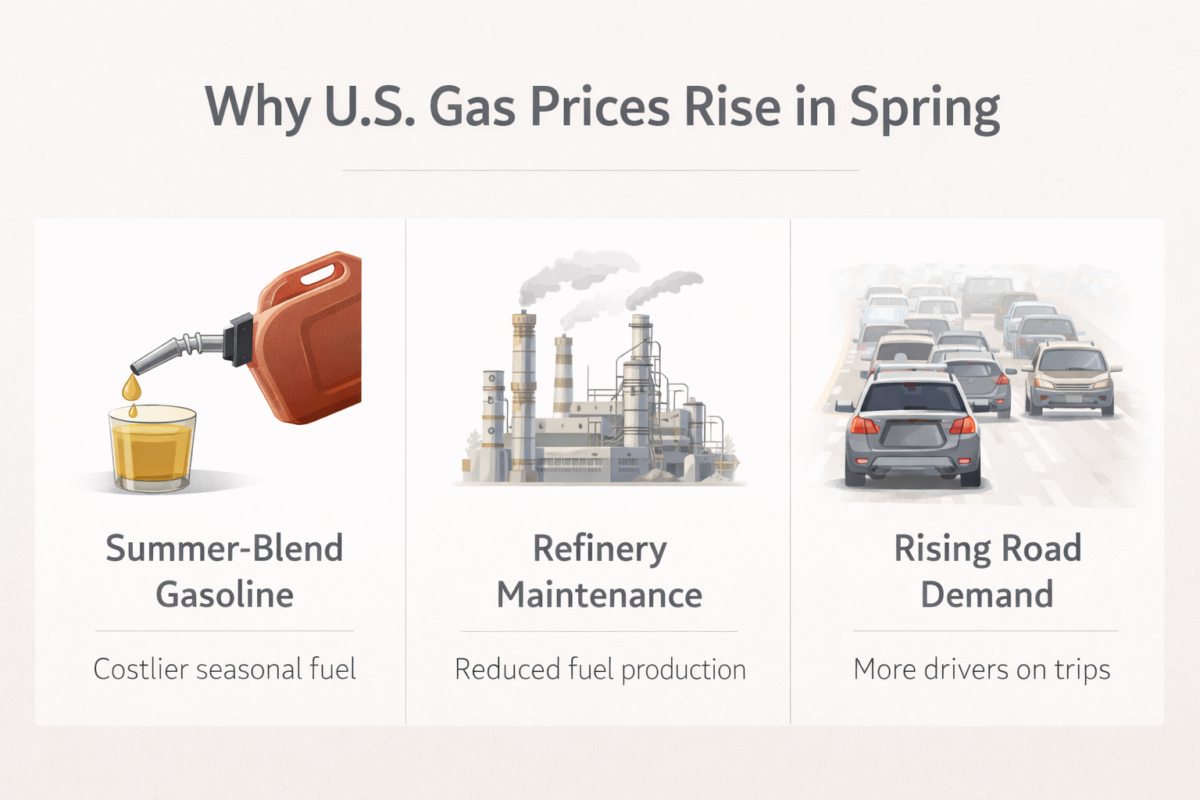
The easy version is demand. More people get back on the road when the weather warms up, spring break begins, and weekend travel starts looking easier.
But demand is only half the story. EIA says gasoline prices tend to rise in spring because refiners are also doing maintenance and switching from winter-grade fuel to summer-grade gasoline, which is more expensive to make. That transition can pinch supply at the same moment more drivers begin moving around again.
That helps explain why the move can feel sudden. AAA said on March 12 that the national average had jumped nearly 35 cents in a week as spring break began. A week later, AAA said prices had climbed another 28 cents from the prior week as the spring equinox arrived. In other words, this was not one noisy afternoon in the oil market. It was a seasonal squeeze showing up right where weekend travelers notice it first.
What changes for a normal weekend trip, not just a giant one
The first change is psychological. A trip that looked “close enough” when gas was lower can start feeling padded with little extra miles that no longer seem free.
The second change is vehicle sensitivity. Every fuel-price jump hurts more in a bigger, thirstier vehicle. On a 500-mile round trip, a 10-cent rise in gas prices adds about $2.50 in a 20 mpg SUV and about $1.67 in a 30 mpg crossover. Stretch that to a 28-cent jump and the same trip adds roughly $7 in the 20 mpg vehicle and about $4.67 in the 30 mpg one.
That is not cancel-the-weekend money. It is still enough to change behavior.
It can nudge a two-night plan toward a slightly shorter destination. It can make the family choose the more efficient car in the driveway. It can also make little add-ons feel more expensive than they looked on paper, especially a roof box, a full truck bed with no tonneau cover, or a route with extra detours.
This is where some of roadmapmag’s recent winners have been pointing all along: the pain is not only the sticker price at the pump. It is the way fuel cost changes the shape of the whole weekend. A more expensive gallon makes dead miles uglier, lazy routing dumber, and oversized-vehicle habits harder to justify.
What this means in the US
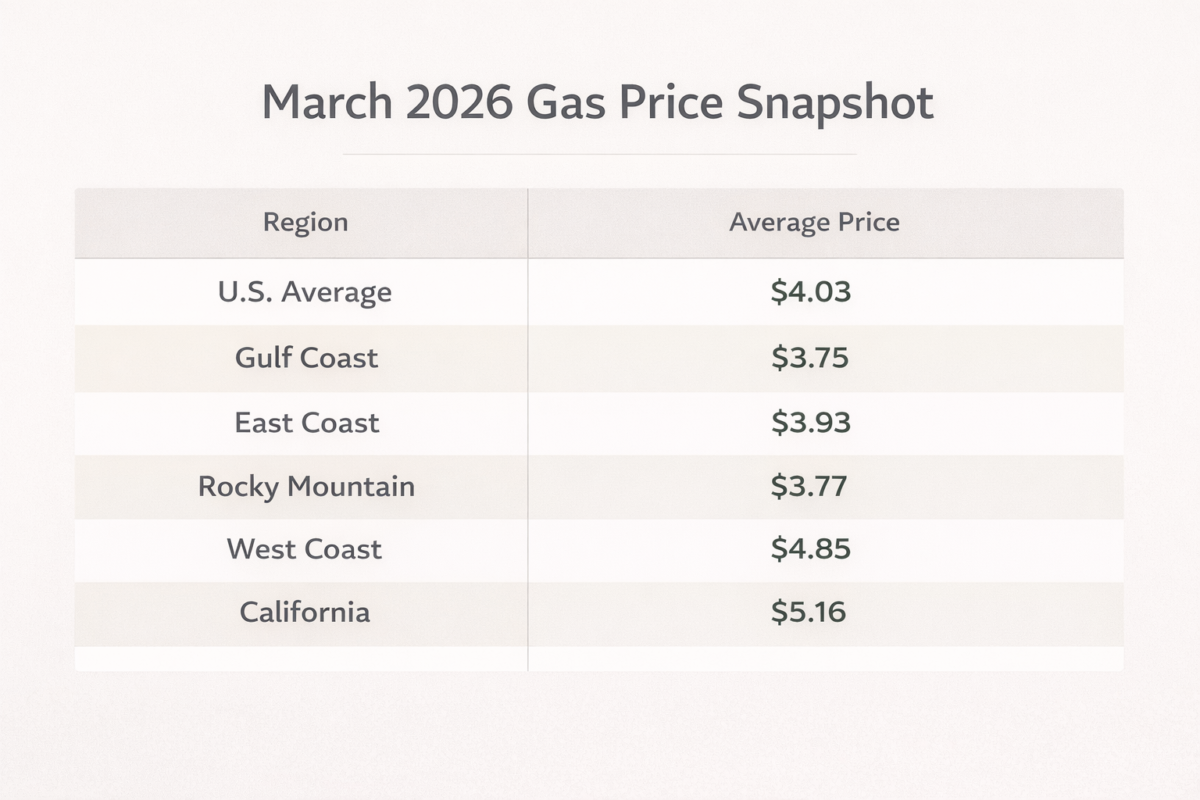
The national average is useful, but the U.S. map is where the story gets real.
EIA’s March 17 gasoline update put the U.S. average at $3.72 a gallon for the week, but the regional spread was wide. The Gulf Coast sat at $3.41. The East Coast was $3.58. The Rocky Mountain region was $3.64. The West Coast was nearly $4.99, and California alone was above $5.38.
That is a different kind of weekend math.
A compact SUV road trip that still feels pretty reasonable out of Texas can feel much less forgiving in California if the route is long and the vehicle is heavy. Florida, which remains a major spring-break road and rental market, was at $3.67 in EIA’s state table. Texas was at $3.40. Washington was near $4.79.
So the same family, the same vehicle, and the same 350-mile plan can land very differently depending on where the tank gets filled.
For a travel site, that matters because broad national advice stops being enough once prices spread this far apart. Readers do not only want to know that gas is rising. They want to know whether a spring weekend still feels normal in their part of the map.
What to watch next before planning the next two weekends
The first thing to watch is whether this stays a spring transition story or becomes a longer squeeze. EIA notes that the gasoline market usually stays under pressure through late spring as summer-grade fuel becomes standard and driving demand builds.
The second thing to watch is crude. EIA’s January 2026 breakdown said crude oil made up 51% of the retail price of a gallon of regular gasoline. That means the pump price is not just about local stations playing games. If crude stays elevated, spring road trips keep feeling tighter.
The third thing is destination style. AAA’s spring-break data shows many travelers are still road-tripping to warm-weather states such as Florida, California, Texas, Hawaii, and Arizona. That does not guarantee pain at the pump, but it does mean a lot of people are making the exact kind of trip that exposes fuel-cost creep fast: several highway hours, luggage, maybe kids, maybe beach gear, maybe an SUV that is not at its best above 70 mph.
So the next few weeks are not really about panic. They are about choosing cleaner trip shapes while prices are still climbing.
How to keep a weekend trip from getting weirdly expensive
A few small moves matter more than usual in this kind of spring market.
Start with trip radius. If two destinations are both “good enough,” the one that cuts 80 to 120 miles off the round trip may save more than readers think once food, tolls, and parking join the fuel bill.
Then look at vehicle choice honestly. This is the season when the efficient crossover, wagon, hybrid, or even plain sedan starts to look smarter than the bigger, roomier option unless the bigger option solves a real packing problem.
After that, clean up wasted miles. One extra airport pickup, one separate grocery run after arrival, or one scenic detour that nobody really needed can turn a moderate fuel bump into an annoying one.
Finally, do not wait until arrival to think about refueling. On many leisure weekends, the destination area is where prices are least forgiving. Filling up before entering a high-cost metro or resort corridor can still be one of the simplest wins on the whole trip.
That is the real spring shift in 2026. Weekend travel is still alive. It just rewards tighter planning a little more than it did when fuel was cheaper and people could afford to be sloppy.