
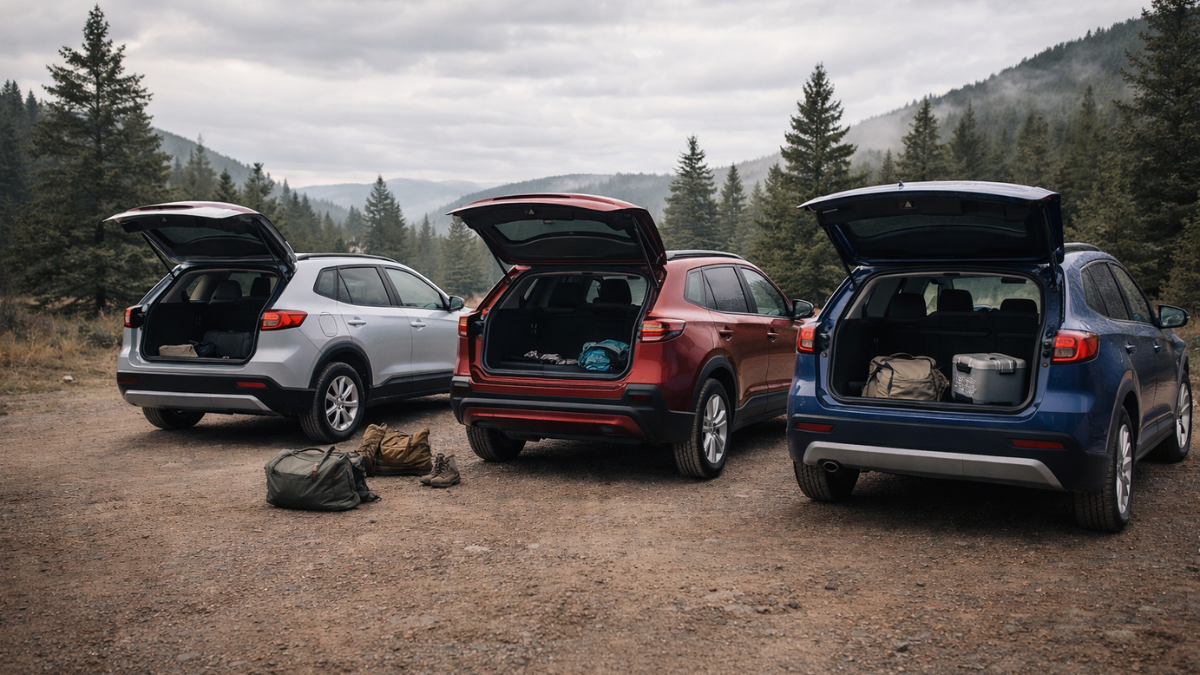
According to Car and Driver’s hybrid compact-SUV road-trip comparison (which included the 2026 Toyota RAV4 Hybrid and 2026 Honda CR‑V Hybrid), the CR‑V’s calm ride and quiet cabin were the easiest to settle into on long highway miles—while the RAV4 impressed with speed and equipment but felt busier under throttle. Toyota’s own 2026 RAV4 announcement also matters for weekend travelers because it signals a full reset: new platform, new software backbone, and the latest Toyota Safety Sense system as standard. Subaru’s 2026 Forester pitch is different: standard EyeSight driver assist across the lineup, strong visibility, and the “go anywhere” confidence that has made the model a default pick for bad-weather getaways. This guide turns those three reputations into a practical “weekend-use” comparison—cargo, comfort after hour two, winter traction, and the small features that make a Saturday escape feel effortless in the U.S.
Quick takeaways
- If the goal is “least friction” on a 2–5 hour drive, Car and Driver’s road-trip test points to the CR‑V Hybrid’s calm ride and quiet cabin as the easiest long-haul baseline in this class.
- The 2026 RAV4 is a bigger story than a normal model-year refresh: Toyota has announced an all-new 2026 RAV4 arriving in winter with the latest Toyota Safety Sense system standard and a new software platform.
- The 2026 Forester’s value proposition is consistency: standard EyeSight driver assist across the lineup and a very familiar AWD, high-visibility cabin layout for bad-weather weekends.
- “Weekend usability” is often decided by trim details: wheel/tire choice, seat support, roof-rail readiness, and whether the tailgate and driver-assist features are standard where it counts.
- The fastest way to pick the right one is to run the same 60-minute test loop: 20 minutes highway, 20 minutes broken pavement, 20 minutes merges + parking.
The weekend-travel lens: what actually makes an SUV “easy”
For weekend trips, “easy” usually means fewer small problems, not more power. The practical stress points show up in the same places every time:
- Loading: liftgate height, cargo floor shape, and how annoying it is to fit a stroller, cooler, or two carry-ons without stacking.
- Cabin calm: wind and tire noise at 70 mph, plus how the suspension settles after expansion joints.
- Winter confidence: AWD behavior, all-season tire capability, and how predictable the vehicle feels on wet ramps and light snow.
- Driver-assist behavior: adaptive cruise smoothness in mild traffic and lane-centering that feels steady rather than twitchy.
- The “hands full” moments: keyless entry, easy HVAC controls, and whether the infotainment creates extra taps when attention is needed on the road.
The comparison below uses those moments as the scorecard.
RAV4: the 2026 reset is the headline, not the badge

Toyota has framed the 2026 RAV4 as an all-new arrival “this winter,” and the announcement highlights two changes that matter for travelers: the latest Toyota Safety Sense system as standard and a new software foundation (Arene / software-developed vehicle platform) underpinning safety features and multimedia. Those are not glamorous weekend-trip bullet points, but they can be meaningful in practice—especially if lane-keeping behavior, alerts, and system responsiveness improve.
Car and Driver’s road-trip comparison (focused on hybrid AWD compact SUVs) placed the all-new 2026 RAV4 Hybrid second behind the CR‑V Hybrid. The magazine praised its speed and “family-friendly” strength while also describing a busier feel under throttle and more body motion than the winner.
Weekend-read on the RAV4 (practical):
- Promising if the priority is a modern safety suite and a fresh platform with updated tech foundations.
- Worth a careful test if the driver dislikes extra body roll or powertrain “buzz” on grades.
- If the plan involves winter weekends, verify the exact tire spec on the trim being considered; tires can change the “confidence” feel more than AWD marketing.
CR‑V: the “calm highway” choice, plus a clear AWD spec line
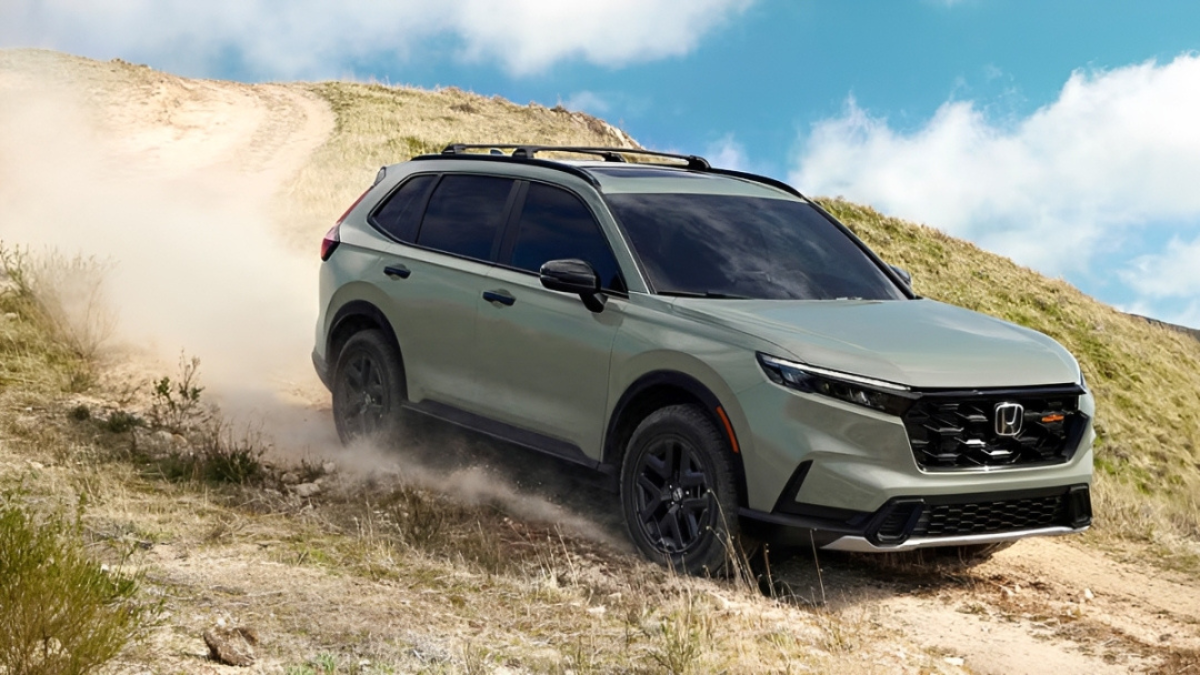
Honda’s CR‑V lineup pages emphasize available Real Time AWD with Intelligent Control System and the presence of Honda Sensing safety and driver-assist features. For weekend travel, that’s the baseline requirement: AWD availability and a modern suite of assist tools.
Where the CR‑V pulls ahead in the “easy to live with” conversation is how it behaves at speed. In Car and Driver’s hybrid road-trip comparison, the CR‑V Hybrid Sport Touring took the top spot, with the publication calling out a refined ride and quiet cabin—traits that reduce fatigue on two- to five-hour stints.
Honda’s own trim/feature listings also show how quickly “weekend ease” becomes trim-specific: higher trims can add convenience gear like hands-free access power tailgate and other comfort items that matter when arriving in rain with bags in both hands.
Weekend-read on the CR‑V (practical):
- Strongest evidence for least-stress highway behavior comes from third-party road-trip testing that singled out ride refinement and cabin quiet.
- The choice can come down to trim: verify whether the tailgate and desired assist features are included on the version being priced.
- If “cabin calm” is the decision-maker, favor the trim/wheel setup that rides more compliantly rather than the most aggressive wheel package.
Forester: standard EyeSight, visibility, and “bad-weather weekend” familiarity

Subaru’s 2026 Forester materials put EyeSight driver assist front and center, stating that every 2026 Forester features EyeSight Driver Assist Technology. For long drives, consistent driver-assist availability can reduce decision fatigue—especially in variable weather, when drivers want lane and speed support without hunting for trim packages.
The Forester’s classic weekend strengths are also easy to feel in a five-minute drive: big glass area, easy sightlines, and a square-cargo “just toss it in” vibe. Subaru also sells a Forester Wilderness variant for buyers who expect rougher access roads or deeper snow, but the core question for most weekend trips is simpler: does the vehicle stay calm and predictable on imperfect roads?
Car and Driver’s hybrid comparison placed the Forester Hybrid fourth (noting a roomy cabin and strong observed efficiency), but also criticized sluggish acceleration and older infotainment design. That result matters mainly as a reminder: weekend “ease” is not only traction—it is also how relaxed the vehicle feels for hours.
Weekend-read on the Forester (practical):
- Standard EyeSight makes it easier to shop: fewer “does this trim include it?” questions.
- Visibility is a real stress reducer in unfamiliar towns, trailhead parking lots, and busy merges.
- Test the infotainment workflow and lane-centering feel at highway speed; those are common fatigue multipliers.
Which one fits which weekend pattern
This is a “pattern match” more than a spec race:
- RAV4 (2026 all-new): makes the most sense when the priority is a full-refresh platform and Toyota’s newest safety/software direction, and the buyer is willing to test for ride motion and powertrain feel on grades.
- CR‑V: tends to suit the long-drive-heavy weekend (2–6 hours each way) where cabin calm and low steering correction load are the main stress points.
- Forester: fits the weather-first weekend where visibility, predictable AWD confidence, and standard driver-assist availability are the main needs.
What this means in the U.S.
U.S. weekend travel often includes three stressors: sustained 65–80 mph cruising, concrete expansion joints, and sudden weather swings (rain to sleet to snow) on the same trip. That makes “ease” heavily dependent on:
- Highway noise level and the way the vehicle settles after repeated joints
- Adaptive cruise behavior in moderate traffic (smoothness matters more than feature count)
- Tires on the exact trim on the lot (the most overlooked long-drive factor)
- Driver-assist availability without complicated package ladders
In this environment, the most actionable public signal today is still the road-trip-style comparison: it pressures the cabin, ride, and assist tuning in the conditions where drivers actually get tired. That is why the Car and Driver road-trip ranking (CR‑V Hybrid first, RAV4 Hybrid second) is more relevant to weekend travel than a short urban loop.
What changed (2026) and why it matters for a weekend buyer
Two model-year shifts matter here:
1) RAV4 is moving into a new generation. Toyota’s 2026 announcement emphasizes standard Toyota Safety Sense updates and a new software platform, suggesting meaningful “feel” changes to safety/multimedia behavior could arrive with the redesign.
2) Trim logic is increasingly “comfort tech” logic. Honda’s trim/feature pages show how the weekend conveniences (tailgate, comfort add-ons, tech) can cluster in higher trims. Subaru, by contrast, is pitching standard EyeSight as a “simplify the decision” play.
The practical implication is to shop the vehicle that exists on the lot—not the one in a mental spreadsheet. Feature availability and wheel/tire choices vary in ways that change the weekend experience.
What you can do: a 12-minute weekend test drive script
Run this script on all three SUVs, on the same route, and the answer usually becomes obvious:
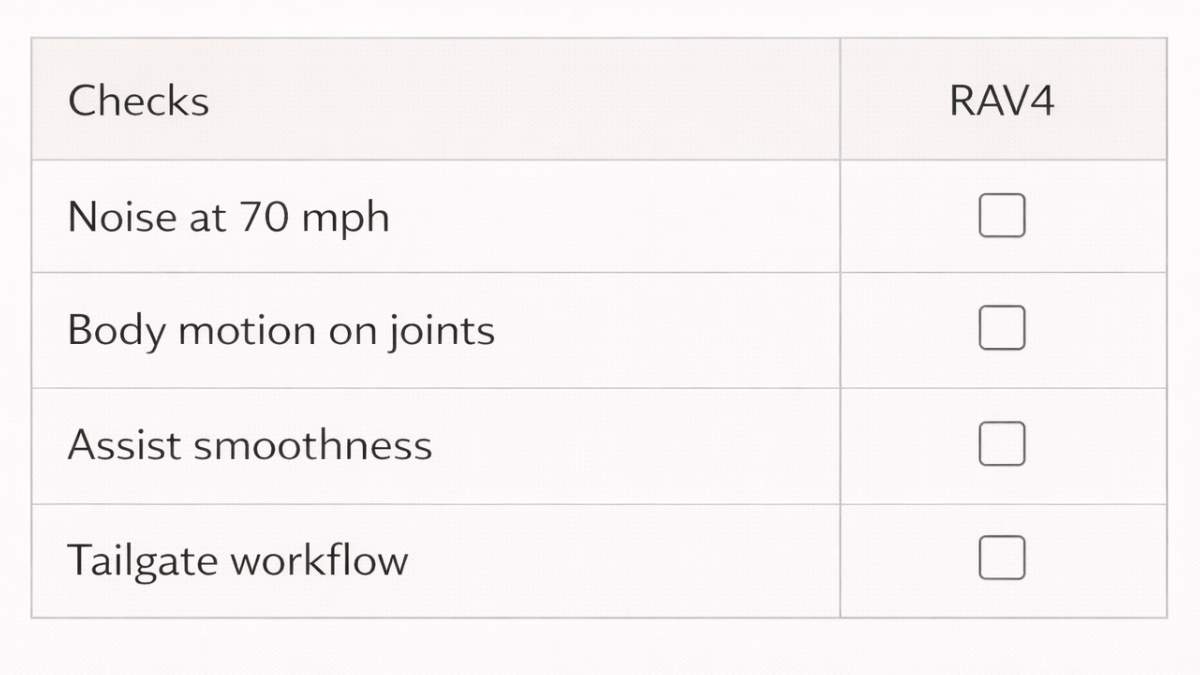
- Noise at 70 mph (3 minutes): audio off, fan low. Listen for wind around mirrors and tire roar.
- Expansion joints (2 minutes): on concrete freeway, feel how quickly the body stops moving after one joint.
- Merges + adaptive cruise (3 minutes): set cruise in light traffic and watch whether braking is smooth when a car cuts in.
- Parking lot realism (2 minutes): tight turn + reverse + quick load check.
- Controls check (2 minutes): adjust temperature, defrost, and wipers without staring at the screen.
What to watch next
For 2026 weekend shoppers, two things can change the verdict quickly:
- Final U.S. trim packaging for the all-new RAV4 as it arrives in the market “this winter,” including how the new multimedia and safety suite behaves in real driving.
- Wheel/tire and equipment drift by trim across the year. A single wheel-size change can flip the “least fatigue” feel, especially on broken interstates.
For a buyer who wants the least risky approach, the simplest plan is to test all three on the same 60-minute loop and prioritize the vehicle that feels calm when nothing dramatic is happening.