
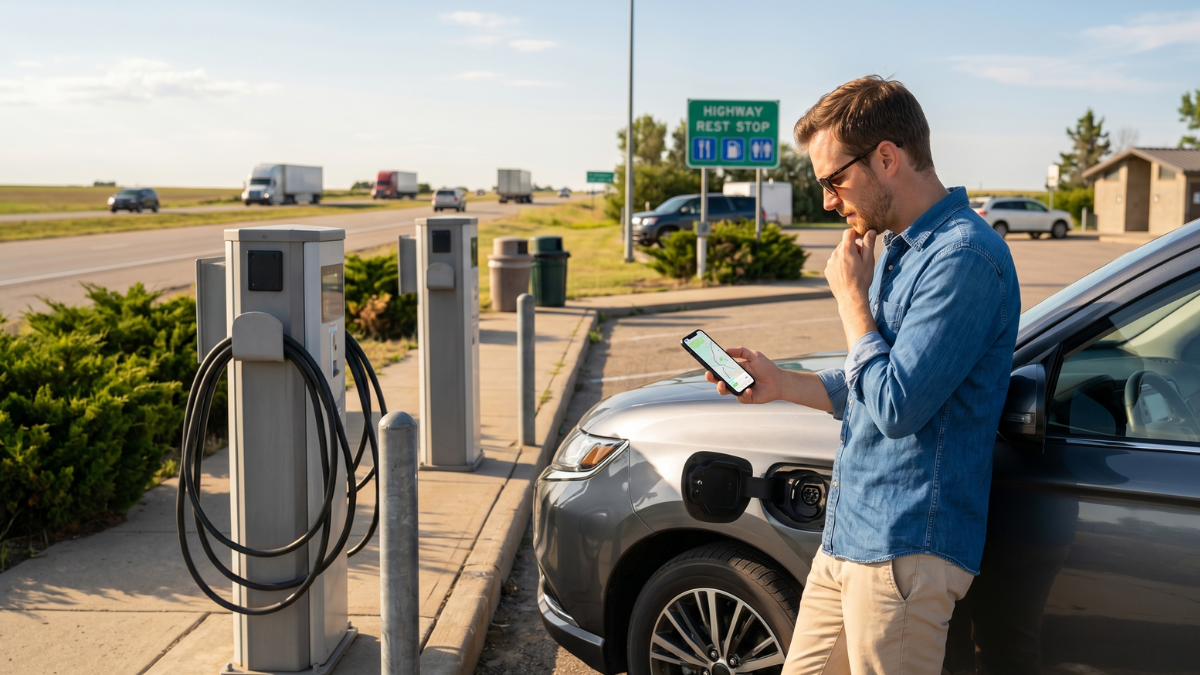
A plug-in hybrid makes the most compelling case at 6:30 on a Tuesday morning: the battery is full from overnight charging, the commute is 22 miles each way, and the gas engine will not turn on until Thursday. Over a week, maybe two weeks, of short daily drives on electric power, the fuel savings are real and the math works clearly in the PHEV’s favor over the regular hybrid it costs several thousand dollars more than.
A weekend getaway is the exact opposite scenario. The trip is 280 miles each way on the Interstate. The battery depletes somewhere around Exit 14. For the remaining 250+ miles, the PHEV operates as a heavier, slightly less efficient version of the regular hybrid it replaced. If the hotel has a Level 2 charger — and if the charger is working, and available, and the cord reaches — the battery may be partially recharged for Sunday’s return trip. In cold weather, the electric range was already 20 to 40 percent shorter than the window sticker said, so the battery was gone by mile 25.
The PHEV does not stop being a good car on the weekend getaway. It remains comfortable, capable, and refuelable at every gas station. What it stops being is better than the regular hybrid — and in the specific conditions of a highway-dominated long drive, it can be measurably worse.
Quick Takeaways
- A PHEV’s electric range is designed and calibrated for city driving speeds — approximately 20–50 mph — where aerodynamic drag is relatively modest; at 70–75 mph highway cruising, the same battery pack provides roughly 60–70% of its rated electric range before depleting
- InsideEVs’ highway range test of the Toyota RAV4 Prime at a steady 70 mph produced 31.6 miles of electric range — versus the EPA-rated 42 miles; RAV4 World forum owners report “drops into the 30s” at 70–75 mph on flat highway, and lower on grades
- Once the PHEV battery is depleted on a highway trip, the vehicle enters charge-sustaining hybrid mode — and must carry the weight of a large battery pack it is no longer using; the 2026 Toyota RAV4 Hybrid (no plug, lighter) is EPA-rated at 43 mpg combined; the 2026 RAV4 PHEV with depleted battery is rated at 41 mpg combined — a meaningful real-world gap, though modest at the Toyota’s end of the range
- Consumer Reports tested the Hyundai Tucson PHEV with an empty battery and found it got 4 fewer mpg than the regular Tucson Hybrid — an example of where the weight penalty is more pronounced than in the Toyota pair
- Cold weather compounds the issue: Consumer Reports confirms temperatures below 40°F reduce a PHEV’s electric driving range; a rated 42-mile electric range delivers approximately 25–33 miles in winter conditions
- Hotel Level 2 charging may not fully restore the battery overnight — a known gap documented in the EV hotel charging article in this series (→ see “The ‘Free Hotel Charging’ EV Trap” in this series)
- The PHEV advantage exists for drivers who charge every day and drive short commutes; it erodes on the specific trip profile of a 300-mile weekend getaway
How the PHEV Advantage Actually Works
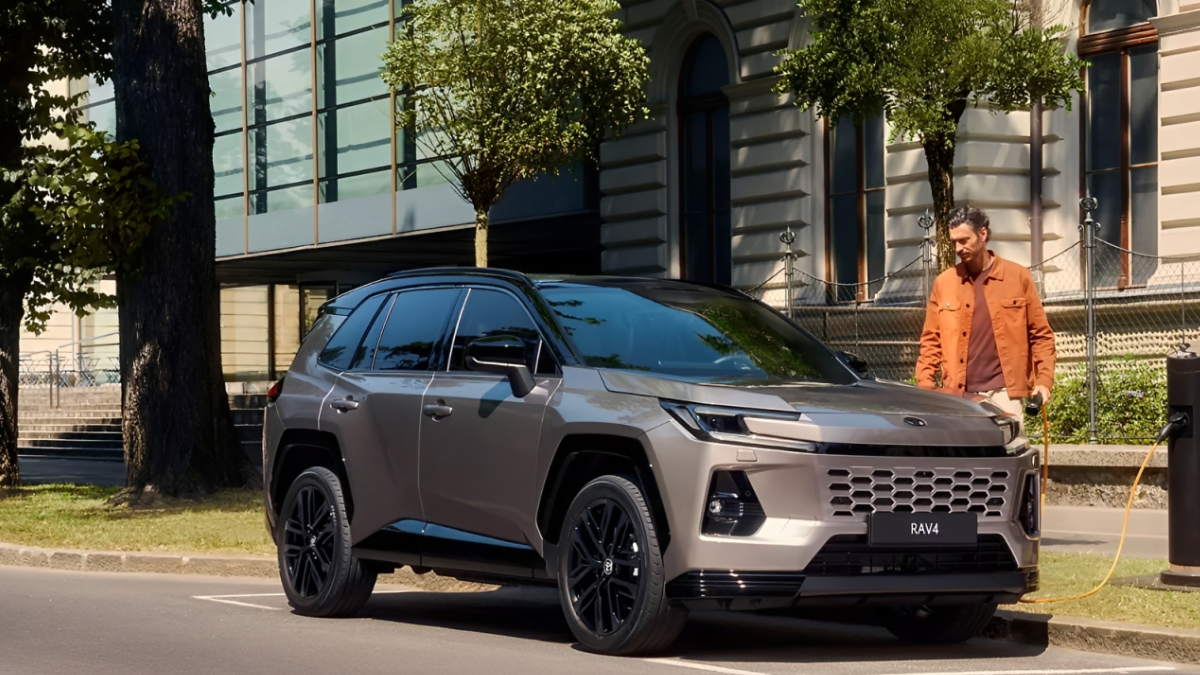
The marketing pitch for a plug-in hybrid is straightforward: drive electrically for short trips and avoid the gas station most of the week, then use the gas engine for the weekend road trip like a normal car.
Both halves of this pitch are accurate. But the second half — “use the gas engine for the weekend road trip like a normal car” — is where the nuance matters. “Like a normal car” means like a heavier-than-average hybrid operating in charge-sustaining mode, not like the efficiency leader its window sticker describes.
A PHEV’s window sticker shows two sets of numbers. The MPGe figure (miles per gallon equivalent) combines electric and gas operation and produces the impressive headline number — 94 MPGe for the RAV4 Prime, for example. The gas-only or hybrid-mode figure is buried below it in smaller print: 38–41 mpg combined for the RAV4 PHEV. The regular RAV4 Hybrid, which costs several thousand dollars less, is rated at 40–43 mpg combined.
The gap between those two numbers is the weekend getaway story. The PHEV earns its premium when the battery is being used. When the battery is depleted for the majority of a long highway trip, the regular hybrid is the more efficient vehicle — because it is lighter, tuned for hybrid operation, and never designed to carry a 300-plus pound battery pack that is doing nothing.
The Four Scenarios Where the PHEV Loses Ground
Scenario 1: The Battery Depletes in the First 30 Miles
The EPA rates most mainstream PHEVs at 20–50 miles of electric range. Those figures are developed under mixed city-highway simulation — moderate speeds, regenerative braking opportunities, controlled temperature.
On a highway weekend getaway, none of those conditions apply. The first 30–50 miles are typically getting out of the metro area: on-ramp merges, Interstate speeds of 70–75 mph, cruise control set and held. Aerodynamic drag at highway speeds is significantly higher than at city speeds — rising roughly with the square of velocity — and the PHEV’s battery depletes correspondingly faster.
InsideEVs’ controlled test of the Toyota RAV4 Prime at a steady 70 mph produced 31.6 miles of electric range. This is not an outlier: RAV4 World owners consistently report “drops into the 30s” at highway cruise speeds on flat terrain, and lower on uphill grades or in headwinds. A PHEV with a 42-mile EPA rating is realistically delivering 28–35 miles of electric range at highway speed.
On a 280-mile weekend trip, those 30 miles represent approximately 11% of the total distance. The PHEV runs on electric power for roughly the first 11% of the trip, then operates in charge-sustaining hybrid mode for the remaining 89% — carrying its battery dead weight the entire distance.
Autoblog’s assessment of the scenario is direct: “A plug-in hybrid driven daily without charging is often worse than a regular hybrid — it hauls around a big, heavy battery that isn’t being used, leading to lower fuel economy than the non-plug-in version.”
Scenario 2: The Hotel Charger Doesn’t Fully Restore the Battery
Most weekend getaways involve one or two nights at a destination. Many hotels now offer Level 2 EV charging — a 240V, 7.2kW connection that adds roughly 25–30 miles of range per hour.
The RAV4 Prime’s battery holds approximately 18 kWh of usable capacity (the 2026 PHEV version has a larger pack, but the principle is identical). At a hotel’s Level 2 charger, a depleted PHEV battery requires approximately 4–6 hours to reach 80% and 6–8 hours to reach full charge.
This math works for a 10-hour overnight stay. It fails in three common weekend scenarios:
The charger is occupied or broken. Hotel Level 2 chargers are often a single unit. If another guest’s vehicle is connected — or if the charger has a fault — the PHEV driver has no recourse beyond a standard 120V outlet, which adds roughly 4 miles of range per hour. An overnight stay on a 120V outlet adds approximately 30–40 miles of range — not a full charge.
The stay is one night, checkout is early. A 10-hour hotel window at Level 2 can recharge most PHEVs. A 7-hour window — arriving at 11 PM, checking out at 6 AM — may produce only a partial charge.
The destination is not the hotel. Weekend getaways often involve arriving at a cabin, campground, or relative’s house with no EV charging infrastructure at all. The PHEV departs Sunday morning with whatever charge it regained through regenerative braking on Saturday’s errands — typically minimal on highway driving. (→ see “The ‘Free Hotel Charging’ EV Trap” in this series for the full Level 2 charging time analysis)
Scenario 3: Cold Weather Cuts the Range Before the Trip Starts
PHEV batteries are lithium-ion chemistry, and lithium-ion batteries lose usable capacity in cold temperatures. Consumer Reports confirms that temperatures below 40°F reduce a PHEV’s electric driving range — a figure that aligns with the 20–40% reduction range documented in EV and PHEV testing broadly. A 42-mile EPA electric range can deliver approximately 25–33 miles in sustained winter conditions.
On a winter weekend getaway — ski trip, holiday family drive, January visit to another region — this means a PHEV rated for 42 miles of electric range may deliver 25–33 miles of actual range before the gas engine takes over.
The heater load compounds this. A PHEV in EV mode uses battery energy for cabin heating; at 20°F, the heater draws a meaningful share of the battery capacity on its own. The gas engine in hybrid mode generates waste heat that the heater captures for free — a specific advantage that regular hybrids have over PHEVs in cold conditions.
At 25–33 miles of highway electric range in winter temperatures, the PHEV’s battery depletes before the first rest stop on most weekend drives. The vehicle then carries its extra weight for the remainder of the trip at the regular hybrid’s mpg — or below it.
Scenario 4: Mountain Grades Drain the Battery in Both Directions
Mountain weekend destinations — ski areas, national park lodges, lake cabins accessible by grade roads — create a specific PHEV efficiency scenario that does not appear in highway flat-road testing.
On the ascent: a sustained grade of 4–6% at highway speed requires the gas engine and the electric motor together, depleting the battery faster than flat-road highway driving. A RAV4 Prime owner on I-70 through the Rockies or I-80 through Donner Pass typically sees electric range consumed in 20–25 miles on the climb — well below the highway flat-road estimate.
On the descent: the PHEV’s regenerative braking recovers some energy, and on a long enough descent, the battery may partially recharge from the regenerated energy. This is a genuine advantage over a non-hybrid vehicle, and regular hybrid owners experience the same benefit.
The net result on a mountain weekend round trip: the PHEV’s battery adds meaningful range recovery on descents, partially offsetting the faster depletion on climbs. Whether this makes the PHEV more efficient than the regular hybrid on this specific route depends on the grade profile and the total trip distance. On routes with long sustained climbs and short descents, the PHEV falls behind.
The Weight Penalty in Numbers
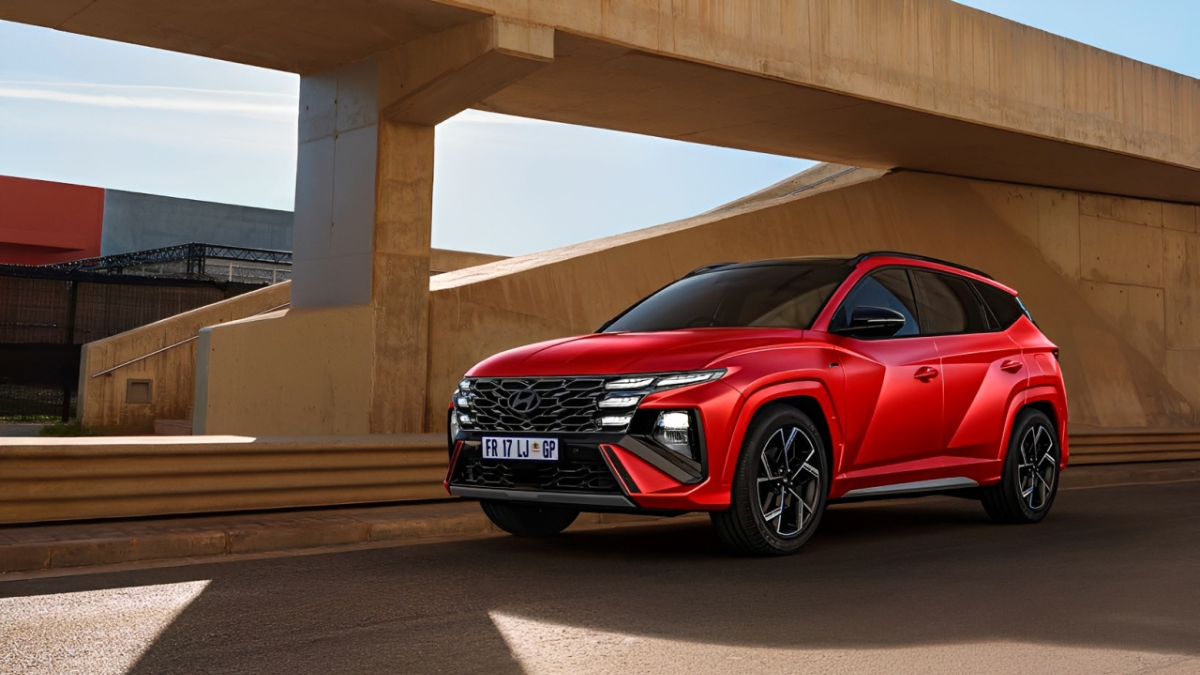
The fundamental mechanical reality behind every scenario above is mass.
A PHEV carries a larger battery pack, a more powerful electric motor, and associated power electronics. These components are necessary for the vehicle to drive electrically. When the battery is empty, they become inert weight that the gas engine must accelerate, cruise with, and climb with.
The Toyota RAV4 Prime weighed approximately 400 pounds more than the RAV4 Hybrid in its previous generation — a figure documented in RAV4 World forum technical discussions. For the 2026 models: the 2026 RAV4 PHEV SE/XSE is rated at 41 mpg combined in hybrid mode, while the 2026 RAV4 Hybrid is rated at 43 mpg combined — a 2 mpg gap that directly reflects the heavier vehicle being pulled through the air at 70 mph for 250 miles.
For other vehicle pairs, the gap is larger. Consumer Reports found the Hyundai Tucson PHEV gets 4 fewer mpg than the regular Tucson Hybrid with an empty battery. The Autoblog assessment extends this to the general case: “If you never plug it in, a PHEV could cost you hundreds more each year on gas than if you’d bought the conventional hybrid version, in addition to the PHEV’s higher purchase price.”
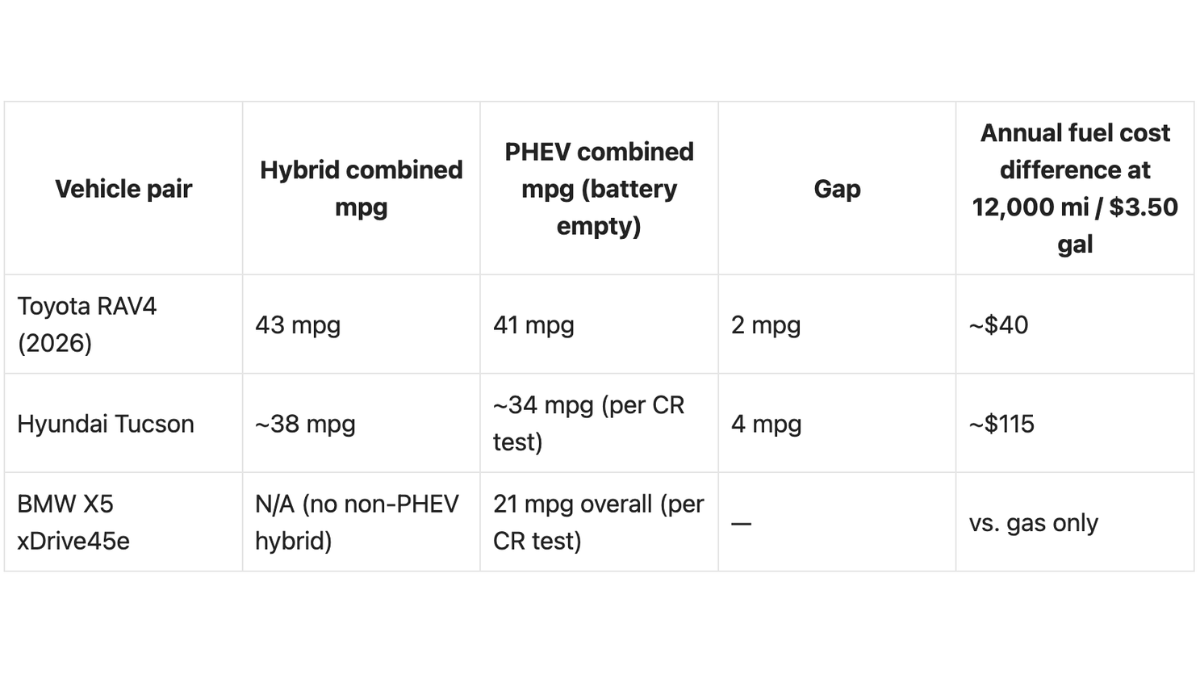
Fuel cost difference calculated as annual additional cost to operate the PHEV in non-plugged mode vs. the regular hybrid. Actual cost varies with fuel prices and miles driven.
When the PHEV Still Makes Sense on the Weekend Getaway
This is not a case against PHEVs. It is a case for understanding what they optimize for.
Three weekend scenarios where the PHEV retains its advantage:
Short weekend drives to a nearby destination. A 60–80 mile round trip to a lake house — well within the battery range — allows the PHEV to complete the entire trip on electric power, with no gas used at all. This is the PHEV’s best case: electric-only operation start to finish. The regular hybrid cannot match this.
Destinations with Level 2 charging infrastructure. National park lodges, some ski resort hotels, and destination resorts that have installed EV infrastructure allow a full overnight recharge. The Sunday return trip departs with a full battery and the first 30 miles are electric — meaningfully reducing the gas consumed on the return leg. If both legs can access charging, the PHEV’s advantage is partially preserved.
Hybrid mode as the fallback, not the primary. A PHEV driver who uses the electric range intentionally — charging at every available opportunity, switching to hybrid mode on long sustained highway segments, preserving the battery for city driving at the destination — can optimize the vehicle’s efficiency across a weekend. This requires active management, not passive operation. It rewards effort.
The Edmunds assessment frames the core tradeoff accurately: “A hybrid will return better fuel economy since PHEVs tend to lose their electric range quickly at highway speeds and are then lugging around a heavy battery for little reason.” The qualifier “little reason” is the key phrase. The reason exists — the battery supports performance, provides a power reserve, and generates regenerative energy on descents. Whether that reason is sufficient depends on the specific route, the charging infrastructure at the destination, the weather, and how much the driver paid at purchase for the PHEV premium.
The Right Question Before Buying
For a buyer deciding between a regular hybrid and a PHEV at the same dealer on the same day, the weekend getaway scenario suggests one specific question worth asking:
What percentage of my annual driving miles happen on weekend trips longer than 50 miles each way?
If the answer is 20% or more — meaning one out of every five miles is a highway road trip — the PHEV’s advantage is diluted by that proportion. A driver who commutes 20 miles daily but makes twelve 250-mile weekend trips per year is driving approximately 22,000 miles: 5,200 of them on weekend drives where the PHEV operates as a heavy hybrid. That is not a trivial share.
If the answer is under 10% — weekend trips are rare, the car is primarily a commuter — the PHEV calculus likely favors the plug-in, particularly for drivers with home charging and daily mileage within the electric range.
The PHEV is not an all-conditions winner. It is a commuter vehicle with a useful highway fallback. The weekend getaway is where the fallback does the work — and where the commuter’s efficiency advantage stops applying.
U.S. and Canada Note
Canadian buyers considering a PHEV for year-round use face the cold-weather range reduction as a regular seasonal condition rather than an occasional variable. Temperatures below 40°F (4°C) — the threshold at which lithium-ion battery performance begins declining meaningfully — occur for multiple months in virtually every Canadian province.
A PHEV rated at 42 miles of electric range in California testing will deliver approximately 25–33 miles of electric range in Ottawa in February, 22–30 miles in Winnipeg in January, and somewhat higher in coastal British Columbia. The charging infrastructure gap at many Canadian winter destinations — ski areas, cottage country in shoulder season, remote northern drives — further limits the overnight recharge opportunity.
For Canadian families who do significant winter driving or regular long-distance highway trips, the regular hybrid’s no-plug-required simplicity and consistent efficiency across temperatures is a specific advantage that the PHEV’s electric range cannot offset if charging at the destination is unavailable.
L/100 km note: The 2026 RAV4 Hybrid at 43 mpg combined is approximately 5.5 L/100 km. The 2026 RAV4 PHEV in hybrid mode at 41 mpg combined is approximately 5.7 L/100 km. At $1.70/litre CAD over 20,000 km/year, the 0.2 L/100 km difference is approximately $68 annually — modest on its own, but compounded by the PHEV’s higher purchase price in markets where the federal iZEV PHEV incentive has lapsed.
SOURCES
- Consumer Reports: Hyundai Tucson PHEV gets 4 fewer mpg than hybrid version with empty battery; “if you never plug it in, a PHEV could cost hundreds more each year on gas”; highway driving and temperatures below 40°F reduce PHEV electric range; conventional hybrid usually better for long trips or without charging
- Autoblog: “A plug-in hybrid driven daily without charging is often worse than a regular hybrid — it hauls around a big, heavy battery that isn’t being used”
- InsideEVs: Toyota RAV4 Prime highway range test at steady 70 mph = 31.6 miles; EPA rating more on par with city driving than highway; controlled test at 54°F
- RAV4 World forum: “If you are doing highway above 70–75 it does drop into the 30s EV range”; owner-reported range 30–35 miles at 75 mph on freeway with uphill; “EV in town, HV for highway for max efficiency”
- Edmunds: “a hybrid will return better fuel economy since PHEVs tend to lose their electric range quickly at highway speeds and are then lugging around a heavy battery for little reason”; PHEV daily charge ideal; long trips favor hybrid
- fueleconomy.gov — official U.S. DOE/EPA source: 2026 RAV4 PHEV SE/XSE hybrid mode 44/38/41 mpg; 2026 RAV4 Hybrid up to 47/40/43 mpg; 2026 PHEV all-electric range up to 52 miles; verify current model year figures at fueleconomy.gov
- Consumer Reports — primary source already in SOURCES: also confirms that “highway driving and temperatures below 40°F can reduce a PHEV’s electric driving range”; cold-weather range reduction for lithium-ion batteries consistent with 20–40% figures documented in EV and PHEV testing
- RAV4 World forum owner discussion: “The PHEV is about 400 lbs. heavier due to the larger battery, transmission, and motors”; on long trips at 100–120 km/h owner reports 36–39 mpg; “EV will get used up quickly traveling at 80 mph”
- RAV4 World forum: “33 miles in the worst conditions (all highway, cold weather)”; “if on the highway, it’s typically about 60% of that range or about 34 miles”; mixed cold/highway driving reports