
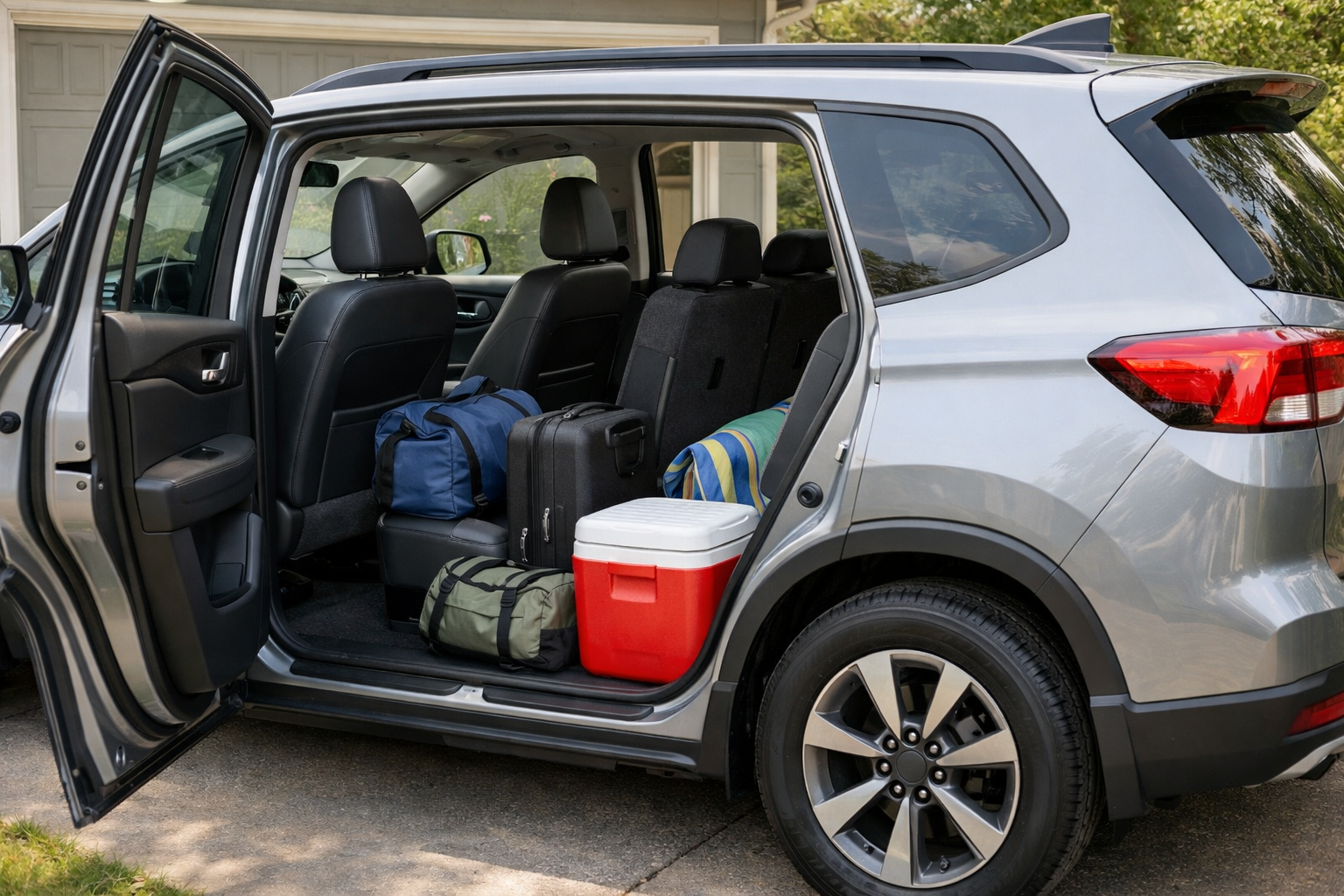
According to Hyundai and a March 17 NHTSA safety recall filing, 61,093 model-year 2026 Hyundai Palisade and Palisade Hybrid SUVs in the U.S. are being recalled over second- and third-row power seats that may not respond to contact with an occupant or object as intended during certain powered functions. The recall covers Limited and Calligraphy trims, and Hyundai has already stopped sales of affected vehicles while it develops a full remedy. An interim software update is planned, but families who use the Palisade as a spring-break and weekend-trip machine still have a live question right now: what changes before the fix arrives? The answer is less about badges and more about how the third row gets used on real trips.
Quick takeaways
- The recall covers 61,093 U.S. vehicles: 40,729 gas-powered 2026 Palisades and 20,364 2026 Palisade Hybrids.
- Affected vehicles are Limited and Calligraphy trims built through February 12, 2026.
- The issue involves certain second-row and third-row power seat functions, including the automatic power-folding function and the second-row one-touch tilt-and-slide feature.
- Hyundai says an interim software update is planned, with VINs searchable and owner notifications expected later this spring.
- For weekend travel, the biggest change is simple: treat third-row entry, exit, and seat-folding as a safety routine until the update is done.
What changed
This is not a soft service campaign buried in dealer paperwork. It’s a formal safety recall, and it landed right as the 2026 Palisade was positioning itself as one of Hyundai’s big family-trip plays for the year.
NHTSA’s filing says the affected seat systems may fail to respond to contact with an occupant or object as intended during some powered functions. In plain terms, the problem is tied to the exact features that make a big three-row SUV feel easy on school runs, airport pickups, and two-night getaways: power-folding seats and simple third-row access.
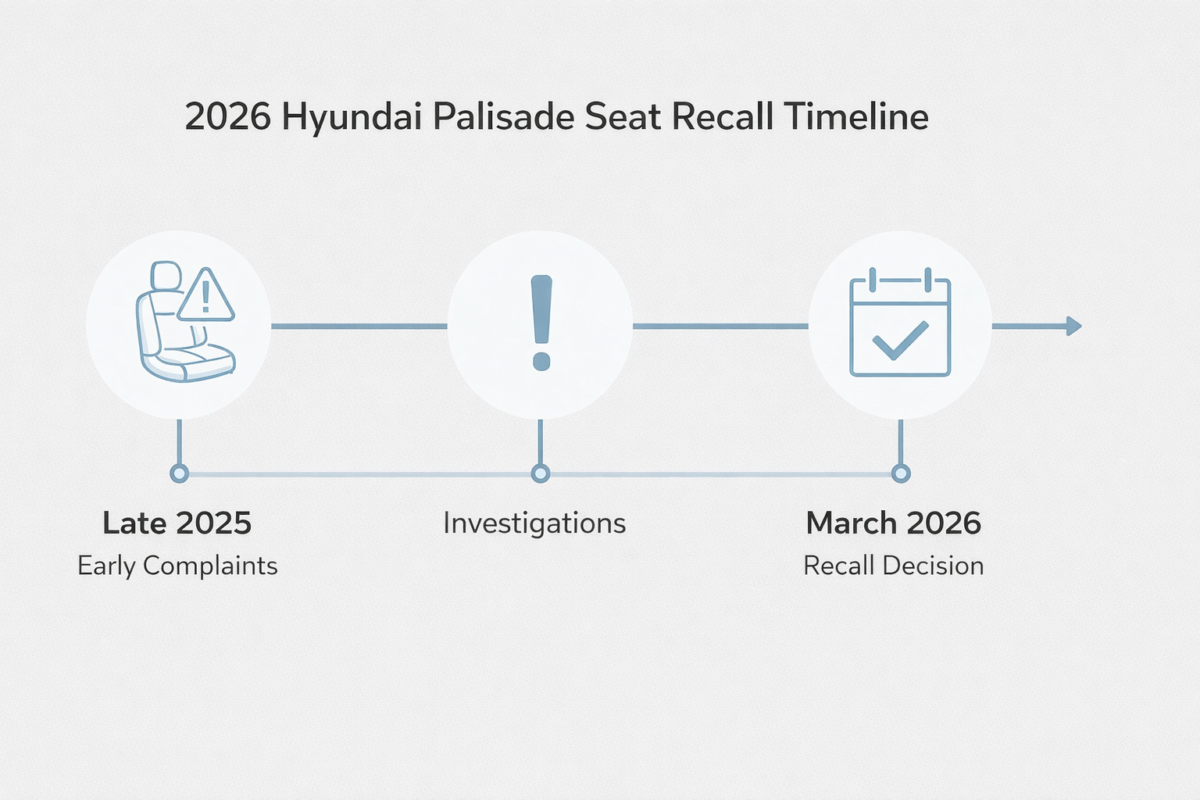
The timeline makes this heavier than a normal nuisance recall. The filing says Hyundai had been tracking complaints tied to second- and third-row seat operation, then escalated the case after receiving a March 9 report of a fatality potentially involving the condition. By the time the recall decision was made, Hyundai had one fatality report potentially tied to third-row operation, four minor injury reports tied to second-row operation, and 17 unique vehicles with claims. No crashes or fires were identified.
Which Palisades are in the recall
The affected U.S. count is large, but the trim list is not broad. The vehicles are:
- 2026 Hyundai Palisade Hybrid Limited and Calligraphy
- 2026 Hyundai Palisade Limited and Calligraphy
This is not a whole-lineup story. It’s concentrated in the higher trims that buyers typically choose when they want the Palisade for family hauling — more convenience features, nicer seating setups, easier rear-row access.
The filing lists 20,364 Palisade Hybrids and 40,729 gas Palisades in the U.S., built from May 8, 2025, through February 12, 2026 for the gas model and August 11, 2025, through February 12, 2026 for the hybrid.
The real audience here is fairly specific: families who paid up for the comfort end of the Palisade range and are now trying to figure out whether their spring driving plans need to change.
Why this matters more on weekend trips than in a parking lot
A recall like this is easy to misread if the SUV mostly does commuter duty. On paper it can sound like a technical seat-control problem. On a real weekend trip, it hits the busiest part of the cabin.
Three-row family SUVs earn their keep in exactly the moments when people are moving fast. Someone is loading a stroller. Someone else is stepping into the third row. A bag gets tossed inside. A child climbs around a cooler. A tired adult hits the easy-access button because everyone wants to leave now, not five minutes from now.
That’s why this matters as a travel story, not just a recall story. The issue is tied to fast, repeated rear-seat movement — the kind that happens when the vehicle is full, not parked in a driveway. It’s one thing to read about a seat function in a feature list. It’s another to think about it at a rest stop after three hours on the road.
There’s a broader buyer lesson here too. Large family SUVs sell convenience as much as space. The more a vehicle leans on powered access and seat automation, the more those features become part of the trip routine. When that routine has to change, the whole ownership experience shifts with it.
What owners should do before the fix arrives
The official guidance is narrow, but clear.
Hyundai says affected owners should use caution when operating the second- and third-row power seat functions, and make sure no person or object — including children — is in the seat or seat-folding area during operation. The filing also says owners should avoid touching the second-row seatback one-touch tilt-and-slide button during third-row entry and exit, and take steps to prevent accidental activation.
For a family with a trip already booked, the practical answer is not to panic. It’s to slow the routine down.
Check the VIN first. Hyundai’s recall tool and NHTSA’s recall search page are the fastest way to confirm whether a specific vehicle is included. If it is, treat third-row access as a deliberate step, not a one-button shortcut. Keep kids, pets, and loose cargo clear of the seat-folding area. If more than one adult is traveling, it makes sense to designate one person as the rear-seat spotter instead of letting entry and unloading happen all at once.
The software fix matters too. Hyundai plans to notify owners to bring vehicles in for an update, or to complete an over-the-air update for eligible Bluelink-enrolled vehicles. One of those recalls where reading the headline isn’t enough — the vehicle actually has to get the update once it’s available.
What this means in the U.S.
The timing is awkward for Hyundai. The Palisade is exactly the kind of three-row SUV families shop when spring travel picks up. Hyundai markets the 2026 Palisade as a spacious three-row midsize, with up to 86.7 cubic feet of cargo room behind the front seats.
Part of why this recall will travel beyond the usual VIN-check crowd is that the affected trims are not stripped fleet models. They’re premium family haulers. People buy them because they expect the rear cabin to make life easier.
The short-term effect isn’t that trips get canceled. It’s that the Palisade’s main selling point — easy rear-row convenience — becomes something owners have to think about more carefully until the remedy is in place.
For roadmapmag, that’s the real angle. This isn’t a market rumor or another dry defect filing. It’s a reminder that the features that feel most useful on a brochure are often the ones that matter most once a family actually starts moving.
What to watch next
Three things worth watching.
First, Hyundai says the VIN should be searchable for the recall now, giving owners a direct way to check status. Second, the current filing points to May 16, 2026 as the planned dealer and remedy-owner notification date. Third, the over-the-air path matters — Bluelink owners may be able to skip the dealer visit entirely.
The other thing to watch is whether Hyundai sharpens its explanation of the root cause. The filing says the company is still assessing it while developing the full remedy. Buyers tend to react differently to a clean software-fix story than to something more complicated involving hardware.
In the short run, though, the answer is simpler than the speculation. If a 2026 Palisade Limited or Calligraphy is in the driveway, this is a VIN-check-and-routine-change story first. The technology fix can come next.
SOURCES
- hyundainews.com
- static.nhtsa.gov
- reuters.com
- autoservice.hyundaiusa.com
- nhtsa.gov
- hyundaiusa.com
- caranddriver.com
DISCLAIMER
This article is a travel-utility explainer, not repair, legal, or safety certification advice. Owners should confirm recall status by VIN with Hyundai or NHTSA and follow the latest manufacturer instructions.