
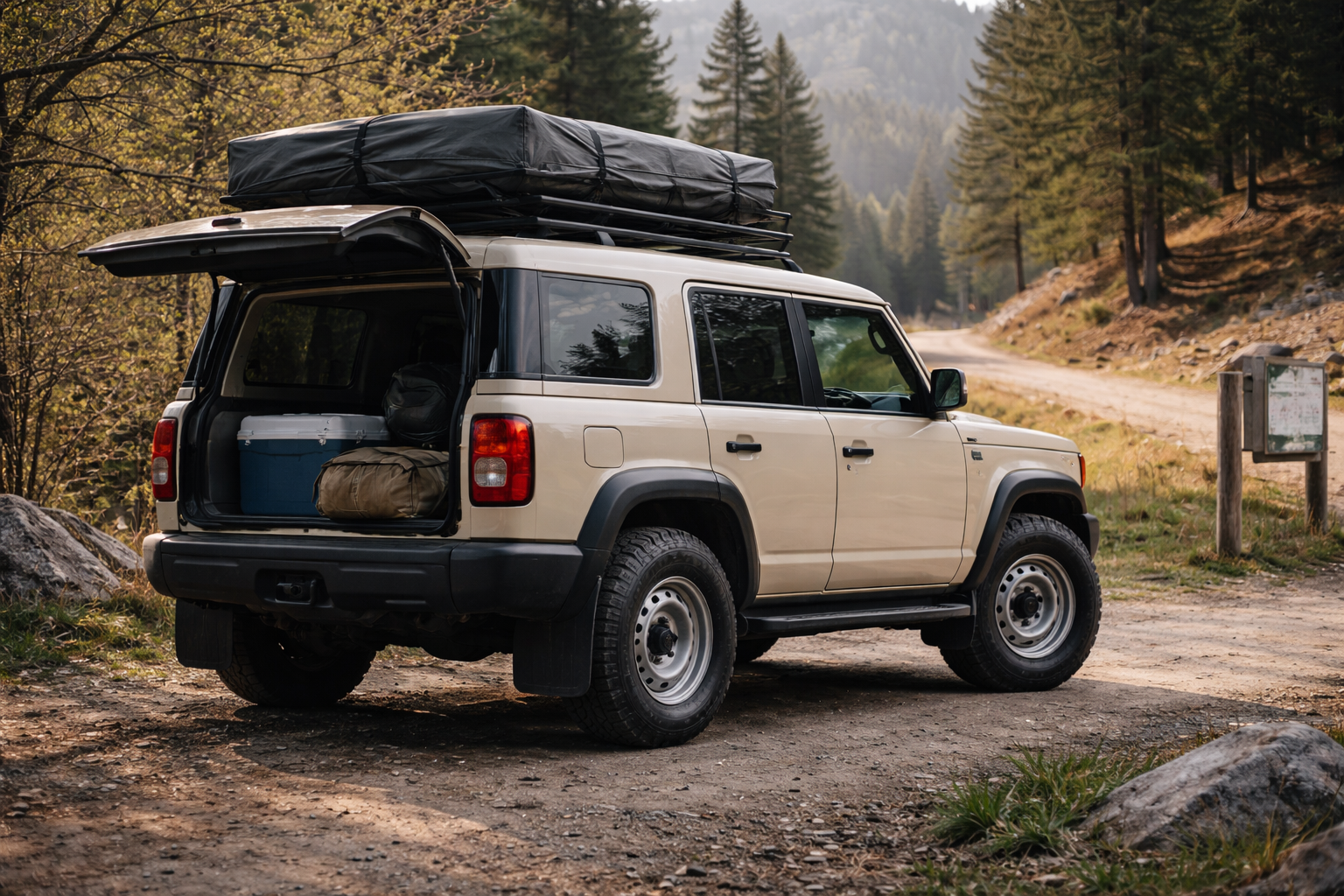
Motor1 published photos of four customized Land Cruiser FJ builds this week — retro, street, trail, and camper. Toyota isn’t selling any of them. But the exercise is worth taking seriously, because it clarifies what Toyota is actually trying to do with this vehicle: not ship one finished answer, but establish a compact, accessory-ready base that different buyers can shape into different trips. For roadmapmag readers, that’s a useful lens on where weekend SUVs are heading in 2026 — smaller, boxier, more obviously useful out of the box.
A lot of SUV stories still treat adventure like a trim level.
Toyota’s new Land Cruiser FJ concepts suggest something slightly smarter. The company isn’t selling one mood here. It’s showing one compact off-roader as four different kinds of weekend machine.
Quick takeaways
- Toyota’s four FJ builds point to a bigger 2026 trend: adventure SUVs are getting more modular and identity-driven.
- The hook isn’t nostalgia alone. It’s compact size, easier maneuverability, visible utility, and customization that doesn’t require a dealership visit.
- Toyota designed the FJ as an everyday Land Cruiser with “Freedom & Joy” at the center — not as a giant flagship.
- Motor1 and Carscoops both say North America isn’t getting this smaller FJ, but the design logic still matters for U.S. buyers.
- For weekend travelers, the clearest lesson: a useful adventure SUV now has to feel easy to live with before it feels heroic.
Toyota turned one FJ into four travel personalities
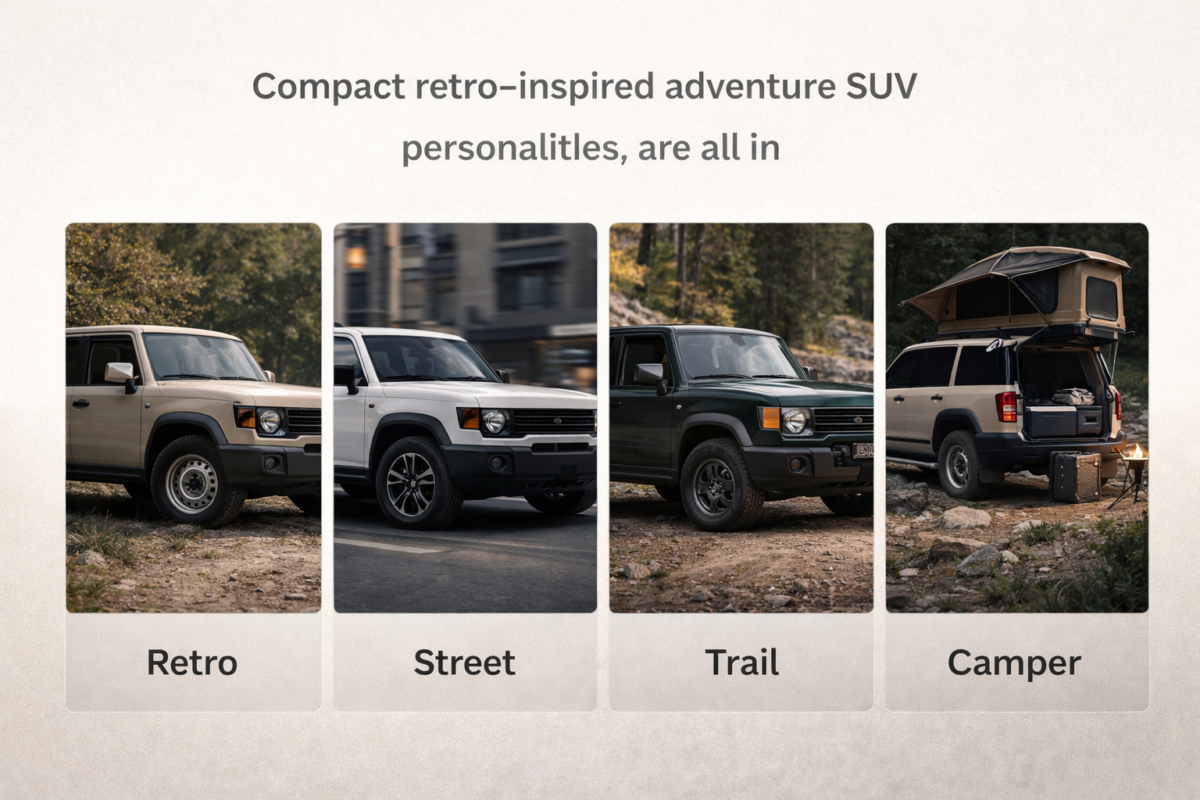
Motor1’s March 23 story laid out the split clearly.
“The Legendary” leans into old-school Land Cruiser nostalgia — steel wheels, vintage fender lettering, classic off-road look. “The Street Cruiser” goes the other direction: lower stance, black wheels, city attitude. “The Meridian” adds trail gear, including a snorkel, tougher tires, and a roof rack. “The Nature Explorer” pushes toward weekend camp duty with a rooftop tent and side awning.
More revealing than it sounds.
Toyota’s October 2025 world premiere had already built the FJ around customization: shorter wheelbase than the 250 Series, 5.5-meter turning radius, removable segmented bumpers for easier repair, round headlight options, MOLLE panels. The March 2026 concepts made that message louder — the FJ is being pitched less as a finished product and more as a flexible base for different travel styles.
Why this matters for weekend-trip buyers in 2026
The old SUV flex was easy to read. Bigger looked tougher, pricier looked more serious, and buyers were expected to sort the rest out later.
The newer version is more practical. A weekend SUV now has to fit normal life without killing the fantasy.
Compact enough to park, but upright enough to carry gear. A shape that looks ready for a trailhead before anybody starts talking about torque. Utility you can see at a glance: wide openings, roof-ready geometry, visible protection, a cabin built for muddy bags rather than polished commutes.
The FJ lands somewhere most larger SUVs don’t. Toyota’s team described it as combining Land Cruiser dependability with the manageable size of an everyday car. Smaller footprint, lower price, same basic outdoor promise — without the weight penalty that makes big adventure trucks exhausting to live with.
Buyers aren’t only asking “how capable is it?” They’re asking “can this thing feel useful on Friday, Saturday, and Monday?”
The smarter trend isn’t nostalgia. It’s modular
Retro styling gets attention. Modular usefulness is what makes the idea stick around.
The best FJ details aren’t the decorative ones. They’re the ones that suggest ownership will feel easier over time.
Segmented bumpers matter because trail and city knocks are real. The compact footprint matters because most trips begin in crowded parking lots, not on empty desert roads. Gear-mount options matter because weekend travel is usually full of awkward objects: coolers, wet boots, duffels, bike gear, camp chairs.
Oversized adventure SUVs often lose the plot here. They sell a huge image, then make ordinary use harder than it needs to be.
The FJ points the other way. The promise isn’t “go anywhere at any cost.” It’s “build a small rugged thing that people can actually shape around their version of a weekend.”
What this means in the U.S.
The obvious frustration for U.S. readers is availability. Motor1 and Carscoops both say the Land Cruiser FJ is aimed at Japan, Thailand, and selected markets across Africa, Asia, Latin America, and the Middle East.
But the design direction is already showing up in Toyota’s U.S. lineup.
The 2026 Land Cruiser leans on heritage design, visible off-road hardware, and outdoor-use features like locking differentials and a 2400W inverter. The 2026 4Runner keeps its own heritage cues. Toyota’s Trailhunter strategy treats integrated adventure equipment as core product, not an afterthought.
The practical U.S. takeaway isn’t “wait for the FJ.” Watch what the FJ is signaling.
If the next wave of weekend SUVs keeps moving toward smaller footprints, upright shapes, factory-backed personalization, and obvious utility — this launch will look less like an overseas oddity and more like an early marker.
What shoppers can actually use right now
Even without a U.S.-market FJ, the buying logic holds. The sharper questions for a 2026 weekend SUV aren’t about badge or horsepower. Does it look ready because it’s actually useful, or just decorated? Does the footprint fit a real parking lot? Can it handle a camping weekend and a hotel overnight without feeling wrong for either? And can it grow — accessories, mods, a different rack setup — without a trip back to the dealer?
Toyota’s four concepts are basically a demonstration that people don’t all want the same adventure. They want something they can make their own.
What to watch next
The interesting question isn’t whether the retro FJ looked good online. It’s whether Toyota and its rivals keep pushing compact adventure SUVs toward more modular identities over the next year.
If that happens, the split between giant luxury trucks and genuinely manageable weekend rigs will probably get more obvious — and harder for big SUV brands to ignore.
It matters to roadmapmag because it isn’t really about a Toyota most readers can’t buy. It’s about what the weekend market keeps rewarding: compact enough to live with, rugged enough to feel like something, and open enough to become more than one kind of trip.
SOURCES
DISCLAIMER
Availability, trims, and accessories can vary by region, and reported market plans can change. U.S. buyers should treat non-U.S. FJ availability as market-specific, not guaranteed.