
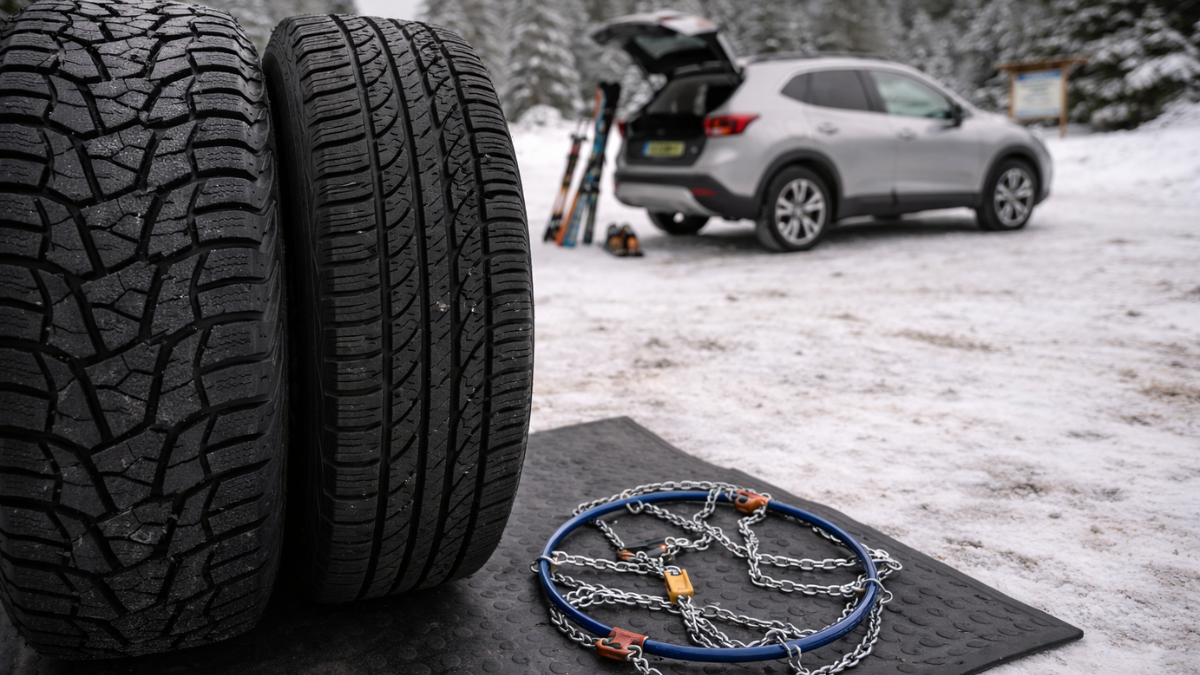
According to Tire Rack’s testing and related reporting, winter tires can cut stopping distance dramatically on ice compared with all-season tires (one Tire Rack test cited by MotorTrend showed a winter‑tire RAV4 stopping in 34 feet vs 57 feet for all-seasons from 12 mph on ice). Michelin’s winter-driving guidance also notes that AWD helps acceleration but does not improve braking or cornering on its own. And on real ski corridors, the rules often reward tires: Colorado’s Passenger Vehicle Traction Law allows compliance via AWD/4WD plus appropriate tires with at least 3/16-inch tread (or via 2WD with 3PMSF/M+S tires or chains/ATDs), while severe conditions can still trigger chain requirements. The takeaway for 2026 ski weekends is simple: AWD is helpful, but winter tires are where the money often works harder for safety and control.
Quick takeaways
- Winter tires usually buy more control per dollar for ski weekends because they improve braking and cornering, not just acceleration. Tire Rack testing has shown large stopping-distance gaps on ice between winter and all-season tires.
- AWD helps you get moving, but it does not automatically help you stop; Michelin’s guidance makes that distinction explicit.
- Rules can favor prepared tires: Colorado’s traction guidance allows compliance through AWD/4WD plus properly rated tires (or through 2WD with rated tires or chains/ATDs), and conditions can still require chains during severe storms.
- All-weather (3PMSF) tires are a compromise: CAA-Quebec notes all-weather tires can qualify for the snowflake symbol yet still have significantly longer braking distances than dedicated winter tires, especially on ice.
- Best buying order for most ski-weekend drivers: winter tires first; then evaluate whether AWD is needed for your driveway, repeated deep snow, or steep access roads.
The misconception: AWD equals winter safety
AWD is valuable, but it is not a winter “cheat code.” It mainly helps with getting traction to move forward. On snow and ice, the limiting factor for many crashes is braking and cornering grip.
That’s why the “where money works harder” framing matters:
- AWD helps you launch and climb, which can prevent getting stuck.
- Winter tires help you stop and steer, which prevents leaving the road.
If the ski weekend includes highways, mountain descents, and braking into turns, the second category tends to matter more.
Why winter tires usually win the value argument
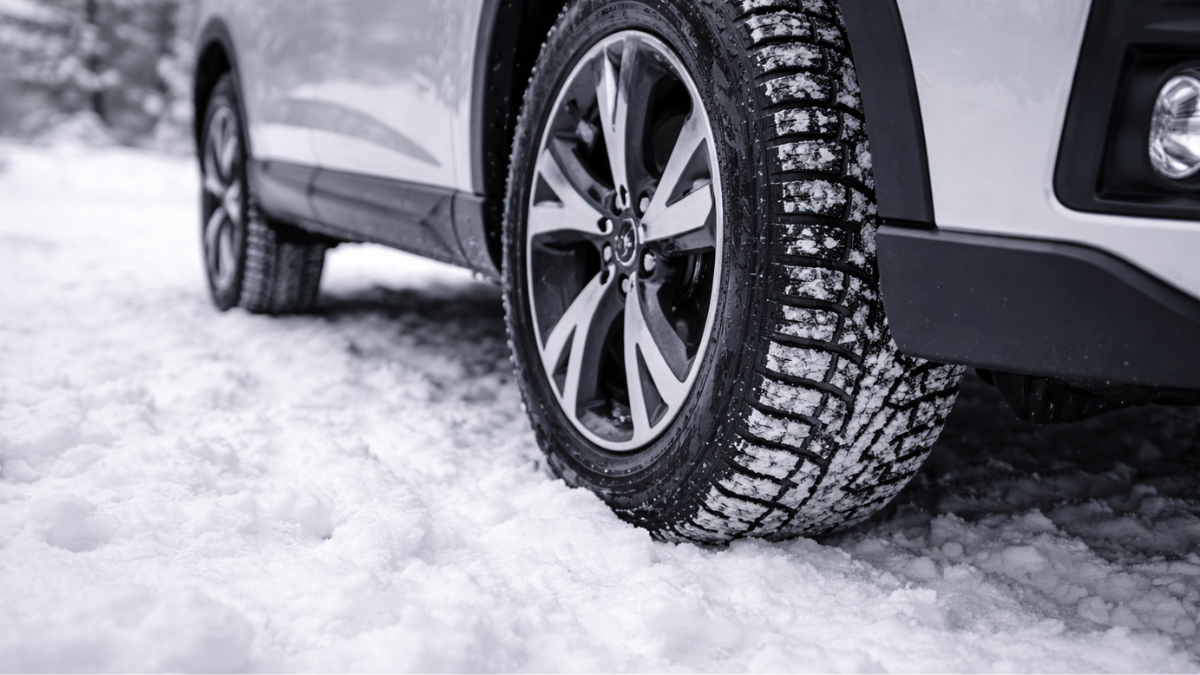
Winter tires do two things that change the physics:
1) Rubber compound stays flexible in cold temperatures.
2) Tread design grips snow and evacuates slush.
The proof is in instrumented testing. Tire Rack’s winter vs all-season comparisons (as summarized in MotorTrend’s reporting) showed a large stopping-distance gap on ice in identical vehicles, with winter tires stopping much sooner than all-seasons in the same conditions.
That doesn’t mean winter tires make you invincible. It means they reduce the “surprise slide” moments that turn normal braking into drama.
What AWD actually buys on ski weekends (and when it’s worth it)
AWD earns its keep in three common ski-weekend scenarios:
1) Steep driveways and unplowed side roads
If the last mile to the cabin is steep, or if the neighborhood plowing is delayed, AWD reduces the chance of getting stuck. It also helps when pulling away from a stop on a grade.
2) Deep snow starts and low-speed traction
Parking lots and side streets can be the most “stuck-prone” places: low speed, uneven snow, frequent stops. AWD helps you keep moving.
3) When you cannot avoid travel during storms
If trips happen on fixed dates and the family can’t wait for better weather, AWD can add margin—especially paired with good tires.
But Michelin’s guidance is a useful guardrail: AWD does not inherently improve braking or cornering. The tires still control that.
What the money math looks like for most families
A simplified “value” lens for 2–4 ski weekends per season:
- Winter tires: a one-time investment that improves control on every winter mile, including braking and cornering.
- AWD: often a higher ongoing cost (purchase price + possible fuel/maintenance tradeoffs) that mainly helps in lower-speed traction scenarios.
That’s why winter tires are often the “harder working” spend: they apply to more of the risk surface (stopping and steering), not just forward traction.
The law and the real world: compliance is not the same as capability
Ski weekends often run through corridors with traction rules. Colorado’s Passenger Vehicle Traction Law is a good example because it’s explicit about what qualifies: motorists may comply via AWD/4WD with properly rated tires and minimum tread, or via 2WD with rated tires or chains/ATDs; Colorado State Patrol also describes tire rating and tread requirements and notes that severe conditions can still justify chains.
Two practical takeaways:
- Know the rule for your corridor (I‑70, canyon roads, resort access routes).
- Complying on paper isn’t the same as feeling calm on a descent. Winter tires are often what makes the drive feel controlled, not merely legal.
Where all-weather tires fit in 2026
All-weather tires (3PMSF-rated) can be a valid compromise for drivers who cannot store a second set. But CAA-Quebec’s guidance warns that even when they qualify for the snowflake symbol, their braking distance can be significantly longer than a true winter tire, especially on ice.
Weekend takeaway:
- All-weather can be “better than all-season,” and may satisfy some traction laws.
- Dedicated winter tires are still the safest bet for repeated mountain travel where ice and braking control matter.
What you can do: the “ski weekend setup” checklist
Use this order to make the money work harder:
1) Choose four winter tires (not two) if you drive to the mountains regularly.
2) Verify tread depth before the season and before long trips; worn tread changes stopping distance.
3) Add AWD only if your use-case needs it (steep driveway, unplowed access, frequent storm travel).
4) Carry chains/ATDs if your corridor requires them or if conditions can escalate.
5) Treat speed as a traction tool: slower cruising reduces the slide penalty and gives tires more usable grip.
Bottom line
For 2026 ski weekends, winter tires are usually the spend that works harder because they improve the two things that prevent most “winter moments”: braking and cornering. AWD is still valuable—especially for getting moving in deep snow and climbing steep access roads—but it is best viewed as a second layer, not the foundation.
For most families who drive to resorts a handful of times each winter, the least-stress setup is simple: four winter tires first, then decide whether AWD is worth paying for based on where the trip actually gets difficult.