
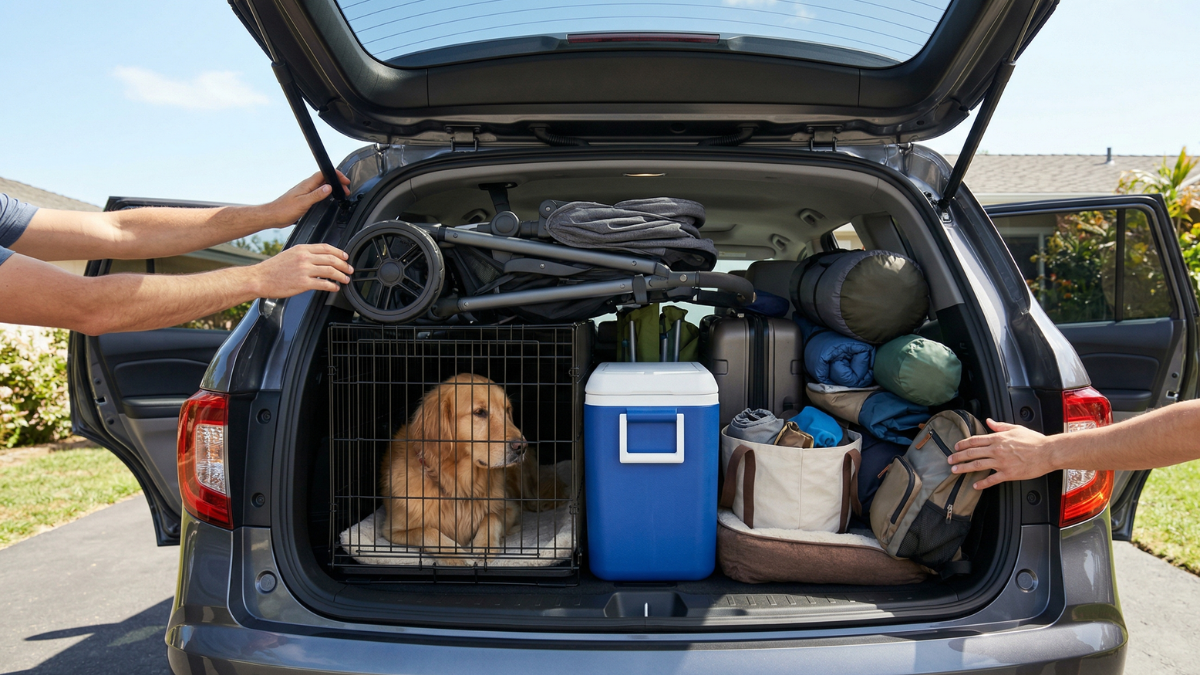
The trip is a weekend drive to the lake cabin: two adults, two kids in the second row, a dog, a 62-quart cooler, a stroller, and whatever else the car ends up absorbing in the driveway. Folding the third row is not an option because the third row has people in it. Folding the second row is not an option because the second row also has people in it. The cargo area is exactly what it says on the spec sheet: the space behind the third row, with everyone sitting where they are supposed to sit.
That number — cubic feet behind the third row with all seats occupied — is the one that determines whether this trip works. It is also the one that varies most dramatically across vehicles that otherwise look similar on paper. A vehicle with 22 cubic feet behind the third row can fit a large dog crate, a slim 45-quart cooler, and a compact stroller in its cargo bay simultaneously. A vehicle with 14 cubic feet behind the third row requires a decision about which one of those three things gets strapped to the roof instead.
Quick Takeaways
- The relevant cargo figure for a full-passenger family trip is cubic feet behind the third row with all rows occupied — not maximum cargo volume with seats folded, which is the number most spec sheets lead with
- Mid-20s cubic feet behind the third row is the practical threshold for fitting a dog crate + cooler + stroller simultaneously without folding seats; sub-18 cubic feet requires compromises
- Cargo area width matters as much as volume: a wider rear opening allows a dog crate and cooler side-by-side rather than stacked; check width at the widest point of the cargo floor, not just total volume
- Liftover height — how high you have to lift items over the bumper to load them — determines whether a heavy cooler is a two-person lift; lower is better
- Power liftgates are table stakes for this use case; hands-free foot-activated liftgates are specifically useful when holding a dog leash or a child at the same moment
- The underfloor storage compartment found on some vehicles (Kia Telluride, Honda Pilot) does not add cubic footage to the rear-of-third-row measurement but does free up vertical space by allowing the cargo cover, jack, and accessories to move below the floor
The Number That Actually Matters
Most SUV cargo comparisons lead with maximum cargo volume — the number produced when every seat is folded flat and the vehicle is essentially functioning as a box with wheels. For a family of five or six who keeps everyone seated, that number is irrelevant. The relevant number is what remains available behind the occupied third row.
This figure varies by a factor of almost two across midsize three-row SUVs in the 2025–26 model year. The Chevrolet Traverse and Honda Pilot sit at approximately 22–23 cubic feet. The Toyota Grand Highlander and Volkswagen Atlas land at approximately 20–21 cubic feet. The Kia Telluride arrives at approximately 22 cubic feet for 2027 (skipping the 2026 model year). The Hyundai Palisade comes in at approximately 19 cubic feet. Some smaller or more style-compromised three-row vehicles land below 16 cubic feet, which is the minimum for even a single large piece of luggage.
For context: a standard medium-large dog crate (30 inches long × 21 inches wide × 24 inches tall, suitable for a Labrador or similar breed) occupies approximately 8–9 cubic feet. A 62-quart hard-sided cooler occupies approximately 4–5 cubic feet. A compact folded stroller occupies approximately 3–5 cubic feet depending on model. Put all three in a cargo area and you need 15–19 cubic feet just for those items, with zero margin for error and no room for the reusable grocery bags that inevitably appear at the last moment.
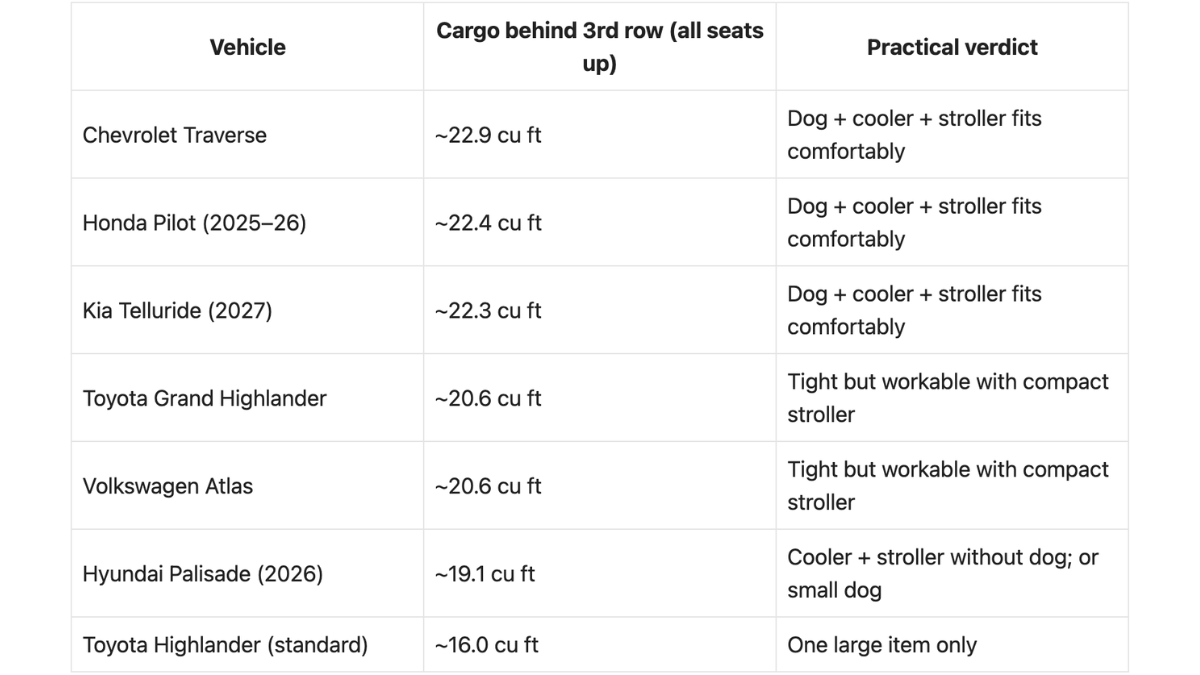
Figures per manufacturer specifications and published cargo testing; actual usable volume depends on cargo floor width, liftover height, and item shape.
Why Width Is as Important as Volume
Cubic footage is a total measurement. It does not specify the shape of the available space. A cargo area that is 22 cubic feet but narrow forces items to be stacked vertically: dog crate on the floor, stroller on top of the cooler, nothing stable. A cargo area that is 22 cubic feet and wide allows items to sit side-by-side: dog crate on the right, cooler on the left, stroller flat on top of both.
The Grand Highlander’s cargo testing by Autoblog specifically noted that the vehicle’s cargo area is “wider than every three-row crossover I’ve tested,” able to place two large checked-bag suitcases end-to-end on the floor — a floor width comparison that translates directly to a dog crate and cooler sitting side-by-side rather than competing for vertical space.
The Volkswagen Atlas’s boxier profile similarly preserves internal width, with 96.6 cubic feet of total cargo space credited partly to its decision to avoid the sloping rooflines that reduce usable width in style-focused competitors.
The takeaway for practical packing: always check the load floor width at its widest point, not just the total cubic footage. Manufacturers do not always publish this measurement directly; the most reliable check is placing your specific crate and cooler side-by-side with a measuring tape before visiting the dealership.
Four Vehicles That Work Without Compromise
Honda Pilot (2025–26) — Most Underfloor Storage Plus Best Third-Row Cargo
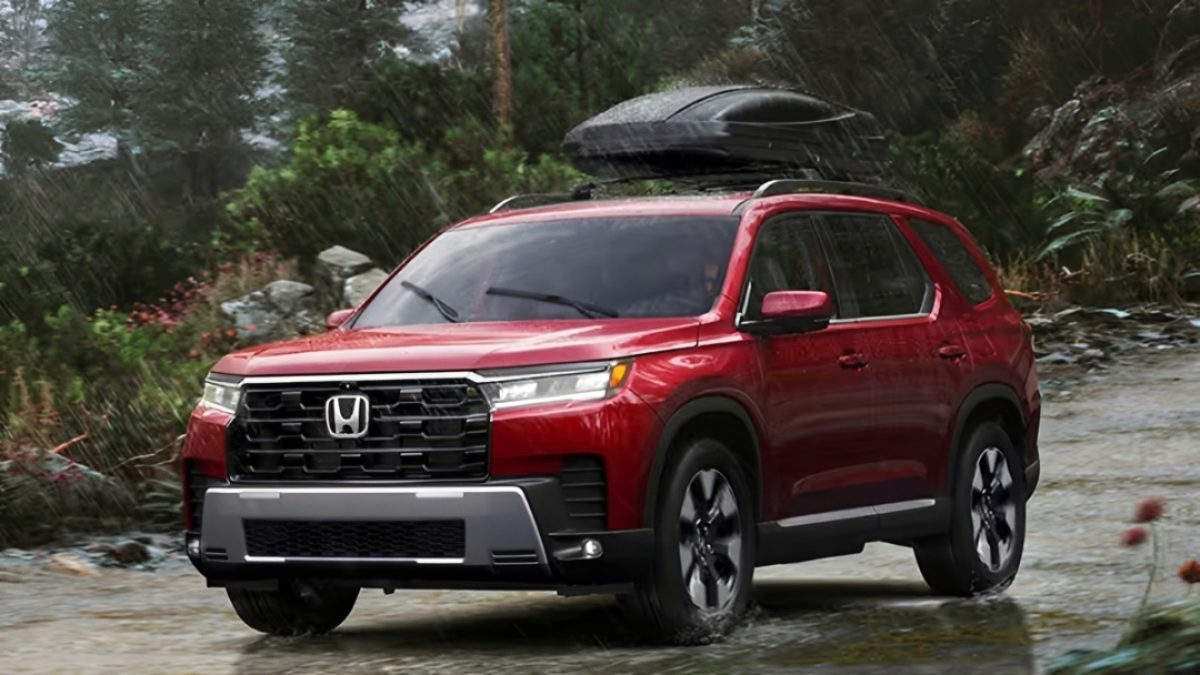
The Pilot’s 22.4 cubic feet behind the third row is among the highest in the midsize class. That figure alone makes it a strong candidate. What moves the Pilot to the top of this specific use case is what happens below the cargo floor.
On Touring, Elite, and Black Edition trims, the Honda Pilot features a removable second-row center seat with its own dedicated storage compartment under the rear cargo floor. This serves two functions: the center seat can be removed to open a walk-through aisle to the third row (useful for loading a dog without climbing over seats), and the underfloor compartment swallows the cargo cover, the jack, and other accessories that would otherwise sit on the floor and reduce usable space.
The 2026 Pilot adds a standard power liftgate across all trims — including the base Sport — which confirms Honda’s commitment to accessibility at this price point. Upper trims add a hands-free foot-activated liftgate, which is specifically relevant when walking the dog from the rear door to the cargo area requires both hands on the leash.
Published dimensional data from multiple Honda dealer sources confirms 18.6 cubic feet as the standard measurement, with maximum configurations reaching 22.4 cubic feet on EX-L, Touring, and Elite trims. The Community Honda review of the 2026 Pilot specifically notes: “22.4 cubic feet of space behind the third row is deep enough to accommodate most standard foldable strollers vertically, leaving room for other bags.”
What fits: Large dog crate (Lab-size) + 62-quart cooler + compact jogging stroller, with moderate room remaining on Touring and above trims.
Recommended trim: EX-L (~$45,000). Gets the 22.4 cu ft rear cargo; stowable center seat; power liftgate standard.
Chevrolet Traverse — Best Flat Floor Width for Side-by-Side Loading
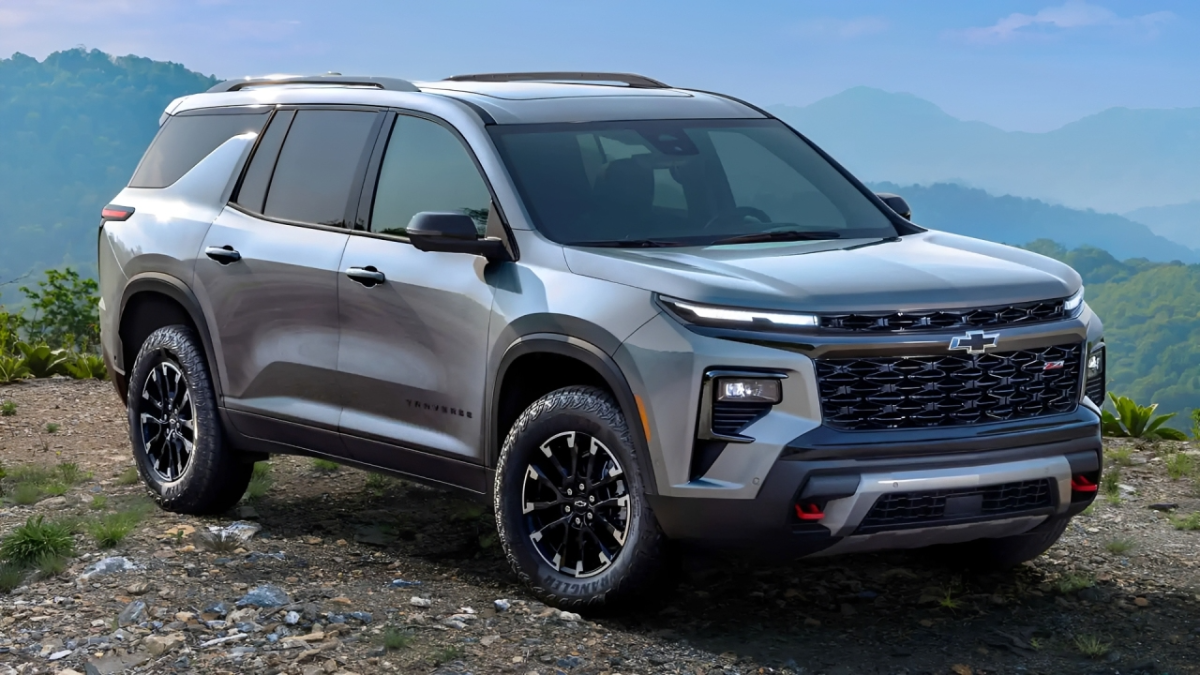
The Traverse earns its spot through a combination of the largest behind-third-row cargo space in the mainstream midsize segment (22.9 cubic feet) and a cargo floor geometry that prioritizes usable width over architectural complexity.
U.S. News ranks the Traverse specifically for this advantage: “If third-row space is your key metric, only the Honda Pilot and Chevrolet Traverse show slightly better numbers” than the Grand Highlander, noting the Traverse at 22.9 cubic feet. Autoblog’s confirmed luggage test puts the Buick Enclave/Traverse at the top of the three-row midsize class for rear cargo.
The Traverse’s rear cargo design benefit comes from its upright rear profile — avoiding the raked rear glass and stepped cargo floors that reduce usable width in vehicles with more expressive exterior styling. The flat cargo floor, standard on the Traverse across all trims, means a large dog crate and a tall cooler can sit side-by-side on the same level rather than requiring one to be propped or tilted.
What fits: Large dog crate + 62-quart cooler + compact stroller, side-by-side configuration, with room for a small bag.
Recommended trim: RS or Premier (~$45,000–$51,000). Gets mid-height seating for rear-passenger accessibility, cargo floor cargo rails, and power liftgate.
Toyota Grand Highlander — Best Cargo Floor Width in the Class
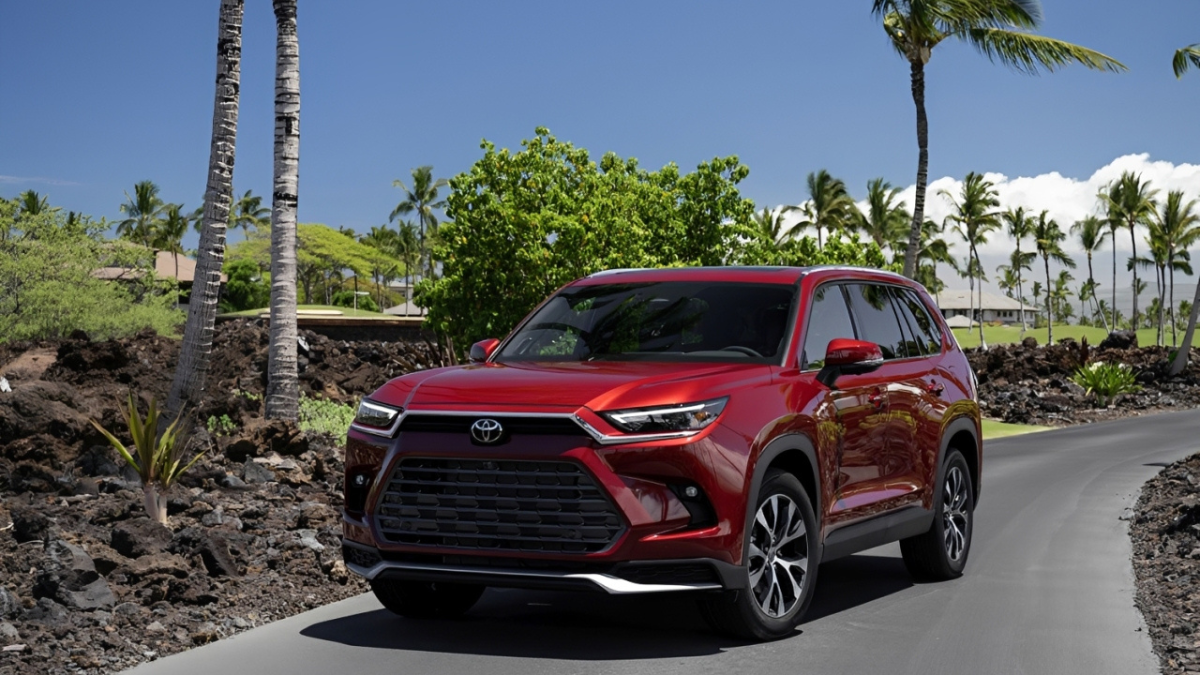
The Grand Highlander lands at 20.6 cubic feet behind the third row — slightly below the Pilot and Traverse by the numbers, but the Autoblog luggage test demonstrated a specific geometric advantage that cubic footage alone does not capture: the Grand Highlander’s cargo floor is wider than every other three-row crossover tested, including the Chevrolet Tahoe and Ford Expedition.
That width allows two large rollaboard suitcases placed end-to-end on the floor, leaving vertical space above for additional items. In dog + cooler + stroller terms, it means the dog crate and cooler can sit side-by-side without the width constraint that affects narrower vehicles with nominally higher cubic footage figures.
U.S. News confirms: “Cargo capacity in the Grand Highlander is better than what’s offered by most vehicles in the midsize SUV class, with 20.6 cubic feet behind the third row.” The low liftover height — noted in multiple Grand Highlander reviews — means a heavy loaded cooler can be slid in rather than lifted.
The Grand Highlander Hybrid is EPA-rated at 36 mpg combined, which on a 300-mile lake weekend round trip at $3.50/gal means approximately $29 in fuel versus approximately $48 for a non-hybrid midsize at 22 mpg. Over a season of weekend trips, that difference covers the cost of a quality dog crate.
What fits: Medium-large dog crate + 62-quart cooler side-by-side, with a folded stroller upright behind them — tight but confirmed workable per the luggage test.
Recommended trim: XLE Hybrid (~$48,000). Gets multilink rear suspension for smooth mountain-adjacent routes, wide cargo floor, hybrid efficiency, and power liftgate standard.
Volkswagen Atlas — Most Usable Vertical Height in the Class
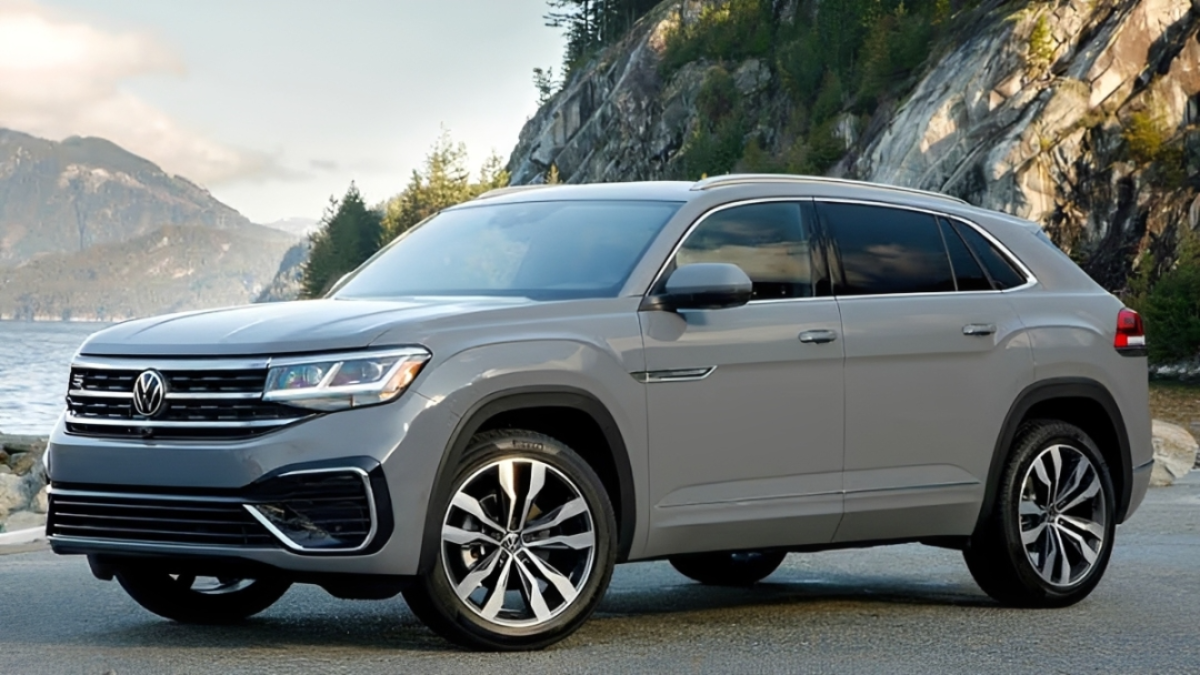
The Atlas earns its inclusion not for the highest cubic footage but for its boxiest profile, which preserves internal cargo height better than virtually any competitor. At 20.6 cubic feet behind the third row — matching the Grand Highlander numerically — the Atlas’s near-vertical rear glass means items can be stacked taller without being constrained by a sloping roofline.
A large dog crate and an upright stroller have different problems than heavy flat luggage. The stroller, in particular, is often stowed in a semi-vertical folded position that relies on rear-cargo height rather than floor area. The Atlas’s tall cargo opening, documented in the ElkGroveVW specification guide at 96.6 cubic feet total maximum capacity, is the product of a design philosophy that prioritizes internal volume over exterior styling — explicitly the opposite of the raked rooflines that limit cargo height in more style-focused competitors.
The Atlas’s cargo passthrough — a channel from the cargo area through the center console into the front cabin — allows long items like folding camping tables or ski poles to extend forward, which in practice means the cooler or crate does not have to compete for floor length with extended items.
What fits: Large dog crate + 62-quart cooler + upright-folded stroller, with vertical stacking advantage for taller items.
Recommended trim: SE (~$40,000). Gets adequate cargo without paying for SEL or SEL Premium trim upgrades that add cost without cargo benefit.
The Load Floor Geometry Test: What to Check at the Dealer
Three measurements that spec sheets usually omit but determine whether the specific load works:
Load floor width at widest point: Measure from side wall to side wall at floor level with the third row occupied. This determines whether the dog crate and cooler sit side-by-side or whether one goes on top of the other.
Load floor length at floor level: With the third row occupied, measure from the rear seatback to the liftgate. Some vehicles have third-row seats that intrude several inches into the cargo area when occupied; others do not.
Liftover height: Measure from the ground to the cargo floor lip at the liftgate opening. Under 30 inches is manageable for a loaded cooler as a solo lift; above 34 inches typically requires a second person or a sliding motion along the bumper. Vehicles with lower ground clearance and flat-bottomed cargo floors generally have lower liftover heights.
The most reliable pre-purchase test for this specific use case: bring the actual dog crate and cooler to the dealership. Cubic footage is an abstraction; your specific items either fit or they do not.
U.S. and Canada Note
Canadian families doing long drives to cottage country — the Muskoka lakes, the Eastern Townships, Banff-area lake drives — face one additional constraint worth noting: AWD availability on the cargo-leader trims.
All four vehicles above are available with AWD: the Pilot with standard AWD on most trims, the Traverse with optional AWD, the Grand Highlander with standard AWD across the lineup, and the Atlas with AWD available on all trims. For Canadian buyers doing weekend drives on mixed pavement and gravel cottage roads in spring or fall shoulder season, confirming AWD on the specific trim being purchased is worth the same diligence as confirming cargo figures.
Canada-specific L/100 km note: the Grand Highlander Hybrid at 7.8 L/100 km combined (approximately, based on the 36 mpg EPA estimate) versus a non-hybrid midsize at roughly 11–12 L/100 km represents a meaningful fuel cost difference on a 400-km round trip to the lake, particularly with Canadian fuel prices running at $1.60–$1.90/litre in many provinces. Over a six-weekend cottage season, the hybrid saves approximately $80–$120 CAD in fuel alone.
SOURCES
- U.S. News: Grand Highlander 20.6 cu ft behind third row; Traverse has slightly better numbers; Grand Highlander cargo better than most in class
- Autoblog Luggage Test: Grand Highlander cargo floor “wider than every three-row crossover I’ve tested” including Tahoe and Expedition; all six bags fit behind raised third row; new segment champion in luggage test
- Community Honda of Orland Park: 2026 Pilot 22.4 cu ft behind third row; stroller fits vertically with room for bags; stowable center seat; power liftgate standard on all 2026 trims
- Cars Frenzy: Pilot behind-third-row 18.6 cu ft standard, 22.4 cu ft max on EX-L and Touring with underfloor
- CarBuzz: Kia Telluride 89.3 cu ft total, 22.3 cu ft behind third row; Grand Highlander 97.5 cu ft total, 20.6 cu ft behind third row
- ElkGrove VW: Atlas 20.6 cu ft behind third row; 96.6 cu ft total maximum; center console cargo passthrough for long items; boxier profile preserves internal height; 165 lb roof rail weight limit
- Autoblog top five SUVs trunk space: Traverse 22.9 cu ft behind third row; flat floor advantage noted; full-size and midsize comparison
- Glen Toyota: Grand Highlander low liftover height; 20.6 cu ft with all rows up; 57.9 cu ft with third row folded; foot-activated power liftgate available
- U.S. News most cargo space: comparative midsize and full-size rankings; Grand Highlander and Pilot noted for best midsize third-row cargo