

There is a specific kind of discomfort that tall drivers know and most car reviews do not capture: the vehicle that seems spacious enough in the parking lot but requires a specific, slightly wrong seated position to make the sightlines work, the headliner clear, and the steering wheel accessible simultaneously. At 75 mph on a six-hour drive, that slightly wrong position is not slightly wrong anymore. It is the reason the lower back starts its complaint at hour three and has fully filed a grievance by hour five.
The overall size of a vehicle is, counterintuitively, a poor predictor of whether a tall driver fits well. Midsize SUVs that are nearly identical in exterior footprint can differ by four or five inches in front-seat legroom. A sunroof can reduce effective headroom by nearly two inches — enough to push a 6-foot-3 driver into a forward head tilt that will be felt the next morning. And a vehicle can offer generous legroom with a steering wheel position that does not telescope far enough to allow a comfortable arm angle for anyone with a longer-than-average torso.
What follows is a specific guide for drivers of 6 feet and above who need to evaluate midsize SUVs for long-distance road trips — not for commuting, not for parking convenience, but for the eight-hour driving day where every dimension that was a minor compromise becomes a sustained load.
Quick Takeaways
- The four dimensions that matter for tall drivers — and that most buyers do not measure at the dealership — are front seat legroom, front headroom without a sunroof, steering wheel telescopic reach, and seat cushion depth (thigh support extension)
- Sunroofs cost 1.5–2 inches of headroom on most midsize SUVs; for a driver of 6-foot-3 or taller, this can push the fit from comfortable to marginal — the headroom spec in most reviews and manufacturer brochures is the non-sunroof figure
- The 2026 Hyundai Palisade has the longest front legroom in the midsize SUV class at 44.2 inches and available seat thigh-cushion extension — but Edmunds notes that “the low-mounted steering wheel makes it hard for tall drivers to enter and exit gracefully,” a real ergonomic flag
- The Toyota Grand Highlander offers 41.7 inches of front legroom and 41.5 inches of headroom and consistently appears in both editorial tall-driver reviews (Edmunds) and owner community reports as one of the more comfortable fits for drivers approaching 6-foot-6 and above
- The Kia Telluride at 40.9 inches of headroom and 41.4 inches of legroom draws consistent owner endorsements from drivers between 6-foot-6 and 6-foot-7 in owner forum documentation — a segment of buyers underserved by standard review coverage
- The critical pre-purchase test for a tall driver is 30 minutes at highway speed, not a parking-lot sit: headroom and legroom feel fine standing still; the sustained-posture problem emerges only at cruise speed when the seat adjusts to its true highway position and the steering wheel angle becomes the defining constraint
What Tall Drivers Actually Feel That Short Drivers Don’t
The ergonomic challenges of a tall driver in a midsize SUV fall into four distinct categories, and they compound differently depending on height distribution. A driver whose height is mostly in the legs faces a different set of constraints from a driver whose height is mostly in the torso, and both are different from the driver with proportionally long arms.
Legroom is the dimension everyone measures and it is genuinely important — but it is also the one most frequently overestimated. Legroom is measured from the heel contact point on the floor to the fully-extended leg position. What it does not measure is knee-to-dashboard clearance, which affects the driver’s ability to shift between driving positions over a long trip, or the angle of the hip when the seat is in its useful position for visibility. A car with 42 inches of legroom in which the seat cannot go low enough for a 6-foot-4 driver to see the road without tilting their head forward is not a well-fitting car for that driver, regardless of the number.
Headroom is the dimension most sensitive to sunroof choice. The spec-sheet figure for front headroom almost always represents the non-sunroof configuration. On many midsize SUVs, the sunroof module intrudes 1.5–2 inches into the headroom. A 6-foot-3 driver in a vehicle with 41 inches of headroom without a sunroof has 39–39.5 inches with one — which can mean the difference between a comfortable seated position and one that requires a slight but sustained forward head tilt to maintain road visibility without contact with the headliner.
For tall drivers, this is the specification to verify specifically: front headroom in the trim with the sunroof package you are actually considering. Most review sites, and most manufacturer websites, list the non-sunroof figure by default.
Steering wheel reach is the variable most consistently overlooked and most consistently reported by tall drivers as a cause of highway fatigue. A driver with a longer torso or longer arms who cannot move the steering wheel far enough toward them must either: sit closer to the wheel (reducing legroom) or reach forward slightly to maintain control (tensing the shoulders and upper back). Either adaptation is sustained for the full duration of the drive. After four hours, either adaptation has become a source of fatigue that the driver attributes to the trip rather than to the car’s ergonomic limits.
Seat cushion depth — the front-to-rear length of the seat base — determines how much of the thigh is supported and how much hangs unsupported between the seat edge and the knee. Most midsize SUV seats are sized for drivers of average height; a driver of 6-foot-3 or taller has more thigh to support. When the seat cushion ends three or four inches before the back of the knee, the concentrated pressure at the unsupported edge of the cushion becomes noticeable over long drives as a thigh pressure point or, in some drivers, a progressive compression of circulation. Some vehicles address this directly with extendable thigh-support cushions.
The Spec Table That Matters
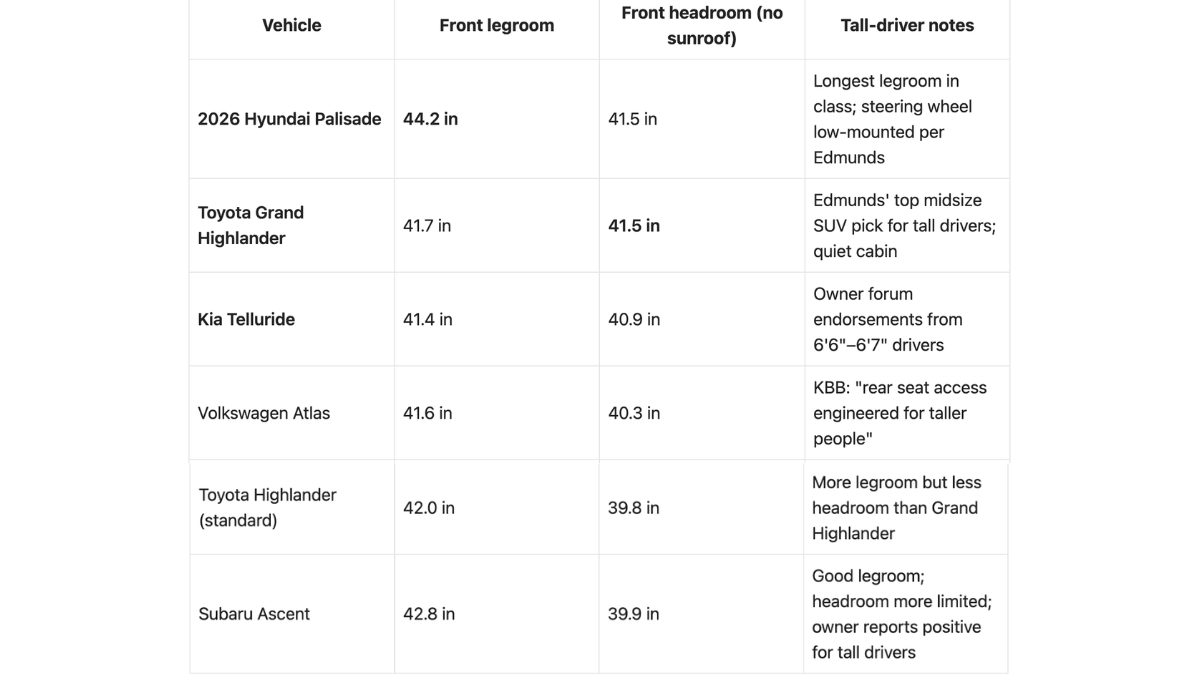
Note: headroom figures shown are without moonroof/sunroof. Add sunroof and subtract 1.5–2 inches. Verify the exact figure for your specific trim before purchase
Three Vehicles in Detail: What Tall Drivers Actually Experience
Hyundai Palisade: The Numbers Champion With a Notable Caveat
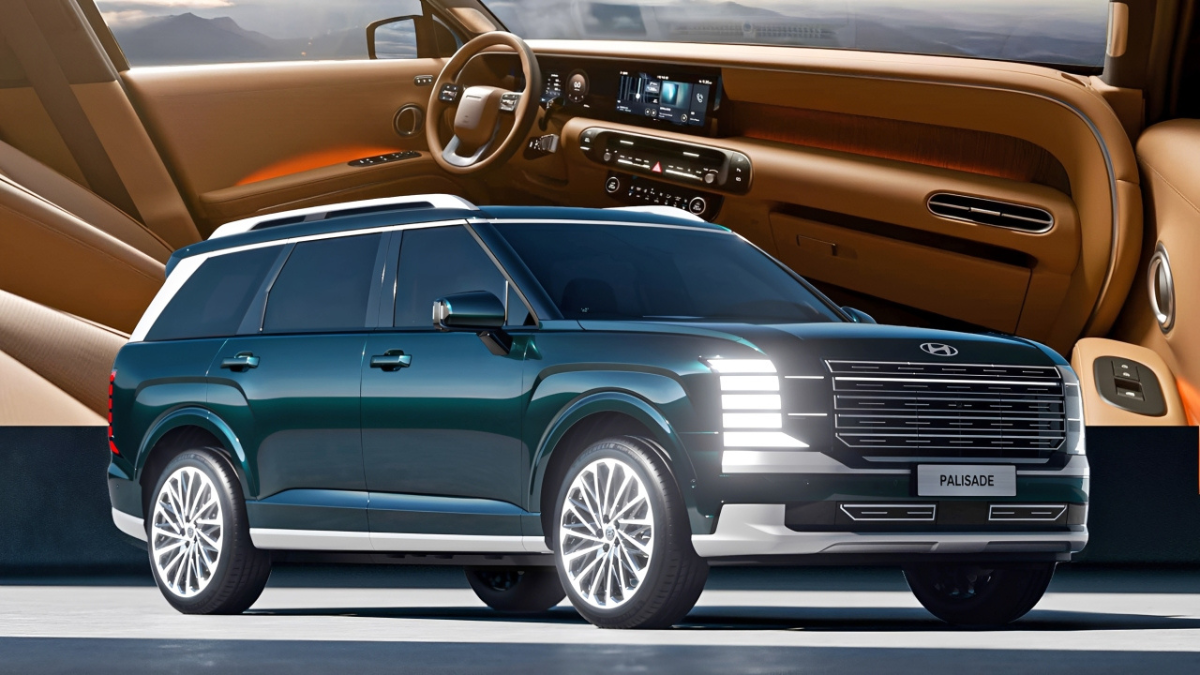
At 44.2 inches of front legroom, the 2026 Palisade leads the midsize SUV segment outright. For a driver whose primary concern is leg and knee space — particularly drivers with very long legs relative to their torso — this number matters. The Palisade’s redesigned 2026 interior also brings a seat thigh-cushion extension on higher trims: the Calligraphy grade offers a power-extendable seat cushion that explicitly addresses the thigh-support deficit that affects tall drivers in standard seats.
Edmunds’ first-drive review of the 2026 Palisade describes the Calligraphy seat this way: “The range-topping Calligraphy has the adjustments you’d expect, plus four-way lumbar, side bolster width adjustment and an extendable leg cushion. It proved perfect for long-legged drivers who want extra support on lengthy drives.”
The Palisade’s Ergo Motion driver’s seat, available on higher trims, uses air pockets to provide subtle lumbar-support adjustments during driving — a system specifically documented for long-drive fatigue reduction.
The caveat is meaningful: Edmunds notes that the low-mounted steering wheel position “makes it hard for tall drivers to enter and exit gracefully” — and this is not merely an entry/exit issue. A low-mounted steering wheel combined with an extended thigh cushion creates a narrow gap between the seat and wheel for a tall driver’s thigh during the driving position itself, which Edmunds’ reviewer found constraining enough to disable the automatic entry/exit feature entirely. This is a pre-purchase test item, not a dealership-walkthrough item.
Best for: Tall drivers whose height is primarily in the legs who test-drive the specific trim they are buying and verify the steering wheel reach does not conflict with their preferred seat-and-pedal position.
Toyota Grand Highlander: The Broadly Recommended Fit
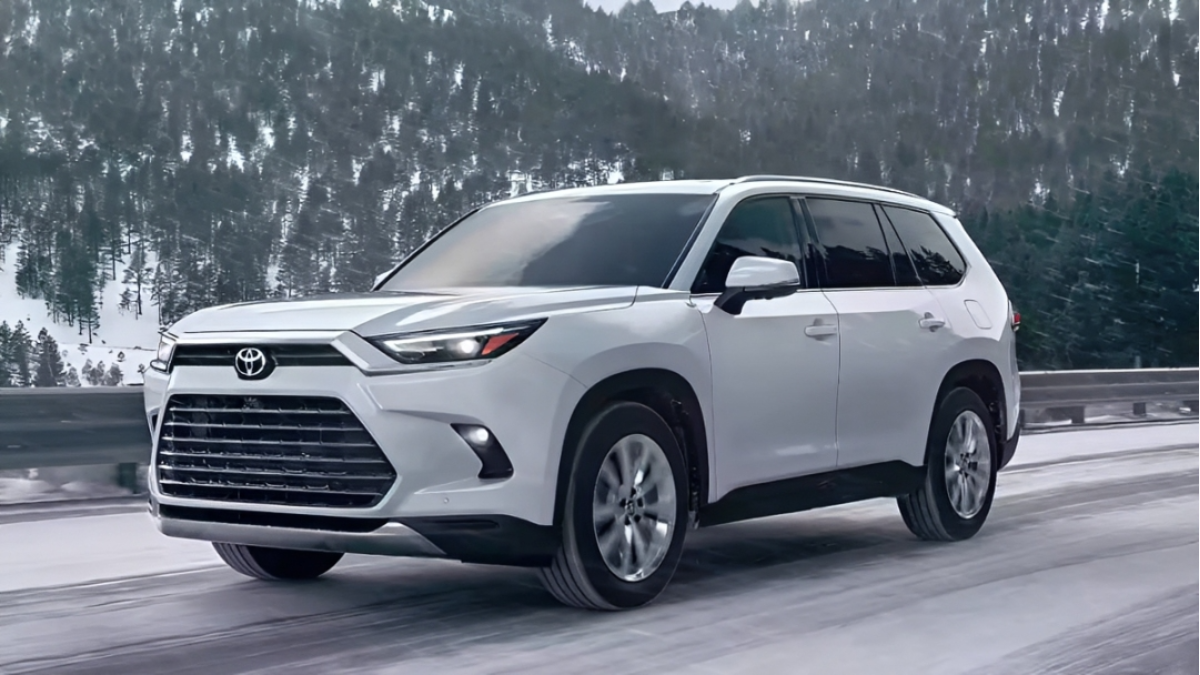
The Toyota Grand Highlander is longer and taller than the standard Highlander, introduced for 2024, and this additional size was specifically applied to interior dimensions rather than just exterior presence. Front headroom of 41.5 inches and front legroom of 41.7 inches place it among the best in the segment on both dimensions simultaneously.
Edmunds’ tall-driver SUV guide identifies the Grand Highlander as the top pick for tall drivers in the midsize category: “It out-headrooms the Palisade by nearly an inch, and this newest, roomier version of the venerable Highlander… provides an extremely good and well-rounded midsize SUV.” The Edmunds reviewer specifically noted the Grand Highlander’s benefit for tall passengers as well, not just the driver — relevant for families where multiple tall adults take turns in the front seat on long trips.
The Grand Highlander’s ride quality at highway speed is a secondary advantage for tall drivers. U.S. News notes that despite not being the quietest at highway speeds, the vehicle provides “comfortable and pleasant driving experience” suited for long distances — and the stiffer, truck-adjacent body feel common in some midsize three-row SUVs is not a characteristic of the Grand Highlander.
Owner reports from ToyotaNation.com document 6-foot-7 drivers finding the Highlander comfortable, with one owner specifically noting that the 2022 redesign improved seat support relative to the prior generation in a way that eliminated tailbone discomfort on extended drives.
Best for: Drivers of 6-foot to 6-foot-8 who need balanced headroom and legroom for mixed-occupant trips where the driver changes; buyers prioritizing Toyota reliability with a genuine tall-driver fit.
Kia Telluride: The Owner-Community Endorsed Option
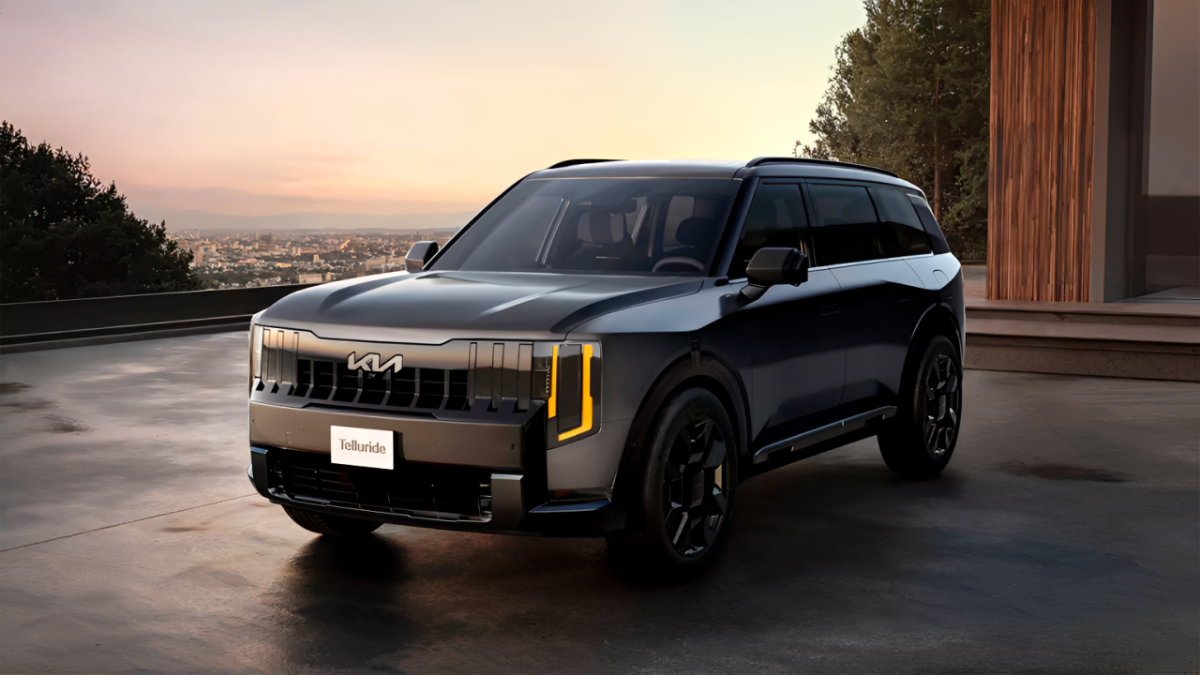
The Kia Telluride does not top any spec-sheet dimension category for tall drivers, but it accumulates consistent, specific endorsements from drivers well above 6 feet in real-world use that no other midsize SUV matches in documentation volume.
TellurideForum.org provides direct testimony from owners at 6-foot-6 and 6-foot-7, with drivers at those heights specifically reporting comfort and noting that the Telluride fits them better than the platform-sharing Hyundai Palisade. Engine Patrol’s tall-driver midsize SUV guide documents this directly: “I’m 6’7″ tall and find my Telluride to be very comfortable” and “6’7″ here as well, so as you can guess, there are very few cars I can sit up straight in — the Telluride fits.”
The Telluride’s seat support characteristics — firmer than the Palisade, with an adjustable driver’s position that several 6-foot-6-plus drivers describe as surprisingly accommodating — may explain why owner reports exceed what the spec numbers alone would predict. U.S. News awarded the Telluride a comfort score of 9.3 out of 10 in its midsize SUV rankings.
The Telluride’s sunroof impact on headroom is worth verifying for the specific trim: at 40.9 inches of base headroom, a 1.8-inch sunroof intrusion leaves 39.1 inches — workable for most 6-foot-3 drivers but worth checking with a physical fit test for drivers at 6-foot-5 and above.
Best for: Drivers in the 6-foot-4 to 6-foot-7 range who want strong owner-community validation and a comfort-focused cabin; buyers who prioritize the Telluride’s resale value and familiarity.
The Pre-Purchase Test Protocol for Tall Drivers
A dealership test drive for a tall driver is almost useless unless conducted correctly. Here is the specific protocol:
1. Bring your shoes. Driving position changes with footwear; test in the shoes you will actually drive in, including winter boots if you are in a cold-weather state.
2. Sit, adjust completely, then check four things before moving: Can you reach the pedals with a slight bend in the knee? Is there meaningful clearance between your head and the headliner (aim for at least 1 inch)? Can you position the steering wheel at a comfortable arm angle without moving the seat forward from the legroom position? Does the top of the steering wheel fall below your line of sight to the road — or does it bisect it?
3. Note the sunroof. If the test vehicle has a sunroof and you are 6-foot-2 or taller, subtract 1.5–2 inches from the headroom you are experiencing and confirm whether the result is still acceptable. Many tall drivers discover the sunroof is the decisive factor only when they take delivery of the vehicle and find the headroom has changed.
4. Drive at highway speed for at least 20 minutes. The head tilt, the steering-wheel stretch, and the thigh-edge pressure do not register at 30 mph in a parking lot. They register at 70 mph after 20 minutes when the position has settled.
5. Evaluate the exit. A significant number of tall-driver ergonomic problems are revealed in the act of getting out of the car, not getting in. If you have to contort or duck significantly, the entry/exit geometry will translate into tension and awkward posture when repositioning during a long drive.
The Sunroof Decision for Tall Drivers
If you are 6-foot-2 or taller, the sunroof or panoramic roof is the single most consequential trim choice you will make. The premium panoramic roofs on many midsize SUVs — which look spectacular in the showroom — are structurally the worst possible configuration for a tall driver because they maximize the roof intrusion on headroom while providing nearly no functional benefit to the driver (the benefit is almost entirely for rear passengers and ambient light perception).
The recommendation for tall drivers is unambiguous: unless you have verified in the specific trim with the specific sunroof package that headroom remains sufficient for your height and driving position, the standard roof is the correct choice. This is a feature that costs you, not benefits you, if you are 6-foot-2 or above.
U.S. and Canada Note
For Canadian drivers navigating the Trans-Canada Highway or the mountain approach routes to western ski destinations, the winter driving posture deserves mention. Cold-weather clothing adds material that reduces effective headroom by half an inch to a full inch depending on hat thickness. A fit that works in summer conditions may not work when the family departs on Boxing Day morning in full winter gear. Test the vehicle fit in winter clothing if your road-trip season extends into cold months, and add at least half an inch to your headroom clearance requirement.
SOURCES
- Edmunds tall-driver SUV guide: Hyundai Palisade 44.1 in front legroom; Toyota Grand Highlander 41.7 in legroom and 41.5 in headroom; Grand Highlander described as top midsize tall-driver pick; Grand Highlander “out-headrooms the Palisade”; Palisade front legroom 44.1 in confirmed
- Edmunds 2026 Palisade first drive: Calligraphy seat “proved perfect for long-legged drivers who want extra support on lengthy drives” — extendable leg cushion; four-way lumbar; side bolster width adjustment; low steering wheel position noted as entry/exit challenge; narrow gap between extended cushion and wheel
- Edmunds 2026 Palisade full review: “front seats are comfortable and have a lot of adjustments — there’s also a lot of headroom and legroom up front, but the low-mounted steering wheel makes it hard for tall drivers to enter and exit gracefully”; Calligraphy massaging seat with extendable thigh rest noted
- 2026 Palisade interior specs: front legroom 44.2 in; front headroom 41.5 in without moonroof; second-row legroom 43.0 in; shoulder room 61.4 in front
- iSeeCars midsize SUV tall-driver analysis: Chevrolet Traverse comfortable for drivers up to 7 ft. 3 in.; ranked by headroom and legroom combination; methodology based on interior dimension analysis
- Engine Patrol: Telluride 40.9 in headroom and 41.4 in legroom; Telluride Forum owner testimonials from 6’6″ and 6’7″ drivers confirming fit; Highlander 41.2 in headroom without sunroof / 39.4 with sunroof — confirms sunroof headroom reduction; 6’7″ Highlander owner “found it comfortable”; Ascent legroom noted
- Palisade Ergo Motion seat: air pockets for lumbar-support adjustments during long drives; thigh-cushion extension available on Limited and Calligraphy; memory settings; ventilated front and rear seats on higher trims
- U.S. News roomiest midsize SUVs: Palisade with 43+ in second-row legroom; Telluride comfort score 9.3/10; Grand Highlander coverage; Atlas rear seat access noted
- U.S. News best cars for tall people 2026: 6’1″ editor’s experience that vehicle size doesn’t predict fit; steering wheel telescoping reach identified as key variable; BMW X5 as top pick overall; physical fit test recommendations