
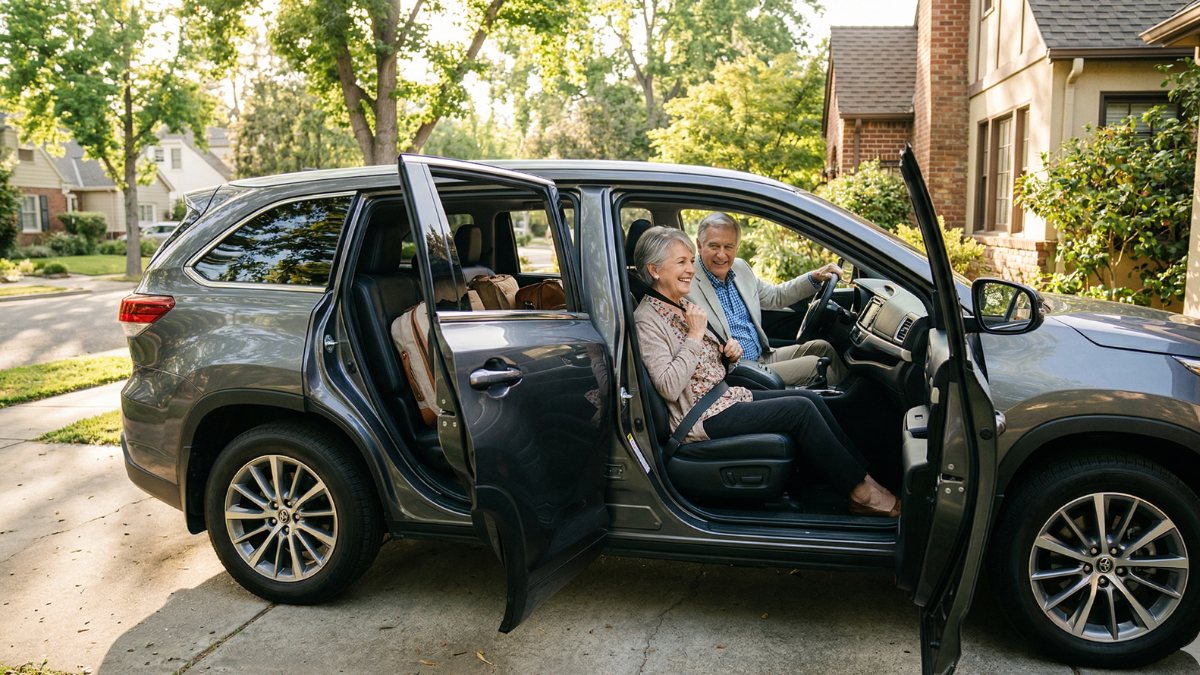
A four-hour drive is long enough for the wrong car to become a problem. Stiff entry and exit at every stop. A steering wheel that pulls in Sport mode after hour two. Climate controls buried in touchscreen menus when someone in the back is cold. An air suspension bounce on undulating pavement that sends the passengers looking for Dramamine. These are not hypotheticals — they are the specific ways that vehicles optimized for the test track or the showroom floor fail the people who simply need to travel comfortably from point A to point B with a grandchild in the second row and a cooler in the back.
This list uses those four hours as the filter. Every vehicle here was selected on ride quality, ingress ease, physical control access, cabin noise, and the specific driver-assist features that make a long highway run genuinely easier rather than just theoretically safer. No performance trim packages. No panoramic roof penalties. Just the vehicles most likely to have everyone arrive relaxed.
Quick Takeaways
- Ride quality, cabin noise, easy entry and exit, physical controls, and adaptive cruise are the five criteria that determine 4-hour trip comfort — not horsepower, trim level, or cargo volume
- Seat height at or near hip level (around 20–22 inches from ground) makes entry and exit easier on joints than either very low sedans or very high truck-based SUVs; wide door opening angle matters equally
- Normal steering mode — not Sport mode — is the right choice for long highway runs; heavier steering in Sport mode creates sustained low-level shoulder fatigue on long straight segments, per standard neuromuscular fatigue research (→ see “The Sport Mode Highway Trap” in this series)
- Climate controls accessed through a touchscreen require 2.5+ seconds of eyes-off-road time per adjustment; physical dedicated climate knobs and buttons require near zero — this difference matters more on long trips than short ones (→ see “Touchscreen-Only Climate Controls” in this series)
- Adaptive cruise control with lane centering, set to Normal or Comfort suspension mode, removes both the throttle/brake workload and the corrective steering workload from the driver — the lowest-fatigue highway combination available on modern vehicles (→ see “Lane Centering vs. Adaptive Cruise” in this series)
- All five vehicles listed here received good or acceptable IIHS headlight ratings on at least their recommended trim, an important night-driving consideration for grandparents who may drive part of the four hours in darkness
At a Glance: Which Vehicle for Which Priority
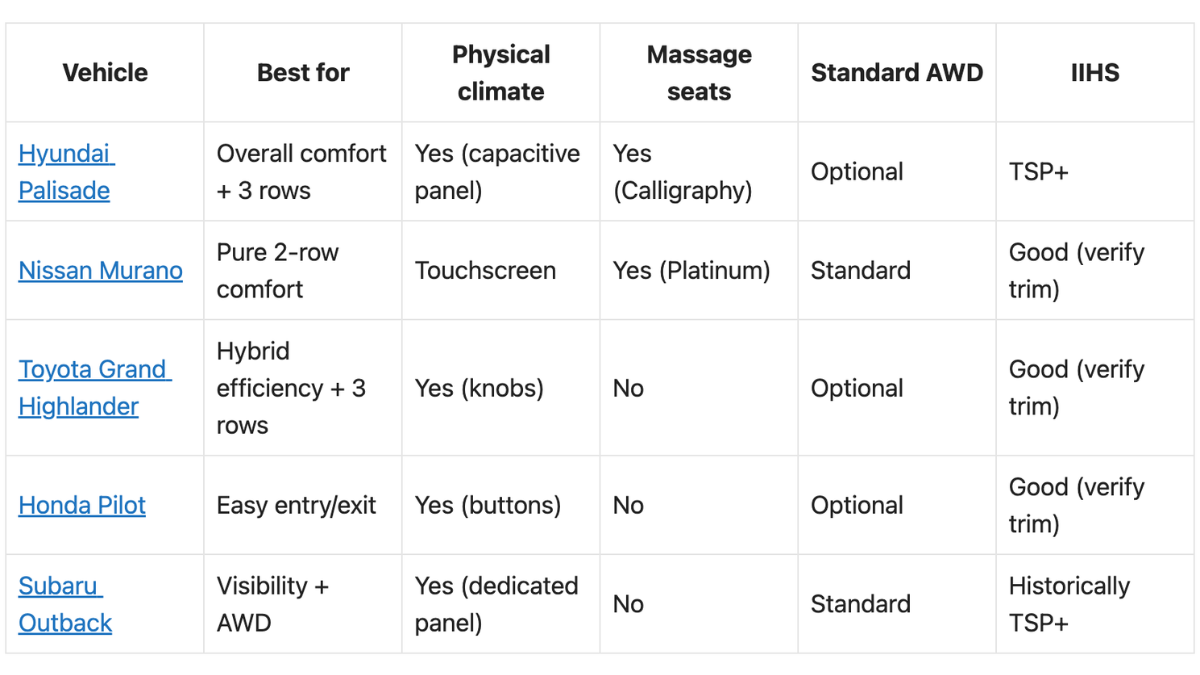
Verify IIHS rating for specific trim at iihs.org before purchase.
What a 4-Hour Drive Actually Asks of the Vehicle
Most SUV reviews evaluate vehicles for daily commuting — 20 to 40 minutes of combined city and suburban driving — or for off-road weekends and towing scenarios. A four-hour highway drive has a different set of demands that rarely align with the standard test-drive route.
The driver needs to maintain a position in the seat for several hours without the back, neck, or shoulders developing the low-level sustained tension that produces fatigue by the end. The suspension needs to absorb road imperfections without the repetitive low-frequency bounce that contributes to motion sickness, particularly for rear-seat passengers. The climate system needs to be adjustable without diverting eyes from the road. And the cabin needs to be quiet enough that conversation at normal volume is possible without elevated vocal effort, which itself is fatiguing over time.
None of these requirements favor a vehicle in Sport mode. None of them reward a firm suspension tuned for cornering. None of them benefit from a touchscreen that buries temperature adjustment two menu levels deep.
The vehicles recommended below earn their places by performing well on exactly these criteria. Price ranges reflect 2026 model year MSRP at the recommended trim level rather than the loaded ceiling.
1. 2026 Hyundai Palisade — Best Overall for Long-Haul Comfort
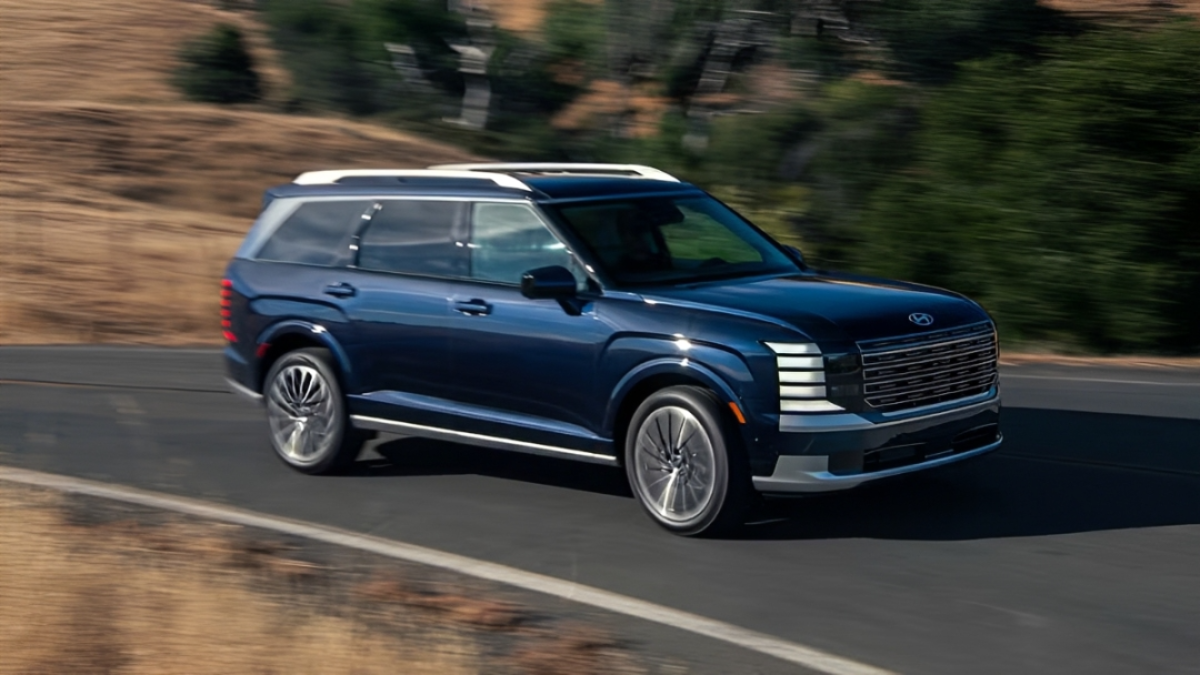
Recommended trim: SEL Premium (~$50,000) or Calligraphy (~$58,000)
The redesigned 2026 Palisade is the most complete answer to the four-hour drive problem in the mainstream midsize segment. Edmunds’ first drive described the ride as “settled” in all but the most demanding undulating pavement. Drive Chicago’s review characterized the cabin as “exceptionally quiet” — reviewers consistently noted that Hyundai achieved an isolation level atypical for a non-luxury vehicle at this price.
What distinguishes the Palisade specifically for this use case:
Physical climate controls retained. The 2026 Palisade keeps dedicated physical controls for the climate system — a deliberate Hyundai decision, confirmed by multiple reviewer and specification sources, explicitly in response to customer feedback. While the main infotainment lives on a 12.3-inch touchscreen, temperature and basic HVAC functions do not require menu navigation while driving. This is not universal in 2026 midsize SUVs (the 2026 Toyota RAV4, for example, moved most climate functions into its touchscreen in the same model year).
Seat comfort at Calligraphy level is genuinely exceptional for the class. The Calligraphy trim includes four-way lumbar support, side bolster width adjustment, an extendable leg cushion, heated and ventilated seats, and a driver’s seat massage function — the latter being unusual at any non-luxury price. The Edmunds first-drive review notes the leg cushion extension “proved perfect for long-legged drivers who want extra support on lengthy drives.” Second-row relaxation seats — with reclining and leg support extension — give rear passengers a meaningful improvement in comfort on long segments.
Adaptive cruise and lane centering are standard. Hyundai’s SmartSense suite comes standard across all Palisade trims, including adaptive cruise control with lane-centering. On a four-hour highway run with the cruise engaged and the steering set to Normal mode (not Sport), the driver’s workload for throttle, braking, and lane-keeping drops to near-zero for extended segments, which is the most substantive fatigue-reduction technology available in the class.
Entry and exit. The Palisade’s seat height and wide door openings draw consistently positive comments from reviewers focusing on accessibility. One note from Edmunds: the easy entry/exit feature (which moves the seatback forward) can feel slightly awkward to exit gracefully — reviewers suggested leaving it off and simply using the reclined position. This is a minor ergonomic calibration, not a disqualifier.
The one flag: Consumer Reports’ review of the Palisade Hybrid noted that climate controls are on a “separate capacitive-touch display beneath the center screen” rather than traditional knobs. Capacitive-touch panels require a light tap rather than screen navigation — closer to a physical button than a touchscreen menu, though without the tactile click-confirmation of a traditional knob. Verify the specific trim’s climate interface before purchase, as implementation may vary across the lineup.
IIHS rating: Top Safety Pick+ for 2026.
2. 2026 Nissan Murano — Best for Two-Row Pure Comfort
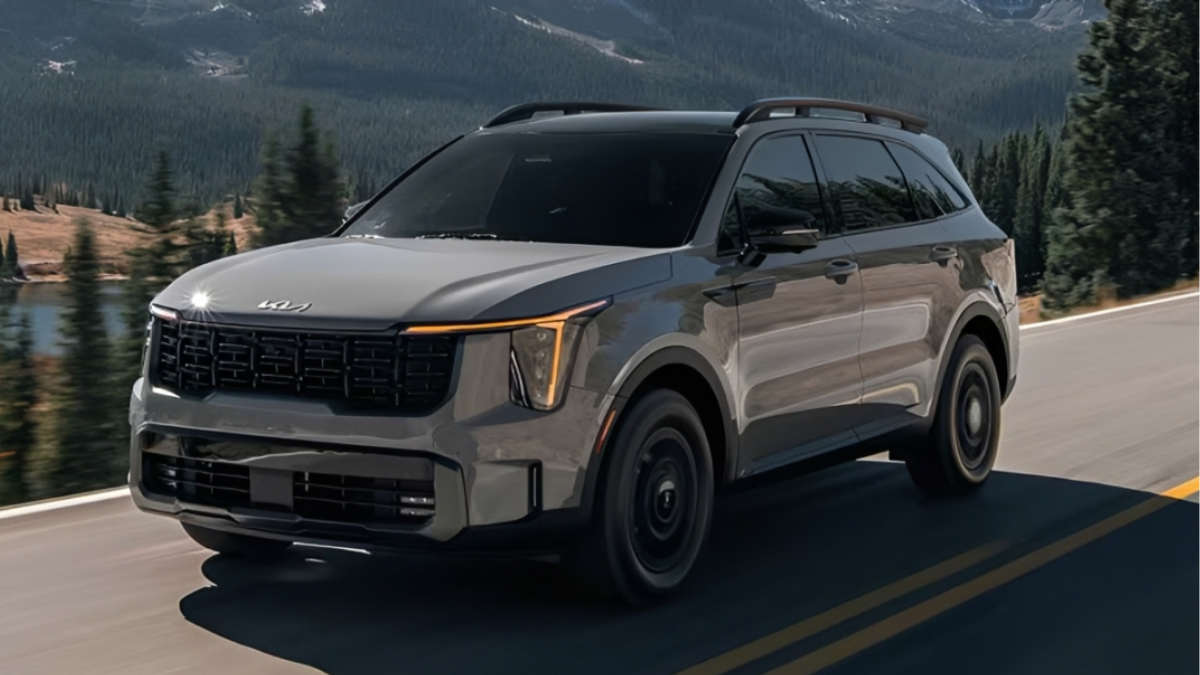
Recommended trim: SL (~$48,000) or Platinum (~$52,000)
The Murano occupies a specific and increasingly rare niche: a two-row, five-passenger midsize SUV that explicitly prioritizes passenger comfort over cargo volume, towing capacity, and off-road capability. In the context of a grandparent pair taking a four-hour drive with one or two grandchildren, the absence of a third row is not a loss. The trade is a deeper focus on the comfort of the people who are actually in the vehicle.
Edmunds describes the Murano’s front seats as “among the most comfortable you’ll find in a midsize SUV,” noting “soft padding, good support and enough adjustments to make long-distance driving easy.” The Drive Chicago review called the Murano’s noise isolation “better than average, rivaling the Toyota Venza and Hyundai Santa Fe in overall cabin serenity.” TrueCar’s overview notes: “The cabin still majors in soft seats and an easygoing ride.” Autoblog’s Platinum review found the cabin comfort in both rows “excellent,” with “perfectly cushioned and accommodating” leather seats on the broad cushions.
Massage seats. The Murano Platinum includes massaging front seats as standard equipment at that trim — along with heated and ventilated seats, heated rear seats, a heated steering wheel, and a panoramic moonroof. The Murano is one of very few mainstream midsize SUVs to include seat massage at a sub-$55,000 price point. On a four-hour drive, the difference between a static seat and one with even intermittent massage is tangible for anyone with lower back sensitivity.
Ride quality. Drive Chicago: “The suspension is tuned on the softer side, absorbing bumps and road imperfections with a plushness that stands out in the segment.” Edmunds: “The Murano isn’t particularly sporty or engaging to drive, but it does have a comfortable and relaxing ride quality. The suspension soaks up bumps and ruts in the road with ease.”
What to watch: The Murano’s infotainment system has been described as “not intuitive” and “frustrating” in multiple reviews (Autoblog, Edmunds). It also lacks a hybrid powertrain option — unusual at this price point in 2026. Some owner reviews report intermittent electronic glitches on the 2025–26 platform. The ride comfort is genuine; the long-term reliability picture for the new generation is still early. Verify current owner reports before purchase.
Visibility note: The Murano’s sharply angled windshield reduces forward visibility somewhat compared to boxier alternatives. Edmunds flags this specifically. For grandparents who value a clear, panoramic forward view, the Subaru Outback or Hyundai Palisade may feel more open.
IIHS rating: Good headlights on higher trims; verify specific trim before purchase.
3. 2026 Toyota Grand Highlander Hybrid — Best for Fuel Efficiency on the Long Run

Recommended trim: XLE Hybrid (~$48,000)
The Toyota Grand Highlander was introduced specifically to address the comfort limitations of the standard Highlander — it is 6.5 inches longer, with that extra length directed almost entirely at third-row legroom and cargo space. For a grandparent who wants three rows available for larger family configurations (grandchildren plus their parents), the Grand Highlander’s adult-friendly third row is the most practical answer in the mainstream segment.
For a two-adult four-hour drive, the first and second rows are the relevant seats, and Edmunds’ comfort evaluation gives the Grand Highlander high marks across all three rows — “All three rows in the Toyota Grand Highlander are comfortable for adults.”
Physical controls. The Grand Highlander is one of the vehicles specifically noted by KBB for retaining physical switchgear for audio volume, climate control, seat heaters, and the drive mode selector — a direct contrast to competitors that route these functions into the touchscreen. On a four-hour drive, this matters: adjusting the heated seat without looking away from the road is a physical knob operation, not a menu navigation exercise.
Hybrid efficiency. The XLE Hybrid returns an EPA-estimated 36 mpg combined — the electric motor’s quiet torque delivery also makes the Grand Highlander notably smooth from rest and during low-speed adjustments, which reduces the sensation of engine intrusion into the cabin. On a four-hour highway segment, the hybrid system runs the engine at lower, quieter RPM ranges than a pure gasoline equivalent. AutoGuide describes the driving experience as “tidy, with light and consistent steering” and notes “less wind noise on the highway” compared to competitors tested in the same segment.
Visibility and ease of driving. The Grand Highlander’s visibility is consistently cited as a strength — “easy to see out of” — which contributes to driver confidence on unfamiliar routes. The TNGA platform it shares with several Toyota and Lexus vehicles is known for a smooth, planted highway ride rather than a sportily reactive one.
One flag: The previous Highlander standard model received criticism for excessive road noise in some reviews. The Grand Highlander was noted to have improved this, but buyers should take a highway test drive specifically to evaluate noise at 70 mph before purchasing.
IIHS rating: Good-rated headlights available; check specific trim.
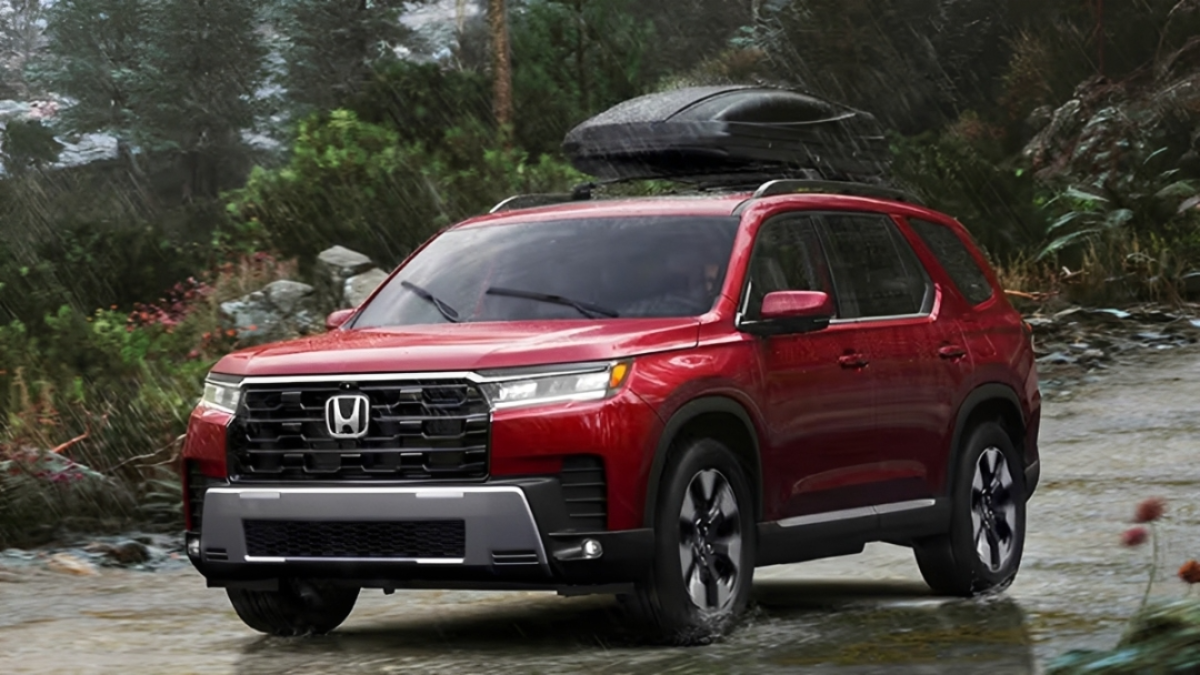
4. 2026 Honda Pilot — Best for Easy Entry and Exit
Recommended trim: EX-L (~$45,000)
The 2026 Honda Pilot was refreshed with a quieter cabin and more standard technology, and it consistently earns high marks on one criterion that matters particularly for older drivers: how easy it is to get in and out.
The Pilot’s door geometry — specifically the wide door openings and the relatively low, hip-height seat position — draws specific positive commentary in accessibility-focused reviews. A RIDE+DRIVE accessibility evaluation notes “wide, tall door openings for both front and second rows” and “large and perfectly placed” grab handles. The seat height sits “just under 19 inches” from ground level at the step-in point, within the range that avoids both the climbing-up problem of tall truck-based SUVs and the sinking-down difficulty of low sedans.
The cabin design prioritizes accessibility broadly, with wide door openings and a relatively low step-in height noted specifically in Canadian market coverage from the Humberview Group as making “entry and exit easier for all passengers.” For grandparents who take multiple stop breaks on a four-hour drive — which most do — making each entry and exit easy and low-stress matters cumulatively.
Cabin quiet. The 2026 refresh specifically targeted cabin noise reduction. KBB describes the 2026 as offering “a quieter ride” compared to the previous generation.
Driver-assist. Honda Sensing is standard across all Pilot trims, including adaptive cruise with lane centering — the full package that removes the throttle, braking, and sustained corrective steering workload from the driver on long highway segments.
What to watch: The Pilot does not offer massage seats at any trim. Its ride quality is good but does not match the softness-first calibration of the Murano or the premium-tuned feel of the Palisade Calligraphy. It is a well-executed practical family vehicle, not a comfort-first cruiser.
IIHS rating: Good headlights available; confirm trim.
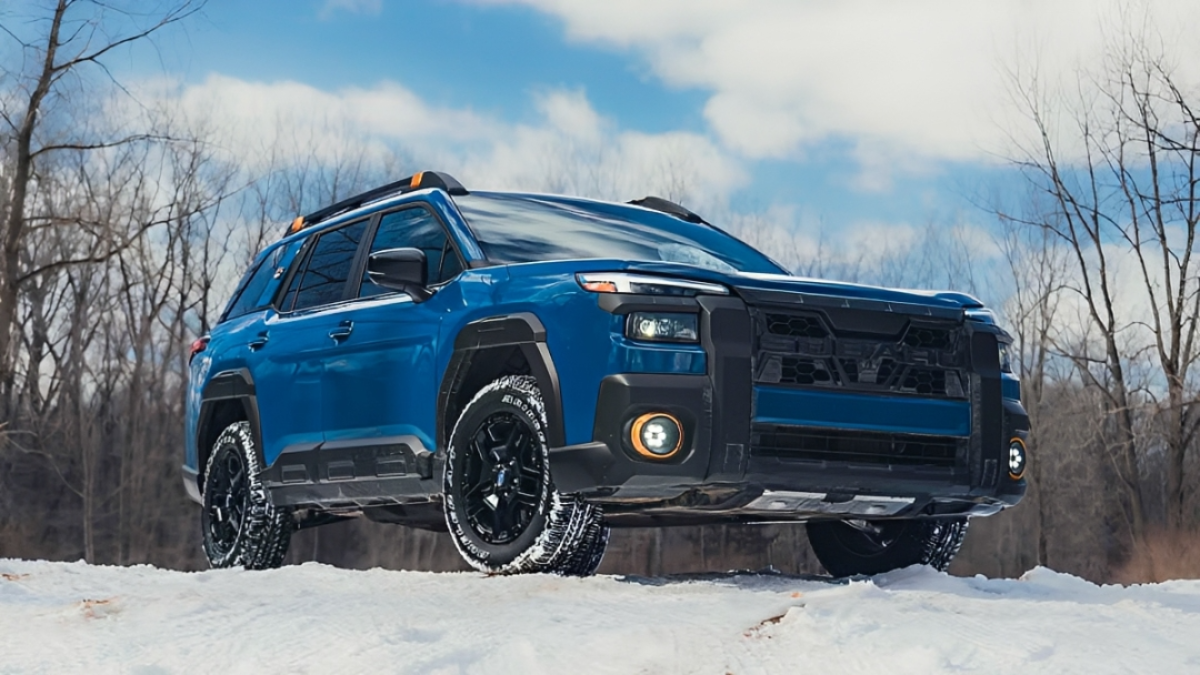
5. 2026 Subaru Outback — Best Visibility and AWD Confidence
Recommended trim: Limited (~$42,000)
The Outback is not typically categorized alongside the three-row midsize SUVs above, but its specific strengths align well with the four-hour drive criteria for grandparents who may be driving in mountain terrain, wet weather, or variable-visibility conditions.
Visibility. The Outback has the most driver-forward glass area of any vehicle on this list. Thin roof pillars, tall side glass, and a low hood line produce a panoramic view of the road that no three-row crossover with its larger body structure can match. For drivers whose depth perception or night vision has shifted with age, the ability to see clearly in all directions — not just forward — reduces the cognitive load of managing traffic and lane position. Edmunds’ best midsize SUV for 2026 cites visibility specifically: “great visibility out of the cabin, which is no longer something you can take for granted in the world of stringent rollover safety standards.”
Physical controls. The 2026 Outback returned to a smaller infotainment screen paired with a dedicated physical climate control panel — explicitly a reversal from the previous generation which had shifted climate functions into the touchscreen. Carscoops confirmed this in coverage of the redesign, citing it as a contrast to the 2026 Mazda CX-5 which went the opposite direction.
Standard AWD. For grandparents driving in the northern U.S. or across Canadian provinces in shoulder seasons, the Outback’s standard symmetrical AWD eliminates the question of whether the vehicle will handle rain, light snow, or wet mountain passes. This is not a capability most grandparent drivers will test at the limit — it is background confidence that reduces the low-level anxiety that makes long drives tiring.
Ride. TrueCar: “a chassis that takes the edge off broken pavement.” The Outback’s suspension is tuned for comfort rather than sport, appropriate for mixed highway and secondary road driving.
What to watch: The Outback’s standard 2.5-liter engine is underpowered for some highway driving scenarios, particularly two-lane passing. The turbocharged Limited XT addresses this but at higher cost. Cargo space is good but smaller than the three-row vehicles above. It is a two-row vehicle — appropriate for two adults and one or two grandchildren, not for larger family configurations.
IIHS rating: Historically Top Safety Pick+; verify the 2026 trim and headlight package at iihs.org before purchase.
✓ Five-Point Test Drive Checklist
Four-hour comfort is not captured by a parking lot test drive. Bring this checklist to the dealer.
1. Do five entry/exit cycles — front seats and rear. Joints vote immediately. If the seat height requires bending or the door forces a head-down posture, that answer holds for the fourth hour of the trip, not just the dealership lot.
2. Ask for 20 minutes at 70 mph on a real highway. Cabin noise, ride compliance over expansion joints, and cruise stability are not evaluable on slow suburban streets. If the dealer will not allow highway driving, that is itself information.
3. Adjust the cabin temperature three degrees without looking at the screen. Physical knobs: zero eyes-off-road. Touchscreens: 2.5+ seconds. (→ “Touchscreen-Only Climate Controls” in this series) Note what the specific vehicle requires.
4. Engage adaptive cruise and lane centering for at least five miles. Evaluate whether the system holds the lane smoothly or makes frequent corrections requiring conscious monitoring. (→ “Lane Centering vs. Adaptive Cruise” in this series)
5. Verify the vehicle is in Normal or Comfort mode, not Sport. Sport mode increases steering effort, sharpens throttle, and compounds shoulder fatigue over several hours. (→ “The Sport Mode Highway Trap” in this series) Ask the dealer explicitly before starting.
U.S. and Canada Note
Canadian buyers in the northern provinces should weight AWD capability and cold-weather starting reliability more heavily than buyers in mild-climate U.S. states. The Subaru Outback’s standard symmetrical AWD has a long track record in Canadian winter conditions. The Hyundai Palisade and Toyota Grand Highlander both offer AWD that performs competently in Canadian winter, though AWD is an option rather than standard on base trims. Verify AWD availability on the specific trim being purchased.
For long Canadian routes — Trans-Canada segments in Manitoba and Ontario, or the Vancouver Island Highway system — the hybrid efficiency of the Grand Highlander Hybrid becomes more material. At Canadian fuel prices, the difference between 24 mpg and 36 mpg over 400 km is meaningful in the same way the hitch-versus-roof-box fuel calculation is meaningful: small per trip, significant over a season of family visits.
SOURCES
- Edmunds first drive: ride quality “settled,” supportive seats, Calligraphy leg extension for long drives, driver massage function; entry/exit note on easy-exit feature
- Edmunds Murano: front seats “among the most comfortable in midsize SUV”; suspension “soaks up bumps with ease”; quiet cabin noted
- Drive Chicago: Murano cabin noise isolation “better than average, rivaling Toyota Venza and Hyundai Santa Fe”; ride quality tuned for comfort; Platinum massaging seats
- Autoblog Murano Platinum review: cabin comfort in both rows “excellent”; seats “perfectly cushioned”; massaging, heated, ventilated, panoramic moonroof standard on Platinum
- Edmunds most comfortable SUVs: Grand Highlander “all three rows comfortable for adults”; controls “easy to use”; good visibility
- AutoGuide Grand Highlander comparison: “tidy, with light and consistent steering”; less wind noise than Atlas; physical controls retained
- KBB: Grand Highlander retains physical switchgear for volume, climate, seat heaters, drive mode — direct contrast to touchscreen-dependent competitors
- Wolfchase Hyundai: “Separate physical controls are retained for the climate system” — 2026 Palisade confirmed spec
- Consumer Reports Palisade Hybrid: climate controls on “separate capacitive-touch display beneath center screen” — capacitive panel distinction noted
- Edmunds best midsize 2026: Outback visibility praised — “great visibility out of the cabin, which is no longer something you can take for granted”; Palisade comfort and quiet
- Carscoops: 2026 Subaru Outback went opposite direction from CX-5 — smaller screen plus dedicated physical climate panel, confirmed as new-generation design decision
- RIDE+DRIVE: Pilot wide/tall door openings; large and well-placed grab handles; step-in height under 19 inches; seat height guidance — seat near sill height for pivot-and-slide entry; Forester step-in approximately 17 inches as reference point for accessible entry geometry
- KBB: 2026 Honda Pilot “quieter ride” with 2026 refresh confirmed; Palisade “plush without getting floaty”