
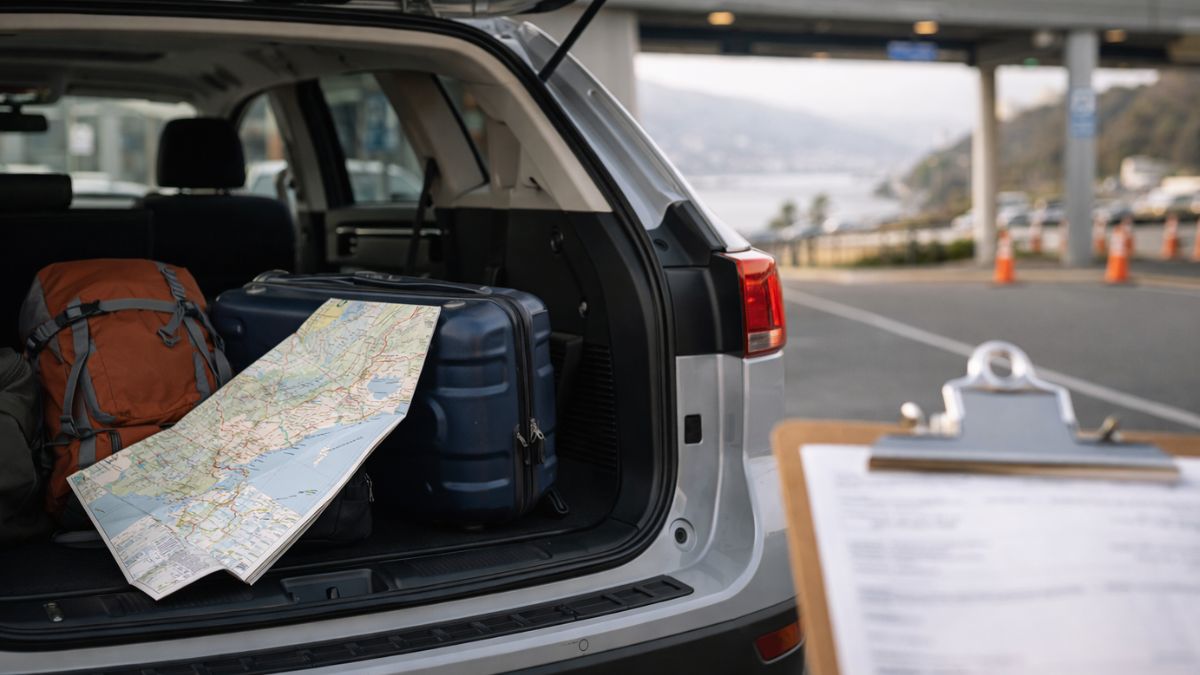
According to Enterprise’s FAQ, a “drop charge” (one-way fee) is an extra cost that may apply when a car is picked up in one location and returned to a different one, and it can vary by route, location, and season. On some routes it shows as a separate line; on others it’s effectively built into a higher one-way daily rate.
On popular city-to-city itineraries, the all-in total can swing sharply by day and by pickup station—so the fastest “fix” is often changing where and when the reservation starts, not the trip itself.
At a glance
- Price the route, not the city name. Airport vs downtown stations can price like different routes.
- Assume timing matters. Enterprise notes one-way pricing varies by time of year.
- Treat discount codes as eligibility items. Use only codes tied to memberships/employers actually held. (Savings tactics are commonly summarized in travel points coverage.)
Rule of thumb → what it changes
- Book the correct one-way upfront → avoids counter “return change” repricing
- Test multiple nearby stations → can flip a high one-way total into a much lower one
- Move dates by 1–3 days → can hit fleet-reposition windows
- Re-shop after booking (free cancel) → captures price drops without locking in early
What “drop fee” is (and why it spikes)
Hertz explains one-way pricing as reflecting the cost of getting the vehicle back where it’s needed in the fleet. Enterprise similarly frames drop charges as route/location/time-of-year dependent and disclosed during booking when they apply.
Translation: short distance does not guarantee a small one-way surcharge. A route that leaves a station short on cars can price higher than a longer route that helps the company reposition inventory.
The most common gotcha: changing the return after booking
The highest-risk scenario is booking a round-trip (same return) and then switching the return location later—especially at the counter. The safe pattern is simple: make sure the reservation itself shows the correct pickup and return location before paying. Enterprise’s one-way policy guidance is clear that one-ways should be booked as one-ways up front.
10 ways to reduce (or erase) the one-way surcharge
Each of these tactics is designed to change the fleet math without changing the trip.
1) Price the same trip across “location types”
Run the exact dates/vehicle class through:
- Airport → airport
- Downtown → downtown
- Airport → downtown
- Downtown → airport
Same cities, different station types can price very differently.
2) Try 3–6 nearby pickup/return stations (not just “LA” and “SF”)
Within large metros, switching from one neighborhood station to another changes the station pair—and that can change one-way pricing materially.
3) Shift pickup/return by 24–72 hours
Enterprise notes drop charges vary by time of year, and timing effects show up within weeks and even days. If flexibility exists, test weekday vs weekend starts and ±1 day on both ends.
4) Look for seasonal one-way “repositioning” windows
Deal-tracking guides (e.g., AutoSlash’s one-way coverage) often point out that some one-way routes get cheaper when companies need to move cars out of seasonal markets.
Key practical note: the “waiver” may appear as a lower one-way rate rather than a separate “drop fee removed” line.
5) Re-shop after booking (free-cancel strategy)
AutoSlash’s one-way guide emphasizes how widely one-way pricing can vary—so it’s worth rechecking. Book a cancellable rate early, then reprice periodically and rebook if the all-in total drops.
6) Use only eligible discount codes (and expect proof)
Travel points coverage (The Points Guy) summarizes common savings levers like membership/corporate discounts. Use only codes tied to actual eligibility, and assume proof may be requested at pickup.
7) Compare one long rental vs two shorter segments
Sometimes the expensive part is one station pair, not the whole itinerary. Testing a midpoint swap (same dates, two bookings) can reveal a cheaper combination.
8) Compare car classes (compact vs midsize vs SUV)
One-way pricing can be more favorable in classes that are easier to rebalance. If “any automatic” works, test a couple of categories.
9) Consider a “base-city loop” if one-way pricing dominates
If the one-way total overwhelms the overall budget, a round trip back to origin can be cheaper (even with extra fuel) because it removes one-way fleet costs.
10) Confirm the all-in total before arriving
Before committing, ensure the booking flow clearly shows:
- Pickup + return locations
- Vehicle class
- All-in total (not just the daily rate)
- Any one-way/drop disclosures (if shown separately)
The 60-second checkout checklist
- Reservation shows the correct pickup and return locations (as a one-way).
- Price airport vs downtown stations on both ends.
- Reprice with ±1 day and weekday/weekend starts.
- Scan for seasonal one-way specials / repositioning windows.
- Use only eligible discounts and keep proof ready.