
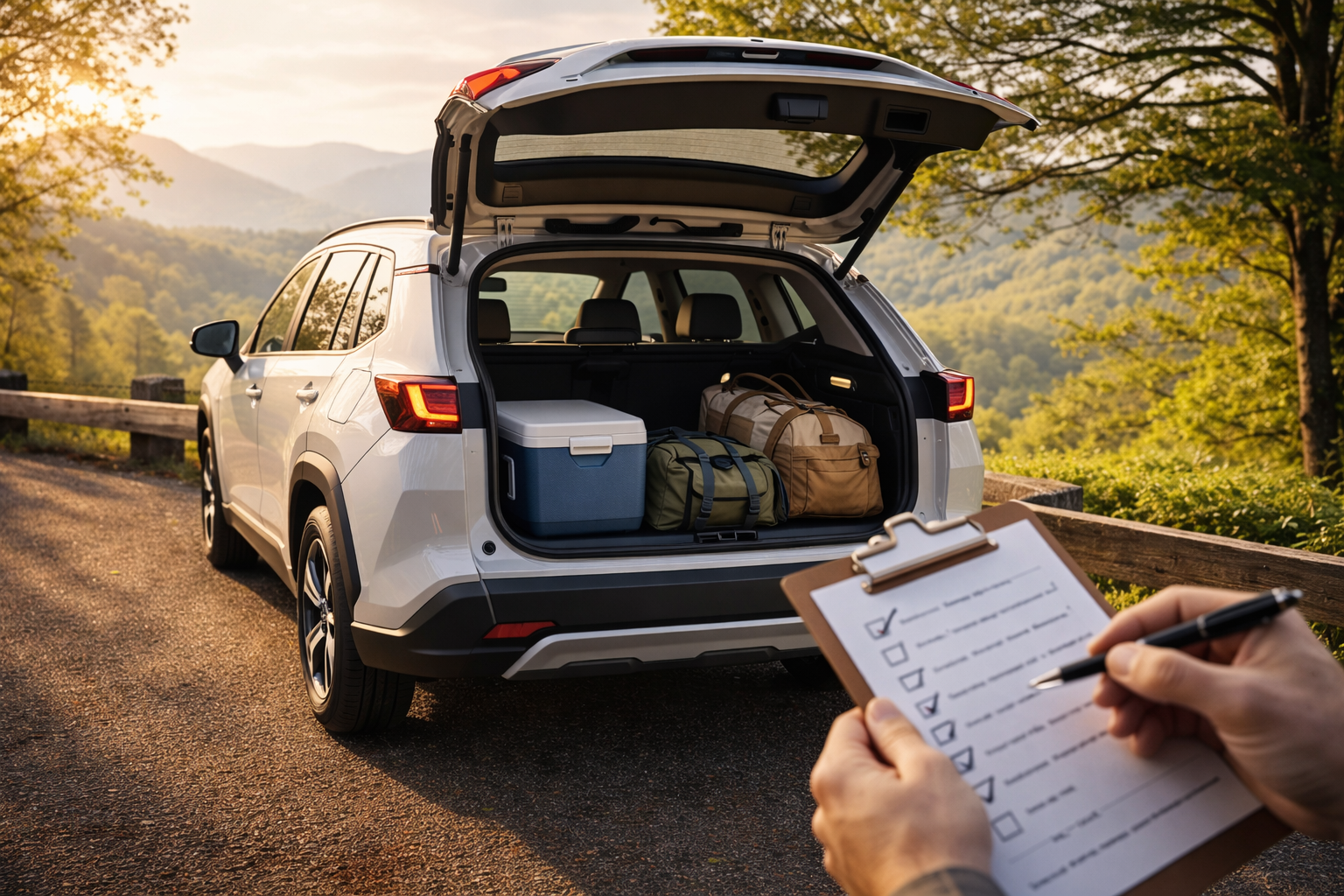
According to AAA’s pre-trip inspection guidance, a quick check of tires, fluids and battery health can prevent the most common “why are we stopped on the shoulder?” moments before a long drive. March 5, 2026 is a good time to reset the basics because spring travel usually brings more highway miles, more construction zones and more temperature swings that change tire pressure. The goal is not to turn your Friday evening into a mechanic’s appointment. It is to spend 30 minutes on the right checks so your weekend trip stays a weekend trip.
Quick takeaways
- Do the tire check first. It is the fastest safety win before any long drive.
- Treat warning lights like a deal breaker, not a suggestion.
- Pack an emergency kit that matches the season, not your last trip.
- Leave a small buffer for construction and fuel stops. It lowers stress and prevents bad decisions.
- If you only do one thing, check tire pressure and tread before you roll.
1) The 30-minute rule
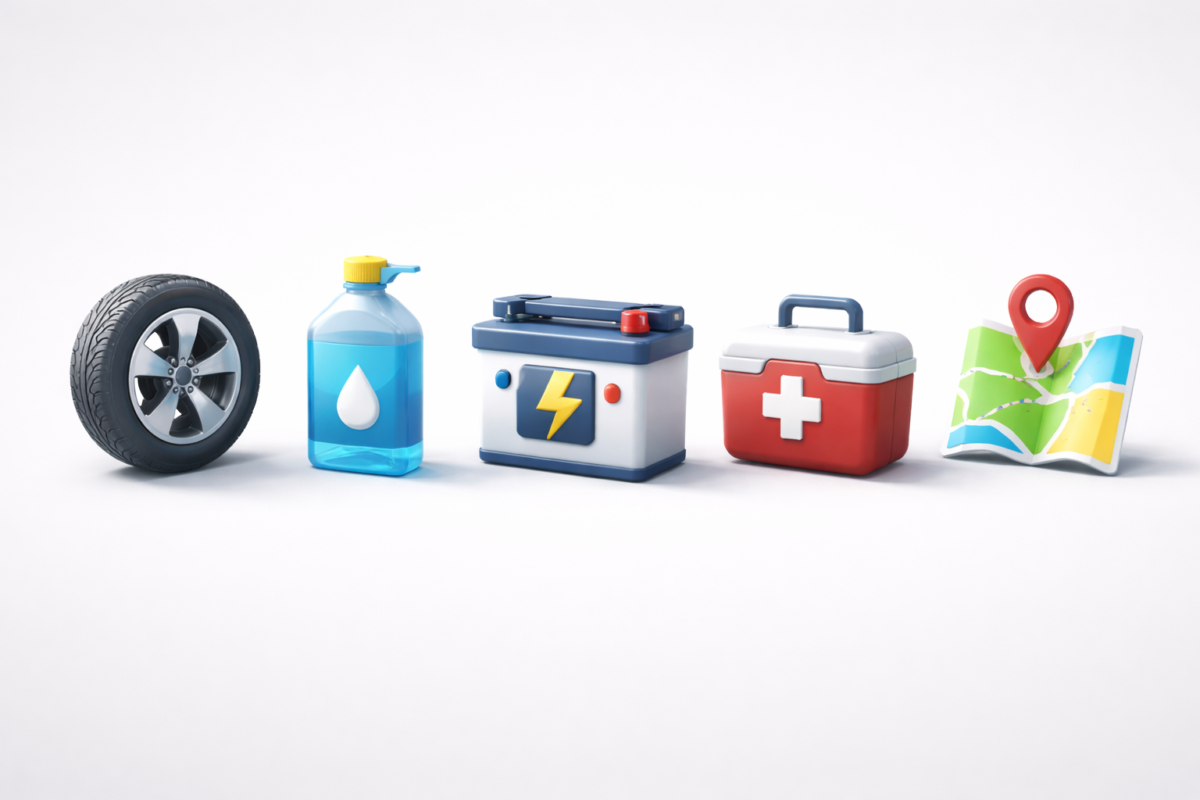
Weekend trips fail for boring reasons. A low tire. A weak battery. Wiper fluid you forgot to top up. A warning light you hoped would disappear. AAA’s checklist approach is useful because it focuses on the basics you can verify quickly, without special tools.
If you are short on time, use this order:
1) Tires and spare
2) Fluids
3) Battery and lights
4) Paperwork and kit
5) Route and timing
2) Tires: the check that matters most
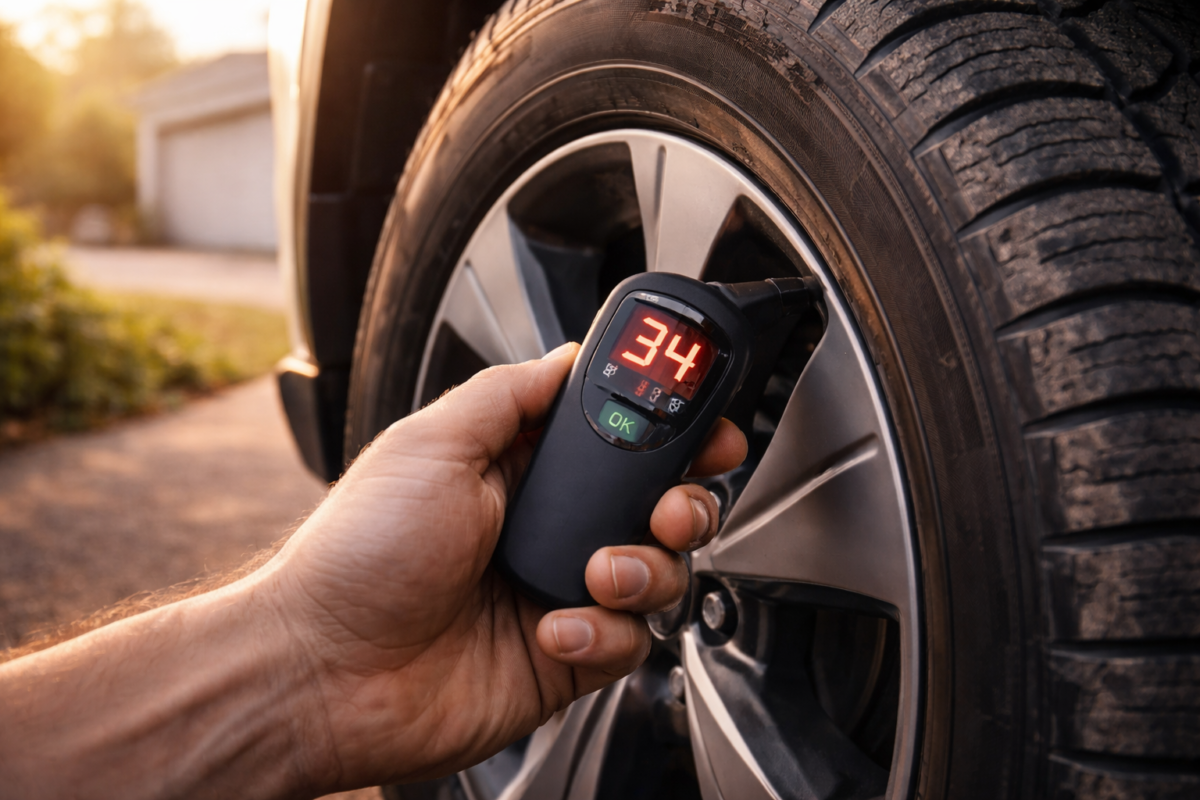
NHTSA repeatedly emphasizes tire inspection before long road trips. The “look + pressure” combo is simple and high impact.
Do this before you load the car:
- Check tire pressure when tires are cold.
- Inspect tread for uneven wear and foreign objects.
- Check sidewalls for cracks or bulges.
- Do not forget the spare.
If your tread is very low, replace before travel. NHTSA’s tire safety guidance notes that worn tread reduces traction, especially in spring rain.
3) Fluids, wipers, and the spring-rain reality
Spring driving is often about visibility. This is where a two-minute check pays you back:
- Engine oil level looks normal and not overdue.
- Coolant is at the right level.
- Windshield washer fluid is full.
- Wiper blades clear cleanly without smearing.
AAA’s pre-trip list highlights fluids and basic systems because they are common failure points that show up exactly when you want to be on the road, not in a parking lot.
4) Battery and lights: don’t learn this at the gas station
A weak battery can survive daily commuting and still quit after a few extra starts, short stops, and cold mornings. AAA suggests testing a battery, especially if it is older. Make sure:
- Headlights and brake lights work.
- Turn signals are bright and consistent.
- Your phone charger works in the car.
This is also the moment to check warning lights. If your check-engine light is on, get it scanned before you leave.
5) The emergency kit that matches your trip
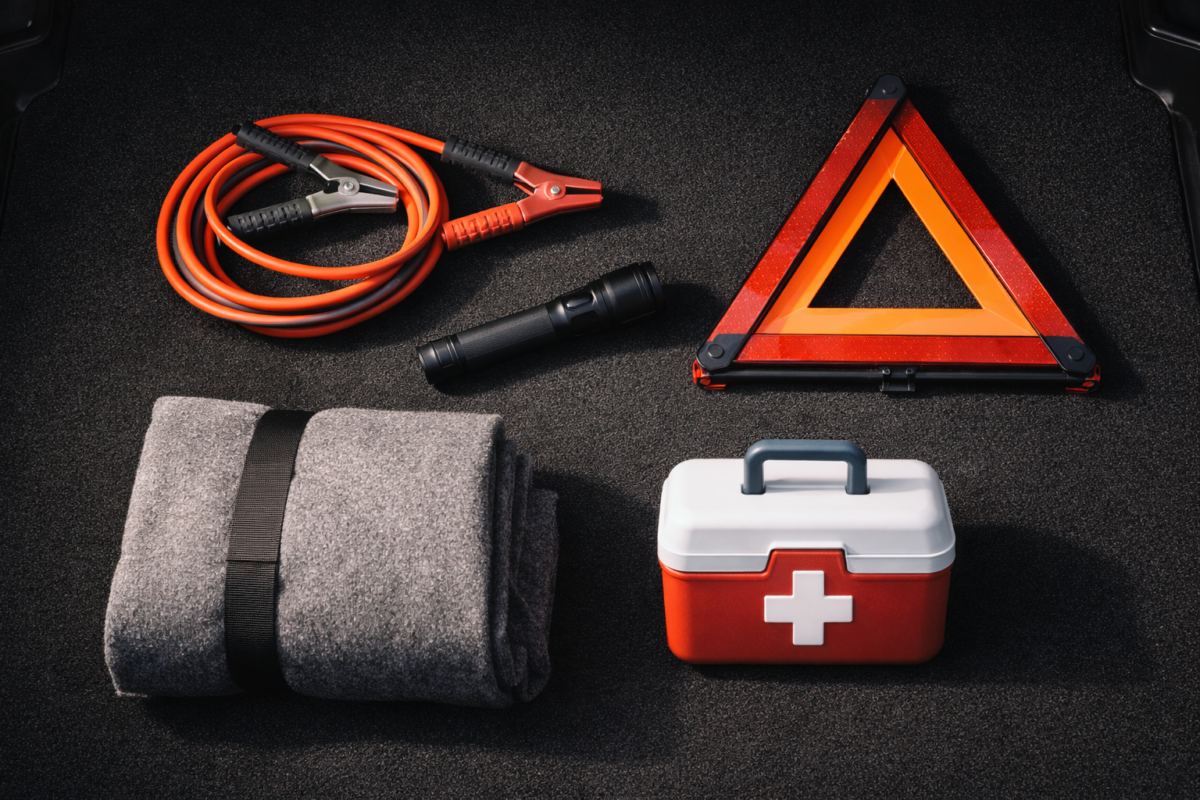
A weekend road trip does not require survivalist gear. It does require a few items that prevent a small issue from becoming a long wait.
Ready.gov’s car kit list is a solid baseline:
- Jumper cables or a jump pack
- Reflective triangle or flares
- Blanket
- Flashlight with batteries
- Phone charger
- Basic first-aid supplies
- Water and non-perishable snacks
Add one trip-specific item:
- If you are going rural: a paper map or offline maps
- If weather is unstable: a light rain shell and an extra layer
6) Packing: keep the car stable and your mind calm
Poor packing makes a car feel worse than it is. REI’s road trip checklist is useful here because it separates comfort items from true essentials.
Two rules keep things simple:
- Heavy items low and forward, not stacked high.
- Keep the “need it fast” bag reachable: chargers, snacks, wipes, meds, sunglasses.
If you are traveling with kids or pets, build a “mess layer” in the trunk: towels, trash bags, spare clothes. It will pay off.
7) Route planning that actually reduces stress
This is not about a perfect itinerary. It is about removing the failure points:
- Confirm your first fuel stop in case your tank is lower than you think.
- Assume at least one slowdown from construction or weekend traffic.
- Avoid arriving at your destination at peak check-in time if you can.
If you are heading to trails or parks, check if the last miles require cashless parking, a pass, or limited entry. A one-minute check can save you an hour.
8) What to do if something feels “off” on the first 10 miles
Many mechanical issues announce themselves early. Do not ignore:
- Steering pull
- New vibrations
- Grinding brakes
- A smell that is clearly not normal
If something feels wrong, stop and check before you are 50 miles away from your driveway. That is the lowest-cost decision you will make all weekend.
What to watch next (spring pattern)
Spring brings predictable “trip killers”:
- Potholes and rough shoulders after winter wear
- Sudden rain and reduced visibility
- More weekend traffic and lane closures
Sources
Disclaimer
General information only. This is not mechanical or safety advice for a specific vehicle.