
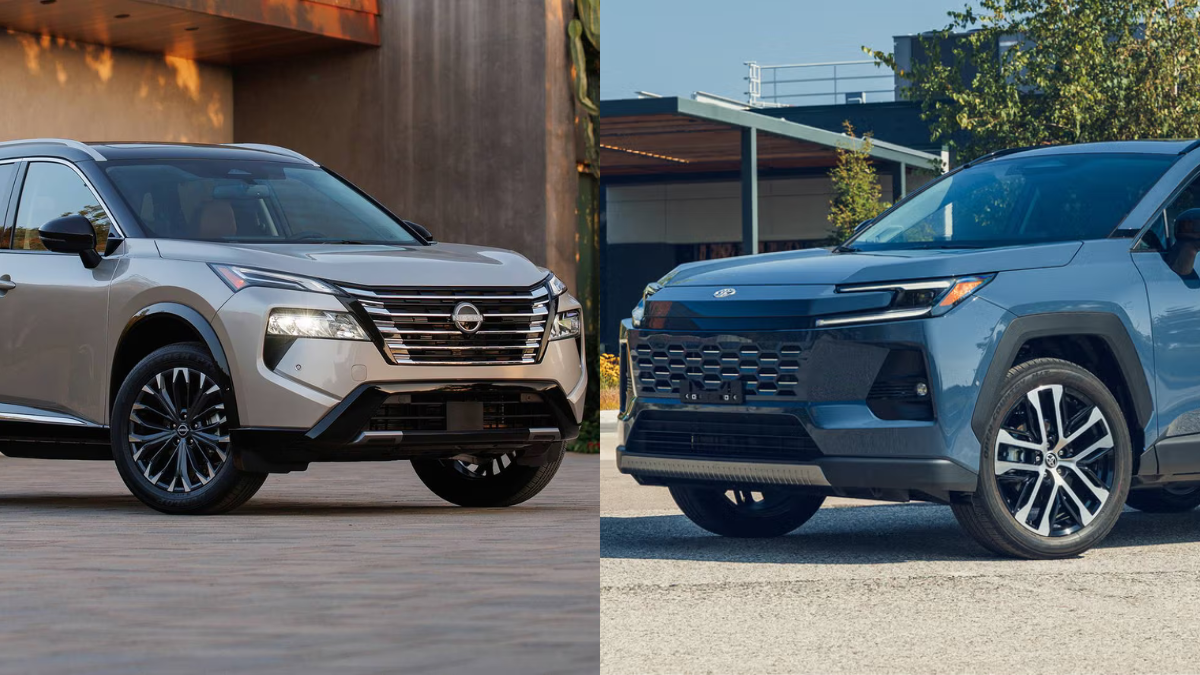
According to Toyota’s U.S. pressroom briefing on the all-new 2026 RAV4 and Nissan’s 2026.5 Rogue specs pages, these two compact SUVs aim at the same “do-everything” lane but solve daily life differently: the RAV4 leans into standard electrification and updated safety tech, while the Rogue leans into straightforward packaging, strong cargo utility, and a familiar turbo setup. Pricing also separates the ownership feel: Edmunds’ breakdown of 2026 RAV4 trim pricing places the redesigned RAV4’s entry point above the Rogue’s listed starting MSRPs on Nissan’s trim page. The practical question isn’t which one is “better” on paper—it’s which one removes more friction on normal days and weekend drives.
Quick takeaways
- The 2026 RAV4 is positioned as an electrified lineup (hybrid or plug-in hybrid depending on trim), which can make day-to-day fuel stops less frequent and stop‑and‑go driving smoother.
- The 2026.5 Rogue’s “liveability” strength is packaging: a square cargo opening, up to 74.1 cu. ft. max cargo capacity, and a long list of practical small features that reduce daily hassle.
- If a lot of miles are motorway miles, the Rogue’s “up to 29/36 mpg city/highway” rating and the RAV4 Hybrid’s high-efficiency numbers can both work—what changes the feel is drivetrain character (turbo CVT vs hybrid e‑CVT).
- For occasional towing or heavier weekend gear, the RAV4’s available 3,500‑lb towing rating on certain AWD grades is a meaningful divider versus the Rogue’s listed “up to 1,500 lb.”
- The easiest-to-live-with choice often comes down to one decision: prioritise lower fuel burn and electrified smoothness (RAV4) or prioritise simpler trim/value and cargo-first practicality (Rogue).
What changed for 2026 (and why it matters)
Toyota’s 2026 RAV4 arrives as an all-new generation and—crucially for “ease”—it’s framed around electrified powertrains across the range, with published manufacturer fuel-economy ratings and updated driver-assist tech under Toyota Safety Sense 4.0. That matters because hybrids tend to feel calmer in stop‑start traffic: less transmission “hunting,” more smooth pull-away, and fewer big swings in consumption on short runs.
Nissan’s 2026.5 Rogue isn’t a clean-sheet reset in the same way. Its change for shoppers is more about clarity and usability: Nissan’s own trim/spec page lays out a compact trim walk (SV, Dark Armor, Rock Creek, Platinum) with clear starting MSRPs, plus a consistent 1.5‑liter VC‑Turbo three‑cylinder engine output and familiar driving modes. In other words: it’s a “known quantity” update, and that predictability can be a comfort feature on its own.
The “easy day” test: the stuff that happens every week
The ownership feel is shaped less by brochure highlights and more by the repeated tasks: loading, parking, commuting, and quick trips.
Cargo and loading
On paper, both are in the compact class. In practice, the Rogue is built around the back half of the vehicle. Nissan lists up to 74.1 cu. ft. maximum cargo capacity with the rear seats folded, and also highlights 36.3 cu. ft. with the rear seats upright (depending on configuration). Those numbers show up as real-world “ease” when loading bulky items: the wide liftgate opening and the Rogue’s cargo-organisation approach (like Divide‑N‑Hide) is aimed at stopping bags from rolling and keeping day-to-day mess under control.
Toyota’s 2026 RAV4 messaging emphasises a more upright rear cargo area and a fold-flat rear seatback design, plus an available hands-free power liftgate. For a strict cargo-volume number, Toyota Canada’s model/spec listing commonly cites 37.8 cu. ft. behind the second row for the 2026 RAV4 (market specs can vary), which suggests the RAV4 is competitive on the “stroller-and-suitcase” tasks.
Parking, tight streets, and turning circles
This is where “easier” becomes personal quickly. The Rogue’s trim/spec page lists a 35.4‑ft turning diameter, which can reduce multi-point turns in older parking garages and tight suburban cul‑de‑sacs. For the RAV4, Toyota’s pressroom emphasis is less about turning radius and more about safety and assistance tech—useful in crowded lots, but it doesn’t automatically make the vehicle feel “small.”
The practical rule: the SUV that feels easier in a five-minute test drive can feel dramatically easier after six months. A quick loop through a tight supermarket lot and a narrow street near home is often more revealing than a long straight road.
Drivetrain feel in stop-and-go
The Rogue’s daily feel is shaped by its VC‑Turbo engine and CVT pairing. Nissan highlights “up to 29/36 mpg city/highway,” and its trim/spec page lists 201 hp and 225 lb‑ft. Some drivers like the straightforward boost response at low speeds; others prefer the smoother, more linear hybrid feel.
The RAV4’s 2026 story is the opposite: hybrid and plug‑in hybrid powertrains first. Toyota’s pressroom notes hybrid system horsepower figures and manufacturer fuel-economy ratings, including “up to” a 44 mpg manufacturer combined rating (FWD hybrid) and published combined figures by grade. For day-to-day life, that often translates into fewer fuel stops and a calmer, less “revvy” sensation at low speed.
Ownership friction: money, time, and the “small costs” nobody advertises
“Easier to live with” is rarely the purchase price alone. It’s the combination of what gets paid, how often it gets serviced, and how stressful the fuel bill feels.
Starting price and trim clarity
Nissan’s official trim page shows a lower entry point for the 2026.5 Rogue trims shown there (for example, SV FWD is listed with a starting MSRP of $30,090 and Platinum AWD at $38,990). Toyota’s 2026 RAV4 pricing, as summarised by Edmunds, starts at $33,350 including destination and reaches $49,950 at the top of the range, with every trim described as hybrid or plug‑in hybrid.
This matters because it changes the “easy math” at the dealership: the RAV4 can ask for more upfront, but it can give some of that back in fuel savings—especially for urban commuting. The Rogue can feel easier on the monthly payment, especially in mid-trims, even if fuel costs land a bit higher depending on mileage and driving mix.

Ownership feel math: payment vs fuel vs insurance (plug in local fuel price + miles/week)
Towing and weekend utility
Weekend life often includes a small trailer, a pair of e‑bikes, or a lightweight camper.
- Rogue: Nissan lists towing capacity as “up to 1,500 lb.”
- RAV4: Toyota’s pressroom materials list towing ratings that can reach 3,500 lb on certain AWD grades, while other trims/drive configurations are lower.
That’s a real “ease” divider because it determines whether the SUV can do a task without anxiety (and without pushing limits). Even for non-towing households, higher towing ratings often correlate with cooling and powertrain headroom—useful on long uphill motorway grades with a fully loaded cabin.
Tech that feels easy vs tech that feels like homework
Tech is “easier” when it disappears: fast pairing, clear buttons, predictable driver-assist.
Driver assistance and safety suites
Toyota positions the 2026 RAV4 with Toyota Safety Sense 4.0 and a standard 12.3-inch digital gauge cluster in its pressroom material, and Canadian Toyota’s release on the 2026 RAV4 Plug‑in Hybrid also foregrounds Toyota Safety Sense 4.0. Nissan’s Rogue trim page lists core safety equipment and standard/available driver assistance depending on trim, with ProPILOT Assist featured across the listed trims.
In daily use, the difference usually shows up as “how often the system nags” and “how smooth the assistance feels.” That’s not something a spec sheet can settle. The cleanest test is a 10‑minute drive with lane-keeping and adaptive cruise active on a gentle curve and during a merge. If it feels calm, it’s a liveability win.
Screens and controls
Nissan lists an 8-inch touchscreen on lower trims and a 12.3-inch screen on Platinum, while Toyota’s press materials and pricing coverage point to large digital clusters and updated multimedia systems on the RAV4. Bigger screens can be easier—if the menus are fast and the climate controls are still simple. If too many functions are hidden in submenus, “easy” flips to “annoying” fast.
What this means in the U.S.
For U.S. shoppers, the key “ease” trade is electrification vs value packaging.
- The 2026 RAV4’s pricing and trim structure (as covered by Edmunds) suggests the new model year pushes the lineup upmarket, with electrification as the core value proposition.
- The 2026.5 Rogue’s Nissan USA trim sheet lists lower starting MSRPs for the trims shown and keeps the drivetrain story simple, which can make the purchase and service conversations feel more straightforward.
Availability can vary by region and dealer allocations. For any comparison built on MSRP, it’s worth checking local inventory because discounting and supply can invert the “easy payment” conclusion.
What to watch next
Two future-facing notes can change the decision timeline:
1) Rogue Hybrid timing: Car and Driver reports 2026 Rogue Hybrid pricing and suggests it may be a limited/bridging offer, with a next-generation ePower series-hybrid setup discussed for a later model year.
2) RAV4 plug-in mix: Pricing coverage indicates Toyota is expanding the plug‑in hybrid range for 2026, which could make “plugging in sometimes” a more common ownership pattern (especially for short commutes).
For households that keep a vehicle 5–8 years, it can be useful to treat the powertrain roadmap itself as part of “ease.”
What can be done before signing anything (a 20-minute checklist)
This is the shortest path to a confident “easy to live with” call:
- Run the “real errands” loop: supermarket car park + tight street + a short motorway stretch.
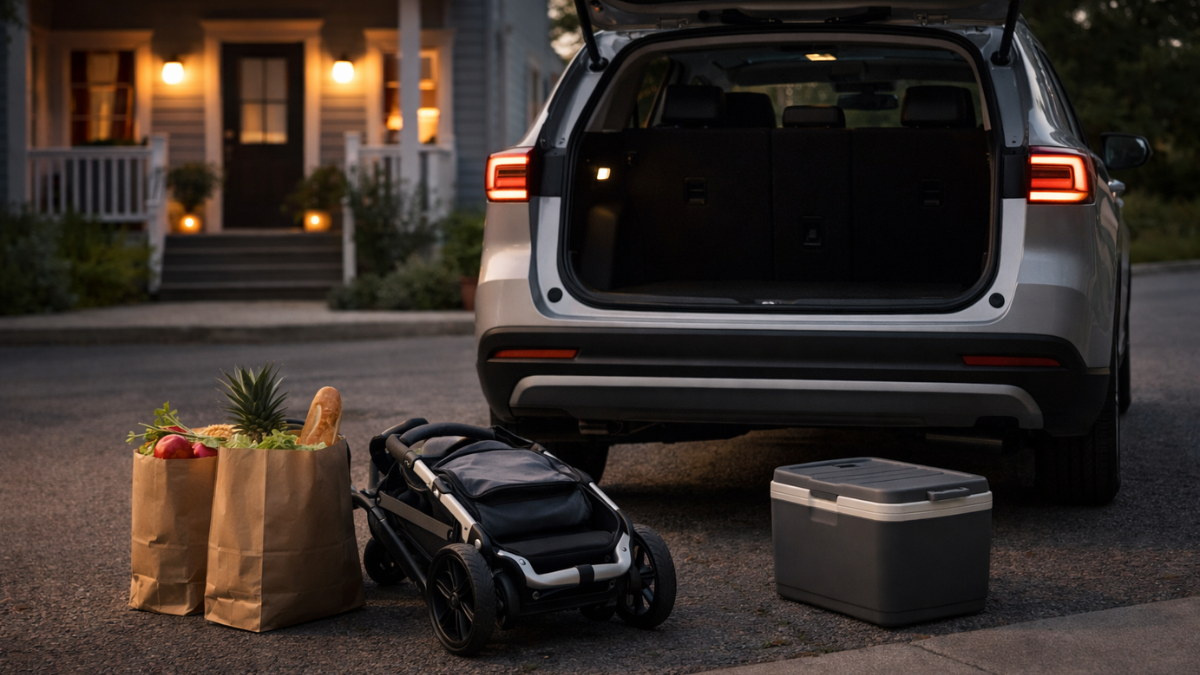
- Load test: bring the actual bulky item (stroller, folding wagon, cooler) and check lift-over height, floor shape, and rear-seat fold.
- Driver-assist test: try adaptive cruise + lane centring on a gentle curve, then disable it and see how easy the controls are.
- Cabin noise check: hold a normal conversation at 70 mph; if voices rise, the “easy” factor drops on road trips.
- Fuel math: estimate weekly miles and compare the hybrid/petrol scenarios using the same route mix (city vs motorway).
If these five checks are clean, the model is likely to feel “easy” for years—no matter what the spec sheet says.
SOURCES
- The Next Adventure Begins: 2026 RAV4 Arrives this Winter
- 2026 Toyota RAV4 Pricing: Here’s How Much Each Trim Costs
- 2026 Toyota RAV4
- 2026.5 Nissan Rogue® Specs & Trims
- 2026.5 NISSAN Rogue® Features
- 2026 Nissan Rogue
- 2026 Nissan Rogue Hybrid Pricing Revealed Under $50,000
- Toyota Canada announces pricing for the all-new 2026 Toyota RAV4 Plug-in Hybrid
- 2026 RAV4 Specifications