
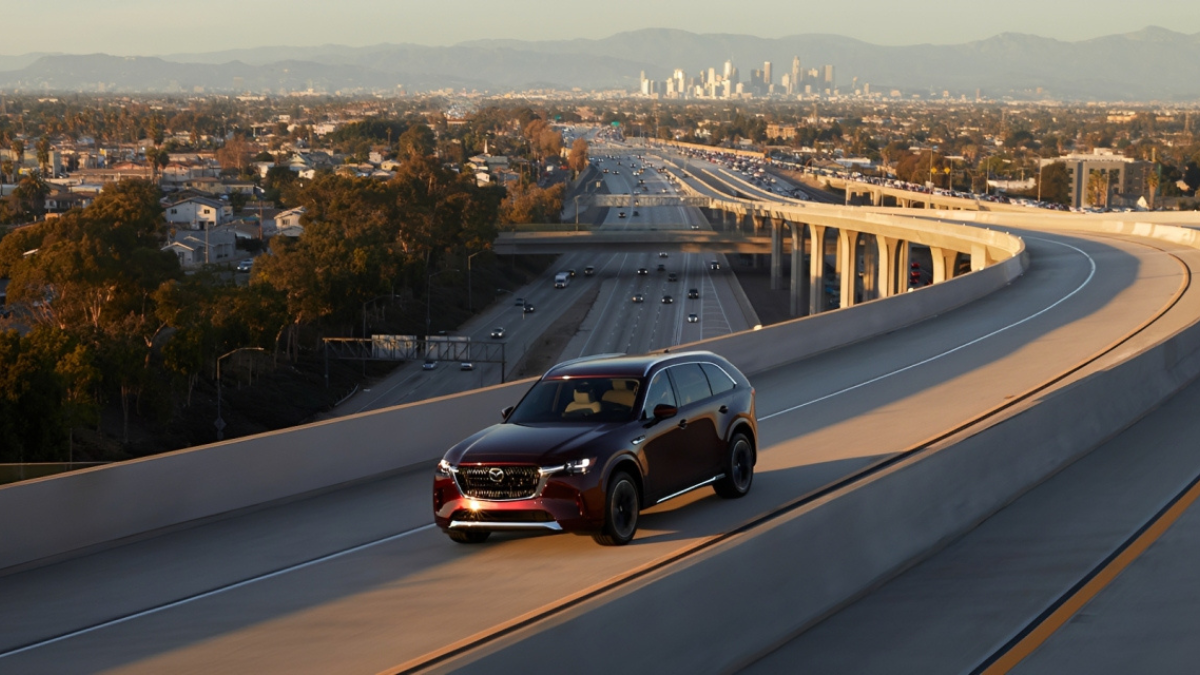
Research from the Federal Highway Administration and Consumer Reports points to the same basic split: adaptive cruise control and lane centering reduce different parts of highway workload, and only one of them stays consistently useful when lane markings are poor. Both get lumped together in sales brochures as a package that makes highway driving easier. On a well-marked interstate with light traffic, the combination can genuinely reduce fatigue over several hours. On a stretch of patchy pavement with faded lines and the wrong system engaged, it can make a driver feel like they’re arm-wrestling the car from Pennsylvania to Ohio. Knowing which feature actually helps, which one depends heavily on road conditions, and how to configure them before a long trip changes the experience more than most buyers expect.
The short version: ACC = speed fatigue (handles throttle and braking, reliable on any highway) Lane centering = steering fatigue (handles lateral position, only reliable on clear markings) Best on: well-marked interstates with light traffic Turn lane centering off on: faded markings, construction zones, narrow lanes, fresh windshield replacement
Quick Takeaways
- Adaptive cruise control handles one axis — speed and following distance — and genuinely reduces the mental workload of throttle and brake management on open highway
- Lane centering handles the other axis — steering — but its usefulness depends almost entirely on implementation quality and road marking conditions
- There are two meaningfully different types of lane assist: intermittent (reacts near lane edges) and sustained (holds near lane center) — the first can create a ping-pong effect that adds stress; the second reduces it
- Consumer Reports’ active driving assistance ratings found that sustained lane centering systems fared better in driver satisfaction than intermittent ones, which drivers frequently turn off because of annoyance
- Running ACC alone, without lane centering, is often the better choice on roads with faded markings, construction zones, or varying lane widths
- The best setup for fatigue reduction: ACC and a well-tuned sustained lane centering system, on a highway with clear lane markings, with light hands on the wheel — not fighting the car
Two Different Axes, Two Different Problems
Adaptive cruise control and lane centering are often sold as one feature, but they solve different mechanical problems and perform at different levels of reliability.
Adaptive cruise handles the forward axis — how fast the vehicle goes and how much space it keeps between itself and the car ahead. The driver sets a target speed; the system modulates the throttle and brakes to maintain it, slowing automatically when traffic is detected ahead and resuming speed when the road clears. The Federal Highway Administration describes ACC as a convenience system that relieves the driver of continuously regulating vehicle speed and following distance. On open highway, that description is accurate. The driver can remove the foot from the pedal entirely, stop managing gap constantly, and direct attention to the wider road environment instead of the gap to the bumper ahead.
Lane centering handles the lateral axis — where the vehicle sits left to right within its lane. A camera or set of cameras reads the lane markings, and the system steers continuously or intermittently to keep the vehicle positioned within them.
The difference in consistency between these two systems is significant. ACC works reliably wherever the radar can see a clear lane ahead. Lane centering depends on painted lane markings being visible, fresh, and readable by the camera — a condition that is not uniformly met on North American roads. That asymmetry explains much of the driver experience gap between the two systems on a real trip.
What Adaptive Cruise Actually Does for Fatigue
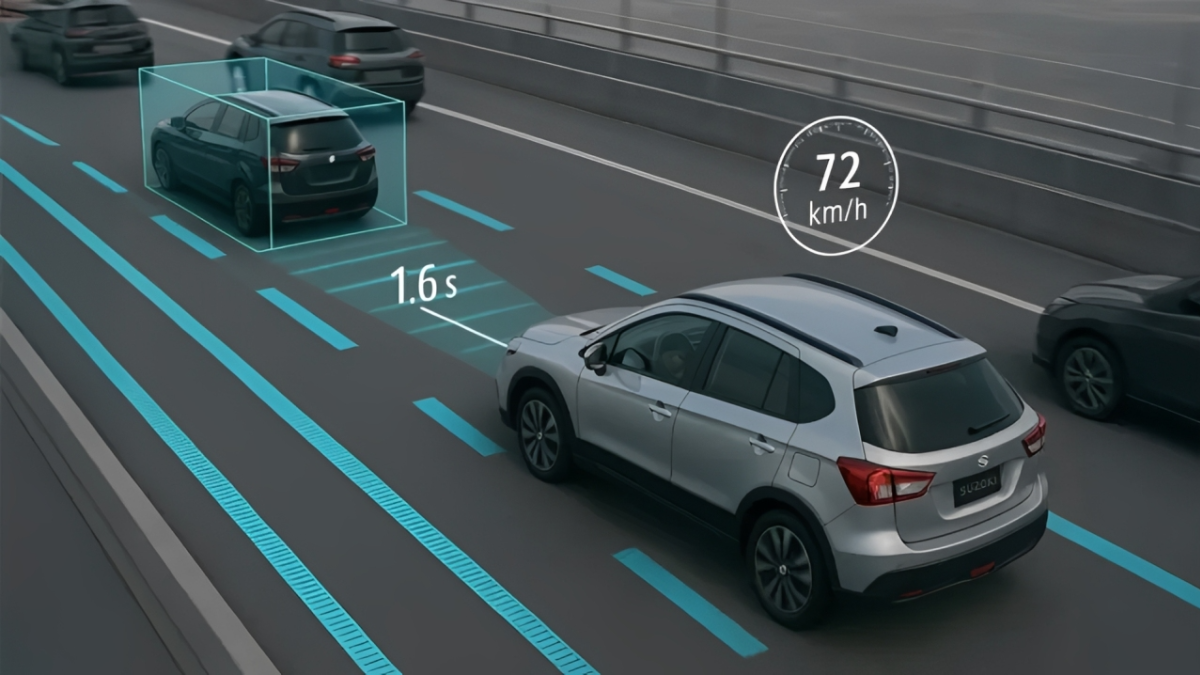
The case for ACC reducing highway fatigue is grounded in a straightforward mechanical reality. Speed management on a multi-hour highway drive is mentally repetitive work. The driver continuously monitors speed, adjusts to the traffic ahead, eases on and off the throttle through grade changes, and stays alert to vehicles entering from ramps. None of these are high-intensity tasks, but they accumulate over hours.
Research published in Transportation Research Part F reviewed the empirical evidence on ACC and driver workload and concluded that ACC automates the longitudinal control loop — speed and headway — leaving the driver to manage steering while the system handles the rest. The review is careful about the ceiling of that benefit: removing throttle and brake management reduces one specific demand, but does not substantially lower overall driver workload the way full automation would. Removing the throttle/brake task is a real but modest reduction, not a transformation of the driving experience.
The nuance worth knowing: some research has found that very high levels of driving automation can also accelerate passive fatigue — because monotonous highway driving with little to do may cause some drivers to disengage more than they would if driving manually. A German Aerospace Center simulator study found that drivers in automated conditions showed facial indicators of fatigue after 15 to 35 minutes, while manual drivers without sleep deprivation showed similar levels only after longer periods. ACC, which still requires the driver to steer, sits in a middle zone: it reduces active workload without fully removing the engagement that keeps alertness up.
The practical result for most highway drivers on a 300-plus-mile trip: ACC reduces the tiring part — constant pedal management in moderate traffic — while the driver remains actively involved with steering. That is a genuine fatigue reduction, not a complete solution.
Lane Centering: The Version You Have Changes Everything
Not all lane assist systems work the same way, and the distinction between types matters more than most buyers realize.
Consumer Reports, in its analysis of lane keeping systems, identifies two categories: intermittent and sustained. Intermittent lane keeping intervenes when the vehicle approaches a lane marker — it waits until the car drifts close to the edge, then applies steering torque to push it back toward center. Sustained lane centering continuously steers to keep the vehicle near the center of the lane, making smaller, more frequent adjustments.
The difference in driver experience between these two approaches is significant. With an intermittent system, drivers report a bouncing sensation — the car drifts toward one side, gets corrected, drifts toward the other, gets corrected again. Consumer Reports describes this as a ping-pong effect, and notes that drivers frequently turn off intermittent systems because of the annoyance. Sustained systems fared better in driver satisfaction because the corrections are smoother and the car holds a predictable position rather than hunting from edge to edge.
The ping-pong problem has been documented across a wide range of vehicles. Consumer Reports’ testing found that earlier Hyundai/Kia/Genesis Highway Driving Assist behavior was more ping-pong-prone — the system struggled to hold lane center and sometimes moved uncomfortably close to adjacent lane vehicles — while the updated HDA2, tested on the Ioniq 6, performed significantly better. Ford BlueCruise and Mercedes-Benz LCA systems received praise in the same Consumer Reports ratings for smooth, centered steering. Taylor & Francis’ automotive engineering knowledge base also describes the older-style intermittent LKA directly: when the driver’s hands are off the wheel, the system drives from one side of the lane to the other in a cycle.
The implication: “lane assist” on two different vehicles in the same price bracket can feel completely different. One holds the lane like a calm co-driver; the other makes the driver work harder to stay comfortable than if the system were turned off.
Why Ping-Pong Increases Stress Rather Than Reducing It
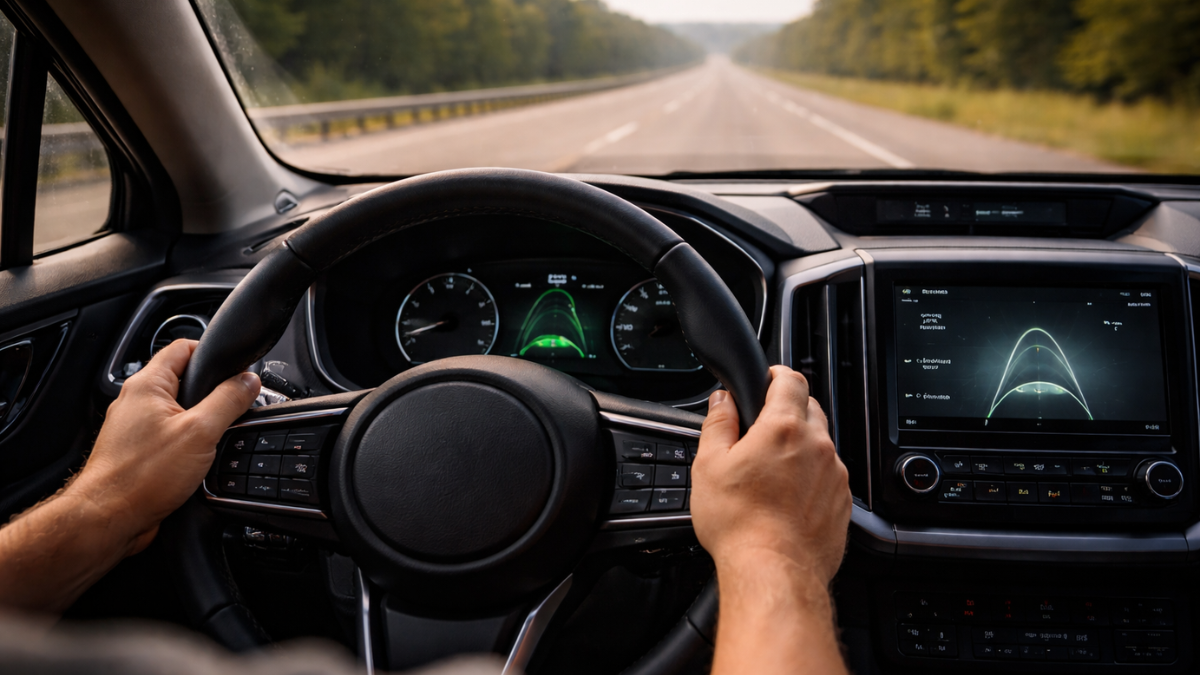
Fighting an intermittent lane assist system over several hours produces a specific kind of fatigue that is distinct from simply driving manually.
When a driver steers normally, the physical inputs are continuous and self-directed — the driver decides where the car goes and applies the appropriate torque. With a malfunctioning or poorly tuned lane assist engaged, the driver is applying steering input against an opposing force: the system’s correction is going one direction, the driver is trying to override it, and the resulting effort is higher than either would be alone.
Multiple owner-reported accounts across different vehicles describe the same experience: disabling the lane assist entirely and driving manually feels less tiring than leaving it on and fighting it. This tracks mechanically — any system that requires the driver to actively oppose it on a sustained basis is adding to fatigue rather than removing it.
The conditions that make ping-pong worse are also common on North American road trips. Faded lane markings — common in winter-heavy states and provinces after spring road damage — cause intermittent systems to lose the reference line and overcorrect when they reacquire it. Inconsistent lane widths through construction zones cause similar behavior. High-crown road surfaces, where the lane curves slightly with the road geometry, can cause systems calibrated for flat roads to constantly battle the driver’s natural compensation.
What to do on bad roads
Switch to ACC-only or full manual steering when any of these are present: — Faded, patchy, or missing lane markings (common after winter in northern states and Canadian provinces) — Active construction zones with temporary lane lines or variable widths — Narrow lanes under 11 feet, where the system may track the wrong boundary — Recent windshield replacement without an ADAS recalibration — Heavily crowned road surfaces that cause the car to drift toward the shoulder
In these conditions, lane centering will disengage or fight the driver regardless of the vehicle. ACC continues to work; lane centering does not. Turn it off before it turns itself off mid-correction.
The combination of ACC and lane centering, configured correctly, is the closest thing most mainstream vehicles offer to genuine highway fatigue reduction. The key is using the right mode in the right conditions.
Know which system you have. Check the owner’s manual or the vehicle’s driver assistance settings menu. Most vehicles offer a choice between a warning-only mode (visual or haptic alert when drifting), an intermittent assist mode (steering nudge near lane edges), and sustained lane centering (continuous center-holding). The third option is what delivers the smoothest experience. On many vehicles, sustained centering is only available when ACC is also engaged.
Run ACC and lane centering together, not separately. Lane centering is most useful when paired with ACC. With both active, the car manages speed and lateral position simultaneously — this is the combination that Consumer Reports describes as potentially stress-reducing on long highway stretches. Running lane centering without ACC, or toggling them independently, produces less consistent behavior on most systems.
Use a light grip, not a firm one. The most common driver mistake with lane centering is fighting it. The system is calibrated to work alongside light steering input — a finger or two resting on the wheel, not a two-handed grip that counteracts every correction. Applying firm resistance to every steering input from the system produces the ping-pong effect even with a well-tuned system, because the driver and the car are essentially competing for the same steering column.
Switch to ACC-only on degraded road conditions. When markings are faded, missing, or inconsistent — common in construction zones, spring road damage zones, rural two-lanes, or any road where the system repeatedly disengages and re-engages — turn lane centering off and run ACC alone. The system will tell you it cannot maintain lane position and will disengage anyway. Switching to ACC-only preemptively keeps speed management automated while giving the driver full steering control, which is less stressful than fighting a confused lane system.
Use vehicle settings to adjust sensitivity where available. Some vehicles offer sensitivity or timing adjustments for lane assist. Audi’s system, for instance, can be set to intervene “early” — keeping the car continuously near center — or “late,” which provides correction only when approaching the line. The early setting behaves more like sustained lane centering; the late setting behaves more like intermittent LKA. On vehicles with multiple sensitivity levels, a higher sensitivity generally produces smoother behavior on well-marked roads. Ford’s system allows choosing between alert-only, aid-only, or both.
Check ADAS calibration after windshield work. Lane centering cameras are typically mounted near the rearview mirror and require recalibration if the windshield is replaced or if a significant impact moves the camera mount. A misaligned camera produces exactly the kind of persistent off-center tracking that owners sometimes describe as ping-ponging. If the behavior is new and followed a windshield replacement or a hard impact, a dealer recalibration is worth checking before a long trip.
What Better vs. Worse Implementations Look Like
Consumer Reports’ rated active driving assistance systems provide a useful reference for what to expect from well-implemented versus poorly implemented versions. Their testing found that Ford BlueCruise, Mercedes-Benz systems, and the updated Hyundai Highway Driving Assist 2 gave smooth steering inputs and held lane center well on both straight and curved roads. GM’s Super Cruise was noted separately for working only on mapped freeways, using a combination of high-definition maps and GPS positioning to provide a higher-confidence basis for lane keeping than camera-only systems.
The pattern across better-performing systems is consistent: they use continuous, smooth corrections rather than reactive jabs at the edges, they communicate clearly through the instrument display when they are and are not operating, and they transition smoothly when the driver needs to override.
Worse-performing systems share the opposite characteristics: they react at the lane boundary rather than the center, the corrections are abrupt enough to be felt through the wheel, and they fail on faded or narrow markings rather than giving the driver advance notice.
For buyers shopping now, the clearest signal of a well-tuned lane system is how the vehicle behaves on the test drive. A highway segment with good markings and ACC engaged is the right test. If the lane assist holds the car at a consistent position with minimal drama, it will likely reduce fatigue on a long trip. If the car wanders and corrects visibly, it will not.
What This Means on a 300-Mile Day
A realistic 300-mile highway day — say, six hours including a fuel stop — involves several different road conditions: a well-marked interstate segment, a construction zone or two, a stretch of older highway with worn markings, and possibly some rural two-lane miles at the end.
For that kind of day, the practical breakdown looks like this. ACC carries most of the fatigue reduction value across all of it — reliably automating speed and gap management on every segment. Sustained lane centering adds genuine value on the clean interstate miles, reducing steering micro-corrections during the monotonous middle stretch. The construction zones and rough-marking segments are ACC-only territory; trying to run lane centering through them adds stress instead of removing it.
The driver who ends the day least tired is the one who ran ACC the entire way, added lane centering on the clean segments, and turned lane centering off before the construction zones rather than waiting for the system to fight them through it. That approach is not complicated, but it requires knowing the difference between the two systems going in.
Lane marking quality is not uniform across North America, and ADAS performance reflects that variation. States and provinces with severe freeze-thaw cycles — the upper Midwest, much of Canada’s interior, New England, coastal British Columbia in winter — routinely have faded, cracked, or incomplete lane markings on secondary highways and even on some interstates after the spring melt.
Canadian drivers on Trans-Canada highway stretches and many provincial highways will find that sustained lane centering systems disengage more frequently than on well-maintained urban interstates. The ACC component remains useful on these routes regardless of marking quality. Lane centering functions most reliably in the U.S. Sun Belt corridor, on recently repaved interstate segments, and in regions where road maintenance budgets have kept markings fresh.
For trip planning purposes: if the route runs through known rough-pavement territory or areas with recent road damage, treating ACC as the primary fatigue tool and lane centering as a secondary feature that may not be available for the full trip is the realistic expectation.
SOURCES
- Consumer Reports: intermittent vs. sustained lane keeping systems, driver satisfaction data, ping-pong effect
- Consumer Reports: active driving assistance system ratings — Hyundai HDA2 improvement, BlueCruise and Mercedes-Benz smooth LCA, ping-pong on previous Hyundai system
- De Winter et al., Transportation Research Part F: ACC and driver workload — empirical review of automated driving research
- Federal Highway Administration: ACC marketed as reducing driver workload and stress by automating speed and following distance
- German Aerospace Center / DLR driving simulator study: ACC and CC effects on driver behavior, reaction times, and attention
- DLR study on driver fatigue during automated driving: facial fatigue indicators appearing 15–35 min in automation vs. later in manual driving
- Taylor & Francis: lane centering knowledge base — ping-pong effect in older intermittent systems, newer lane centering technologies
- KBB: LKA vs. lane centering explained, clear lane markings requirement, override behavior
- JD Power: Audi Active Lane Assist — early vs. late correction setting, configuration options
- Ford.com: Lane-Keeping system settings — alert-only, aid-only, both — official Ford guidance