

Trim levels have turned summer cooling into a marketing arms race. One brochure leads with ventilated front seats. Another leads with tri-zone climate and rear ceiling vents. Both cost about the same premium over the base. Only one of them directly helps the people sitting in the back on a three-hour July drive through the Southwest or the Great Lakes. Understanding the difference before signing matters more than most buyers realize — because these two features solve completely different problems, and one of them involves a tradeoff some long-distance drivers may notice.
Quick Takeaways
- Ventilated seats use small fans to move cabin air through seat perforations — they help the person sitting in that seat, not the rear cabin
- Most ventilated seats circulate ambient cabin air; they do not refrigerate it — effectiveness depends entirely on how cool the cabin already is
- True rear cooling requires either a dedicated rear evaporator or powerful ducting that can deliver cold air to second-row passengers without losing temperature over distance
- Many compact and midsize SUVs pipe front AC through long ducts to rear floor vents — the air warms noticeably on the way back, especially on a hot day
- Ventilated seat airflow through the lumbar backrest on a long summer drive can work against muscle comfort for some drivers — the opposite of what heated seats do for back fatigue
- Before stepping up a trim level, check whether the premium buys a separate rear HVAC loop or just rear vent controls wired to the same front evaporator
Two Features, Two Different Problems
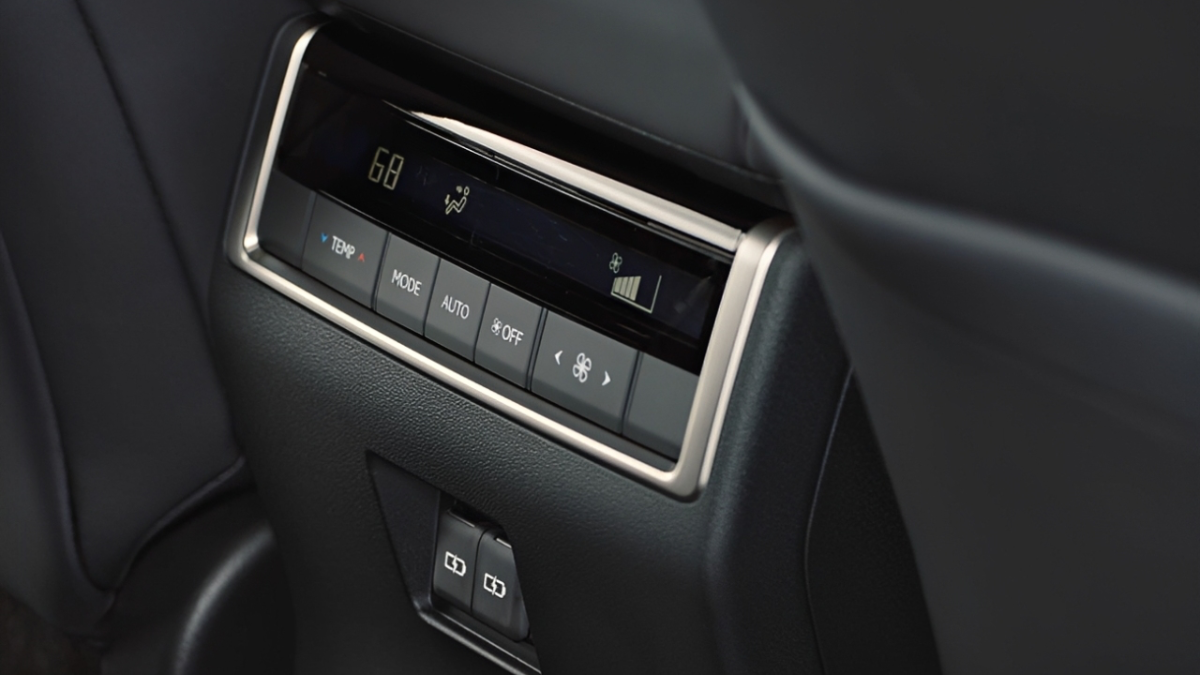
Ventilated seats and rear AC look like versions of the same thing. They are not. They address different people in different parts of the cabin using completely different hardware.
Ventilated seats are about the contact zone between a body and a seat surface. The problem they solve is seat swamp — the sweaty, sticky buildup that happens when leather or synthetic fabric traps heat against skin during a long drive. Small fans embedded under the seat cushion and backrest pull or push air through perforations in the seat surface. That airflow evaporates moisture, reduces surface temperature against the body, and makes the seat feel less like a punishment. It works, within limits.
Rear AC is about the air temperature the backseat passengers breathe and feel. The problem it solves is a fundamentally hotter location in the vehicle — higher glass exposure from side windows, no access to front-row airflow, and a position farther from the dashboard where conditioned air originates. On a vehicle with weak rear delivery, those passengers can be sitting in air that is 10 to 15 degrees warmer than what the driver feels, regardless of what the rear vent controls say.
The confusion happens because brochures treat both as “comfort upgrades” without explaining that they operate in completely separate parts of the cabin experience.
What Ventilated Seats Actually Do

Most vehicles marketed as having ventilated seats use fans to circulate ambient cabin air — not refrigerated air — through the perforated seat. The fan sits under the cushion and moves air upward or draws it downward depending on the design. As Kelley Blue Book notes in its comparison of the two technologies, ventilated seats circulate vehicle-temperature air through the seat coverings, similar in principle to running a ceiling fan in a hot room. The fan moves air; it does not lower its temperature.
This creates an important dependency. If the cabin is already cold, ventilated seats feel noticeably better. If the cabin is still hot — in the first ten minutes after getting into a parked car, or on a vehicle with under-powered AC — the seat is circulating hot air through the cushion and the benefit is minimal. The system needs cold cabin air to work well.
True cooled seats, which are different from ventilated seats despite often being confused with them, use a thermoelectric device to actively cool the air before pushing it through the seat. These appear more often in luxury-tier vehicles and a narrower band of performance and premium trims. For most family SUVs in the $35,000–$55,000 range, what the feature list calls “ventilated seats” means fans, not refrigeration.
The effective reach of even good ventilated seats is also limited by geometry: front seats only. Standard ventilated seat packages do not extend to second-row passengers. The rear bench or captain’s chairs do not have the same fan systems. Rear seat occupants — typically children and back-seat adults on a long summer drive — get nothing from the front’s ventilated seat feature.
What Rear AC Actually Does — and Where It Falls Short
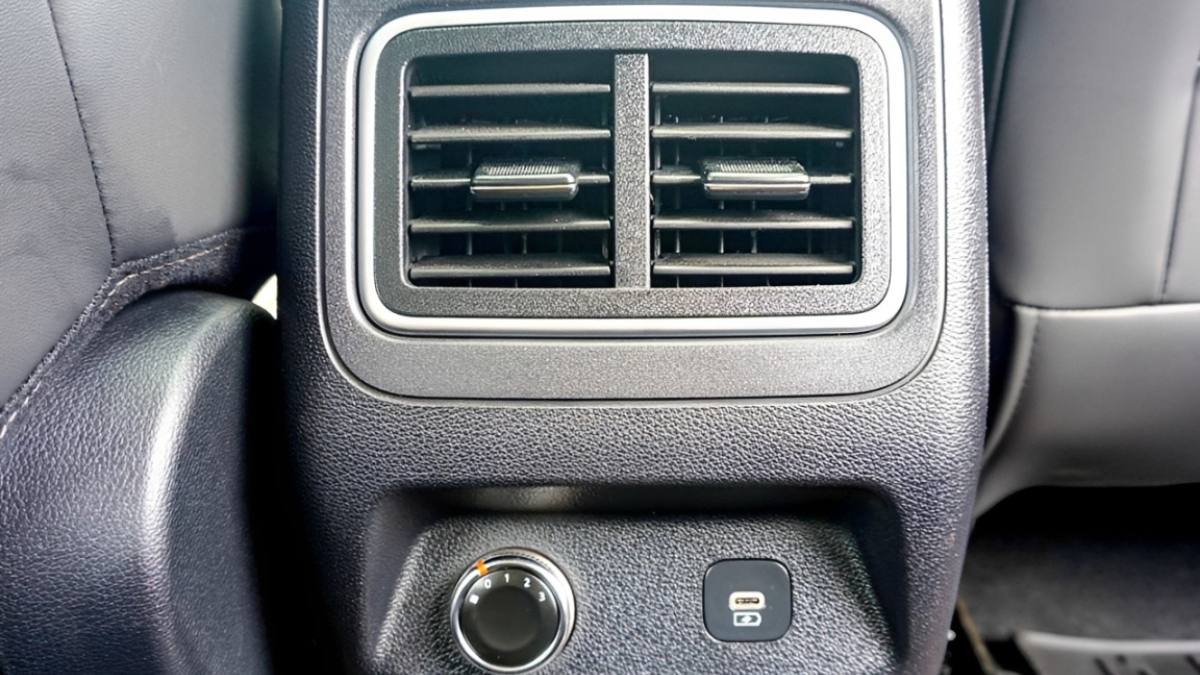
Rear air conditioning comes in two meaningfully different configurations, and the gap between them matters more than most buyers check.
The first is a true dual-evaporator system. This runs refrigerant to a separate evaporator unit mounted in the rear of the vehicle — often under the rear seats or in the ceiling — with its own blower fan. This rear evaporator actively chills the air before delivering it. The rear passengers get cold air that originates near them, not warm air that traveled three feet of ductwork from the front.
The second configuration is extended front AC: the front system handles all refrigeration, and ducts run from the dashboard HVAC unit back to rear floor vents, console vents, or ceiling vents. The control panel in the rear seat may let passengers adjust fan speed and apparent temperature, but the cold air they receive has already traveled the length of the vehicle before reaching them. On a hot day with the sun loading through rear side glass, that air warms noticeably on the way back.
What this temperature loss looks like in practice is illustrated by owner-reported observations rather than controlled testing, but the direction is consistent. A Hyundai Palisade forum discussion includes one owner measuring rear vent output at around 63°F under full AC operation. Separately, an owner of a BMW X7 posted informal measurements — taken with a consumer infrared thermometer at 93°F ambient — showing front-row vent output at roughly 53°F, second row at 56°F, and third row at 62°F. These are not test-grade figures, but they reflect the kind of gradient that real-world rear-cabin cooling has to overcome. Air warms as it travels; the further the run from evaporator to vent, the warmer the delivery.
What this means practically: a compact SUV with rear floor vents connected to the front system may cool the rear cabin adequately in mild heat. In extreme summer heat — the Texas July afternoon, the Arizona highway, the interior of British Columbia in August — the same vehicle may leave rear passengers noticeably warmer than the front, regardless of what the tri-zone climate readout says.
The Back Muscle Question
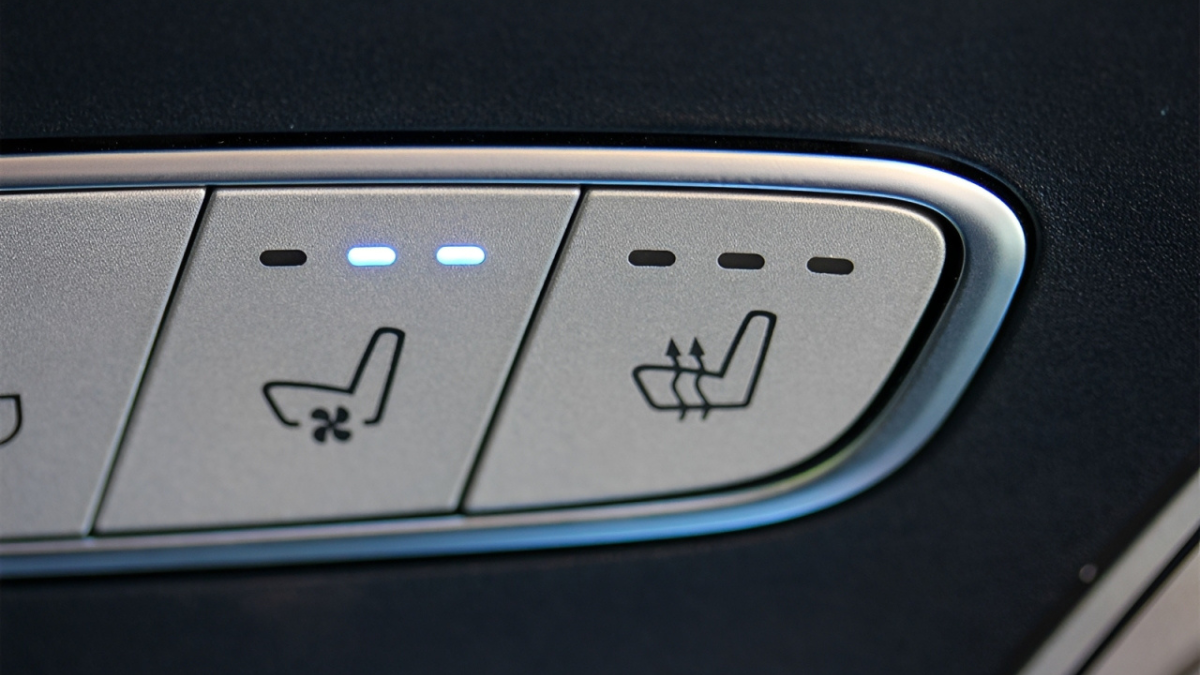
There is a third factor worth noting for anyone who relies on warmth for lower-back comfort on long drives.
Spine health sources including Spine-Health and Healthline are consistent on the mechanics of back fatigue in long drives: sitting in a fixed position stiffens muscles and can lead to achiness and muscle spasm, typically after two or more hours. Heat helps. Heated seats are frequently recommended by spine specialists because warmth increases blood flow to back muscles, reduces tension, and eases the stiffness that accumulates in the lumbar region during static highway sitting.
Ventilated seats produce the opposite thermal effect in the same location. The fan circulates air across the lumbar backrest, creating evaporative cooling through the perforations. For most drivers on most summer trips, this is clearly preferable to a hot, sweaty seat and the absence of airflow is not disputed as a benefit.
But drivers who specifically rely on warmth for lower-back comfort on long trips may find strong seat ventilation less soothing than a heated seat, especially late in a drive. The same perforated backrest that feels good in the first hour may be working against muscle relaxation by hour three — though how much this matters varies by individual and there is no strong controlled evidence establishing it as a universal effect.
The practical note: if back fatigue on long drives is a known issue for a driver, running ventilation at a lower fan setting rather than maximum, or switching it off in the final stretch, may be worth trying.
Which One Is Worth the Money?
Both features carry a real cost. Ventilated front seats typically appear at a tier one or two above base, often as part of a package that bundles other features. KBB’s breakdown of ventilated seat packages in mainstream models shows that reaching that tier can add several thousand dollars to the purchase price — the exact jump varies significantly by vehicle and how features are bundled.
Strong rear AC — specifically the kind with its own evaporator, independent blower, and ceiling or overhead vent delivery — tends to appear on larger SUVs with three rows and on higher trims of midsize SUVs. Vehicles like the Kia Telluride, Toyota Highlander in higher configurations, Ford Explorer with rear climate controls, and Subaru Ascent offer rear HVAC systems with dedicated rear airflow and passenger-controlled settings. Compact two-row SUVs — RAV4, CR-V, Tucson, and their competitors — mostly rely on extended front system ducts to rear floor vents.
The practical question for the buyer:
Who is in the car most often? If it is primarily the driver alone or driver with a front passenger, ventilated seats deliver real daily value in hot climates — particularly for the seat-swamp problem during commutes and short trips. If the vehicle regularly carries children, rear-row adults, or anyone who is less able to tolerate heat (elderly passengers, people with heat sensitivity), the rear cooling system deserves at least as much scrutiny as the front seat features.
The worst-value scenario: spending to get ventilated front seats in a compact SUV that has only floor-level rear vents connected to the front evaporator, then parking children in the back for a summer drive through a region with real heat. The driver is cool and comfortable. The rear passengers are not. The brochure said the vehicle had climate control.
What to Check Before Buying
A few lookups that take five minutes and change the evaluation:
Check the rear vent location. Floor vents connected by long ducts deliver warmer air than ceiling vents or vents positioned higher in the cabin. In SUVs, overhead rear vents are a meaningful comfort advantage in hot climates.
Ask whether the rear system has its own evaporator. The manufacturer spec sheet or HVAC system description will say “dual evaporator” or “independent rear HVAC” if it does. If it just says “tri-zone climate” or “rear seat controls,” that does not guarantee a separate cooling source — it may just mean rear passengers can adjust the fan speed on the same front-sourced air.
Consider the climate zone. In the Pacific Northwest, upper Midwest, or Maritime Canada, the difference between ventilated seats and rear evaporator systems matters significantly less. In Texas, Arizona, California’s Central Valley, or Ontario in August, the rear evaporator is the more consequential feature for anyone sitting behind the front seats.
For long-trip drivers with back issues. Use ventilated seats, but dial them down rather than running them on maximum throughout the drive. The lumbar cooling effect that helps in the first thirty minutes may work against you in hour three.
U.S. and Canada Note
Summer heat is not uniform across North America, and neither is the importance of rear AC architecture. In the Canadian Prairies and Southern Ontario, summer temperatures routinely hit ranges where rear cabin temperature in an under-equipped SUV becomes a genuine welfare issue for rear-seat children, not just a comfort question. The same applies across the Southern U.S. from Florida to the California coast.
Canadian buyers checking trim availability should note that HVAC configurations can differ by market. It is worth confirming directly that the Canadian-market version of a given trim includes the same rear cooling hardware as the U.S. spec — particularly on vehicles where trim levels are slightly different across markets.
SOURCES
- Kelley Blue Book: ventilated vs. cooled seats mechanics, pricing context, climate zone guidance
- Capital One Auto: ventilated seat technology — no refrigerated air, ambient circulation only
- Auto Cooling Solutions: dual evaporator system vs. extended front system — how rear AC actually works
- Palisade Forum: real-world rear vent temperature measurements, BMW X7 owner data showing front/rear vent temp gradient
- Spine-Health: muscle stiffness and spasm from static seating, heat therapy for lumbar relief on road trips
- Healthline: heated seats and back pain relief mechanism — blood flow to back muscles during driving
- GM Authority: ventilated vs. cooled seats — industry distinction, mainstream vehicles mostly ventilated
- Cars.com: which compact and midsize SUVs have rear AC with independent controls
- SpineINA: whole-body vibration research, lumbar resonance, heat vs cold for driving-related back muscle fatigue