

According to Consumer Reports’ access guidance, the easiest vehicles to live with on real trips are often the ones that reduce repeated “in and out” effort and simplify loading—especially for families and mixed‑age passengers. The Insurance Institute for Highway Safety (IIHS) has also highlighted how larger blind zones can raise pedestrian-crash risk during left turns, a reminder that trip stress isn’t only highway fatigue; it’s also low‑speed chaos in parking lots and resort towns. Add weekend realities—strollers, coolers, wet gear, tight garages—and the question becomes: which vehicle type has the lowest stress ceiling, meaning it stays manageable even when the trip gets messy? This guide compares wagons, crossovers, and minivans using the friction points that actually create stress.
Quick takeaways
- Lowest trip‑stress ceiling (most forgiving): a minivan usually wins when trips include kids, grandparents, and repeated stop cycles (loading, buckling, wet gear) because the cabin and doors are designed to reduce daily friction (Consumer Reports access and minivan guidance).
- Lowest stress for “city + highway” without bulky gear: a wagon can feel calm and easy to place on the road, with low lift-over loading and simpler parking—especially when the last mile is paved and the passenger count is small.
- Best middle ground: a compact crossover often sits in the middle: more clearance and available AWD than many wagons, less “door and cargo workflow” ease than a minivan.
- The real stress multipliers: blind zones in crowded places (IIHS), cargo that spills into seats, and doors that fight you in tight parking.
- Best decision method: choose the type that reduces your dominant stress (parking geometry, stop-cycle loading, or rough access), then run a 15‑minute “trip stress test.”
What “trip stress ceiling” means (and why it beats spec-sheet debates)
Trip stress isn’t one feeling. It’s a curve. A vehicle has a low stress ceiling if it stays workable even when three things happen at once:
- the parking spot is tight,
- it’s raining and the gear is wet,
- and the plan changes (extra passenger, grocery stop, late check-in).
A vehicle has a high stress ceiling if it tolerates those curveballs without turning the trip into a project.
For most weekend travelers, stress climbs from three sources:
1) Stop-cycle friction: repeated in/out, buckling car seats, loading and unloading.
2) Cargo clutter: items migrating into seats and footwells because the back is hard to use.
3) Visibility + low-speed chaos: pedestrians, bikes, tight garages, awkward turns (and in some cases, larger blind zones).
The stress ceiling test in one sentence
If the vehicle can handle “child seat + stroller + cooler + one surprise stop” without reorganizing the cabin, it has a low stress ceiling.
Now the types.
Minivan: the most forgiving trip tool when life is messy
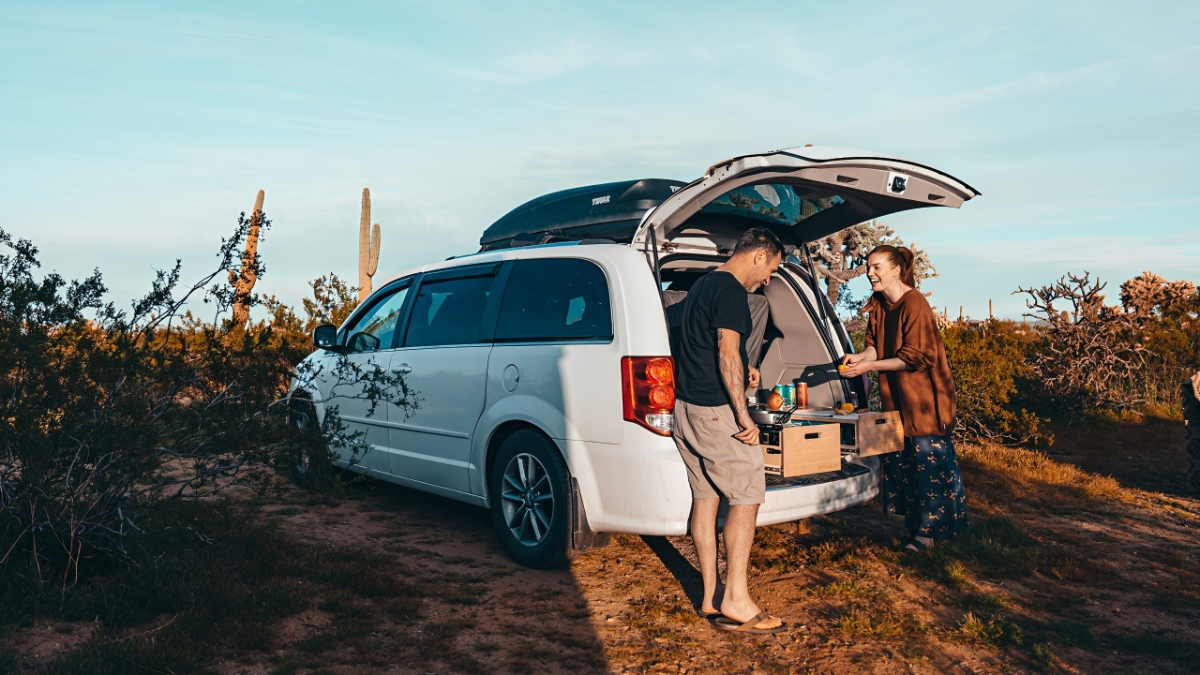
Minivans tend to have the lowest stress ceiling because they solve the trip’s most repeated problem: doors and access.
Why the stress stays low
- Sliding doors reduce parking-lot drama. When spaces are narrow, sliding doors open without the “door ding” fear and make car-seat buckling less awkward.
- Big, square openings reduce packing failures. The cargo area is usually shaped to accept bulky items without a diagonal puzzle.
- Cabin organization is easier. When the interior is larger, bags stay out of footwells and seats, which keeps everyone calmer.
Consumer Reports’ minivan guidance also frames minivans as purpose-built family tools, and its access-focused guidance highlights that ease of entry/exit is a real-life advantage—not a luxury.
Where stress can rise
- In very tight urban cores, a minivan’s length can make parking more stressful than a smaller wagon.
- If the route includes rough, rutted last miles, clearance can become the limiting factor (tires and driving line matter).
Weekend summary: if your trips regularly include kids, older adults, or lots of “stop cycle,” minivan stress typically rises the slowest.
Wagon: the calm choice when the trip is mostly paved and predictable

Wagons often feel low-stress on city highways because they are easy to place in a lane and often easier to park than taller, bulkier vehicles.
Why the stress stays low
- Parking geometry feels simpler. Wagons tend to be lower and easier to judge around corners and pillars.
- Loading can be easy. Low lift-over height helps with groceries, small coolers, and luggage.
- Highway calm. A lower center of gravity can feel steady in crosswinds and wet curves.
Where stress can rise
- Clearance and rough access. If the last mile includes deep ruts, snow berms, or steep gravel driveways, a wagon can become a “hesitation vehicle.”
- Bulky-gear weekends. The wagon’s cargo can be long and useful, but one oversized rigid item (large cooler, large stroller) can still create stacking and access issues if the opening is lower or more tapered than a minivan.
Weekend summary: wagons are low stress when the trip is “city + highway + light gear,” and higher stress when the last mile is rough or the cargo is bulky.
Compact crossover: the middle path that often matches modern weekends
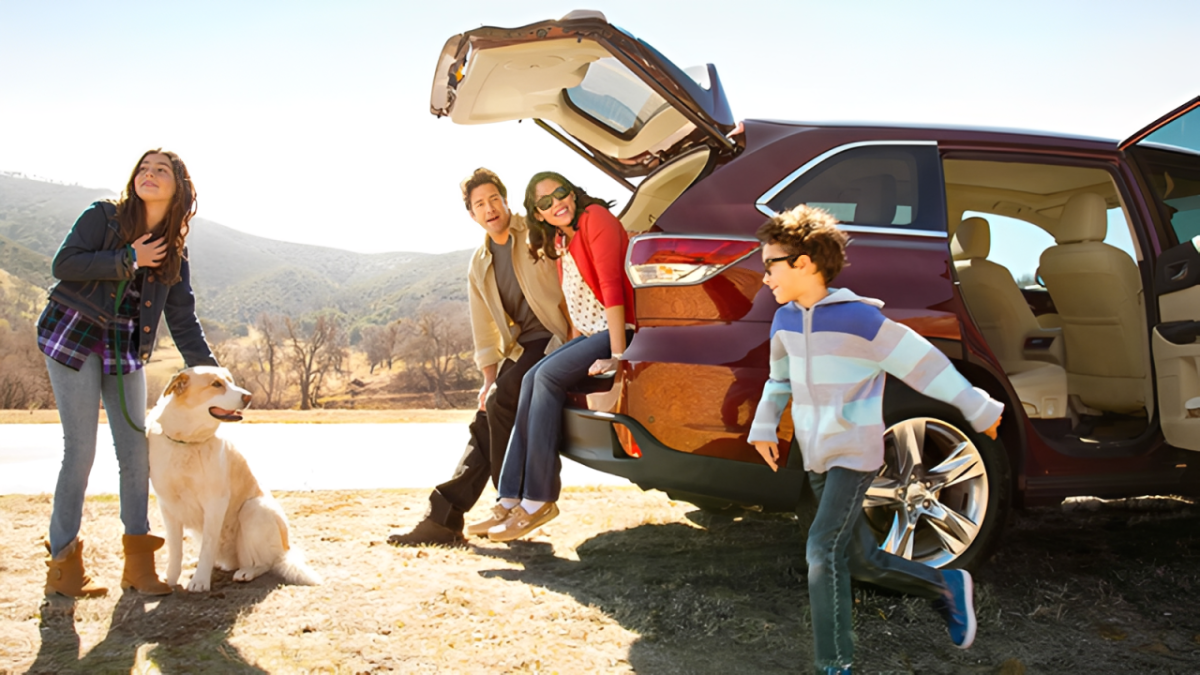
Crossovers can have a low stress ceiling when you need modest clearance and available AWD but don’t need minivan-level door and cargo workflow.
Why the stress stays low
- More clearance for the last mile. Uneven lots, curbs, and light snow become less dramatic.
- Versatility without going huge. A compact crossover can keep parking manageable while still handling weekend gear.
- Available AWD in many models. That can reduce stress in winter corridors—though tires still decide braking and turning.
Where stress can rise
- Doors in tight parking. Hinged rear doors can make car-seat buckling stressful in narrow spaces compared with a minivan.
- Cargo geometry. Some crossovers have tapered rear openings; the “big rigid item” problem can still force seat folding or cabin spillover.
- Visibility in busy places. IIHS research on blind zones is a reminder to choose a size you can see out of comfortably and to prioritize visibility and awareness in crowded parking environments.
Weekend summary: crossovers are a strong compromise, but their stress ceiling depends heavily on the exact cargo opening shape and your parking environment.
What changed in 2026 (why the stress ceiling matters more now)
Two trends make “trip stress” a useful way to choose a vehicle type:
- Trips are more stop-heavy. Weekends involve more micro-stops (pickup, groceries, trailhead, coffee). A vehicle that handles repeated loading and tight parking stays calmer.
- Urban parking and visibility are bigger constraints. IIHS has emphasized blind-zone concerns in left-turn scenarios, which raises the value of vehicles that are easy to see out of and easy to place at low speed.
The “best” type is not the one that wins one metric. It’s the one that stays boring when the trip gets complicated.
What this means in the U.S.
In U.S. weekend travel, the stress points are consistent:
- highway miles at 70–80 mph,
- tight lots at destinations,
- and at least one weather surprise per season.
So the lowest stress ceiling usually goes to the type that reduces the most repeated friction for your household:
- minivan for mixed-age families and frequent stop cycles,
- wagon for paved trips with small loads and frequent city parking,
- compact crossover for a versatile balance when the last mile is uncertain.
What you can do: the 15-minute trip-stress test
Run this test on the same day for any vehicle type you’re considering:
1) Tight lot test (5 min): back in, open the rear door(s), simulate car-seat buckling or a passenger entry.
2) Seats-up cargo test (5 min): load a cooler + two duffels + one bulky item (stroller or chair) without folding seats you need.
3) Visibility + calm test (5 min): slow left turn in a busy lot, then a short highway merge; notice whether the vehicle feels “easy to place.”
If one type stays calm across all three, it has the lower stress ceiling for your weekends.
Bottom line
For most households, the minivan has the lowest trip-stress ceiling because it is the most forgiving when trips include kids, grandparents, wet gear, and repeated stops. A wagon can be the lowest-stress choice when trips are mostly paved and parking is tight, and the load is modest. A compact crossover sits in the middle—often the best balance when the last mile is uncertain—though its stress ceiling depends on door access and cargo opening shape.
The best “weekend vehicle type” is the one that keeps the trip boring when the plan changes.