
According to Car and Driver’s review, the 2026 Chevrolet Equinox has a comfortable ride and strong standard driver-assistance tech, but the publication also flags that the cabin is noisy at highway speeds—a fatigue factor that can build over a four-hour run. Car and Driver’s 2026 Nissan Rogue review, by contrast, describes the Rogue as a “cosseting” compact SUV with comfy seats, a smooth ride, and “leave‑it‑to‑me” driver aids, and its instrumented results list 31 mpg at 75 mph. For highway weekends, the most useful question is simple: which one keeps the cabin calmer for four hours—noise, ride stability, seat comfort, and driver-assist smoothness—without turning the trip into a project?
Quick takeaways
- If highway noise is your #1 fatigue trigger: Car and Driver explicitly flags the Equinox cabin is noisy at highway speeds, while its Rogue overview emphasizes comfort and “cosseting” manners.
- If you want a real 75‑mph proof point: Car and Driver’s instrumented results list the Rogue at 31 mpg at 75 mph and a 75‑mph range of 440 miles (tested Rogue Platinum AWD).
- If you want the most “tech help” for long stints: Car and Driver says Equinox offers standard adaptive cruise control with lane-centering, with additional features optional (360 camera, rear pedestrian detection).
- If you want more rear passenger space on paper: Car and Driver lists Equinox passenger volume 52/49 ft³ (front/rear) versus Rogue 54/47 ft³ (front/rear).
- Best decision method: run one 12‑minute loop (70‑mph cruise + passing + rough pavement) and choose the one that keeps noise + ride + driver-assist boring.
The 4-hour fatigue stack (what actually makes drivers tired)
After four hours, “tired” usually comes from stacked irritants:
- Noise (wind + tire roar),
- micro-corrections (steering and lane position),
- seat pressure points (cushion shape and lumbar support),
- and stop-cycle friction (awkward infotainment, clunky cruise behavior, frequent fuel stops).
A compact SUV can be quick enough and roomy enough and still feel fatiguing if one of those stacks is consistently irritating.
What changed for 2026 that matters here
Equinox: mostly steady after a recent redesign
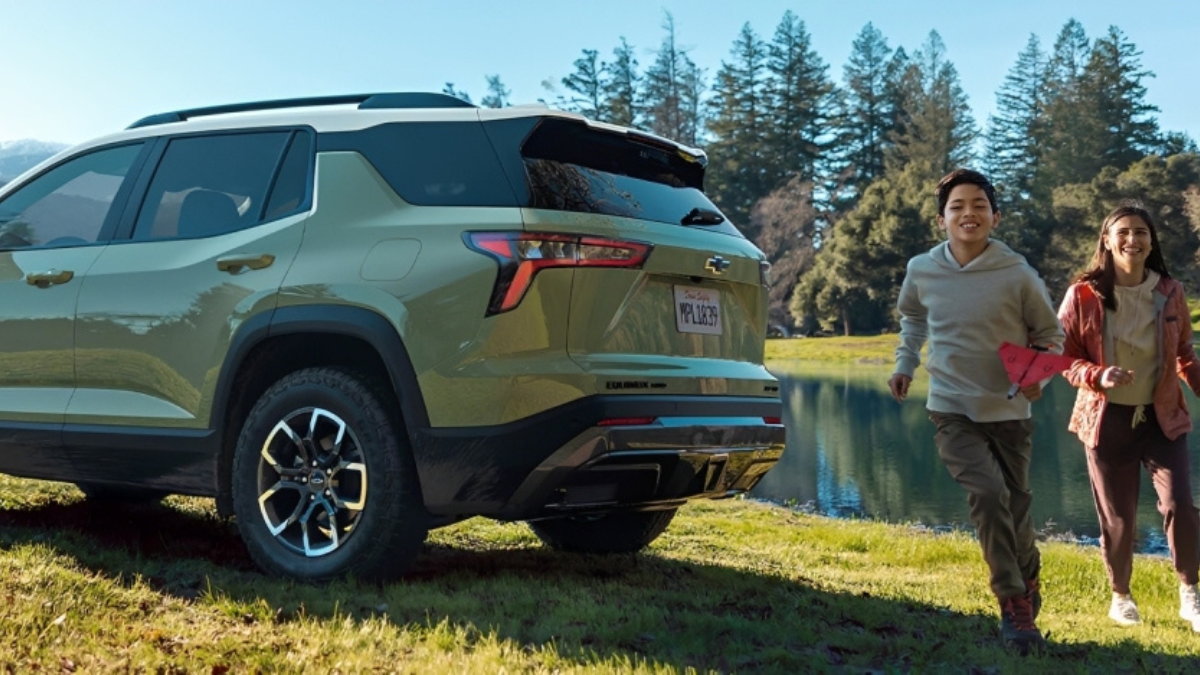
Car and Driver notes Equinox sees few changes for 2026 after its redesign, and describes its on-road demeanor as comfortable and easy-going. The key for this matchup is that the same review also calls out highway cabin noise as a downside.
Rogue: comfort-first personality stays the story
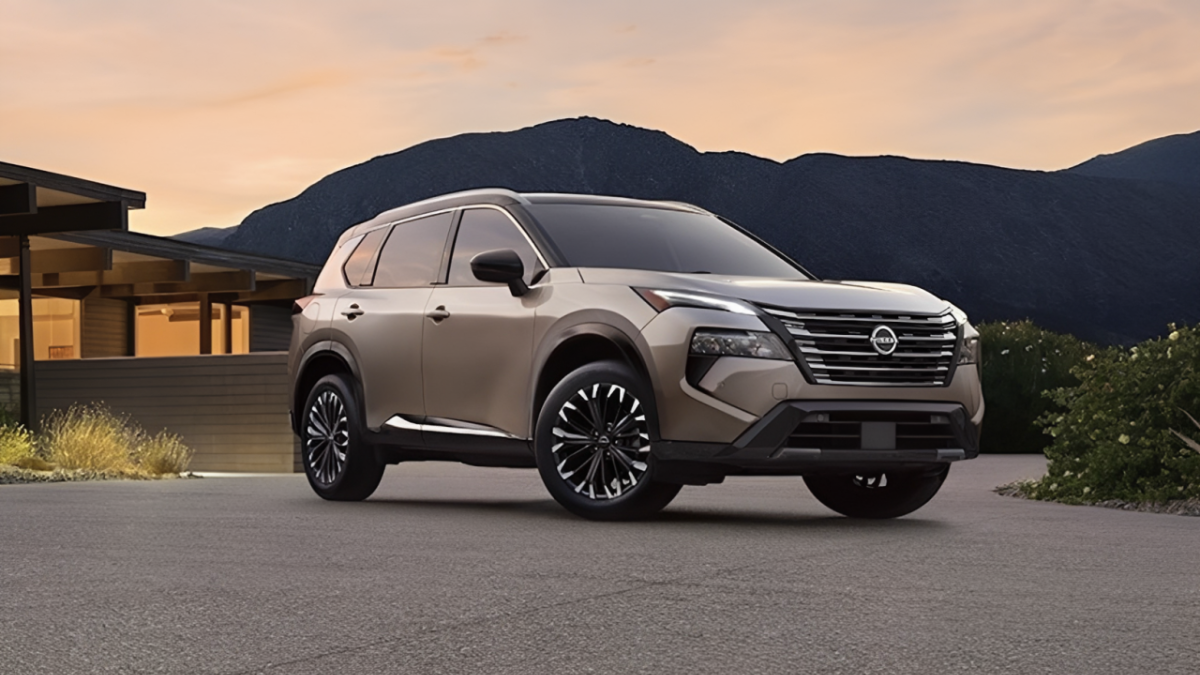
Car and Driver positions Rogue as easygoing and comfort-oriented, with top trims capable of near-luxury feel. That “comfort-first” posture is the kind that tends to matter most for four-hour weekends.
Noise and calm: the biggest divider in this matchup
If the four-hour drive is mostly highway, interior noise is a primary fatigue amplifier.
- Equinox: Car and Driver explicitly lists “cabin is noisy at highway speeds” among its key negatives.
- Rogue: Car and Driver frames Rogue as quietly doing its job and highlights a smooth ride and comfy seats in its overview.
Because the Equinox review is explicit about noise, the honest plan is:
- assume Equinox requires a careful test drive on your typical road surface, and
- treat Rogue as the “comfort baseline” to beat.
Ride calm and steering workload (how “busy” the car feels)
Car and Driver describes Equinox as having a comfortable ride and progressive steering that is a bit heavy, which some drivers find relaxing on-center. Rogue is described as smooth and easygoing, with driver aids that reduce workload.
Weekend takeaway:
- If the vehicle feels “busy” (constant tiny corrections), fatigue rises faster than most people expect.
- The best four-hour car is often the one that tracks straight with minimal steering effort.
Driver-assistance: long-drive fatigue is often a software problem
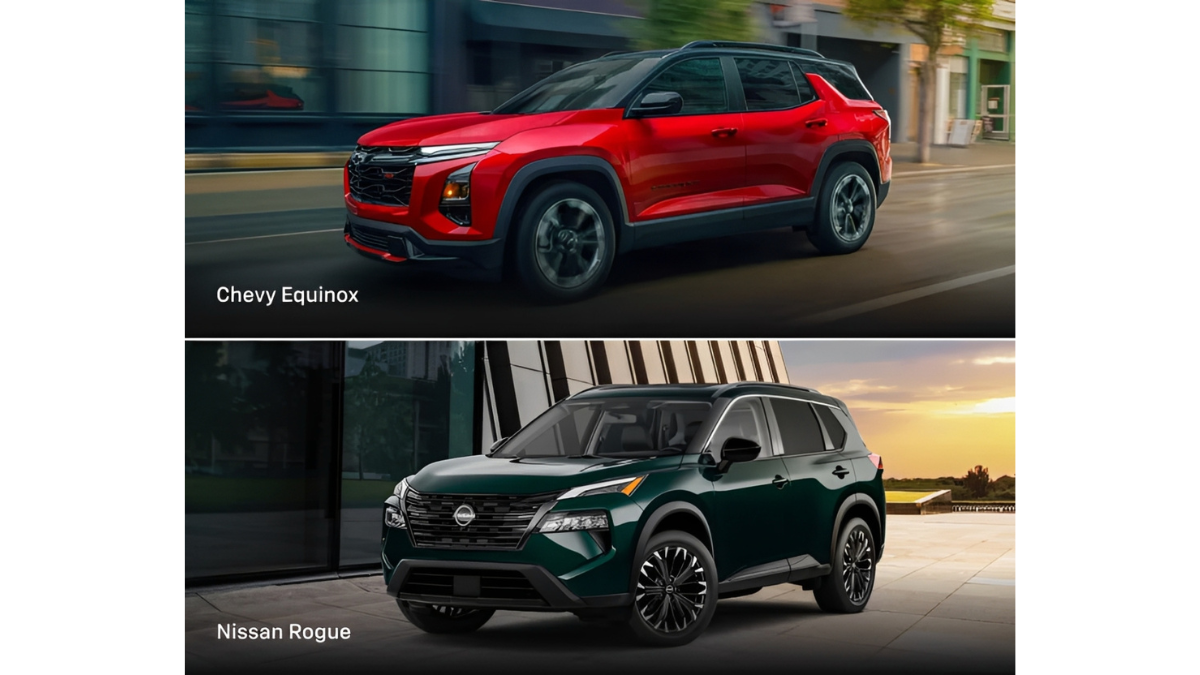
Car and Driver says Equinox offers standard driver assistance including adaptive cruise control with lane-centering. Rogue’s overview highlights “leave-it-to-me driver aids,” and higher trims can be equipped with more advanced hands-free-capable functions (trim-dependent).
For four-hour weekends, what matters is not the feature list. It’s whether the system:
- maintains distance smoothly,
- centers without ping-pong corrections,
- and doesn’t brake late and hard.
This is why the test loop below includes a driver-assist segment.
Space and “seat-up luggage” realities
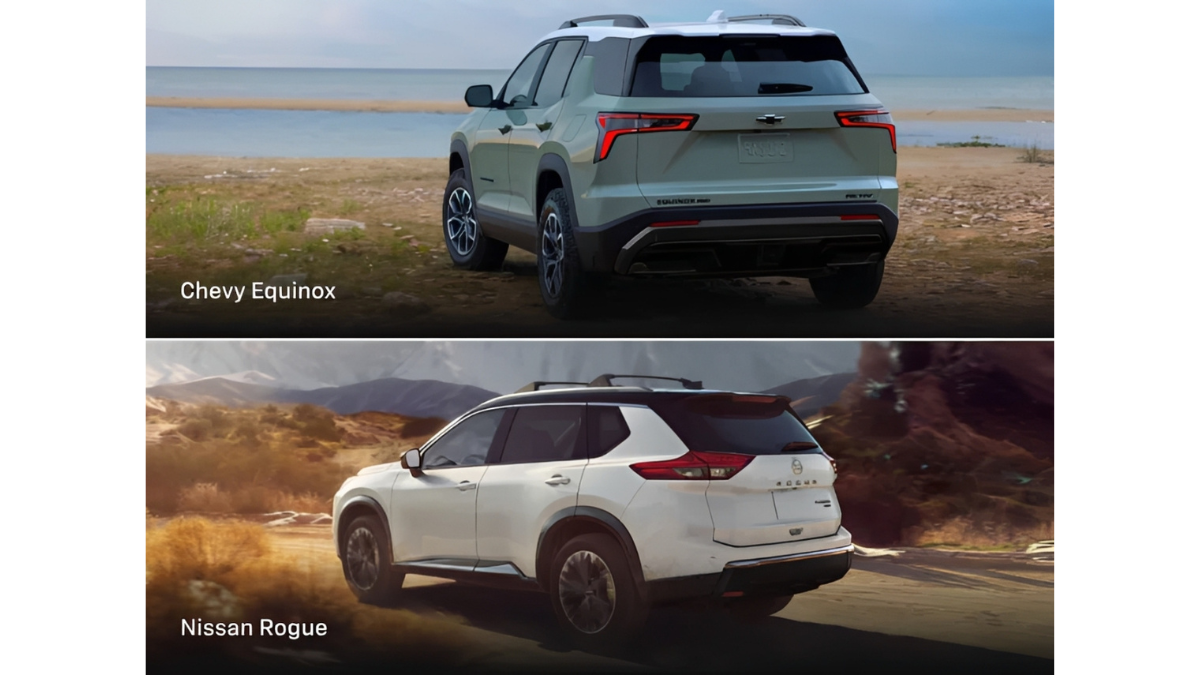
Car and Driver’s published cargo volumes are close enough that the packing method can matter more than the number:
- Equinox (C/D specs): cargo 64/30 ft³ (behind front / behind second row).
- Rogue (C/D specs): cargo 74/32 ft³ (behind front / behind second row).
If the weekend is two adults + normal luggage, both work. If the weekend includes a bulky cooler or a stroller, the shape of the opening and the floor height will decide whether bags stay out of the cabin—another fatigue reducer.
Fuel-stop rhythm: fewer stops can matter more than dollars
The “less tiring” vehicle can be the one that avoids unnecessary stops.
Car and Driver’s instrumented numbers provide a clean benchmark for Rogue:
- 31 mpg at 75 mph and 440 miles of 75‑mph highway range (tested Rogue Platinum AWD).
Car and Driver notes it plans a 75‑mph highway test for Equinox but hasn’t published a result yet. So for Equinox, use the EPA ratings for a planning baseline (and verify with your own driving).
What this means in the U.S.
U.S. four-hour highway weekends usually combine:
- 70–80 mph cruising,
- mixed pavement quality,
- at least one weather swing,
- and crowded rest areas.
In that environment:
- Rogue is likely to feel less tiring when comfort and fuel-stop rhythm are the priorities, supported by Car and Driver’s comfort-oriented overview and its 75‑mph fuel-economy result.
- Equinox can still be the “less tiring” choice for drivers who prioritize its tech suite and prefer its steering feel—but only if the highway noise is acceptable on your roads, since Car and Driver flags it directly.
What you can do: the 12-minute “4-hour weekend” test loop
Do this back-to-back on the same day:
1) 2 minutes on rough pavement (30–40 mph): listen for structural thumps and tire noise.
2) 5 minutes at 65–75 mph: audio off, fan low; note wind noise and seat comfort.
3) 2 minutes of passing (50–70 mph): notice engine/transmission behavior and whether it feels strained.
4) 3 minutes of driver-assist: set adaptive cruise + lane-centering; watch for smoothness and late braking.
Pick the vehicle that feels calm without requiring compensation (music louder, fan higher, more frequent stops).
Bottom line
If “less tiring after four highway hours” is the goal, the 2026 Nissan Rogue has the clearer comfort-first positioning and an auditable 75‑mph fuel-economy benchmark in Car and Driver’s test results. The 2026 Chevrolet Equinox offers a comfortable ride and strong standard driver-assistance features, but Car and Driver’s own review warns that highway cabin noise can be a fatigue factor—making a real-road test drive essential before calling it the calmer weekend tool.