
According to AAA’s late‑February 2026 survey of U.S. adults, 39% said they plan to take more vacations in 2026 than in 2025, and 58% expect to take multiple trips this year—exactly the pattern that turns “weekend vehicle” decisions into a recurring cost. At the same time, EIA’s weekly U.S. regular gasoline series shows a sharp early‑March jump, from $3.015/gal (week ending 03/02/26) to $3.720/gal (week ending 03/16/26). When travel gets pricier, the vehicle sweet spot shifts toward what reduces friction, not what wins on one spec. For many households, small SUVs still sit in the middle: enough space to avoid workarounds, small enough to park, and efficient enough that rising fuel prices don’t turn every getaway into a math problem.
Quick takeaways
- Weekend travel is getting busier, and fuel is volatile. AAA’s 2026 survey points to more trips, while EIA’s weekly series shows regular gas rising sharply in early March (03/02 → 03/16).
- Small SUVs win by preventing workarounds. If luggage fits seats‑up, you avoid roof boxes and “two-car” weekends.
- Rooftop cargo is a real fuel penalty. Consumer Reports measured a 19% overall fuel-economy drop with a rack + rooftop carrier on its test vehicle.
- Bigger isn’t always better. When a vehicle is too large for parking and stop-cycle errands, trip stress rises even if cargo is abundant.
- Best decision method: choose the body style that keeps the weekend boring: seats‑up packing, easy parking, and stable highway comfort.

What changed (and why small SUVs keep winning anyway)
Two things make the “small SUV sweet spot” feel stronger in 2026:
1) Trips are more frequent. AAA’s 2026 survey suggests more people expect multiple trips. When weekends repeat, small differences in friction and cost become noticeable.
2) Fuel swings show up faster. EIA’s weekly gasoline series shows a steep early‑March rise. That doesn’t mean every weekend is expensive. It means it’s harder to count on last month’s price when you plan this weekend.
The result: the best weekend vehicle is not the one that’s “best at one thing.” It’s the one that stays competent across five things that repeat every trip.
The real weekend equation: space without penalty
Most weekend travelers don’t need maximum cargo with seats folded. They need seats‑up space that keeps:
- bags out of footwells,
- rear visibility usable,
- and the cabin tidy when plans change.
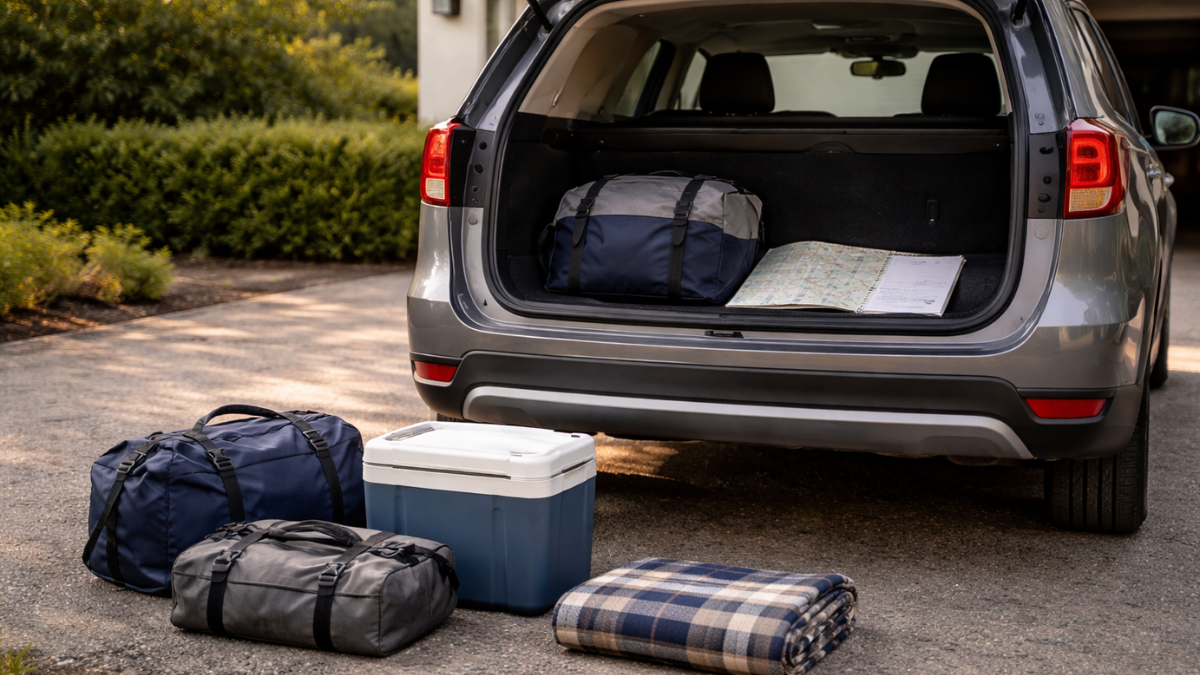
This is the quiet reason small SUVs own the sweet spot. They’re usually big enough to carry the weekend kit—cooler + duffels + layers—without turning the cabin into storage.
When a vehicle is smaller than the weekend kit, people pay a “workaround tax”:
- roof box,
- hitch basket,
- or a second vehicle.
That tax is why a small SUV can be the cheaper system even if it isn’t the cheapest vehicle category on paper.
The fuel and cost piece: why “pricier travel” pushes the middle
Fuel rises don’t automatically change which vehicle is “right.” They change what’s painful:
- drag from roof cargo becomes more expensive,
- detours feel worse,
- and stop-heavy weekends amplify inefficiency.
Consumer Reports’ test is a useful anchor: it found a rack + rooftop carrier caused an overall 19% fuel-economy drop on its test vehicle. That matters because roof cargo is the typical way households try to make a smaller car behave like a bigger one.
In 2026 terms, small SUVs often win because they reduce the odds you’ll need rooftop cargo in the first place.
Parking and the stop cycle: the “busy weekend” advantage
When weekend travel is busier, the trip is not one highway leg. It’s a chain:
- gas stop,
- grocery stop,
- trailhead,
- hotel check-in,
- dinner parking.
This stop cycle is where oversized vehicles lose their appeal. The bigger the footprint:
- the harder it is to find parking,
- the more stressful tight garages feel,
- the more time gets burned in “circling.”
Small SUVs tend to be:
- easier to place in a lane and in a parking spot,
- easier to maneuver in crowded lots,
- and still tall enough for visibility that reduces tension in traffic.
That’s the sweet spot: enough space to avoid workarounds, without the penalties of going big.
Highway calm: the part people feel after three hours
Weekend travel is often 70–80 mph cruise for a few hours. Fatigue usually comes from:
- wind and tire noise,
- constant micro-corrections,
- and seat pressure points.
Small SUVs don’t automatically win on quietness, but they often offer the most “good enough” highway comfort per dollar:
- long wheelbase for stability (model dependent),
- seating height that reduces stress in traffic,
- and modern driver-assist features that can reduce workload.
The practical test is always the same:
- audio off, fan low, five minutes at highway speed,
- one passing move,
- then decide whether you had to compensate (turn the stereo up, grip tighter, or fight the lane).
Weather margin without full-size penalties
Many small SUVs offer:
- modest ground clearance,
- available AWD (trim-dependent),
- and tire sizes that can accept true all-season or winter options.
That’s often enough margin for real weekends:
- wet trailhead lots,
- slushy resort roads,
- shoulder-season surprises.
The key is “margin without punishment.” A full-size SUV can offer more margin, but it also brings more parking stress, more tire replacement cost, and often worse fuel resilience.
Small SUVs tend to hit the weekend middle: enough capability to keep plans from failing, without turning every city stop into a hassle.
What this means in the U.S.
In the U.S., the typical weekend pattern is:
- a few hours of highway driving,
- a destination with tight parking,
- and at least one weather or schedule surprise.
With EIA showing real price movement in March 2026, and AAA’s survey showing more frequent trip-taking, the “sweet spot” vehicle becomes the one that reduces:
- the need for rooftop cargo,
- the need for two vehicles,
- and the stress of parking and stop cycles.
That’s why small SUVs keep winning: not because they dominate one metric, but because they are the least likely to create a weekend problem.
What you can do: the 15-minute “sweet spot” test
Use this to confirm a small SUV is actually right for your weekends:
1) Seats-up load test (6 min): cooler + two duffels + layers; keep seats set as you travel.
2) Access test (3 min): grab one item without unloading everything.
3) Parking realism test (3 min): back into a tight spot; note stress and visibility.
4) Highway calm test (3 min): short highway segment, audio off, fan low.
If the vehicle passes without rooftop cargo and without cabin clutter, it’s in the sweet spot.
Bottom line
As travel gets pricier and weekends get busier, the vehicle that makes the most sense is the one that prevents predictable friction. Small SUVs still own the weekend-trip sweet spot because they’re usually big enough to keep packing seats‑up and avoid roof-drag workarounds, while staying small enough to park and run errands without stress. With AAA’s 2026 survey signaling more frequent trips and EIA showing real fuel volatility in March, the “middle” becomes the safest bet: space without penalty.