
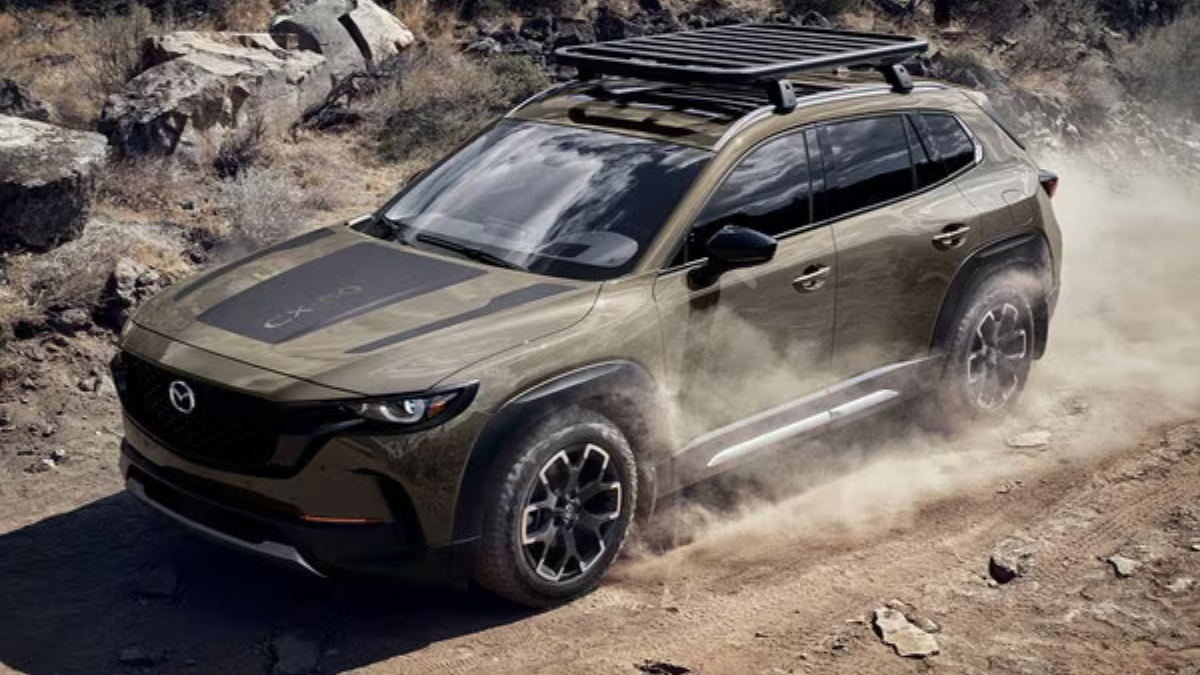
According to Subaru’s official 2026 Outback overview, the Outback delivers up to 3,500 pounds of towing capacity and up to 260 horsepower, with standard Symmetrical All‑Wheel Drive positioned for challenging weather and light off-road use. Mazda’s official 2026 CX‑50 page, meanwhile, highlights a flush-floor liftgate opening and lists 31.4 cu ft of cargo space behind the second row (and up to 56.3 cu ft with the seats folded). On mountain weekends, the “better” choice is rarely about one spec. It’s about the last mile (clearance and tires), the steep mile (power and cooling), and the packed mile (cargo workflow, roof load, and stability on the highway). This guide compares the 2026 Mazda CX‑50 and 2026 Subaru Outback for U.S. mountain trips—trailhead roads, snow weekends, and long climbs—without guessing on numbers.
Quick takeaways
- Best “bring more gear” platform: the 2026 Outback has a much larger published cargo figure behind the second row (34.6 cu ft) and max cargo (80.5 cu ft) than CX‑50, based on Car and Driver’s specs table.
- Best “compact trailhead” feel: the CX‑50 is smaller and is pitched as outdoors-oriented; Mazda highlights a flush-floor liftgate opening and lists 31.4 / 56.3 cu ft cargo, which can feel easy to pack even if it’s less volume than Outback.
- Towing parity at the top: Subaru says Outback can deliver up to 3,500 lbs towing; Car and Driver reports CX‑50 towing depends on engine, with 3,500 lbs on turbo models and 2,000 lbs on non‑turbo models.
- Clearance reality: Subaru’s 2026 specs list 8.7 inches ground clearance on most Outback trims and 9.5 inches on Outback Wilderness. Car and Driver lists 8.5 inches minimum ground clearance for the 2026 CX‑50.
- Mountain decision rule: choose Outback when the weekend includes heavier loads, more passengers, or towing; choose CX‑50 when the weekend is two people, lighter gear, and the priority is a smaller footprint with strong on-road feel.
The mountain-weekend lens (three miles that matter)
Most mountain weekends are a mix of three different “miles,” each with its own stress:
1) The steep mile: long grades, passing power, cooling, and stability.
2) The last mile: rutted trailhead access, snow-packed parking, and ground clearance.
3) The packed mile: gear volume, roof load, and how calm the car feels at 70 mph.
A vehicle that wins only one of these can still be the wrong pick for your specific weekend pattern.
What changed for 2026 (why this comparison is timely)
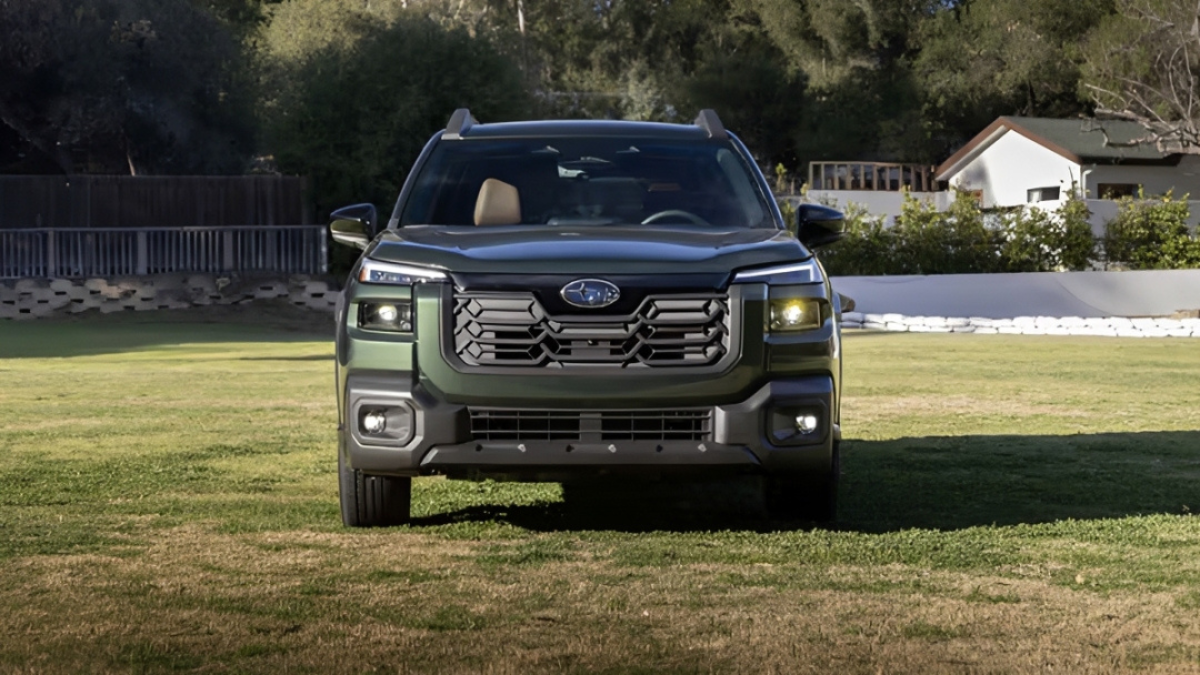
Subaru positions the 2026 Outback as a redesigned model with capability headlines: up to 260 hp, up to 3,500‑lb towing, and standard Symmetrical AWD. Subaru’s trim/spec table also makes the 8.7‑inch vs 9.5‑inch (Wilderness) clearance split explicit.
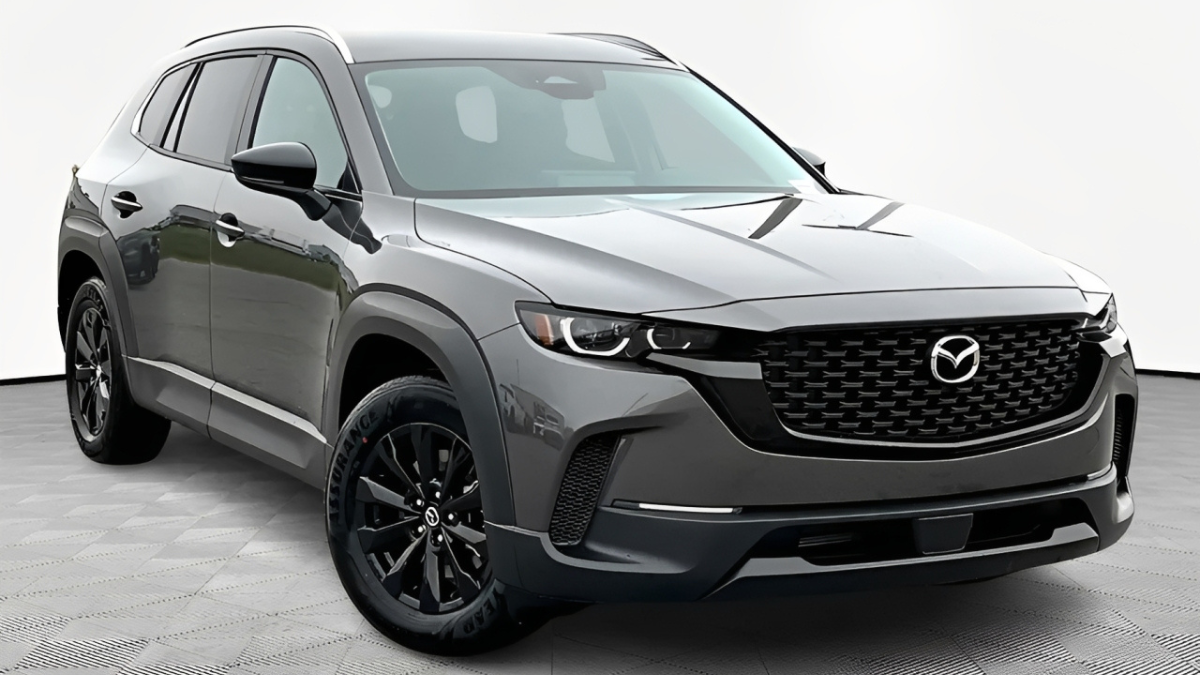
The 2026 CX‑50 continues Mazda’s “outdoorsy crossover” lane and is offered with multiple powertrains. Car and Driver’s 2026 CX‑50 coverage highlights that towing depends on engine, topping out at 3,500 lbs on turbo models. Mazda’s CX‑50 consumer page emphasizes cargo usability features like the flush-floor liftgate opening.
Mountain-weekend takeaway: Outback’s 2026 story is “bigger, more wagon-like capacity,” while CX‑50’s is “smaller footprint + SUV feel with a strong towing option on turbo trims.”
The last mile: clearance and “hesitation factor”
This is where mountain trips are won or lost. Trailhead roads are often not true off-roading, but they punish low clearances and wrong tires.
Subaru Outback: a clear clearance ladder
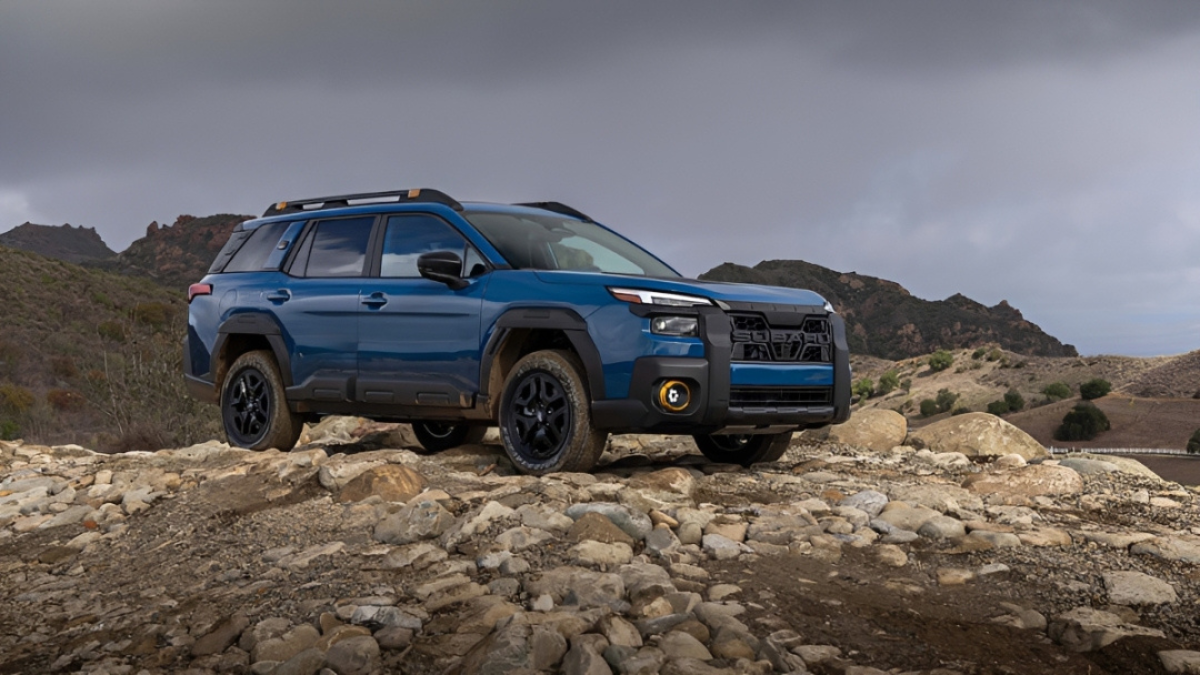
Subaru’s 2026 trim/spec page lists 8.7 inches ground clearance for most Outback trims and 9.5 inches for Outback Wilderness. Autoweek’s first drive of the 2026 Outback Wilderness describes the off-road package as including A/T tires and dual-mode X‑MODE, with the 9.5‑inch clearance called out directly.
That combination reduces the “hesitation factor” on rocky parking lots and snow berms.
Mazda CX‑50: capable, but with less published clearance
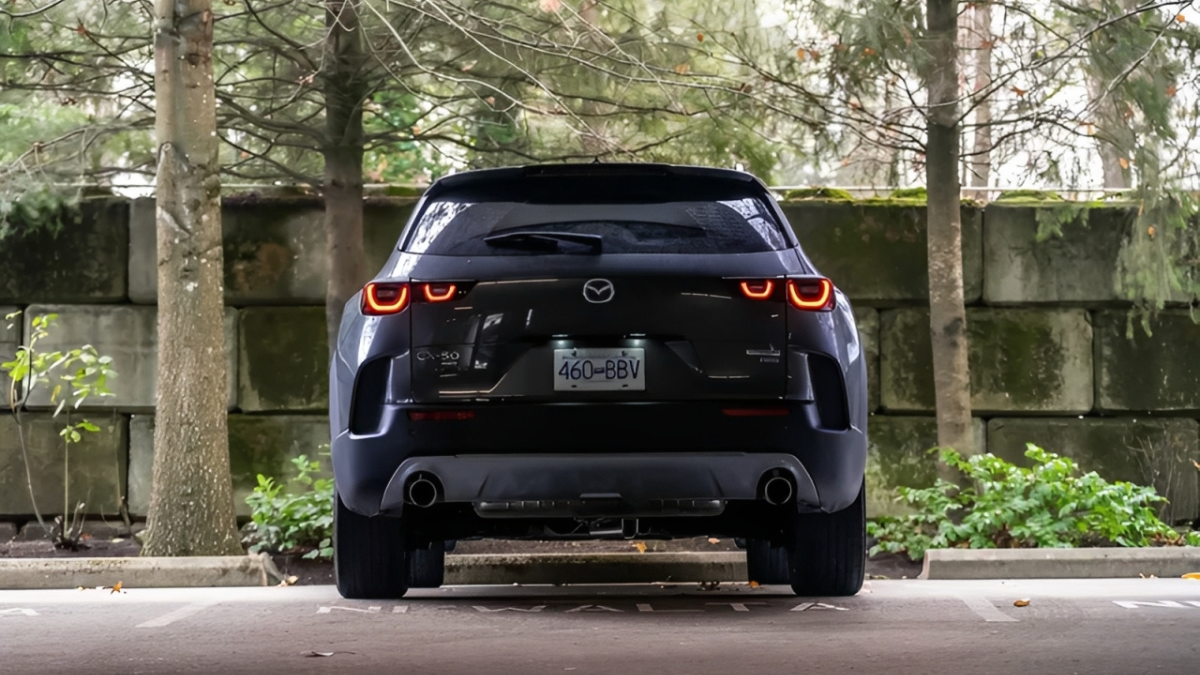
Car and Driver lists the 2026 CX‑50 at 8.5 inches minimum ground clearance. That can still be enough for many forest roads—especially with careful line choice—but it leaves less margin than Outback Wilderness.
Mountain-weekend takeaway: if the weekend regularly includes deep ruts, snowpack, or rocky trailhead approaches, Outback Wilderness is the low-stress pick. If the “last mile” is mostly graded gravel, CX‑50 can be perfectly fine—and easier to place on narrow roads.
The steep mile: power and towing for real weekend gear
Long grades and trailer loads change the feel of a weekend quickly.
Outback: towing and power are simple to price
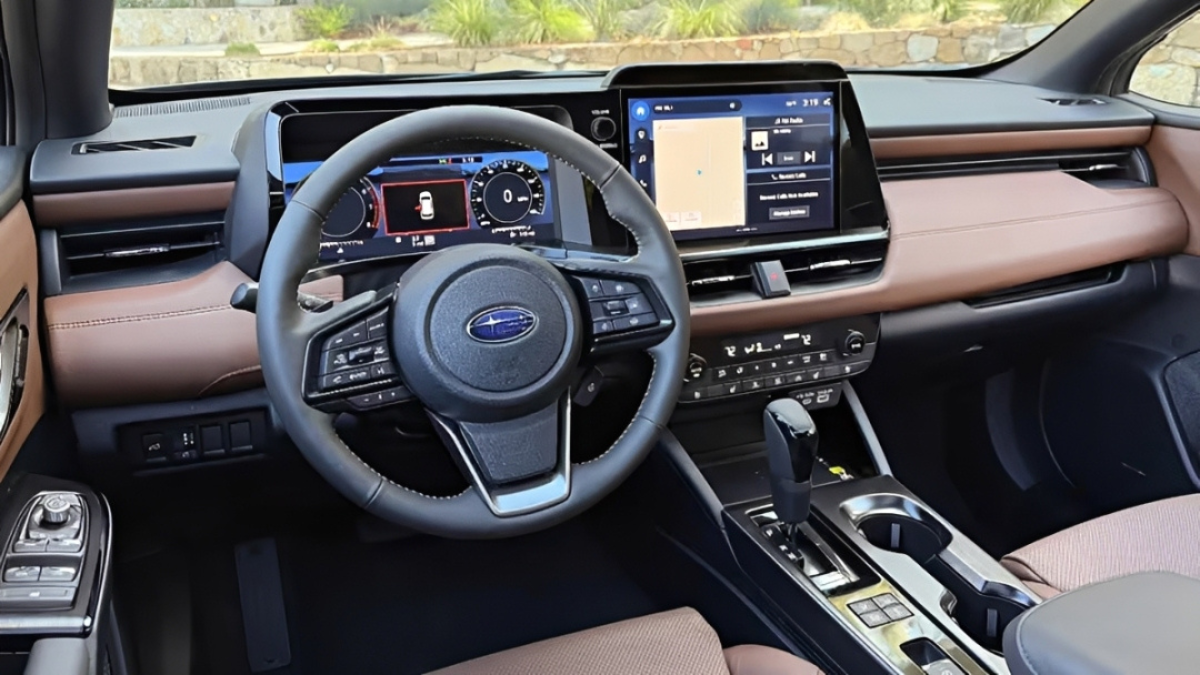
Subaru’s 2026 Outback page advertises up to 3,500 lbs towing and up to 260 hp. That’s a clean “mountain weekend” message: bikes, small campers, or a heavier gear trailer stay within the intended use-case.
CX‑50: choose the engine before you choose the story
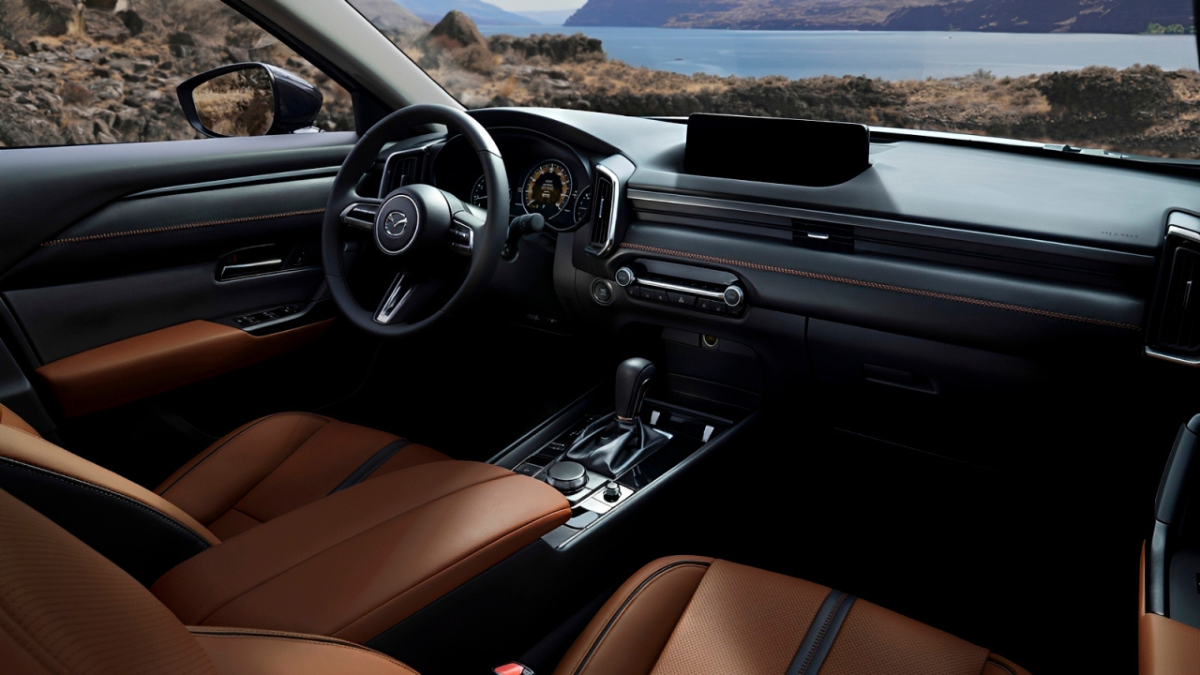
Car and Driver notes CX‑50 towing depends on engine: 2,000 lbs for non‑turbo and 3,500 lbs for turbo. In other words, a CX‑50 can match Outback’s towing capability—but only if you pick the right powertrain.
Mountain-weekend takeaway: if towing is part of the plan, the Outback is simpler (one headline). The CX‑50 can match it, but the buyer must commit to a turbo configuration.
The packed mile: cargo workflow and roof strategy
Mountain weekends are gear weekends: boots, jackets, bags, food, sometimes a dog.
- Car and Driver lists the 2026 Outback at 34.6 cu ft behind the second row and 80.5 cu ft behind the first row.
- Mazda lists the CX‑50 at 31.4 cu ft behind the second row and 56.3 cu ft max with the seats folded.
Those numbers suggest a practical difference:
- Outback fits more without folding the second row.
- CX‑50 often needs either a tighter pack or a roof solution sooner.
The counterpoint is usability. Mazda emphasizes the CX‑50’s flush floor at the liftgate opening, which can make loading coolers and bins feel straightforward even if the total volume is smaller.
Highway stability and fatigue (the drive there and back)
Mountain weekends often include two long highway legs. The “better” vehicle is the one that arrives with less driver fatigue.
The Outback’s wagon-like shape tends to translate to a stable, planted feel under load, and it has more cargo length to keep heavy items low and forward. The CX‑50’s appeal is often its tighter, more “SUV-crossover” driving feel—smaller footprint, easy lane placement, and a cabin that can feel more intimate for two-person trips.
This is not a place to guess. The most reliable test is a consistent loop.
What this means in the U.S.
A typical U.S. mountain weekend usually includes:
- high-speed interstate approach,
- at least one long grade,
- and cold weather or sudden rain at elevation.
In that reality:
- Outback makes sense for groups, dogs, bulky gear, or any towing plan.
- CX‑50 makes sense for two-person trips where the priority is a smaller vehicle that still looks and feels ready for trails.
What you can do: a 20-minute mountain-weekend test loop
Run this loop on both vehicles (ideally same day):
1) 10 minutes highway at speed: audio off, fan low. Note wind and tire noise.
2) 5 minutes broken pavement: watch for bounce and head toss.
3) 2 minutes “last mile” simulation: take a rougher side road or uneven lot entrance.
4) 3 minutes cargo workflow: load a cooler, a duffel, and one odd item (boots bag, stroller, dog crate).
If one feels calmer on broken pavement and easier to load with cold hands, that’s often the “better mountain weekend” answer.
Bottom line
For mountain weekends, the Outback’s advantage is capacity and clarity: 8.7 inches of clearance on most trims, 9.5 inches on Wilderness, 34.6/80.5 cu ft cargo, and up to 3,500‑lb towing in Subaru’s own messaging. The CX‑50’s advantage is a smaller, outdoorsy crossover with a cargo workflow focus (flush-floor opening) and the ability to reach 3,500‑lb towing when configured with the turbo engine.
If the weekend includes heavier gear, more passengers, or towing, the 2026 Outback generally makes more sense. If the weekend is two people and the priority is a smaller footprint that still feels trail-ready, the 2026 CX‑50 is the cleaner pick—especially if the “last mile” isn’t truly rugged.