
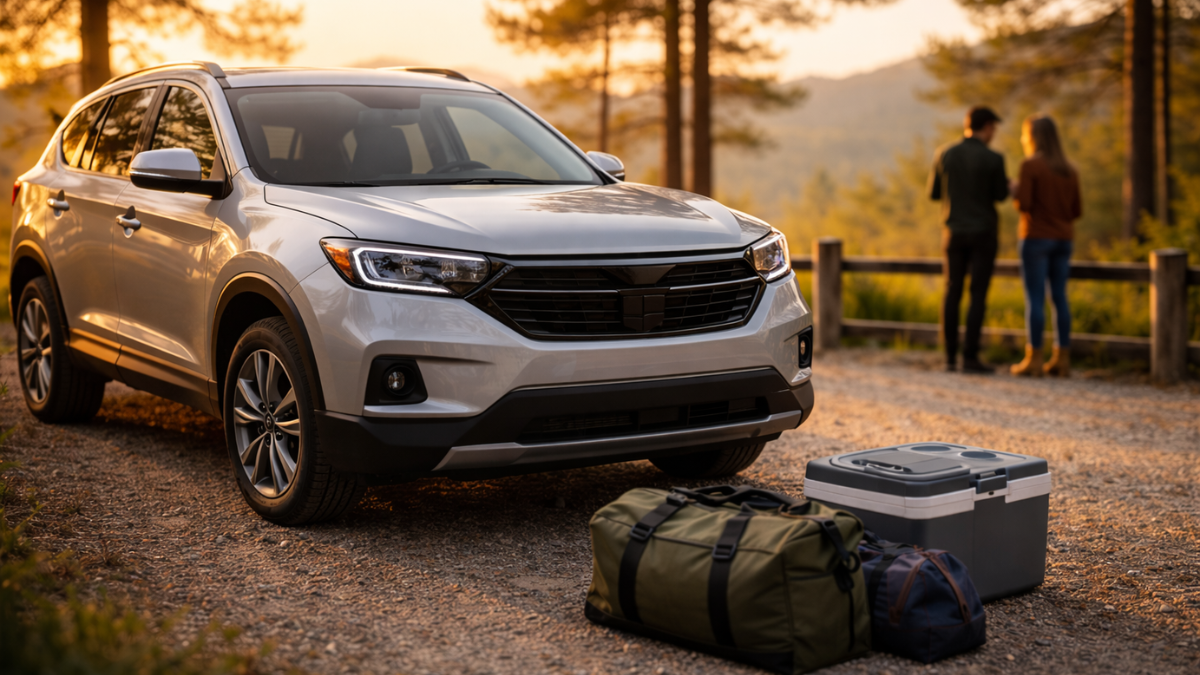
According to Toyota’s 2026 RAV4 model page, Honda’s 2026 CR-V page, Subaru’s 2026 Forester specs, and recent vehicle testing and family-car judging from Car and Driver and Parents, the “right” SUV is usually less about brand and more about how many people and bags must fit without stress. Couples tend to get the best value from a two-row compact SUV that’s quiet on the highway and easy to park. Families feel the difference in the second row, the cargo area behind it, and how car seats and strollers actually load.
Start with the “people + stuff” math

Couples vs families: quick decision tree
A simple way to avoid regret is to count “butts and bags,” not brochures.
Couples (or two adults plus a dog) usually need five-seat flexibility, good front-seat comfort, and enough cargo for two carry-ons plus two “bulky” items (cooler, folding chairs, skis, or a big grocery run on the way home).
Families feel pressure in three places: rear-seat space for car seats, the cargo area with the second row up, and how quickly the cabin gets loud or messy after hour two.
Quick takeaways
- Couples: a two-row compact SUV is usually the smart buy; pay for the trim that makes long drives calmer (seats, noise control, driver-assist behavior).
- One child: two rows can still work, but only if the stroller fits behind the second row without playing cargo Tetris.
- Two+ kids (or frequent grandparents): a three-row SUV often becomes the “less arguing” solution, even if it costs more to fuel and park.
- Main mistake: buying “just in case” space and then hating the day-to-day size.
Couples: what actually matters (and what doesn’t)
For couples, the win is an SUV that behaves like a good daily driver and a good weekend tool at the same time.
1) Fuel stops and running costs
If weekend trips include lots of highway miles plus town driving near trail areas, hybrid efficiency can change the feel of the trip. Toyota’s RAV4 page highlights hybrid mpg figures up to an estimated 47 city/40 highway for certain configurations. Honda positions the CR‑V Hybrid around its two‑motor system with a 204‑hp rating, and its fuel-economy rating varies by drivetrain and trim.
2) Cargo behind the second row
Couples usually keep the second row up, so “behind the second row” cargo matters more than maximum cargo with seats folded. Toyota lists up to 37.8 cu. ft. of cargo capacity for the 2026 RAV4. For Subaru, the Forester’s official specs are laid out trim by trim, and the Wilderness version is marketed around a wider rear opening and increased ground clearance.
3) Parking, turning, and daily hassle
This is where many “family-sized” SUVs fail couples. If the SUV is annoying in a city garage or a grocery lot, it will be used less, even if it’s “perfect for trips.”
Practical couples’ pick: a compact, two-row hybrid-friendly SUV is usually the best blend of running costs and day-to-day ease.
Families: the three things that change the experience
Families don’t just need more space. They need space that stays usable when the back seat is full and the cargo area is already spoken for.
1) Car seats and rear-seat access
Parents’ vehicle judging highlights how much everyday usability depends on straightforward car-seat installation, second-row access, and flexible seating. That’s why families often end up choosing vehicles that make the second row and the rear doors feel “wide and simple,” not just roomy on paper.
2) Cargo with the second row up
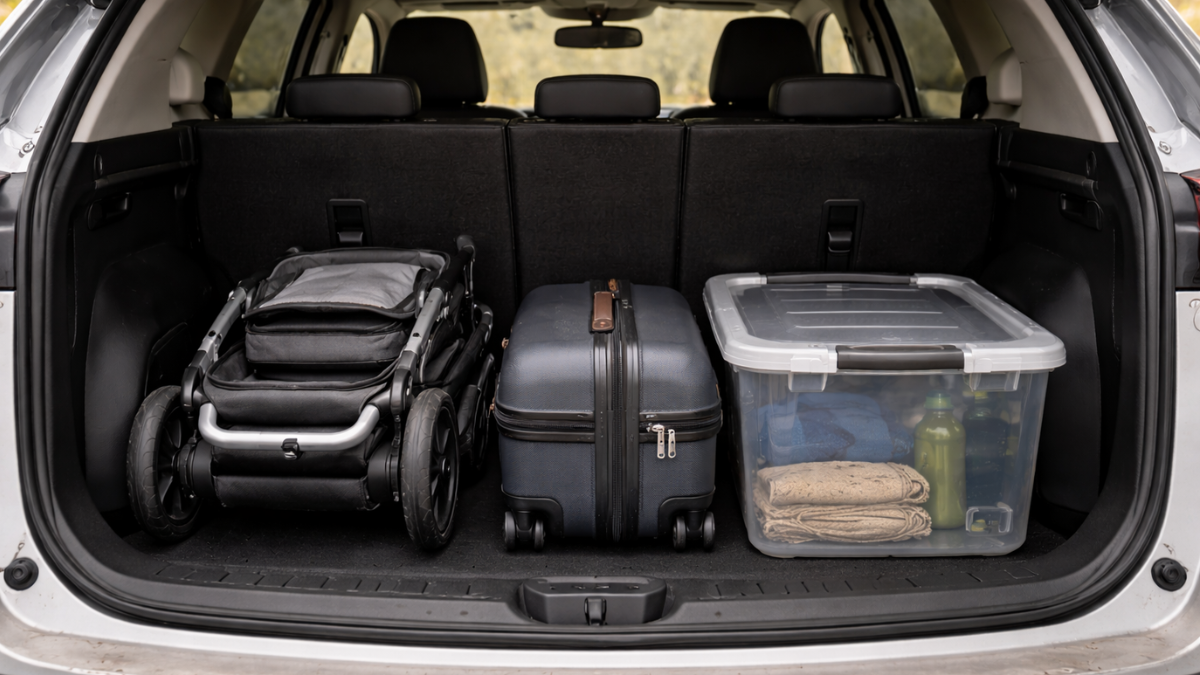
A stroller, a diaper bag, and a few grocery bags can eat a compact SUV’s cargo area fast. If the family setup regularly needs a stroller plus luggage, a two-row SUV can work, but it becomes a packing exercise. A three-row SUV can feel like overkill until the first time everything fits without stacking.
3) Cabin calm on long drives
Car and Driver’s testing often comes back to the same fatigue points: noise, ride control, and driver-assist behavior. Families notice it because the cabin is already louder and more distracting. The calmer the vehicle is at speed, the less draining the trip feels.
Families’ rule: if the second row is frequently occupied and weekend trips include bulky gear, a larger SUV can be the “buy once, cry once” answer.
So… which 2026 SUV makes more sense?
There isn’t one “correct” SUV for everyone, but there is a clean decision tree.
If it’s mostly couples’ travel
Pick a compact two-row SUV and spend money on comfort and efficiency, not size. The Toyota RAV4’s hybrid-first messaging and cargo figure can fit the “two adults + gear” pattern well. The Honda CR‑V Hybrid’s comfort-first positioning in testing also fits the same brief. The Subaru Forester’s standard AWD identity and higher-clearance Wilderness variant can make sense when weekend roads are regularly messy.
If it’s a family that actually travels
Size becomes a quality-of-life feature. The “right” SUV is the one where a stroller fits behind the second row, car seats install without drama, and the cabin stays calm at motorway speeds. Parents’ awards and judging criteria lean into this reality: usability and safety features can matter as much as mpg.
Common mistakes to avoid
- Buying a three-row SUV for a once-a-year trip and then paying for it in parking and fuel every week.
- Buying a compact SUV for a two‑kid setup and discovering the cargo area is gone as soon as the stroller shows up.
- Ignoring trim details: driver-assist behavior, seat comfort, and noise control can be trim-dependent. Confirm the rating and feature set for the exact build.
If you only do one thing: measure the stroller (or the biggest weekend bin) and test-load it with the second row set for real legroom.
What to watch next: pricing and trim mixes can shift during the model year, so re-check the manufacturer build pages before placing an order.