
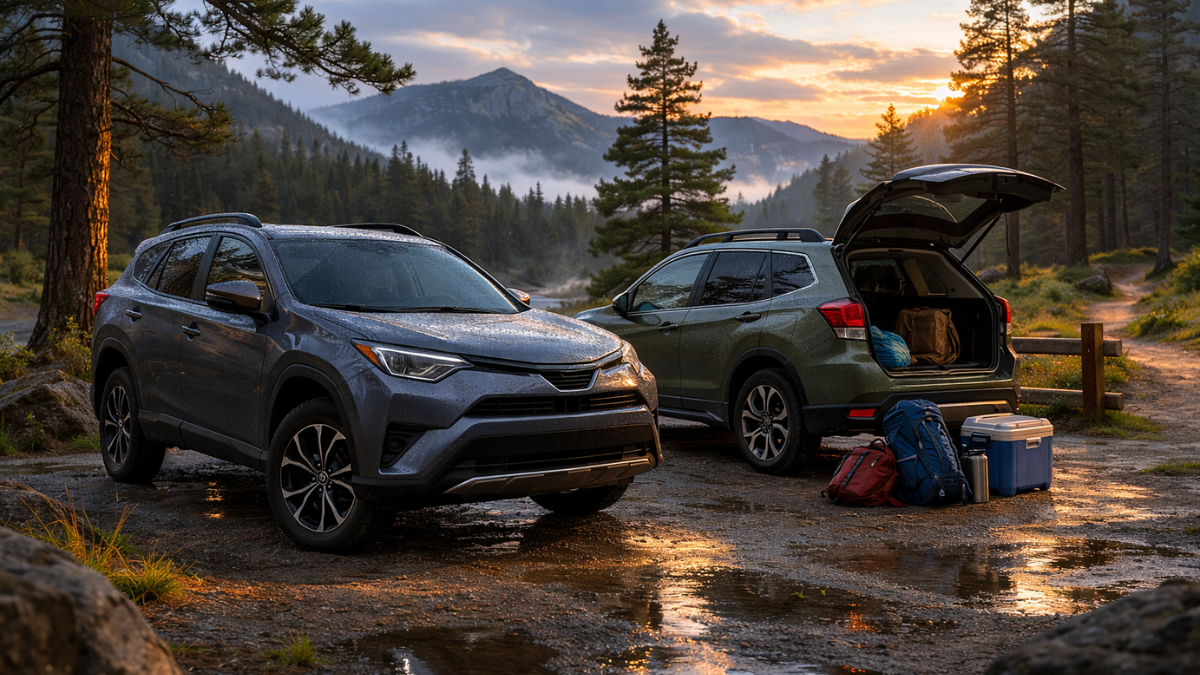
According to Toyota’s 2026 RAV4 model page and Subaru’s 2026 Forester information, these two compact SUVs aim at the same weekend job: easy highway miles, bad-weather confidence, and room for gear. The difference is how they get there—RAV4 leans hard into hybrid efficiency and higher tow ratings on many versions, while Forester leans into standard all-wheel drive simplicity and a boxy, outdoorsy layout. Below is the quick way to decide based on fuel stops, packing, and what kind of “weekend road” shows up most often.
At a glance
- Fuel stops: RAV4’s “hybrid-first” lineup and Toyota’s top mpg estimate are the big draw for longer freeway loops. Forester’s gas mpg is solid for AWD, but it usually means more refuel planning.
- Packing: Toyota lists 37.8 cu. ft. behind the second row for RAV4. Subaru’s trim comparison lists 29.6 cu. ft. behind the second row for certain Forester configurations (some trims list 27.5 cu. ft.), but the opening and roofline can feel easier for tall items.
- Bad weather: Forester’s standard Symmetrical AWD (and X-MODE on many trims) is the “no trim-shopping mistakes” advantage for slush, dirt, and steep access roads.
- Towing: Toyota lists RAV4 up to 3,500 lb. Car and Driver reports Forester is commonly 1,500 lb, with Forester Wilderness at 3,500 lb.

Weekend fit in 3 checks
The weekend equation: fuel stops vs. time flexibility
For most Friday-to-Sunday trips, fuel strategy is the first real fork in the road.
Toyota’s RAV4 page lists an estimated up to 47 city / 40 highway mpg and frames the model around efficient trims and electrified options. On a loop with long highway stretches plus stop-and-go near trail towns, that efficiency usually turns into fewer stops and less time spent hunting for a pump on a rural route.
Subaru’s Forester MPG headline is up to 33 highway / 26 city for the gas model, and Subaru lists a 547-mile range figure on its spec page. In real planning terms, it’s still plenty for a weekend—but it changes the “optional detour” math. That extra scenic spur or last-minute gravel road can feel smaller when the fuel gauge is a bigger part of the plan.
Practical decision rule: If the weekend pattern is “big miles, long freeway stints, lots of little add-ons,” RAV4’s efficiency tilt is hard to ignore. If fuel stops are secondary to traction feel and predictable AWD behavior, Forester stays in the fight.
Cargo volume is only half the story
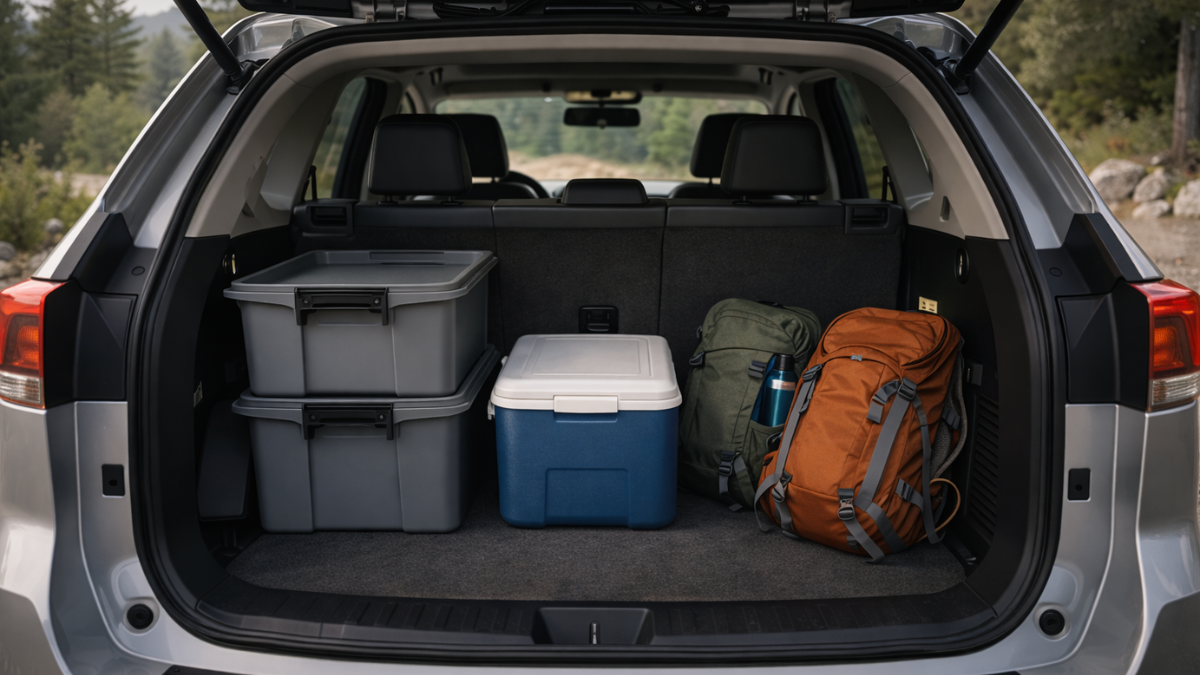
Packing test: bins, cooler, backpacks
Weekend packing is about what fits quickly, not just what looks good on a spec sheet.
Toyota lists 37.8 cubic feet of cargo space behind the second row for RAV4. Subaru’s 2026 Forester trim comparison lists 29.6 cubic feet behind the second row for one configuration, with 27.5 cubic feet shown for several others. Maximum cargo volume in that Subaru chart is up to 74.4 cubic feet with the rear seat lowered (and 69.1 cubic feet for some trims).
Those numbers matter, but packing friction matters more. RAV4’s behind-the-seat space helps when the back row stays up and the load is bulky: cooler, camp box, stroller, big duffels. Forester’s advantage often shows up as “easy geometry”: a tall, square opening and a roofline that can make stacking bins, dog gear, and odd-shaped items feel more straightforward.
Small tip that saves time: Bring one medium plastic tote as the “measuring stick.” If it drops in without turning sideways, the weekend stays simpler—especially when the weather turns and loading needs to be fast.
Bad weather confidence: standard AWD vs. choosing the right setup
This is where the two philosophies split.
Forester’s pitch starts with standard Symmetrical All-Wheel Drive, and Subaru highlights dual-function X-MODE traction control on Wilderness and other trims. For a buyer who wants one simple answer to rain, slush, and dirt access roads, that standardization is the appeal. It reduces the odds of ending up in the “wrong trim” for a winter drive to a cabin or a muddy trailhead lot.
RAV4’s capability depends more on configuration. That can be a strength if the weekend mission is clearly defined—some versions emphasize efficiency, others emphasize utility. But it also means the decision is less “RAV4 vs Forester” and more “which RAV4 and what tires.”
Practical decision rule: If weekends often involve “always some weather, always some dirt,” Forester’s standard-AWD identity is the simpler bet. If the pattern is “mostly highway with the occasional rough access road,” RAV4’s efficiency and broad lineup can be the better match.
Towing is a weekend multiplier
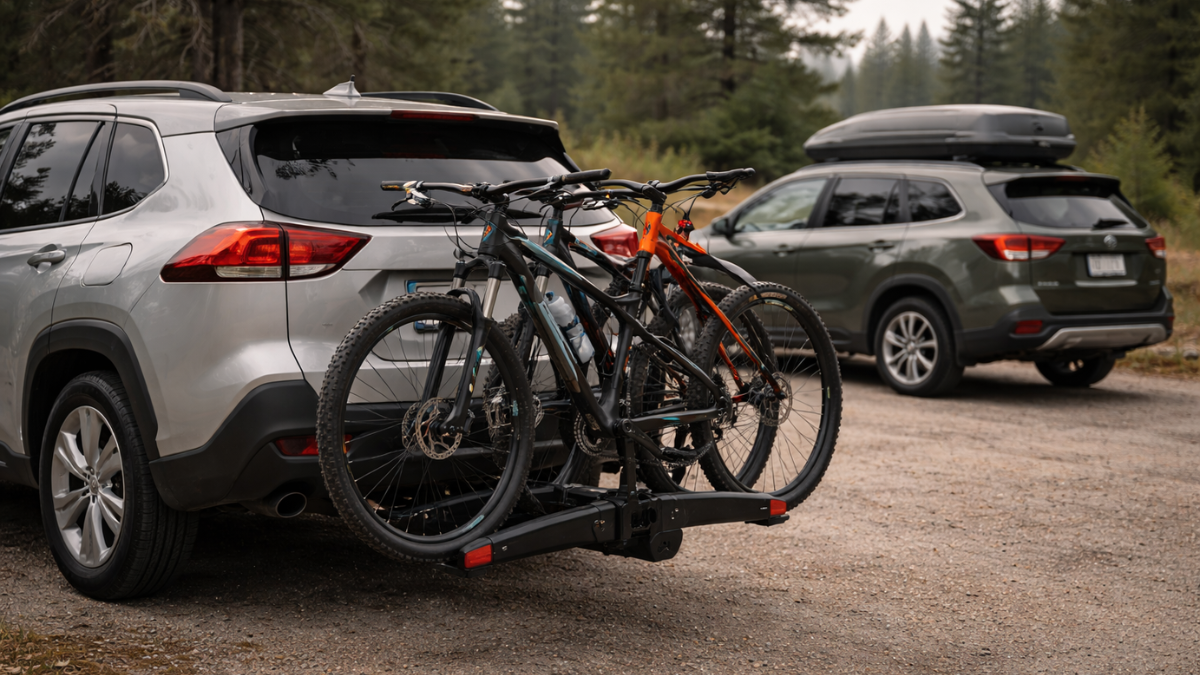
Hitch rack vs roof box
Towing is where the comparison can flip fast.
Toyota lists RAV4 towing capacity up to 3,500 lb. Car and Driver reports that many RAV4 versions are rated up to 3,500 lb, while some configurations are lower. For weekend use, that higher rating can change the whole plan: a small camper, a utility trailer, or a heavier hitch rack setup starts to feel realistic with fewer compromises.
For Forester, Car and Driver says most trims offer 1,500 lb, while Forester Wilderness is rated at 3,500 lb. Subaru’s Wilderness page also highlights 3,500 pounds of towing capacity.
What this means in plain weekend terms:
- If towing is frequent—or if the “someday small camper” is turning into “this season”—RAV4 is often the easier “yes,” unless the plan is specifically a Forester Wilderness.
- If towing is rare and light, the safer play is to focus on realistic loads and how the gear actually travels (inside cargo area vs. hitch rack vs. roof box) rather than chasing the biggest number.
The trip feel: fatigue, noise, and the “easy hours” factor
Most weekend trips are short, but fatigue shows up quickly when the cabin is loud or the seating position feels off after two hours.
This is where trim decisions matter as much as the model name. Quiet tires, seat comfort, and driver-assist tuning tend to improve in higher trims and with the right options. In practice, the best “weekend upgrade” is not a bigger screen—it’s a setup that makes the last hour home feel calmer.
A simple way to test it: do a 20-minute loop that includes rough pavement, a short highway merge, and a few tight parking maneuvers. The SUV that feels easiest in those three moments usually feels easiest on a full weekend.
Choosing in one line
- Pick the 2026 Toyota RAV4 if weekend trips are highway-heavy, fuel stops are the main annoyance, or towing up to 3,500 lb is part of the plan.
- Pick the 2026 Subaru Forester if weekend trips regularly include bad weather and mixed surfaces, and the priority is standard AWD simplicity (or target Forester Wilderness if towing is central).
If you only do one thing: Match the SUV to the most common “last 10 miles” of the weekend—freeway, slush, or rough access road—and shop trims around that.
What to watch next: Before booking any summer weekends, check local trailhead parking rules and seasonal road openings for the routes that matter most.
SOURCES