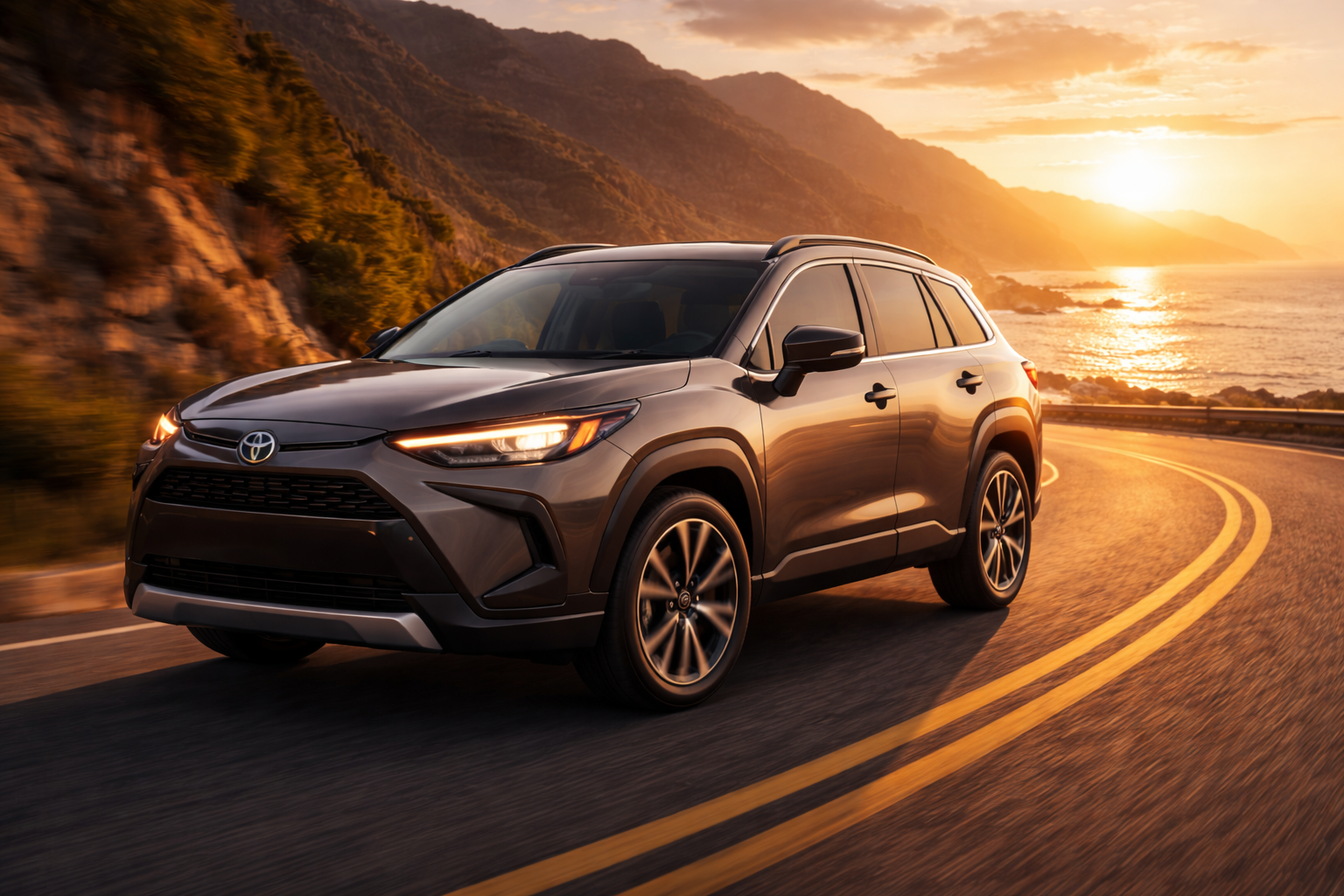
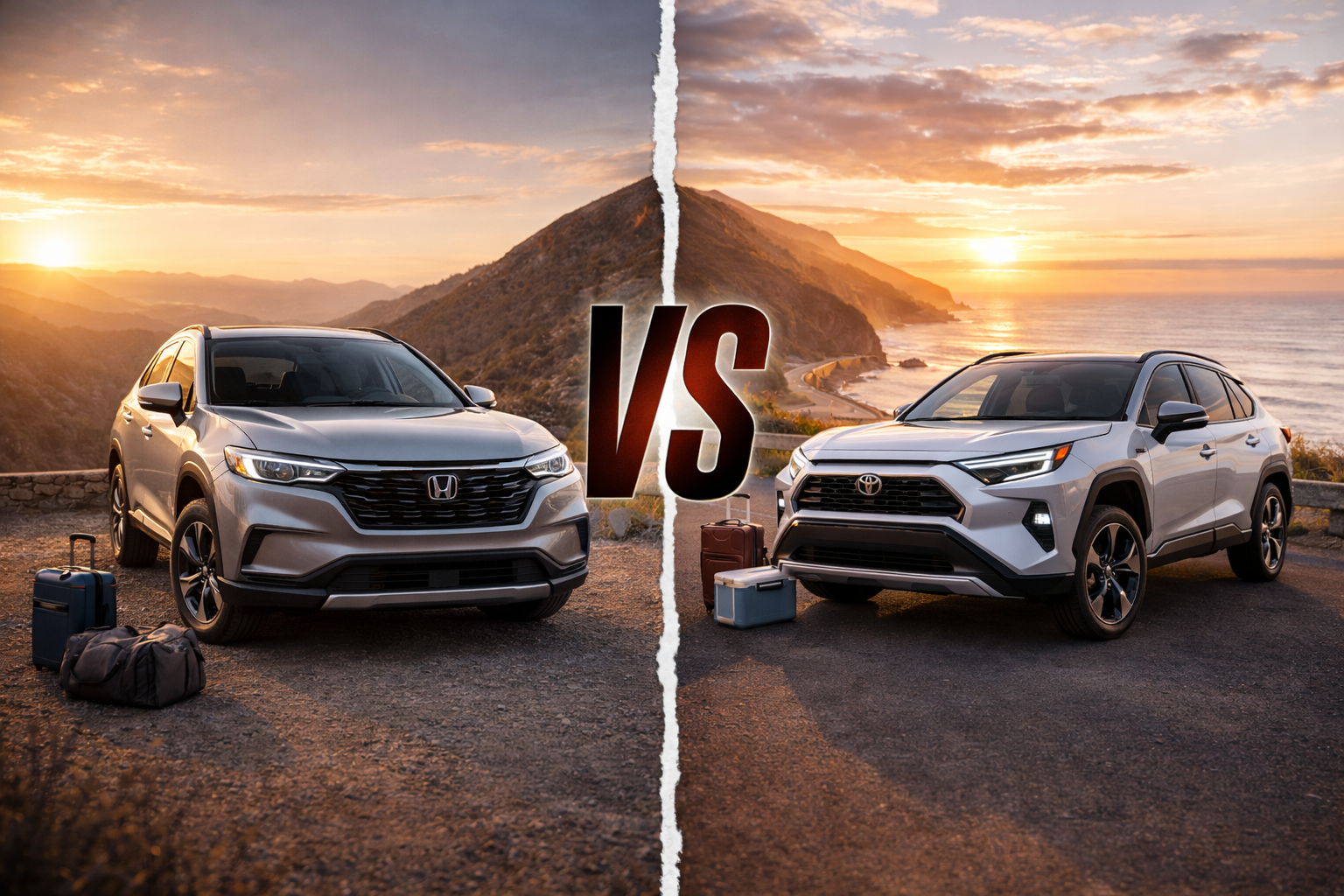
The 2026 Toyota RAV4 and 2026 Honda CR-V are chasing the same driver, but they now lean in different directions. Toyota’s new RAV4 is hybrid-only and pushes harder on efficiency, towing, and a bolder redesign, while Honda’s CR-V stays calmer, roomier in back, and easier to live with on long highway runs. For weekend trips, the choice is less about badges and more about what kind of two-day escape is actually on the calendar. One detail matters most: the RAV4 can haul more and tow more, but the CR-V often feels easier on people.
What changed for 2026
Toyota gave the RAV4 a bigger reset. The 2026 model moves to a new generation, drops the regular gas-only setup, and makes hybrid power the starting point. Toyota says the hybrid lineup reaches up to 44 mpg combined in its most efficient form, with some AWD trims able to tow up to 3,500 pounds. PHEV versions add more power and more EV range, but those trims are the expensive edge of the lineup, not the sweet spot for most short-trip buyers.
Honda took a gentler path. The 2026 CR-V keeps its familiar layout, still offers a 190-hp turbo on lower trims, and keeps the 204-hp hybrid on upper trims. Honda also added a TrailSport Hybrid, which gives the CR-V a more outdoorsy pitch without turning it into a serious rock-crawler. That matters because most weekend-trip buyers do not need a mini off-road rig. They need something that feels easy on Friday night traffic and still has room for bags, snacks, and muddy shoes on Sunday.
Quick takeaways
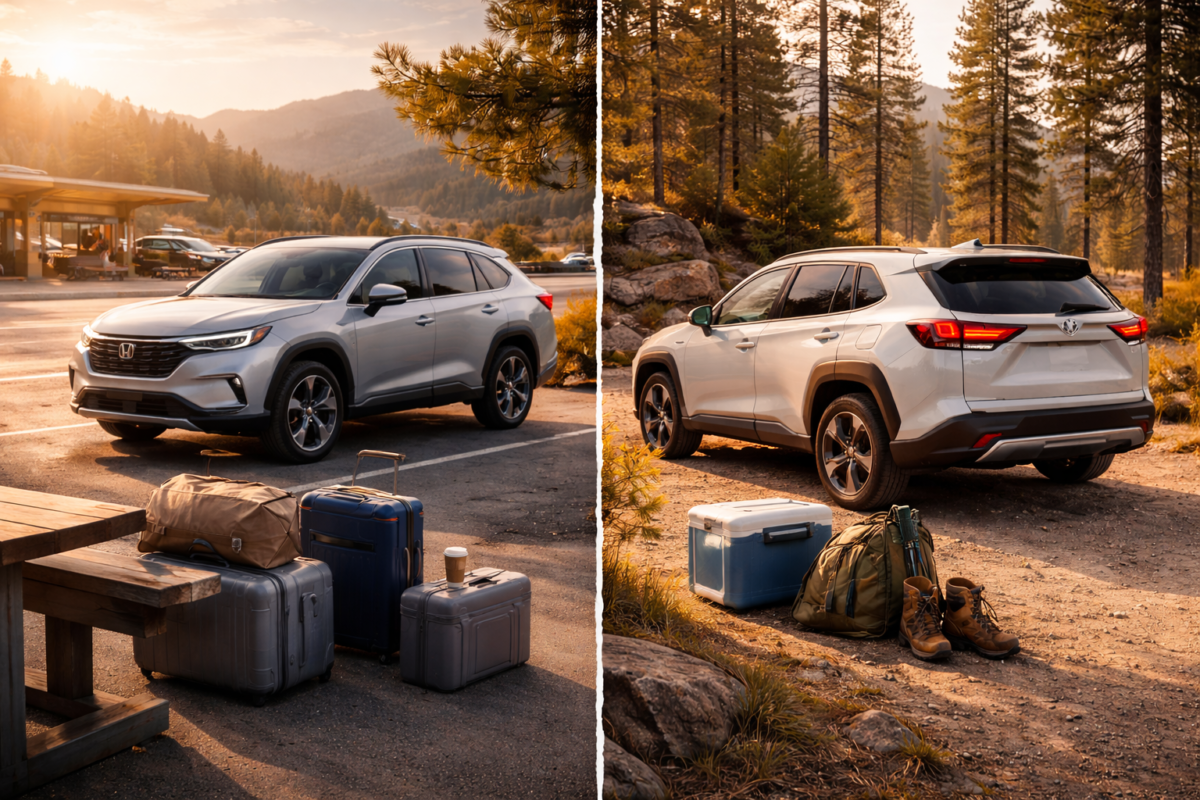
- Pick the RAV4 for better towing, more cargo volume behind the second row, and stronger fuel economy on paper.
- Pick the CR-V for a quieter highway feel, a bigger rear seat, and a cabin that still feels simple in a good way.
- Pick the CR-V first if the trip usually includes four adults.
- Pick the RAV4 first if the trip usually includes bulkier gear, bikes, or a small trailer.
- Watch price creep on upper trims, especially if the choice slides from practical hybrid into loaded-up lifestyle trim.
For the drive itself
This is where the Honda makes its strongest case.
Recent comparison testing found the CR-V easier to settle into and easier to drive for long stretches. It has 41.0 inches of rear legroom, which is a big number in this class, and reviewers kept coming back to the same theme: the CR-V feels composed, quiet, and less busy on the highway. Car and Driver also praised its comfort, highway refinement, and cargo usability, which helps explain why the model stayed on its 2026 10Best list.
The RAV4 is not clumsy. It is quicker off the line in hybrid form and it now feels more modern than before. But it also leans more rugged in look and attitude, and some testers said that comes with trade-offs. Under harder acceleration, the Toyota can sound coarser than the Honda. For a short mountain run or a faster merge, that may not matter. For a long interstate slog, it can.
For cargo, gear, and rougher plans
The Toyota flips the script here.
MotorTrend’s early comparison says the RAV4 offers 37.8 cubic feet of cargo room behind the second row, against 34.7 cubic feet for the CR-V. That gap does not sound huge on paper, but it matters once a trip involves a cooler, two duffels, hiking boots, and a stroller or dog crate. The Toyota also avoids one of the Honda’s annoying cargo quirks: with the CR-V hybrid, folding the second row can leave a noticeable step in the load floor, which makes long or flat cargo harder to slide in.
Then there is towing. Certain AWD RAV4 trims can tow up to 3,500 pounds. The CR-V is not built around that mission. If the weekend plan includes a small trailer, compact camper, or a pair of heavier toys, the Toyota looks more useful before the trip even starts.
Specs that matter
The CR-V hybrid makes 204 horsepower. The new RAV4 hybrid makes 226 hp in FWD form and 236 hp with AWD. Honda says the CR-V hybrid can return 40 city and 34 highway mpg. Toyota says the RAV4 hybrid can reach as high as 44 combined mpg, depending on trim and drivetrain.
Those numbers matter, but the real takeaway is simpler. The Honda spreads its talents across comfort, space for people, and easy daily use. The Toyota pushes harder on versatility, efficiency, and utility.
The possible problems
The CR-V’s main risk is that it can look perfect on the spec sheet for people-hauling, then lose points once the cargo area is packed. The rear-seat room is excellent, but the cargo setup is not as flexible as the Toyota’s once the trip gets bulky.
The RAV4’s risk is the opposite. It does more, and it looks fresher doing it, but some buyers may find it less relaxed on the road. The extra capability is real. So is the chance that a driver who just wants a low-stress weekend cruiser ends up paying for features that sound exciting and matter very little by mile 200.
Which one makes more sense?
For most weekend trips with two adults, light gear, and lots of highway time, the 2026 Honda CR-V is the easier answer. It feels polished, roomy, and low-drama. It is the compact SUV for people who want the trip to feel easy.
For buyers who pack heavier, care more about fuel economy, want a newer design, or may tow something small now and then, the 2026 Toyota RAV4 makes more sense. It has more utility in reserve, and that reserve counts.
What to watch next: Toyota’s PHEV pricing and trim walk for spring 2026 will show how far the new RAV4 can stretch above the mainstream hybrid sweet spot. That will matter for buyers tempted by the flashier end of the lineup rather than the practical middle.