
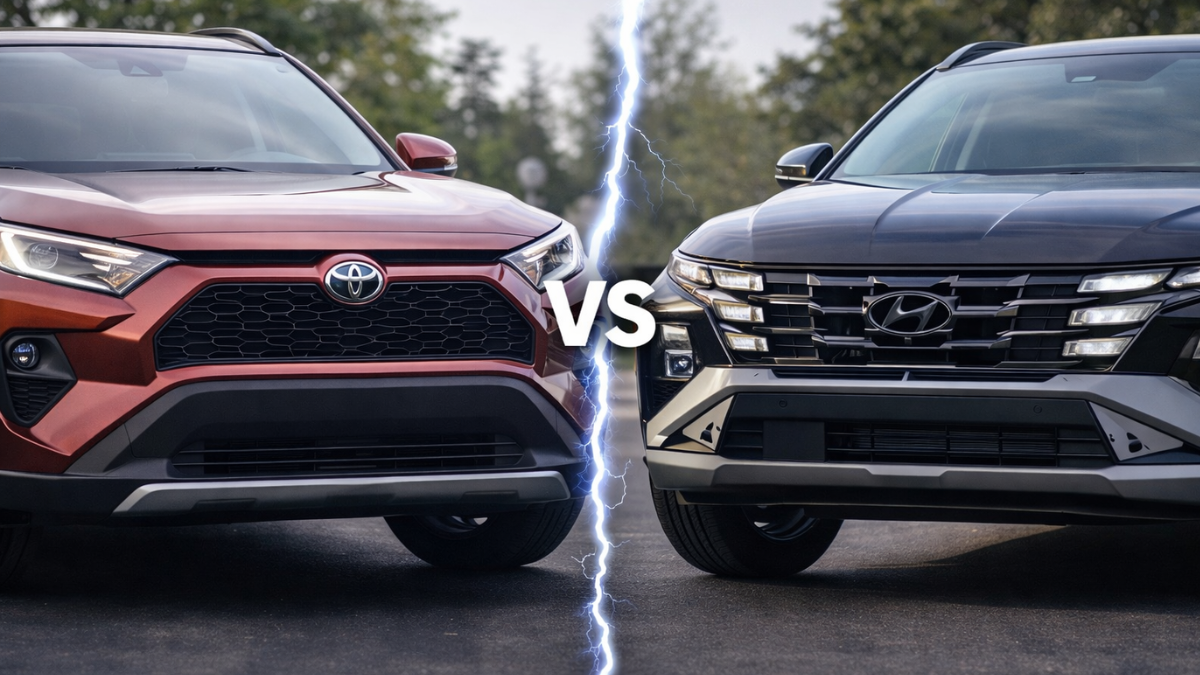
According to Toyota’s U.S. pressroom, the 2026 RAV4 is an all-new model arriving “this winter,” and every version will include the latest Toyota Safety Sense (TSS 4.0) as standard alongside a new software platform that Toyota says underpins safety features and the multimedia system. Edmunds’ small-SUV rating snapshot, meanwhile, places the Tucson close to the RAV4 in overall segment scores, describing the 2026 Tucson as a smooth-riding, roomy choice with lots of tech value. A weekend-trip buyer is not really shopping “Toyota vs Hyundai.” The real question is which vehicle makes the common Saturday escape easier: loading, highway calm after hour two, bad-weather confidence, and the small convenience features that reduce friction at trailheads and hotel lots. This comparison is written for the U.S. market and sticks to what can be verified from official pages and major test outlets.
Quick takeaways
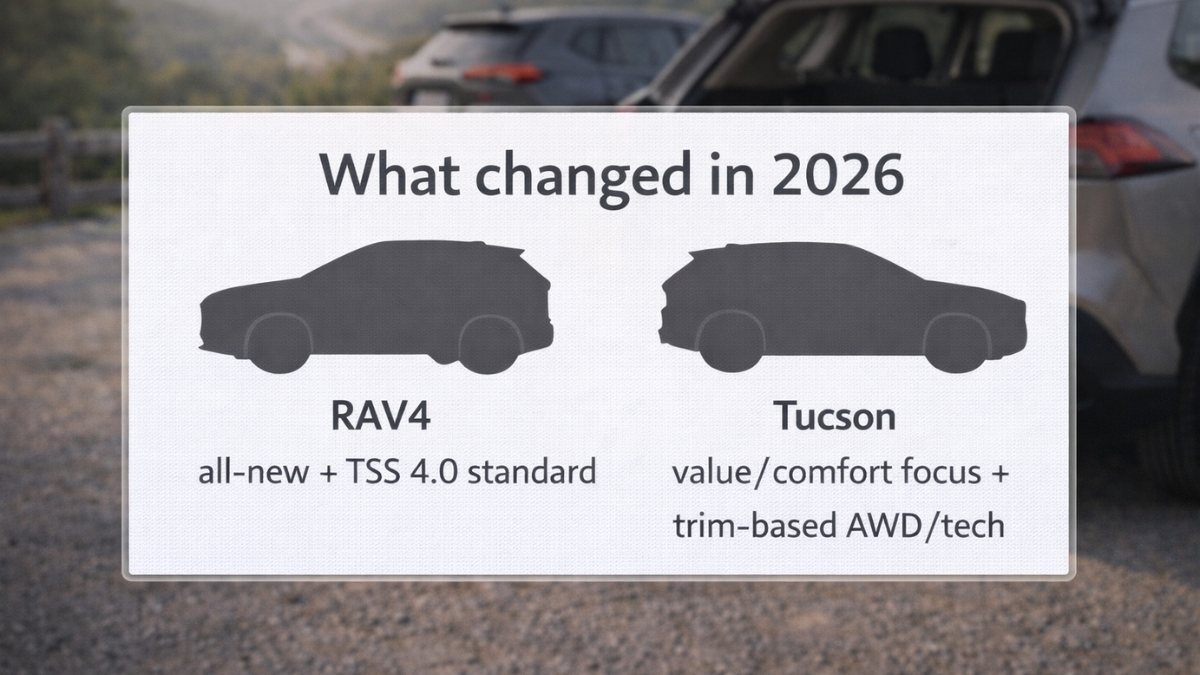
- The 2026 RAV4 is the “big change” option: Toyota has announced an all-new model with standard Toyota Safety Sense 4.0 and a new software platform that it says supports safety features and the multimedia system.
- The 2026 Tucson is the “value + comfort” option: Edmunds highlights a smooth ride, a roomy interior, and strong standard tech for the money, plus Hyundai’s long warranty coverage.
- For weekend trips, the decision usually comes down to three frictions: cargo workflow, highway calm, and weather confidence (AWD + tires + driver-assist behavior).
- If the plan includes frequent 2–6 hour highway legs, test for noise at 70 mph and how the driver-assist behaves in light traffic; “smooth” systems reduce fatigue.
- Do not decide by badge alone. Confirm the exact trim’s AWD availability, wheel/tire setup, and hands-full conveniences (power tailgate, keyless access, roof-rail readiness).
The weekend-trip lens (what matters more than brochure stats)
Most weekend trips are predictable: a 65–80 mph stretch, a stop for groceries or gas, a parking lot with bags in both hands, and at least one “unknown” variable (rain, snow, a rough access road, heavy traffic on the way home).
That is why “which makes more sense” is best answered with a trip lens:
- Loading: liftgate height, cargo floor shape, and how easy it is to pack without playing suitcase Tetris.
- Highway calm: wind and tire noise, plus suspension control over expansion joints.
- Weather confidence: AWD availability, stability in rain/sleet, and a predictable feel on wet on-ramps.
- Assist smoothness: adaptive cruise and lane support that feel steady, not twitchy.
- Convenience details: keyless entry behavior, HVAC controls, and the number of taps needed to do simple things.
What changed for 2026 (and why it affects weekend travel)
Toyota is not framing the 2026 RAV4 as a minor refresh. In its U.S. announcement, Toyota says the RAV4 arrives “this winter,” that every model gets Toyota Safety Sense 4.0 standard, and that the new model launches Toyota’s Arene software-developed vehicle platform as the foundation for safety features and the multimedia system.
For weekend travel, “software” is not an abstract buzzword. It can translate into the things drivers notice on long highway stretches:
- how smoothly adaptive cruise responds to a merge,
- how confident lane tracing feels on worn lines,
- and how quickly the infotainment responds when the route changes.
The 2026 Tucson story is different. Hyundai’s own model page and specs tool emphasize available AWD and a feature-heavy equipment approach. Edmunds’ 2026 Tucson rating write-up highlights the Tucson’s comfort and space strengths and positions it as a strong-value small SUV, while also noting weaknesses like slower acceleration from the base non-hybrid engine.
Highway calm (where weekend fatigue is won or lost)
If the weekend plan is a 2–6 hour drive each way, the “best” SUV is often the one that feels least busy at speed.
Edmunds’ Tucson overview points to a smooth ride quality and comfortable seating as strengths. Car and Driver’s Tucson review describes an easygoing on-road demeanor and a roomy interior, while also flagging acceleration and fuel-economy testing results as weaker areas in some trims/versions.
The all-new 2026 RAV4 is still rolling into the market on Toyota’s timing, so the cleanest “calm-at-speed” claims should be anchored to published tests once they exist for the exact trim. What is verifiable today is Toyota’s standardization of TSS 4.0 for 2026 and the new platform foundation that may influence assist behavior and multimedia responsiveness.
Weekend takeaway: the Tucson is the safer bet if the buyer wants a known comfort-and-space reputation in current reviews. The RAV4 is the higher-upside bet if the buyer is specifically shopping for Toyota’s newest safety/assist generation and is willing to test the real-world “feel” once the new model is on lots.
Cargo and “hands-full” usability (the practical winner can surprise)
Weekend usability is often decided in parking lots, not on spec sheets.
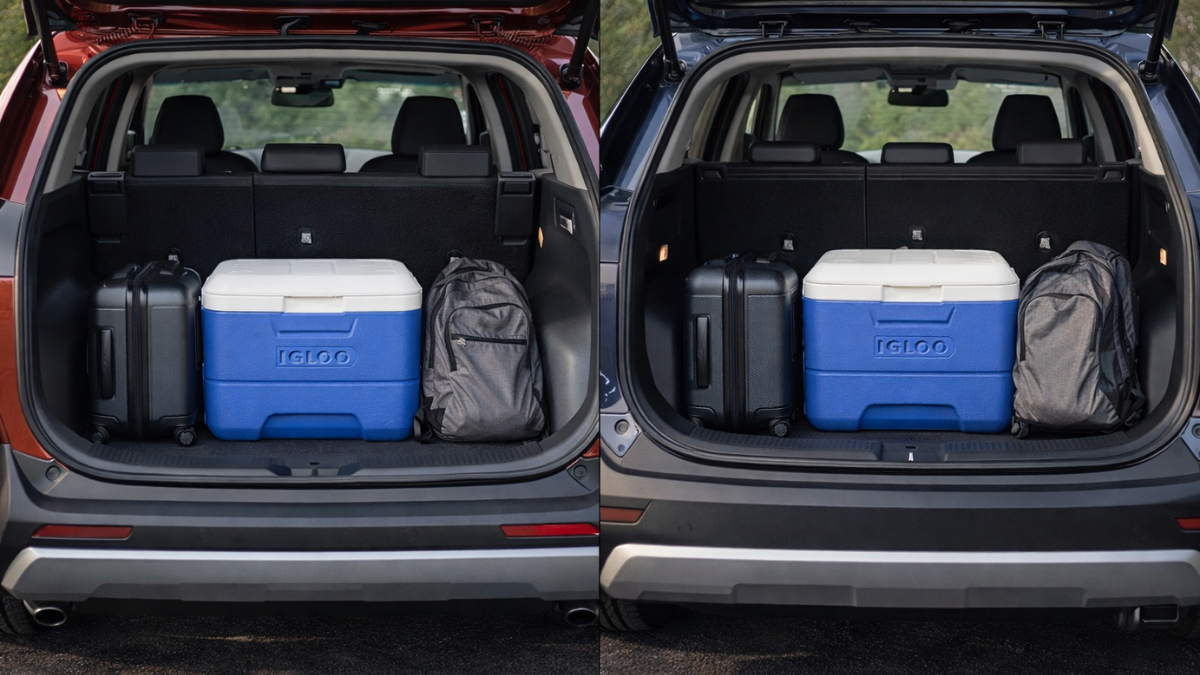
Edmunds highlights the Tucson’s roomy interior, and an AP/Edmunds comparison summary reports up to 74.8 cubic feet of cargo space and 41.3 inches of rear legroom for the Tucson (figures used in that comparison context). Those kinds of numbers usually show up as real-world ease: fewer compromises when packing.
Toyota’s 2026 RAV4 announcement is less cargo-specific and more platform-and-safety focused. For weekend shoppers, that means the cargo question becomes: “How usable is the space in the trims that actually show up locally?” It is a check that should be done at the dealership: cargo floor height, spare tire/underfloor storage, and liftgate ease.
Weekend takeaway: if the trip pattern includes bulky items (stroller, cooler, sports kit), the Tucson’s space reputation is a strong reason to put it on the shortlist early.
Weather confidence (AWD is only half the story)
Both SUVs offer AWD in the U.S., but the “confidence” feeling often comes from three variables:
1) the AWD system’s behavior,
2) tire choice on the trim,
3) and stability/assist tuning in wet conditions.
Hyundai’s model overview and specs/compare tool make it easy to confirm which Tucson trims include AWD availability and what the major equipment steps are. Toyota’s 2026 RAV4 announcement makes the safety-suite standardization explicit (TSS 4.0 across the lineup).
Weekend takeaway: if winter trips are common, do not treat “AWD” as a checkbox. Verify tire type, wheel size, and the exact assist features on the trim being considered.
What this means in the U.S.
A U.S. weekend trip often includes a long interstate segment, a weather swing, and a “loaded” return leg. In that reality:
- a calm cabin reduces fatigue more than a small horsepower difference,
- cargo shape matters as much as cargo volume,
- and driver-assist smoothness can turn a stressful drive into a low-effort one.
For 2026 specifically, Toyota’s move to standardize TSS 4.0 on the all-new RAV4 is a meaningful shift for shoppers who prioritize assist features. For value-focused buyers, Edmunds’ 2026 Tucson rating summary (and Hyundai’s warranty reputation in mainstream coverage) keeps Tucson in the “easy to justify” lane.
What you can do (a 12-minute weekend test-drive script)
Use the same script on both SUVs, on the same route:
- Noise check (3 minutes at highway speed): audio off, fan low. Listen for wind around mirrors and tire roar.
- Expansion-joint check (2 minutes): on concrete freeway, feel whether the body settles quickly after one joint.
- Assist smoothness (3 minutes): adaptive cruise in light traffic; watch for late braking or over-braking when a car merges in.
- Hands-full test (2 minutes): simulate opening the liftgate with bags; check keyless access behavior and liftgate height.
- Controls test (2 minutes): change temperature, defrost, and wipers without staring at the screen.
What to watch next (the piece that will decide many 2026 buyers)
Two near-term realities can change the answer:
- RAV4 on-lot reality: Toyota has said pricing will be announced closer to on-sale date, and real-world road tests of the exact 2026 trims will reveal whether the new platform feels calmer at speed and whether the assist behavior is meaningfully smoother.
- Trim packaging: the Tucson’s value advantage can hinge on which features are standard on the trims that are actually available locally, especially if a buyer needs AWD and a specific tech set.
If the weekend pattern is mostly highway with occasional snow, the “makes more sense” answer will usually be the vehicle that feels calm at 70 mph and handles hands-full moments without extra steps. Put both through the same 12-minute script, then choose the one that makes the trip feel simpler.
SOURCES
- The Next Adventure Begins: 2026 RAV4 Arrives this Winter
- Three…Two…One: Toyota Debuts Amazing All-New RAV4
- All-New RAV4 World Premiere
- 2026 TUCSON
- Specifications – 2026 TUCSON
- 2026 Hyundai Tucson: Driven, Tested, Rated
- 2026 Hyundai Tucson
- 2026 Hyundai Tucson – Car and Driver
- Edmunds small SUV comparison: 2026 Chevrolet Equinox vs. 2026 Hyundai Tucson