
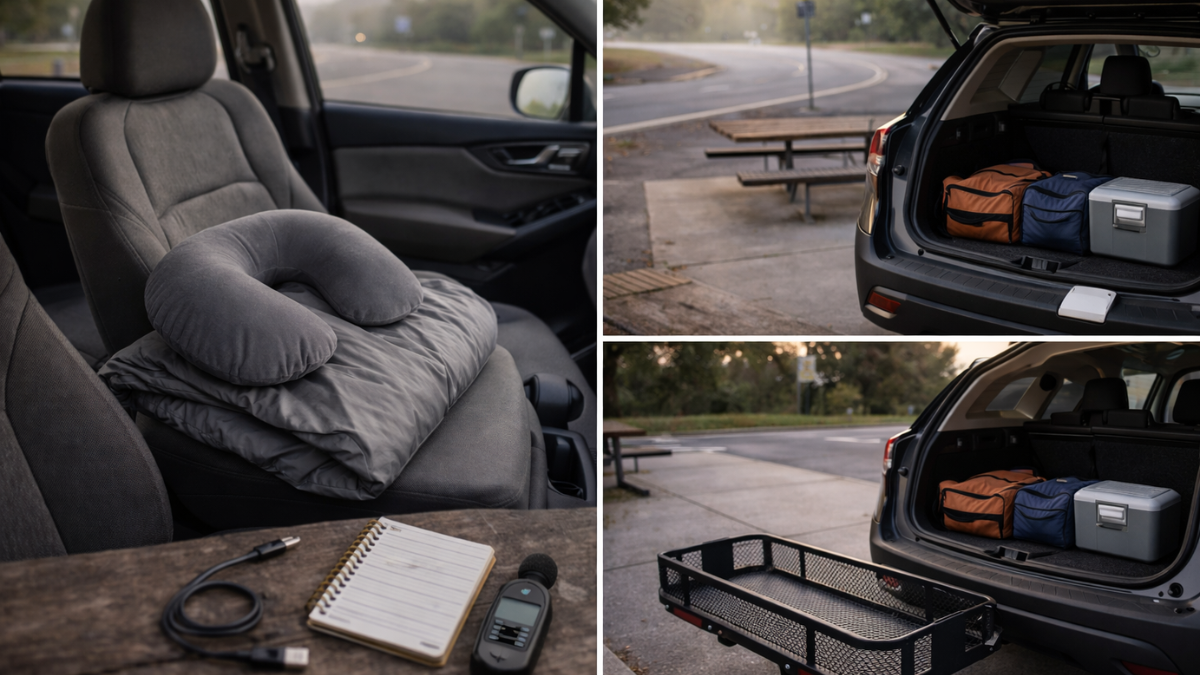
According to Car and Driver, it has long measured interior noise at a 70-mph cruise and now adds sones alongside decibels to better reflect perceived loudness—because “calm” is something drivers feel after a few hours. J.D. Power’s 2025 quality reporting also keeps pointing to infotainment as a persistent owner pain point, especially as more basic functions move into touchscreens. That is the 2026 road-trip reality: the features that sell in brochures aren’t always the ones people value at hour two. After the novelty fades, the trip becomes about fatigue, workload, and stop-cycle friction.
Quick takeaways
- After two hours, the “best” feature is the one that lowers workload, not the one that looks impressive in a spec list.
- Quiet cabin and good seats reduce fatigue every mile.
- Predictable driver-assist helps when traffic and weather get messy.
- Seats-up cargo access prevents clutter and keeps stops fast.
- Simple infotainment matters because road trips multiply navigation and audio tasks.
What changes after the first two hours
Hour one is novelty. Hour two is when the brain starts paying a “tax” for anything irritating:
- constant wind and tire noise,
- small steering corrections,
- seat pressure points,
- repeated stop tasks (parking, grabbing one item, re-loading),
- and screen interactions that demand attention.
This is why people’s “favorite feature” list changes mid-trip. The trip stops being about capability and starts being about how calm the system stays.
Feature #1: A quiet cabin at highway speed
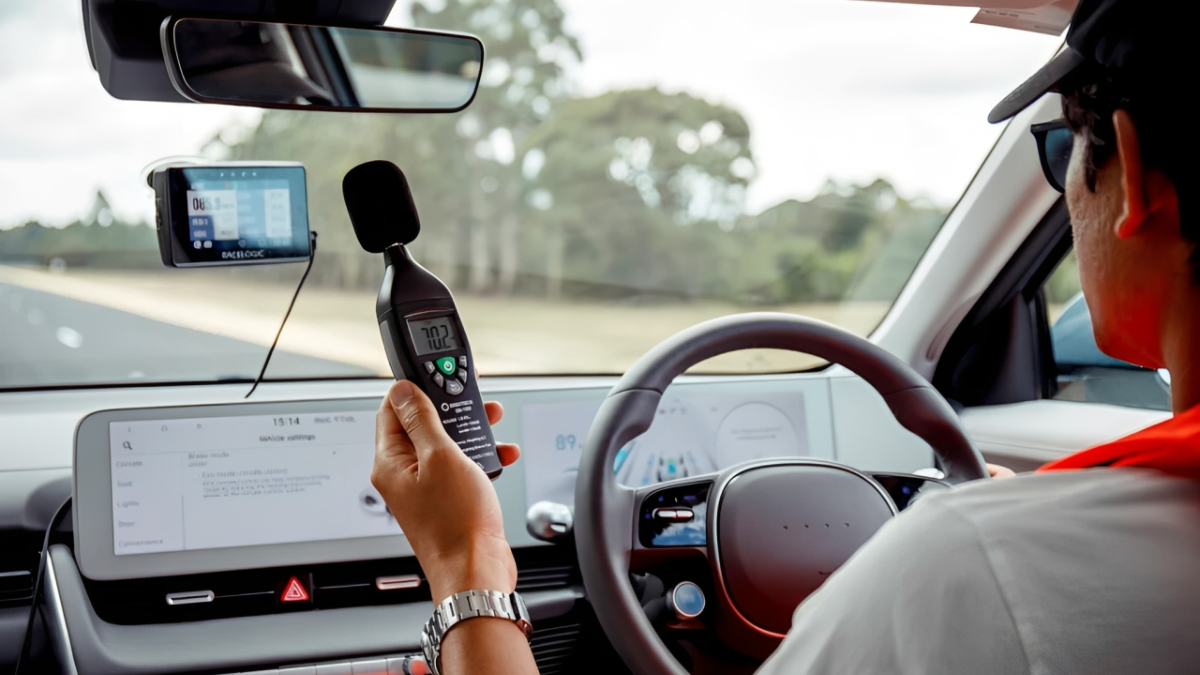
A quiet cabin isn’t luxury fluff. It’s fatigue control.
Interior noise is a constant stimulus. If it’s high enough, drivers compensate by:
- turning music up,
- speaking louder,
- and arriving more drained than expected.
Car and Driver’s move to report sound in sones at 70 mph is a good signal that perceived loudness matters. The road-trip takeaway is simple: the cabin that stays calm at speed feels “better” than a faster car that forces compensation.
Practical test:
- audio off, fan low, 65–75 mph for five minutes,
- identify what’s loud: wind hiss or tire roar.
Feature #2: Seats that don’t create pressure points
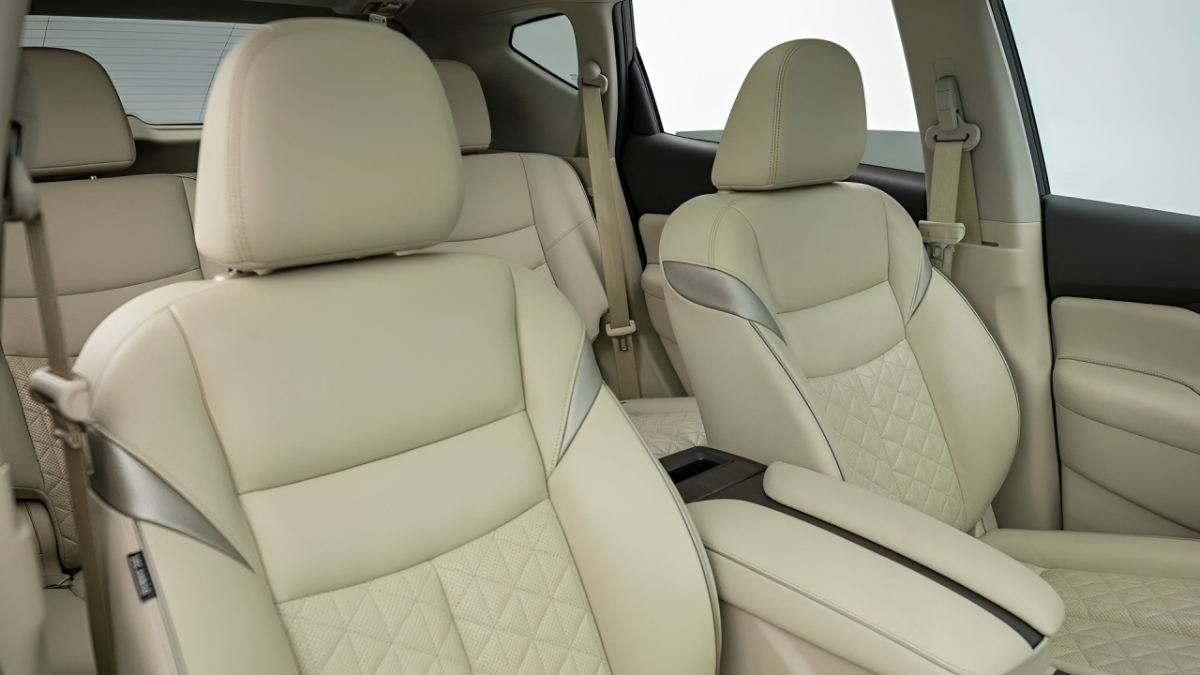
On paper, many seats look similar. After two hours, differences become obvious:
- cushion firmness,
- thigh support,
- lumbar adjustability,
- headrest shape.
This is the feature that matters even more if:
- the driver has back sensitivity,
- the trip is straight-line highway for hours,
- or the vehicle has a “busy” ride that makes the body brace.
Practical test:
- set lumbar early,
- adjust seat base so legs are supported,
- then re-check after 20 minutes without changing posture.
If you feel the urge to constantly reposition, that seat is not road-trip friendly.
Feature #3: Driver-assist that behaves smoothly, not dramatically
On long drives, drivers tend to value assistance that reduces workload without adding surprises:
- adaptive cruise that doesn’t brake late and hard,
- lane-centering that doesn’t “ping-pong,”
- alerts that inform without constant nagging.
This is not about “hands-free hype.” It’s about smoothness and consistency.
Practical test:
- set adaptive cruise + lane centering for a short segment,
- see whether you relax or tense up.
If the system creates more corrections than you would, it is not a road-trip win.
Feature #4: Seats-up cargo space you can access quickly
Most weekend trips don’t fail on maximum fold-flat volume. They fail on seats-up reality:
- a cooler is rigid,
- bags need to stay out of footwells,
- and you want to grab one item without unloading everything.
After hour two, clutter becomes fatigue. It’s constant small problem-solving:
- where did the jacket go,
- how do we reach the snacks,
- why is the cabin full of loose items.
A vehicle with good seats-up cargo geometry (tall opening, usable floor, tie-down points, easy reach) reduces that cognitive load.
Practical test:
- keep seats set as you actually travel,
- load: cooler + two duffels + layers,
- open the hatch and grab one bag without rearranging.
If it requires re-packing at every stop, stress will rise fast.
Feature #5: Infotainment and controls you can use with minimal attention
Infotainment becomes a bigger headache on road trips because the trip multiplies tasks:
- reroutes,
- searching stops,
- switching audio,
- passenger requests,
- Bluetooth handoffs and cables.
J.D. Power’s owner survey reporting has repeatedly identified infotainment as a major complaint category, and it has noted that frustration rises as more basic controls move into screens.
The road-trip preference is simple:
- fewer taps for climate and defrost,
- obvious audio controls,
- stable phone pairing,
- and a system that doesn’t reset preferences.
Practical test:
- can you adjust temperature and defrost quickly without hunting through menus?
- can your passenger change audio without the driver learning a new interface mid-trip?
What this means in the U.S.
U.S. weekend trips often combine:
- 70–80 mph highways,
- rough pavement segments,
- crowded parking at destinations,
- and a stop cycle (gas, groceries, check-in, dinner).
That mix rewards vehicles that keep the trip boring:
- quiet enough that you don’t compensate,
- seats that don’t create pressure points,
- assistance that smooths traffic,
- cargo access that prevents clutter,
- controls that don’t demand attention.
What you can do: the 15-minute “hour-two” test drive
Do this back-to-back in any vehicle you’re considering:
- Highway quiet (5 min): audio off, fan low, 65–75 mph.
- Seat check (3 min): adjust lumbar and seat base, then see if you stop thinking about it.
- Driver-assist segment (3 min): adaptive cruise + lane centering; watch for calm vs tension.
- Stop-cycle access (4 min): open cargo, grab one bag, close up; try defrost and temperature controls quickly.
If a vehicle passes these four, it tends to feel “easy to live with” after hour two—which is what most weekend travelers end up valuing most.
Bottom line
After the first two hours, road-trip value becomes less about peak performance and more about fatigue control and workload reduction. Quiet cabins, supportive seats, smooth driver assistance, seats-up cargo access, and low-attention controls are the five features that most reliably make a weekend feel shorter—even when the brochure highlights something else.
SOURCES
- Fortunate Sones: We’re Changing the Way We Measure Interior Noise in Cars
- Fewer Physical Vehicle Controls and More Problematic Touchscreen Make Infotainment System a Modern “Catch-All Drawer,” JD Power Finds
- Fewer Physical Vehicle Controls and More Problematic Touchscreen Make Infotainment System a Modern “Catch-All Drawer,” J.D. Power Finds
- Distracted driving
- The Most and Least Distracting Infotainment Systems