
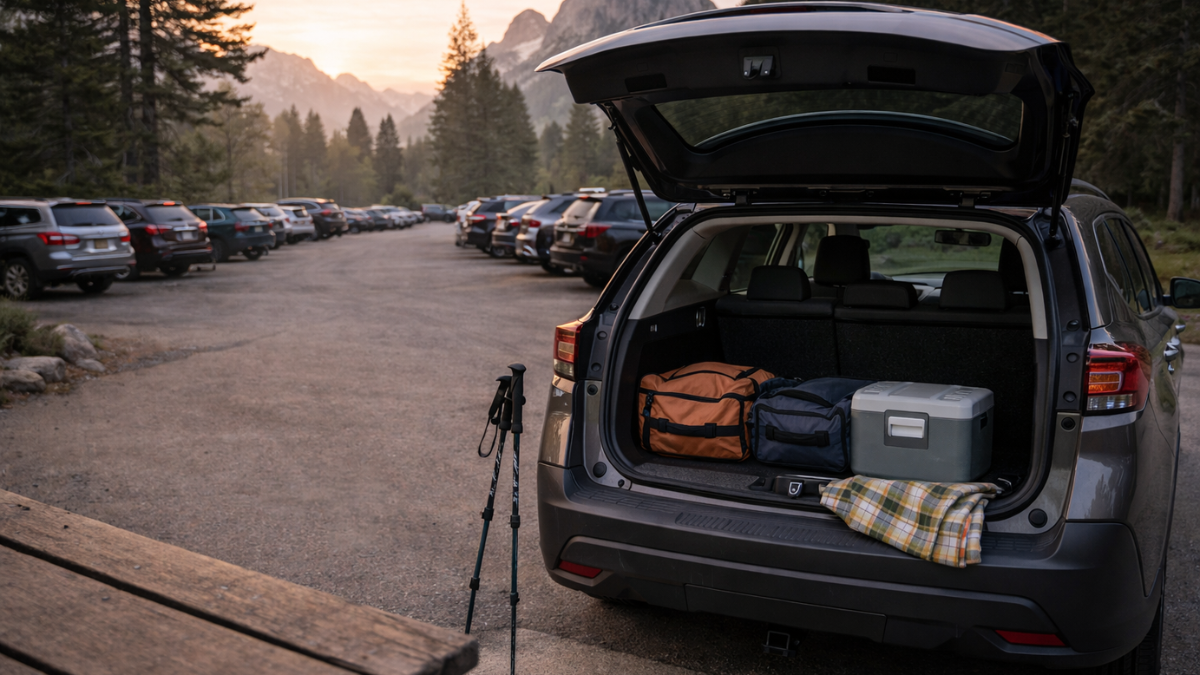
According to the National Park Service, some of the biggest spring weekend pinch points are predictable: seasonal road conditions, limited parking, and high-demand corridors that can back up quickly. Yosemite says it will not use a timed reservation system in 2026, and Arches says it will not require advanced timed-entry reservations in 2026—changes that can shift congestion from “booking stress” to “arrival stress.” Spring weekends are where the “wrong car” shows itself faster than city driving does, because the trip stacks multiple stress tests at once: a cold start, a long highway run, steep grades, crowded lots, and bulky gear.
Quick takeaways
- National park weekends stress-test a car faster than city driving because they combine highway miles, grades, cold weather, and crowded parking in one day.
- Spring conditions can still mean traction rules and winter driving requirements on some roads; Yosemite notes all vehicles must carry tire chains and that requirements can change.
- With some parks changing access systems in 2026 (Yosemite ending timed entry; Arches dropping timed entry), the stress can shift from “reservation anxiety” to arrival congestion and parking roulette.
- The “wrong car” usually fails on seats-up packing, ground clearance/tires, driver fatigue, or stop-cycle friction.
- Best fix: plan for spring parks like a checklist—tires/traction, cooling and brakes for grades, seats-up cargo, and parking strategy.
What changed in 2026: less booking stress, more arrival stress
In recent years, some parks used timed-entry systems to manage peak flows. In 2026, the details vary by park.
- Yosemite says it will no longer use a timed reservation system in 2026.
- Arches announced it will not require advanced timed-entry reservations in 2026.
For drivers, this matters because the “trip problem” can shift:
- With timed entry: the stress shows up at planning and booking.
- Without timed entry: the stress shows up at the gate, on the park road, and in the parking lot.
Either way, spring weekends concentrate demand into a narrow window. That is why the wrong vehicle becomes obvious quickly.
Why national parks expose the wrong car faster than city driving
City driving is repetitive. You learn the workaround. National park weekends are chaotic by design:
- early departure,
- long highway cruise,
- sudden temperature swings,
- steep grades,
- and a parking situation that rewards timing and maneuverability.
If a vehicle is “almost good enough,” a city commute rarely punishes it. A national park weekend does, because it compresses every friction point into 6–10 hours.
Stress test #1: traction rules and shoulder-season surprises

Spring in the mountains can look like sunshine at lunch and snow or ice in the morning.
Some park roads can still require winter driving preparation. Yosemite’s chain guidance is explicit: visitors must carry chains, and certain chain-control levels can require installation depending on vehicle weight, tires, and conditions.
This is where the wrong car shows itself:
- all-season tires with worn tread,
- heavy vehicles that require chains sooner,
- and drivers who assumed “AWD solves everything.”
The weekend-friendly setup is not only AWD. It’s tires + traction plan.
Stress test #2: grades, heat management, and “busy” highway behavior

Many park drives include long climbs and descents. That makes three things matter:
- stable cooling under load,
- braking confidence on descents,
- and calm highway behavior before you even reach the gate.
A vehicle can feel fine in the city and feel tiring on a three-hour approach if:
- wind and tire noise are high,
- the steering requires constant corrections,
- or the seat creates pressure points.
On a national park weekend, fatigue starts before the first trailhead.
Stress test #3: parking pressure and the stop cycle
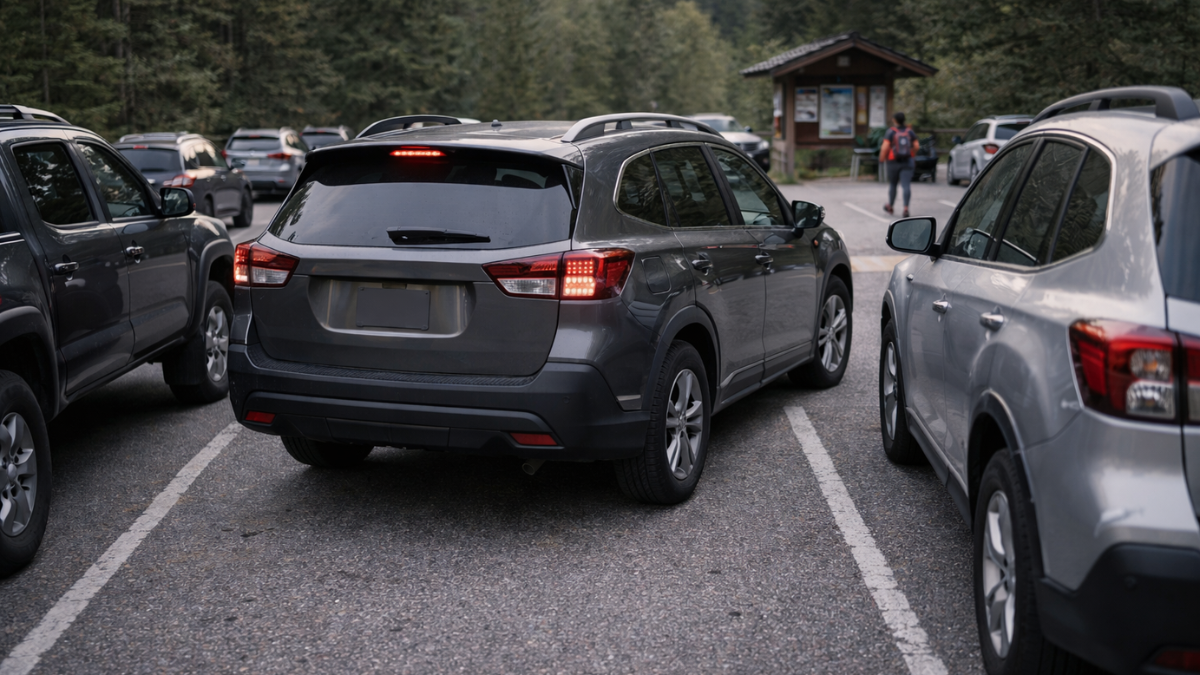
Spring weekends in parks are not “one drive and done.” They’re a stop cycle:
- entrance queue,
- viewpoint pullout,
- trailhead lot,
- picnic stop,
- restroom stop,
- one more viewpoint.
The wrong vehicle shows itself when:
- it is too large to park easily,
- it has a wide turning circle in cramped lots,
- or the driver feels tense placing it near other vehicles and pedestrians.
This is why “easy to live with” often beats “more advanced.” The trip becomes a series of simple tasks, repeated under time pressure.
Stress test #4: seats-up packing and the bulky-gear problem
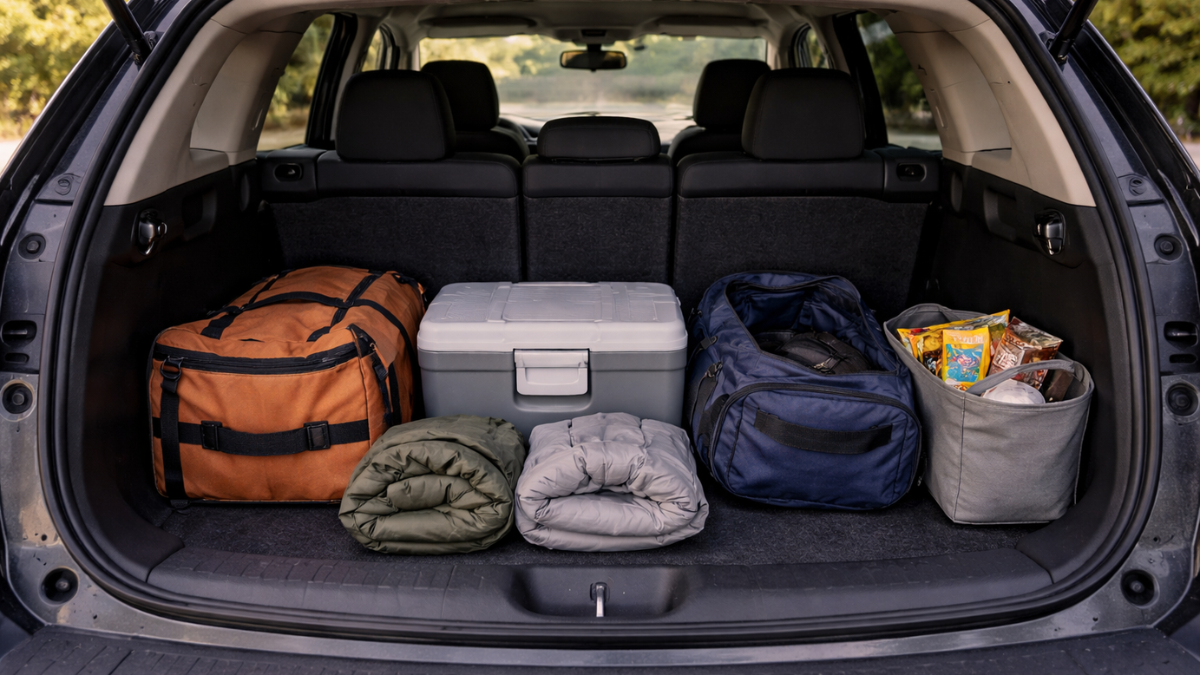
Park weekends have a specific gear signature:
- cooler,
- layers,
- hiking shoes,
- poles,
- dog gear for many households,
- and sometimes a stroller or carrier.
The common failure is not “maximum cargo with seats folded.” It’s seats-up cargo:
- keeping the cabin clear,
- keeping rear visibility usable,
- and accessing one item without unloading everything.
When a vehicle fails seats-up packing, people add rooftop cargo. That can solve volume, but it can add wind noise, height stress, and fuel penalty—exactly the kind of compounding friction that makes a park weekend feel harder.
Stress test #5: access systems and real-time conditions
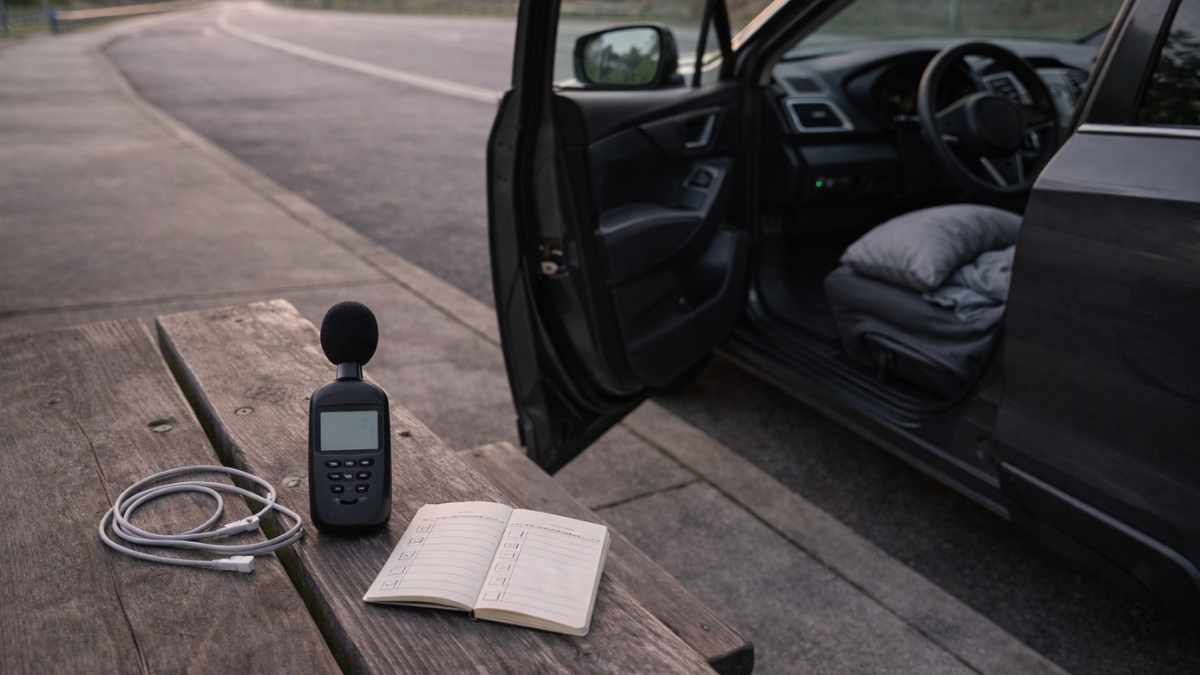
Even without timed entry, conditions can change quickly:
- road restrictions,
- seasonal road schedules,
- maintenance closures,
- and real-time congestion management.
The NPS has published congestion-management guidance that frames congestion as affecting visitor experience, safety, operations, and resource protection. Translation for drivers: on peak days, you should expect interventions (staff at intersections, parking controls, changed traffic flow) and plan a vehicle routine that stays calm under uncertainty.
This is where the wrong car becomes obvious:
- the one that’s stressful to maneuver,
- the one that forces constant cabin reorganization,
- or the one where the driver-assist behavior feels unpredictable in stop-and-go.
What this means in the U.S.
For U.S. spring national park weekends, the most common pattern is:
- early morning start,
- highway approach,
- shoulder-season weather,
- and a high-density few hours inside the park.
The best “park weekend car” isn’t always the biggest or the fastest. It’s the one that:
- handles traction surprises,
- packs seats-up without drama,
- parks easily in tight lots,
- and keeps the driver fresh after two hours.
What you can do: the 12-minute “park weekend car-fit” test
Before a spring park weekend (or before choosing a weekend vehicle), run this quick test:
- Traction check (3 min): verify tread depth and confirm the traction devices that fit your tires if your route can require them.
- Seats-up load test (4 min): pack cooler + two duffels + layers with seats set as you travel. Confirm rear visibility and access to one bag.
- Parking realism (3 min): practice backing into a tight space and exiting cleanly.
- Highway calm (2 min): audio off, fan low at highway speed. If noise or steering workload is high, fatigue will show up earlier.
If the vehicle passes these four, it will usually feel “right” in a park context—even when the day becomes crowded.
Bottom line
Spring national park weekends expose the wrong car faster than city driving because they stack the hardest variables—weather uncertainty, grades, packed lots, and bulky gear—into one day. With some parks changing access systems in 2026, stress can shift from reservations to arrival congestion, making parking ease and seats-up packing even more important. The best weekend vehicle is the one that stays boring under pressure: traction-ready, easy to pack, easy to park, and calm on the highway.