
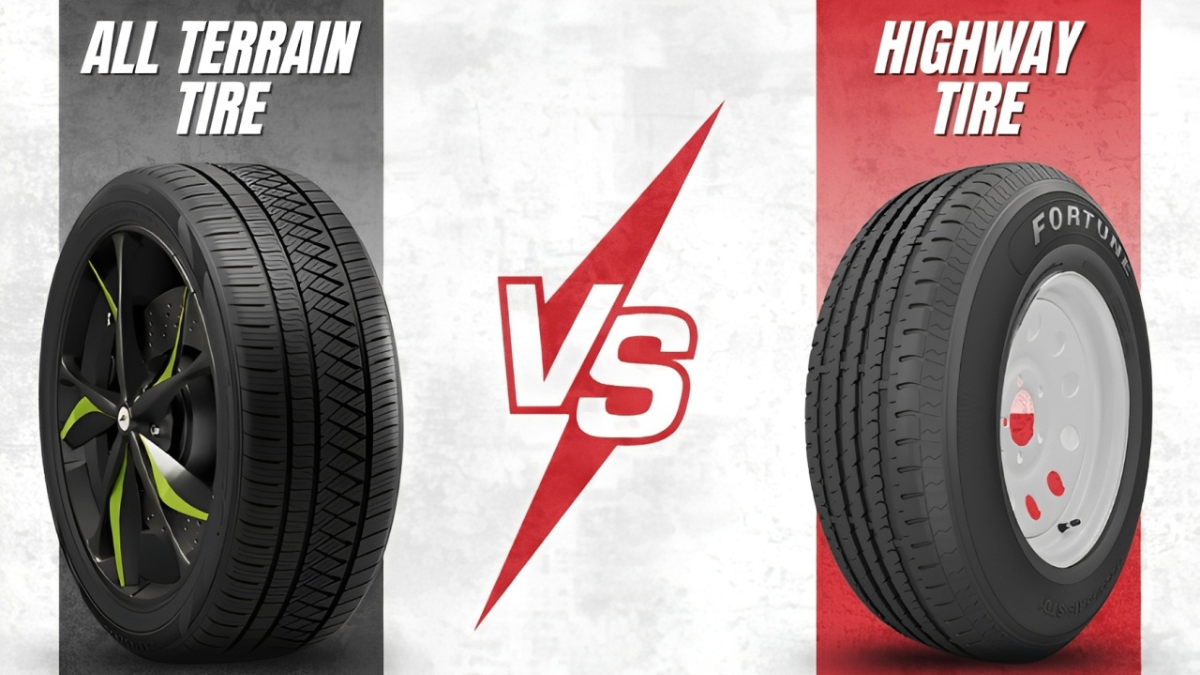
A lot of drivers make this switch for the look, not the route. Then the first long weekend shows up, the tank drops faster than expected, and the tire choice starts to feel less cool and more expensive. The U.S. Department of Energy says fuel economy usually falls quickly above 50 mph, and its Energy Saver Guide says roof racks can cut fuel economy by up to 25 percent at interstate speeds. Tires are a quieter version of the same story. In 2026, the real question is not whether all-terrain tires work. It is how much fuel economy they give away before most drivers realize what changed.
Quick takeaways
- All-terrain tires usually hurt fuel economy faster than drivers expect because they add rolling resistance, weight, and often more aerodynamic drag through taller, rougher setups.
- Highway tires usually win the fuel-economy argument for pavement-heavy driving because they are built to roll easier and stay quieter at speed.
- The tax gets worse on long fast trips. DOE says fuel economy usually drops quickly above 50 mph, so the highway amplifies every tire choice.
- Not all A/T tires are equal. Tire Rack’s on-road all-terrain testing shows some newer road-biased A/Ts are much better behaved than old-school aggressive rubber.
- The real mistake is buying for the fantasy route, not the real one. Five miles of gravel at the end of a trip is not the same as living on rough roads.
What actually makes fuel economy fall
This article works best when it avoids tire-forum mythology.
Fuel economy usually gets hit by four things at once:
1) Rolling resistance
This is the least flashy part of the story and one of the most important. NHTSA’s tire fuel-efficiency consumer-information rules are built around rolling resistance for a reason. Lower rolling resistance improves fuel efficiency. Older NHTSA analysis estimated that every 10 percent reduction in tire rolling resistance could improve fuel economy by roughly 1.1 to 1.3 percent, depending on the study assumptions.
That does not tell you the exact difference between one tire and another. It does tell you the direction: tires that roll harder cost fuel.
2) Weight and unsprung mass
More aggressive all-terrain tires are often heavier. Tire Rack’s upgrade guidance on unsprung weight explains why that matters. More weight at the wheel changes how hard the vehicle has to work and how the suspension behaves over real pavement.
3) Tread pattern and squirm
Chunkier tread helps on loose surfaces. It can also add more movement and drag on pavement, especially as highway speeds rise.
4) The speed multiplier
DOE’s guidance says mileage usually drops quickly above 50 mph. That matters because a long weekend does not test tires at 25 mph around town. It tests them at 70 to 80 mph for hours.
This is why the same tire that feels fine on the commute can start charging a visible tax on a 300-mile trip.
Why all-terrain tires lose the argument faster on pavement
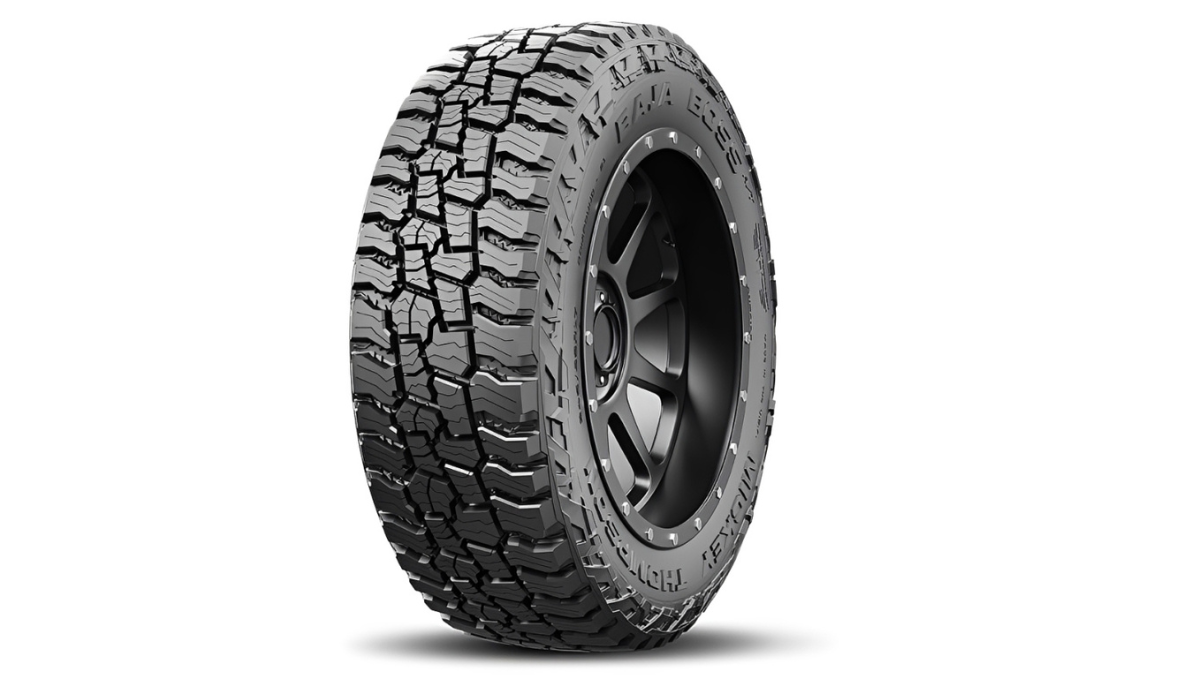
This is not an anti-A/T article. It is a route-matching article.
All-terrain tires are built to do things highway tires are worse at:
- bite into loose surfaces,
- resist punctures and abuse better in many cases,
- and stay more useful when the road becomes gravel, mud, sand, or snow.
That value is real. The problem is how often some drivers actually use it.
Tire Rack’s long-running comparison of highway all-season and on-/off-road all-terrain tires is still useful because it shows the tradeoff clearly. In that test, the highway all-season tire performed better on packed snow braking and turning than the all-terrain tire, which is a reminder that “rugged” does not automatically mean “better everywhere.” More important for this article, Tire Rack’s newer on-road all-terrain testing keeps using language like not too loud, nicest road ride, and on-road all-terrain because that is exactly the category trying to soften the old A/T penalty.
That tells readers something important:
- if tire makers have created a whole subset of road-friendlier all-terrain tires,
- then the harsher, older-school A/T tax is obviously real enough to need fixing.
Highway tires: boring, but often the smarter answer
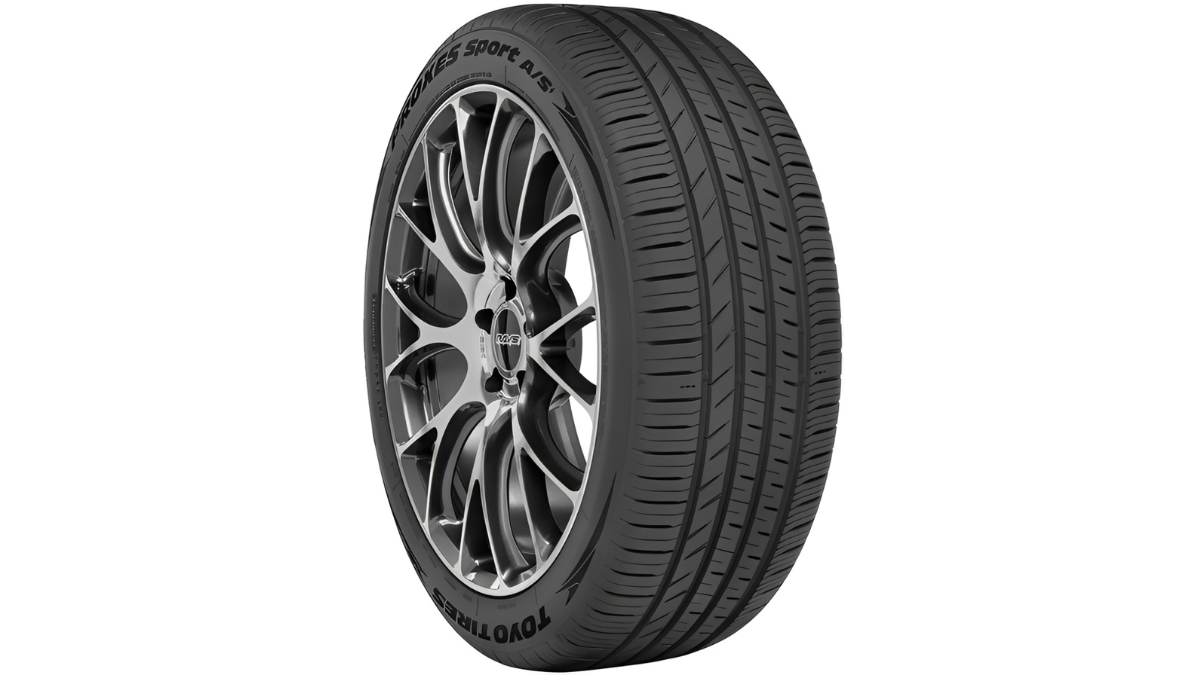
This is the least glamorous part of the article and probably the most useful.
For drivers whose real route looks like:
- commuting on pavement,
- long interstate weekends,
- occasional rain,
- one gravel parking area or campground lane,
a highway tire usually makes more sense because it keeps the whole vehicle calmer:
- less road noise,
- less tread drag,
- easier rolling,
- and often a smoother ride.
That does not mean “highway tire” equals fragile. It means the tire is being matched to the use case instead of the image.
There is a broader point here too. Once fuel gets expensive again, tires start behaving like a hidden subscription. The difference does not always scream at the first pump stop. It accumulates:
- weekly commuting,
- Friday departure fill-ups,
- summer highway miles,
- and one year of pretending the tire choice was free.
That is the part most drivers underestimate.
Not all all-terrain tires are the same anymore
This is where the article should stay fair.
The worst version of this topic says all all-terrain tires are bad on road. That is not supported by the way the market has evolved.
Tire Rack’s 2025 on-road all-terrain test specifically split tires into categories, including on-road all-terrain, off-road all-terrain, and rugged all-terrain. That alone is a useful clue for readers. It means there is now a serious difference between:
- the tire that mostly wants to stay civil on pavement,
- and the tire that is much happier looking tough and paying for it later.
So the better takeaway is this:
- Highway tires usually protect fuel economy best.
- Road-biased A/Ts can be a decent compromise.
- Aggressive A/Ts usually punish fuel economy and noise faster.
That is a much more honest framework than “A/T or highway” as if there are only two tire personalities left.
What this means on a 200- to 500-mile weekend
This is where the title promise cashes out.
If the route is mostly:
- interstate,
- state highway,
- patched pavement,
- gas stations,
- family cargo,
- and one mild gravel stretch,
then the all-terrain tire often ruins fuel economy faster than drivers expect because the trip is spending almost all of its time in the exact conditions where the tire’s extra capability is least useful.
That does not mean the SUV becomes undriveable. It means the tax appears in a stack:
- more fuel burned,
- more road noise,
- more steering busyness,
- and a slightly more tiring cabin.
For a lot of readers, that stack matters more than the possibility of one muddy turnout in October.
What drivers should check before the next tire swap
1) Count the real rough-road miles.
Not the fantasy ones. The actual ones.
2) Look for road-biased A/T language if you truly need some mixed-use ability.
The market has moved. Use that.
3) Think about average speed, not just terrain.
A tire that is fine at 35 mph can get expensive at 75.
4) Do not ignore noise.
The fuel-economy tax and the fatigue tax often arrive together.
5) Buy for the 90 percent route.
If most miles are pavement, a highway tire usually makes more sense.
What this means in the U.S. and Canada
The logic is basically the same on both sides of the border.
In the U.S., this often lands as:
- bigger highway mileage,
- more obvious pump pain,
- and a larger market for trucks and rugged-looking SUVs that never really leave pavement.
In Canada, the same tradeoff shows up with a little more mixed-weather relevance, especially where gravel roads and seasonal conditions are common. But even there, the route still matters more than the vibe. A driver can need winter capability or cottage-road confidence without needing the most aggressive all-terrain tire available.
That is why this article is broad-reader useful. It is not anti-truck, anti-SUV, or anti-A/T. It is anti-mismatch.
Bottom line
All-terrain tires usually ruin fuel economy faster than drivers expect because the cost is not only in the tread. It is in rolling resistance, weight, speed, and the fact that most “rugged” vehicles spend most of their lives on pavement. Highway tires usually make the smarter case for fuel economy and long-trip calm. Road-biased all-terrain tires can split the difference better than older aggressive designs. The mistake is paying the all-terrain tax every day for a route that barely uses the extra capability.