
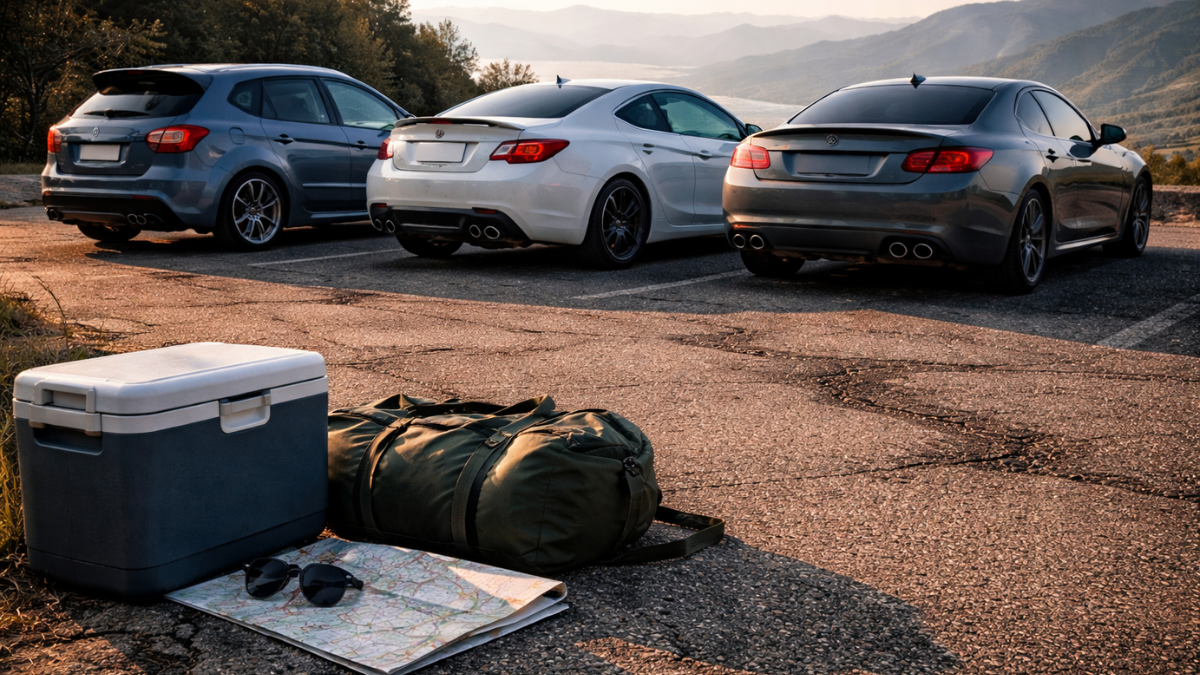
The first 20 minutes flatter the manual. The next 280 miles usually tell the truth. That truth got sharper as modern automatics and dual-clutch gearboxes got quicker, smoother, and often easier to live with than the old manual-versus-auto arguments admit. Edmunds’ current manual-versus-automatic explainer says many of the old manual advantages in fuel economy, performance, and price have largely faded. Hagerty’s 2026 Bull Market framing cuts the other way: manual-transmission enthusiast cars still carry real emotional pull because they feel like the last chapter of the analog era. For a used performance car in 2026, that leaves the real question: what feels fun for a blast, and what still works when the trip becomes a real getaway?
Quick takeaways
- Manual usually wins the first 20 minutes because it makes the driver feel more involved in every corner, downshift, and pull away.
- Automatic often wins the real getaway because modern torque-converter autos and dual-clutch gearboxes are quicker, calmer in traffic, and less tiring on long highway stretches.
- The best answer depends on the car. A manual Miata or Cayman still makes a lot of emotional sense. A GTI, 911, or Mustang often makes a stronger all-round case with the right automatic.
- Used-performance reality has changed. Edmunds says many old manual advantages in performance, mpg, and price have mostly disappeared, while Hagerty says manuals still have analog-era appeal.
- The wrong choice usually reveals itself in traffic, on the highway, or at the hotel stop, not on the first back road.
Why manuals still win the short drive
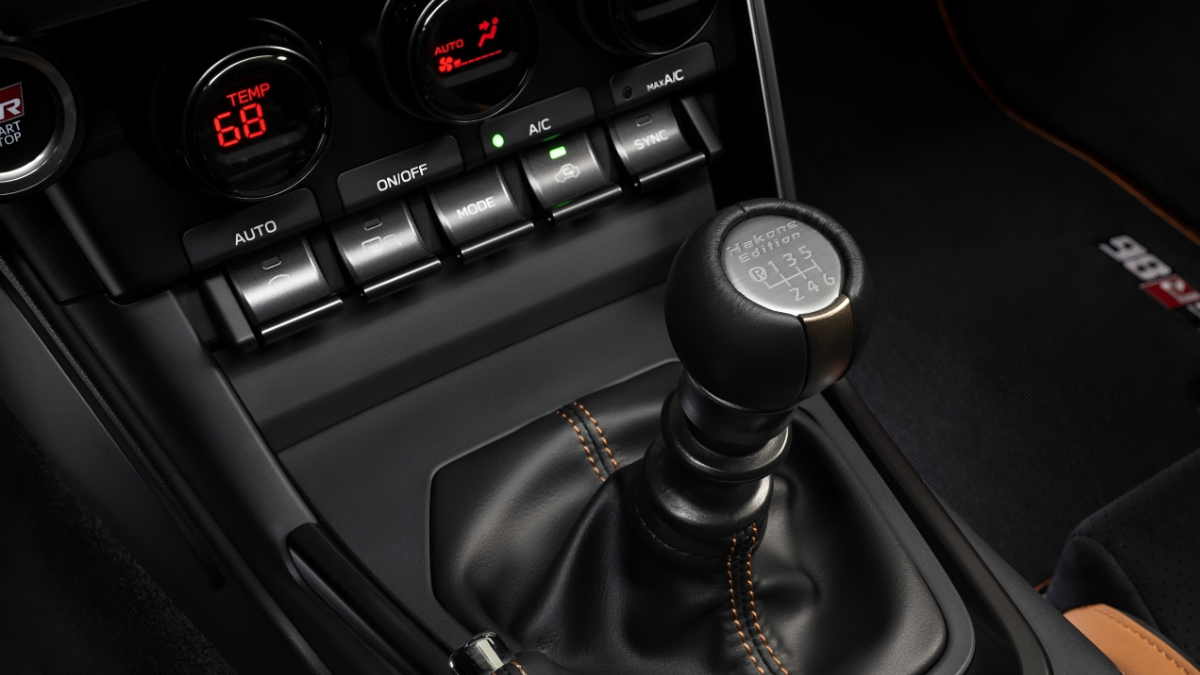
This part is not complicated. A manual still feels special because it asks more from the driver and gives more back when the road is good.
A stick shift makes even a familiar road feel a little more eventful:
- choosing the gear,
- timing the downshift,
- matching revs,
- and feeling the car do exactly what the hands and feet asked for.
That is why Hagerty keeps pointing toward manual-transmission enthusiast cars as part of the analog appeal still drawing people in. The value is not only mechanical. It is emotional. A manual makes the car feel less filtered.
This is also why people keep telling themselves the manual is the “real” enthusiast choice even when the rest of the ownership story has moved on. On a short drive, they are often right.
A used performance car with a manual usually feels best when:
- the road is interesting,
- traffic is light,
- the weather is good,
- and the drive is the event.
That is the fun-for-20-minutes argument, and it is a strong one.
Why automatics got much harder to dismiss
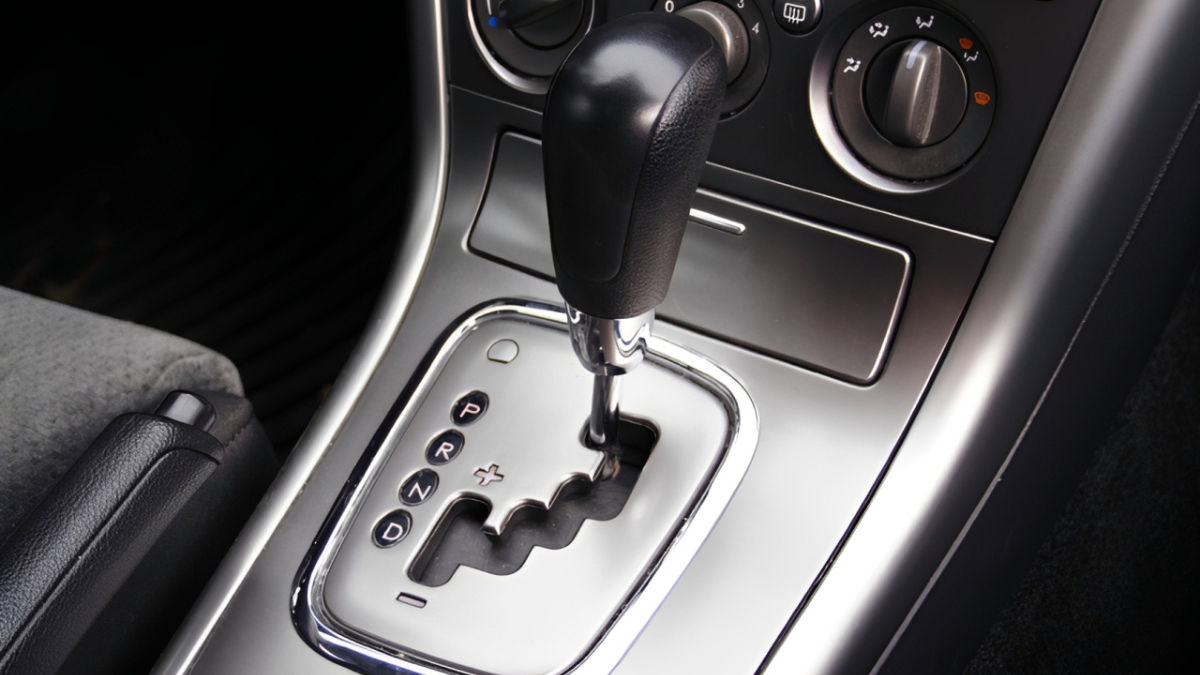
This is where old clichés break down.
Edmunds’ current manual-versus-automatic explainer says the old reasons for automatically choosing a stick have largely faded. That matters because a lot of used performance-car buying logic still comes from another era:
- manuals used to be clearly cheaper,
- often more efficient,
- and often the performance choice.
That is no longer a safe assumption.
Take the 2015 Volkswagen GTI. Car and Driver tested both the DSG and the manual and found the DSG was quicker to 60 mph and through the quarter-mile. That tells a very modern truth: in a used hot hatch that also has to commute, sit in traffic, and do a weekend highway run, the “less romantic” transmission can be the one that actually makes the most sense.
The same basic story keeps repeating higher up the price ladder.
With Porsche, the PDK case has become impossible to ignore. Car and Driver’s Carrera T and GT3 testing makes the broad point obvious: the automatic version is often the faster tool, and in a lot of road situations it feels cleaner and more relentless even when the manual version feels more special.
That matters on a real getaway because the trip is not made only of good corners. It is also:
- traffic,
- toll booths,
- hotel driveways,
- parking decks,
- two hours of steady highway,
- and one stretch of stop-and-go where the romance gets tested.
Three used-car patterns that explain the whole debate
This is where the article becomes useful instead of sentimental.
1) The hot hatch pattern: GTI logic
A used GTI is one of the clearest manual-vs-auto examples because it lives in the overlap between fun car and practical car.
The manual makes the GTI feel more old-school and more involved. The DSG makes it faster and usually easier to live with when the trip includes:
- traffic,
- urban stop cycles,
- and a partner or friend who may not care about your perfect rev-match.
That means the DSG GTI often works better as a getaway car, even if the manual GTI wins the emotional vote in the first half-hour.
2) The sports-car pattern: Cayman or 911 logic
This is the opposite case. In a Cayman or manual-friendly 911, the whole point is often the feel.
Car and Driver’s manual 718 Cayman review basically says the quiet part out loud: they would choose the manual over the PDK because the engagement is the reason to buy the car, even though the PDK is faster.
That is the strongest pro-manual argument in the article:
- if the car’s reason to exist is driver involvement,
- and the getaway is built around the drive itself,
- the manual still makes a ton of sense.
The trouble starts when buyers assume that logic applies equally to every used performance car.
3) The muscle/GT pattern: Mustang logic
This is where the automatic often starts looking very smart.
Car and Driver’s 2015 Mustang GT automatic review called the transmission nearly transparent and described the car as a bit more mellow and refined in that configuration. That matters because a used V-8 coupe or grand-touring performance car often works best when it can settle down.
For a weekend getaway, that automatic-Mustang logic is powerful:
- highway calm,
- less clutch work,
- easy low-speed driving,
- and still plenty of performance when the road opens up.
That is the kind of car that can feel slightly less alive in 20 minutes and much more correct after 300 miles.
What actually gets tiring on a real getaway
This is where a lot of buyers get too romantic.
A manual can become the wrong answer for a real getaway when:
- the clutch is heavy or awkward,
- the gearing is busy on the highway,
- the route includes city traffic before the fun road starts,
- or the cabin is already loud, stiff, and demanding.
That stack matters. A raw used performance car already asks the driver to tolerate:
- more road noise,
- a firmer ride,
- smaller cargo space,
- and sometimes weaker infotainment or comfort features.
Add a clutch to that, and the whole thing can swing from “special” to “a lot.”
Edmunds’ older long-term notes on cars like the M3 and WRX still point toward the same truth: clutch weight, friction point, and traffic behavior matter more than bench-racing purity once the car is part of real life.
What still makes manuals worth it
This article should not turn into “automatic good, manual obsolete.” That would be lazy and false.
A manual still makes the most sense when:
- the specific car is celebrated because of the gearbox,
- the route is the reason for the trip,
- the clutch and shift action are good,
- and the buyer wants the getaway to feel like an event, not just transportation.
That is why some used cars still make the manual decision easy:
- Miata
- Cayman
- certain 911 trims
- older lightweight analog cars that lose part of their identity without a third pedal
Those are not just transportation choices. They are mood choices.
What this means in the U.S. and Canada
The used-performance-car getaway logic works across both markets because the route is the same kind of test:
- highway miles first,
- traffic or town driving somewhere in the middle,
- and then the good road.
In the U.S., that often means long interstate stretches before the fun begins.
In Canada, it often adds mixed-weather relevance and long regional drives where fatigue starts to matter earlier than the buyer expected.
Either way, the same rule holds:
Manual wins the drive. Automatic often wins the trip.
What drivers should check before buying
1) Test the clutch in traffic, not just on the fun road.
That is where the truth usually starts.
2) Notice highway gearing.
A manual that feels alive at 45 mph can feel busy and loud at 75.
3) Think about who is coming with you.
A solo getaway and a partner trip are not the same transmission story.
4) Separate collector emotion from getaway logic.
Hagerty is right that manuals still matter. That does not mean they are always the smartest real-trip answer.
5) Buy the transmission that matches the route.
If most getaways start with traffic and end with fatigue, the automatic may be the better enthusiast choice than the internet will admit.
Bottom line
A manual used performance car still wins the first 20 minutes because it adds texture, effort, and that analog payoff people keep chasing. But a real getaway asks more than a perfect back road. It asks for traffic tolerance, highway calm, easier hotel and city driving, and less fatigue after a long day. That is why the honest answer in 2026 is not “manual always” or “automatic always.” It is simpler than that: manual is often better for the drive, automatic is often better for the trip. The right used performance car is the one where those two answers overlap enough that the weekend still feels worth it by the drive home.
SOURCES
- Manual vs. Automatic Transmission Pros and Cons: Which Is Better?
- Buy It Now Thank Us Later Hagertys 2026 Bull Market List Of 11 Appreciation Ready Enthusiast Cars
- 2015 Volkswagen GTI DSG Automatic
- 2010 Volkswagen GTI 3-Door DSG
- Tested: 2023 Porsche 911 Carrera T Goes Back to Basics
- Tested: 2017 Porsche 718 Cayman Manual
- Tested: 2015 Ford Mustang GT Automatic
- Best Used Sports Cars