
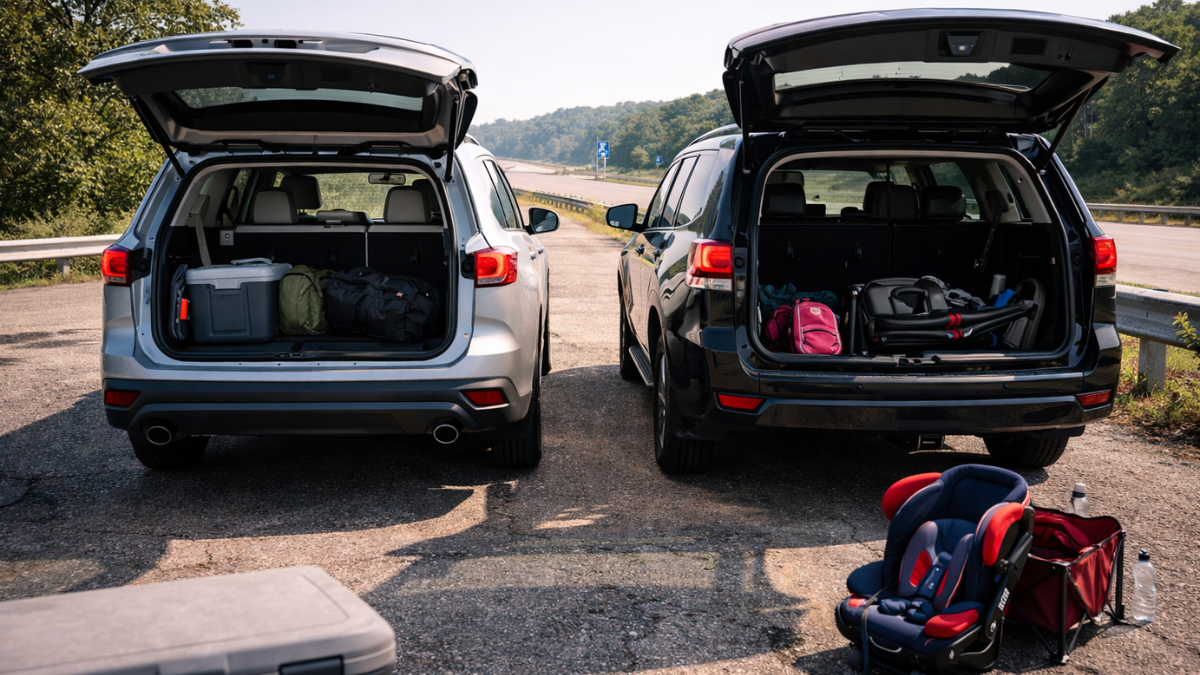
The roof box usually shows up when the family vehicle is solving the wrong problem. Toyota’s 2026 Grand Highlander launch materials say it has room for seven small roller bags with the third row up and up to 97.5 cubic feet of cargo space with the rear seats folded, while Kia’s current U.S. Telluride specs page lists 89.3/48.7/22.3 cubic feet behind the first, second, and third rows. That turns this into a clean road-trip question in 2026: which three-row SUV can handle a real family weekend with the third row still usable, the cooler still inside, and no rooftop workaround hanging in the wind?
Quick takeaways
- The Grand Highlander makes the cleaner “no roof box” case on paper if the trip includes people in all three rows and you still want real cargo space behind them.
- The Telluride still makes a strong family-weekend case if the priority is second-row space, straightforward family packaging, and a simpler “big midsize SUV” feel.
- The key number in this article is not maximum cargo with all the seats folded. It is how much space is left with the third row up.
- Toyota’s own seven-carry-on claim is the cleanest practical clue here. It tells buyers the Grand Highlander was designed around real family travel, not just brochure volume.
- The mistake families make first is buying for the one huge annual trip, then living with the wrong setup every other weekend.
What actually matters when the goal is “no roof box”
A lot of three-row SUV comparison pieces get this wrong. They start with horsepower, giant touchscreen talk, or folded-seat cargo numbers that only matter when the family is not actually using the third row.
This article needs a simpler test:
- third row up,
- weekend bags still inside,
- cooler still inside,
- stroller or sports bag still inside,
- and nobody forced into a rooftop workaround.
That changes the whole comparison.
A big three-row SUV can look spacious on paper and still fail this test if the cargo behind the third row is too shallow or awkwardly shaped. A slightly bigger, boxier family SUV can win it without feeling “full-size” because the layout is simply more honest about how families travel.
That is why the Grand Highlander versus Telluride comparison is good. Both are family-first three-row SUVs. The difference is where the space feels easier to use.
Why the Grand Highlander makes such a strong road-trip case

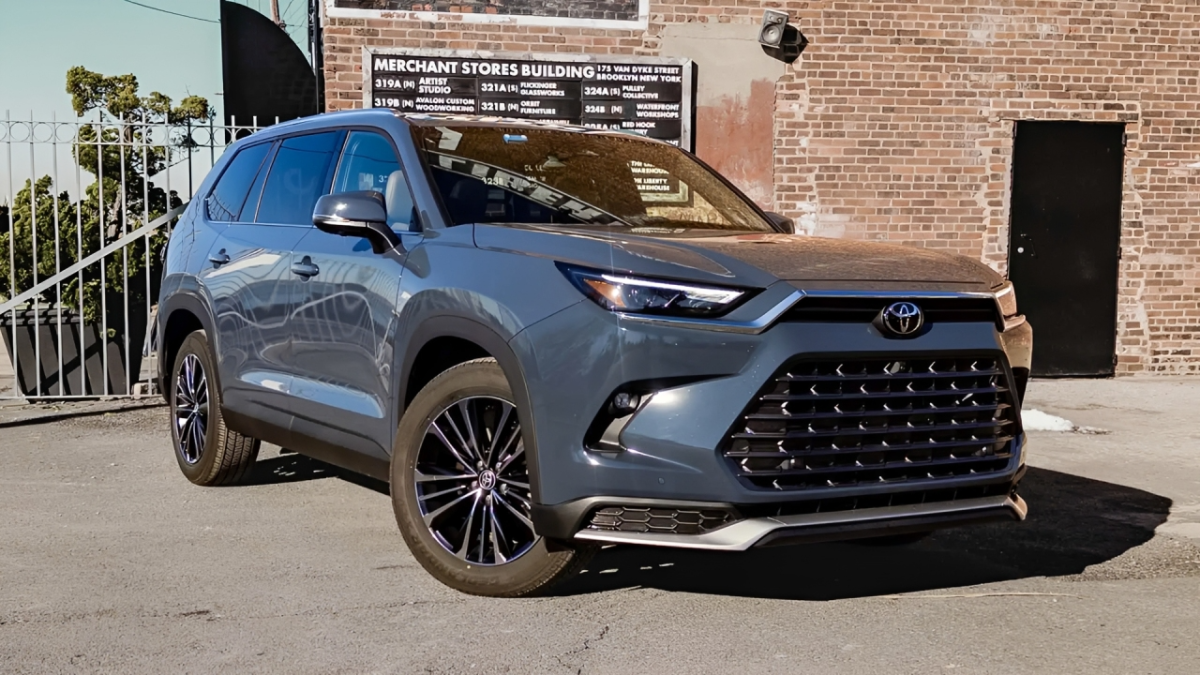
Toyota made this article easier than most automakers do. Its 2026 Grand Highlander press materials do not just list a cubic-foot number. They say the SUV can hold seven carry-on suitcases with the third row up. That is exactly the kind of real-world framing roadmapmag should care about, because it sounds like a family weekend, not a lab test.
Toyota also says:
- the third row has 33.5 inches of legroom and 37.2 inches of headroom,
- there are second- and third-row vents,
- and second-row bench or captain’s chairs are available depending on configuration.
That bundle matters. It means the Grand Highlander is not only “big.” It is built around the idea that the third row may actually be used by real people while the cargo area still carries real stuff.
The second reason the Grand Highlander is easy to defend here is simple layout. Toyota’s materials keep coming back to long-haul use:
- a quiet interior,
- standard acoustic glass on the windshield and front windows,
- seven USB-C ports,
- and family-friendly storage and accessibility details.
That is all on-lane for roadmapmag. It is not only about fitting bags. It is about reducing the amount of friction the family feels on stop three, not just stop one.
Where the Telluride still makes a real case
The Telluride should not be framed as the loser. That would miss why so many families still like it.
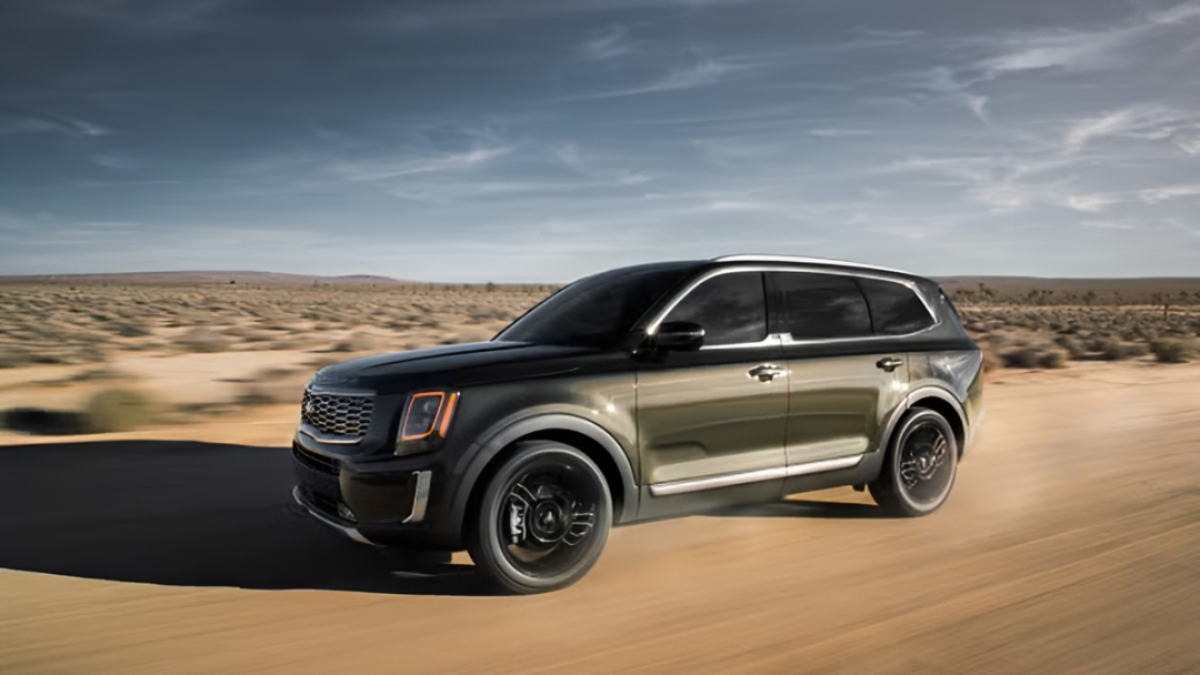
Kia’s current U.S. Telluride specs page is straightforward:
- 89.3/48.7/22.3 cubic feet behind the first, second, and third rows,
- 43.0 inches of second-row legroom,
- 32.1 inches of third-row legroom,
- and 180.6 cubic feet of total interior volume.
That is still a useful, practical three-row SUV. It has a real third row. It has real cargo behind it. And it still makes sense for families who need:
- an 8-seat layout,
- a roomy second row,
- and a simpler “one family SUV does everything” shape.
The Telluride’s problem in this specific article is that the Grand Highlander is just harder to beat on third-row-up cargo logic. Kia gives a clear behind-third-row number, and 22.3 cubic feet is not bad at all. It just reads more like “manageable” than “pack it and forget it.”
That distinction matters because the title promise here is not “Which 3-row SUV is best?” It is “Which one fits a weekend without using a roof box?”
The Telluride can absolutely do that for many families. It just does it with less visible margin.
What families get wrong first
Mistake 1: shopping max cargo instead of third-row-up cargo
This is the classic trap. A lot of three-row SUVs advertise giant folded-seat numbers. Families do not drive to the cabin with all the back seats flat.
The practical question is:
What fits when the third row is still available?
On that measure, Toyota’s seven-carry-on claim gives the Grand Highlander a sharper, more useful road-trip story.
Mistake 2: overvaluing “rugged” vibes
A lot of family buyers drift toward upright, rugged-looking three-row SUVs because the image feels safer or more capable. But the roof-box question is not solved by image. It is solved by usable space and easier packing geometry.
Mistake 3: forgetting the stop cycle
A weekend trip is not just loading the car once. It is:
- gas stop,
- food stop,
- check-in stop,
- maybe one more grocery stop.
If the bags are stacked awkwardly behind row three, or the stroller blocks everything, the SUV will feel smaller than the spec sheet suggests.
What the trip changes on a real family weekend
This is where the comparison gets more useful.
Grand Highlander works better when…
- the third row gets used often,
- the family travels with a stroller, cooler, and multiple soft bags,
- the goal is to avoid rooftop drag and packing drama,
- and the driver wants the cabin to feel more “long-haul family bus” than “upright midsize SUV.”
Toyota’s own description of the Grand Highlander as ready for adults or kids in the third row, plus the seven-carry-on claim, makes this the cleaner road-trip packing answer.
Telluride works better when…
- the second row matters more than the extra packing margin,
- the family likes the Telluride’s packaging and style,
- the trip load is moderate rather than “everyone plus everything,”
- and the buyer wants a well-known family three-row shape that still carries meaningful space behind row three.
Kia’s 22.3-cubic-foot number behind the third row is enough for a lot of families. It just leaves less margin for the “stroller + cooler + bags” version of the weekend.
What this means in the U.S. and Canada
This article travels well because the family-use pattern is the same in both markets:
- highway miles,
- kid gear,
- repeated stops,
- and too much stuff for a sedan but not quite enough to justify a full-size truck SUV.
In the U.S., the “no roof box” question often becomes a highway-efficiency and packing-stress question. In Canada, it lands with the same practical payoff, plus a little more emphasis in some regions on mixed-weather travel and keeping gear inside the vehicle.
Either way, the point is not only cargo space. It is avoiding friction:
- less rooftop drag,
- less repacking,
- less blocked rear view,
- and fewer moments where the family SUV feels full before the trip really starts.
What drivers should check before buying
1) Load the third row in your head, not just the cargo floor.
If the third row is part of your real life, shop with it up.
2) Bring the biggest real item mentally first.
Usually that is the stroller or the cooler, not the suitcase.
3) Ask whether the family trip needs eight seats or more luggage margin.
That answer changes the second-row choice too.
4) Think about the stop cycle.
The best three-row SUV is not just the one that swallows bags. It is the one that lets you grab one thing without rebuilding the trunk.
5) Treat the roof box as a failure signal, not a normal assumption.
If the vehicle needs rooftop cargo for ordinary family weekends, the fit may already be off.
Bottom line
For a family weekend road trip without using a roof box, the Grand Highlander makes the cleaner case because Toyota has done the rare useful thing and translated cargo into a real packing claim: seven carry-on suitcases with the third row up. The Telluride remains a very credible family three-row SUV, with real behind-third-row space and a roomy second row, but it gives buyers less obvious packing margin when the whole family and the weekend kit are both in play. The better fit comes down to one simple question: is this a three-row SUV that occasionally hauls a lot, or a three-row SUV that needs to haul a lot while all three rows still matter?