
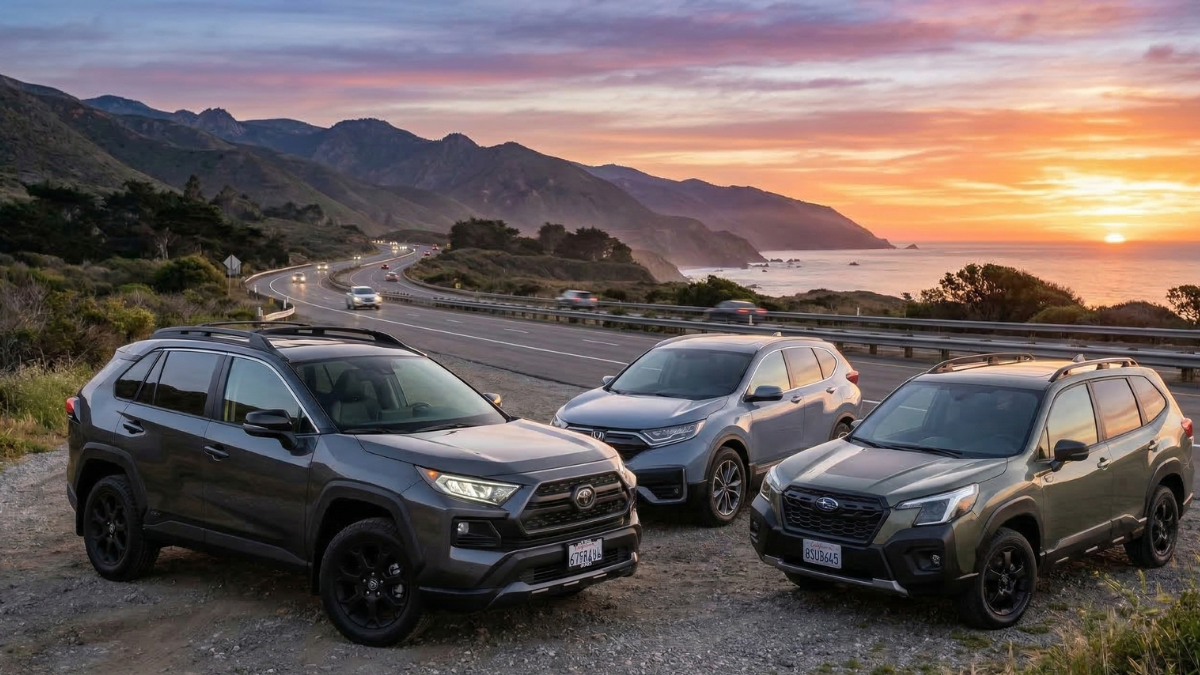
According to Honda’s official 2026 CR‑V trim comparison, cargo volume is listed as 39.3 cu ft behind the second row and 76.5 cu ft with the seats folded on several trims, while some hybrid trims list smaller “rear seat up” figures (as low as 34.7 cu ft) even with the same 76.5‑cu‑ft max. Toyota’s 2026 RAV4 page, meanwhile, lists up to 37.8 cu ft cargo capacity and highlights “up to” hybrid MPG figures, and Subaru’s 2026 Forester page positions the model around standard Symmetrical AWD with fuel economy “up to” 33 mpg. The two-day trip question is less about one spec and more about friction: how easy it is to load, live, and unwind for 36–48 hours without feeling like the car is “work.” This guide uses checkable specs plus review notes from Car and Driver to rank the three most common weekend-use wins: packing, cabin calm, and low-hassle tech.
Quick takeaways
- Least-hassle “base camp” feeling: the CR‑V tends to win on shape + usable cargo numbers for a two‑day pack, and Honda’s trim chart makes the cargo differences auditable by trim.
- Simplest powertrain story (2026): Car and Driver and Toyota’s press materials describe the 2026 RAV4 as moving to a hybrid / plug‑in hybrid-only lineup, which can reduce “trip math” if fuel stops are part of the stress.
- Best “standard AWD, go anywhere” posture: Subaru’s 2026 Forester keeps standard Symmetrical AWD messaging front and center and emphasizes predictable all‑weather traction.
- Hidden gotcha: cargo and MPG claims can vary by trim; for the CR‑V, Honda’s own chart shows 39.3 vs 36.3 vs 34.7 cu ft “rear seat up” depending on trim.
- The real tie‑breaker: on a two‑day trip, the “easiest” SUV is usually the one with (1) low loading friction, (2) calm driver-assist behavior, (3) the fewest tech annoyances.
What “easy to live with” means on a two-day trip
A 36–48 hour trip is long enough to expose little annoyances, but short enough that most people won’t change their normal routines. The easiest SUV is the one that reduces these three friction points:
1) Packing friction (loading height, opening shape, tie-down points, and how flat the floor feels)
2) Cabin calm (seat support, noise, and whether the highway drive feels “busy”)
3) Tech friction (navigation/CarPlay connection, driver-assist consistency, and simple controls)
That framing keeps the piece “2026-proof” because it is not tied to one MSRP or a single MPG headline.
1) Packing friction: which one feels like the easiest “weekend gear” car?
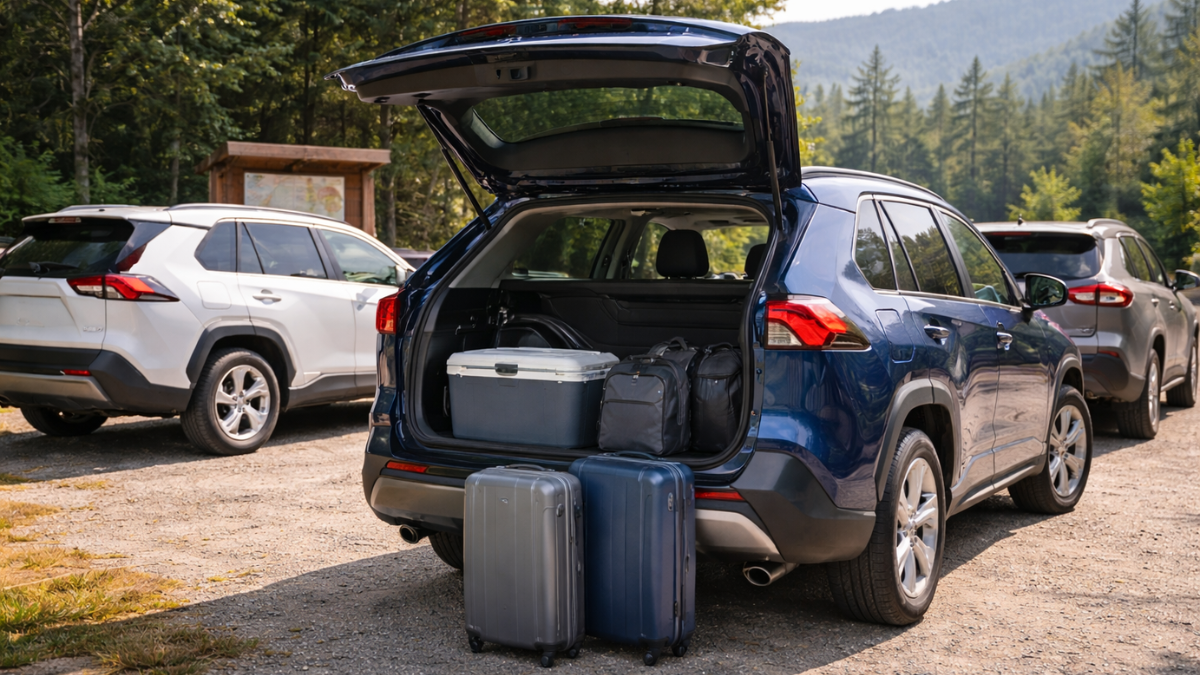
The fastest way to spot an easy-to-live-with SUV is to run a simple packing test: cooler + two carry-ons + one duffel, then see what happens to the rear visibility and the passenger space.
Honda CR‑V: the cleanest, most checkable cargo story
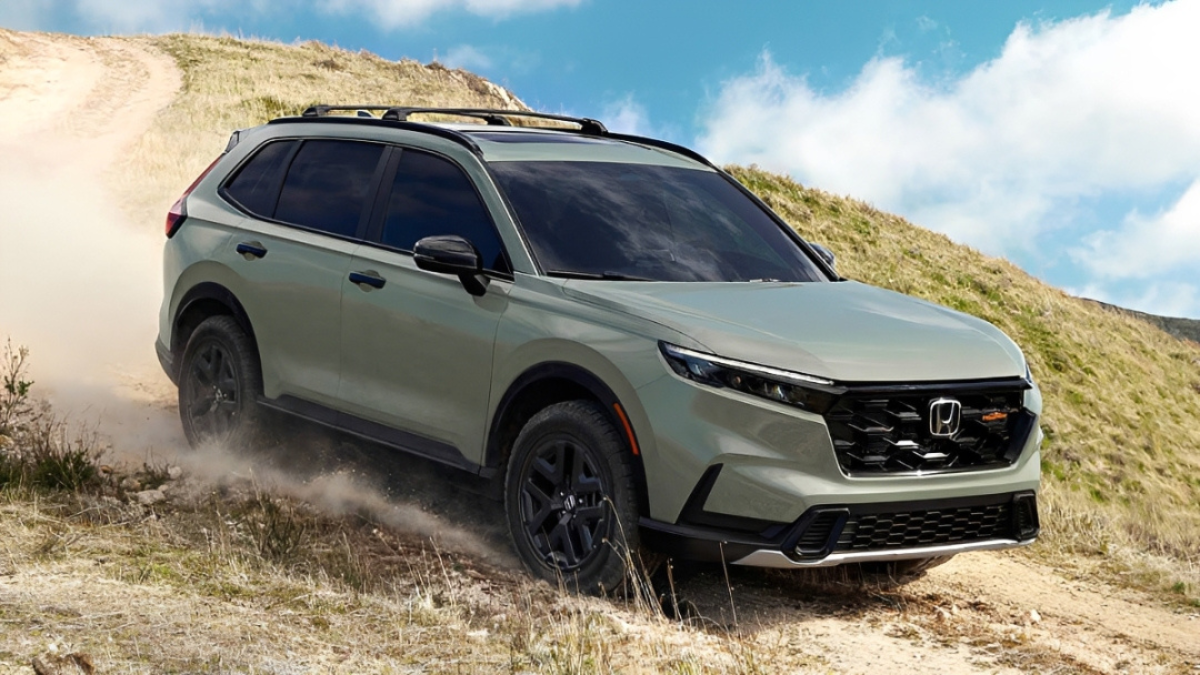
Honda’s 2026 CR‑V trim comparison provides a rare level of clarity on cargo by trim: multiple trims list 39.3 cu ft behind the rear seats and 76.5 cu ft with seats folded, while some hybrid trims list 36.3 and one lists 34.7 cu ft “rear seat up” on the same chart. That matters because a two‑day trip often lives in rear-seat-up space—no one wants to fold the second row just to fit a cooler.
Practical weekend note: if shopping a hybrid, verify the exact trim’s “rear seat up” number in the Honda chart and treat that as the packing baseline.
Toyota RAV4: slightly smaller “seats-up” number, but simple headline
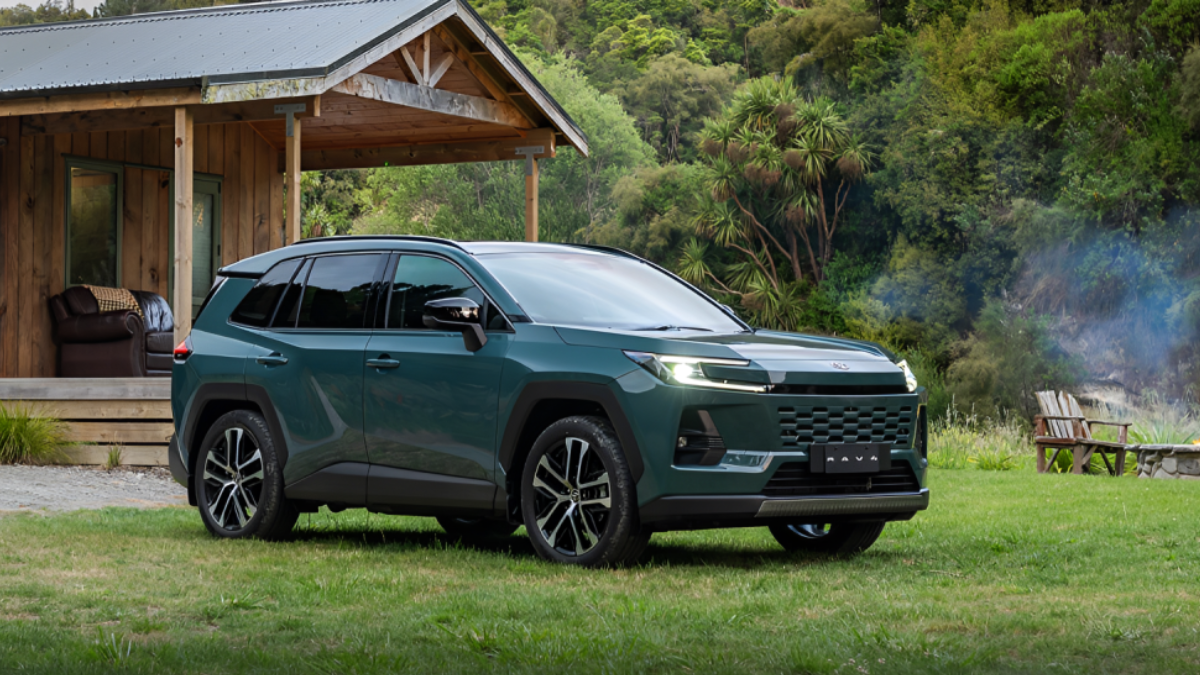
Toyota’s 2026 RAV4 page lists up to 37.8 cu ft cargo capacity. It is close to the CR‑V in headline magnitude, but the “up to” wording signals configuration variation. Car and Driver also frames the 2026 RAV4 as redesigned and hybrid-only, which can make a two‑day trip feel simpler if the driver wants fewer fuel decisions. That said, “easy packing” is still about the opening and floor shape, not the raw number.
Subaru Forester: less seats-up cargo, but a very usable box
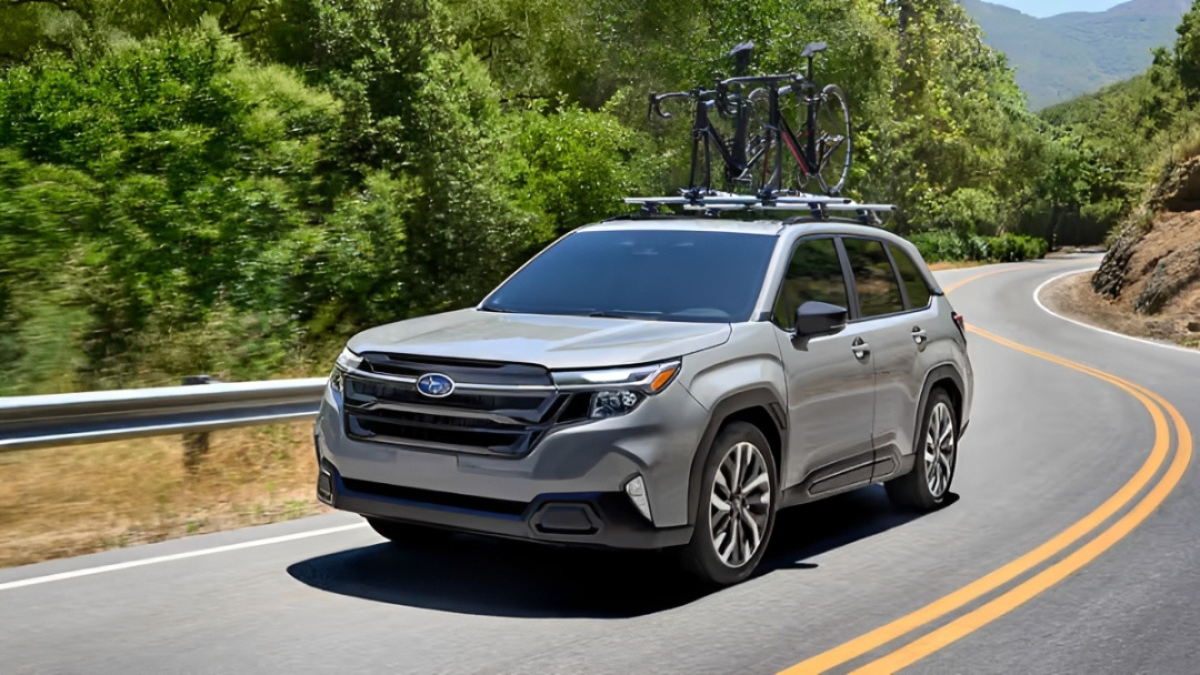
Car and Driver lists the Forester at about 30 cu ft behind the rear seats and about 75 cu ft with seats folded (and notes the spaciousness advantage versus some rivals). On two-day trips, that can still work well because the Forester’s layout tends to feel “upright” and easy to stack—especially for soft bags. The tradeoff is that a hard cooler plus luggage can fill the seats‑up space faster, which may push a roof box decision on some weekends.
2) Cabin calm: which one reduces long-drive stress on day one?
Day one is usually the longer drive. “Easy” means the driver arrives less tired and the cabin does not amplify small annoyances.
CR‑V: steady comfort-and-space messaging
Car and Driver’s CR‑V coverage consistently emphasizes practicality and strong overall execution in the segment, and the official Honda spec sheet provides a clear view of passenger volume differences by trim. For a two-day trip, the CR‑V’s advantage is often that nothing feels like a compromise: reasonable cargo, decent rear seat, and fewer “busy” behaviors in normal driving.
RAV4: new-generation tech can help, but verify the feel
For 2026, Car and Driver says the RAV4 is comprehensively redesigned and now offered only as hybrid and plug‑in hybrid. Toyota’s press materials also describe a move to a 100% electrified RAV4 lineup for 2026. For cabin calm, hybrids can help in stop‑and‑go near destinations, but on the highway, the “easy” factor still comes down to ride/noise tuning and driver‑assist smoothness. The RAV4 is a strong candidate if the buyer values the hybrid-only simplicity, but it is still worth a long test drive because redesigns can change noise and ride character.
Forester: standard AWD confidence as the weekend “feel”
Subaru markets the 2026 Forester around standard Symmetrical AWD and confident traction. That matters because “easy to live with” is also psychological: if weather shifts or a trailhead road looks rough, a predictable AWD system reduces decision stress. If the weekend plan is outdoors‑heavy, the Forester can feel easiest simply because it lowers hesitation.
3) Tech friction: the small things that ruin a short trip
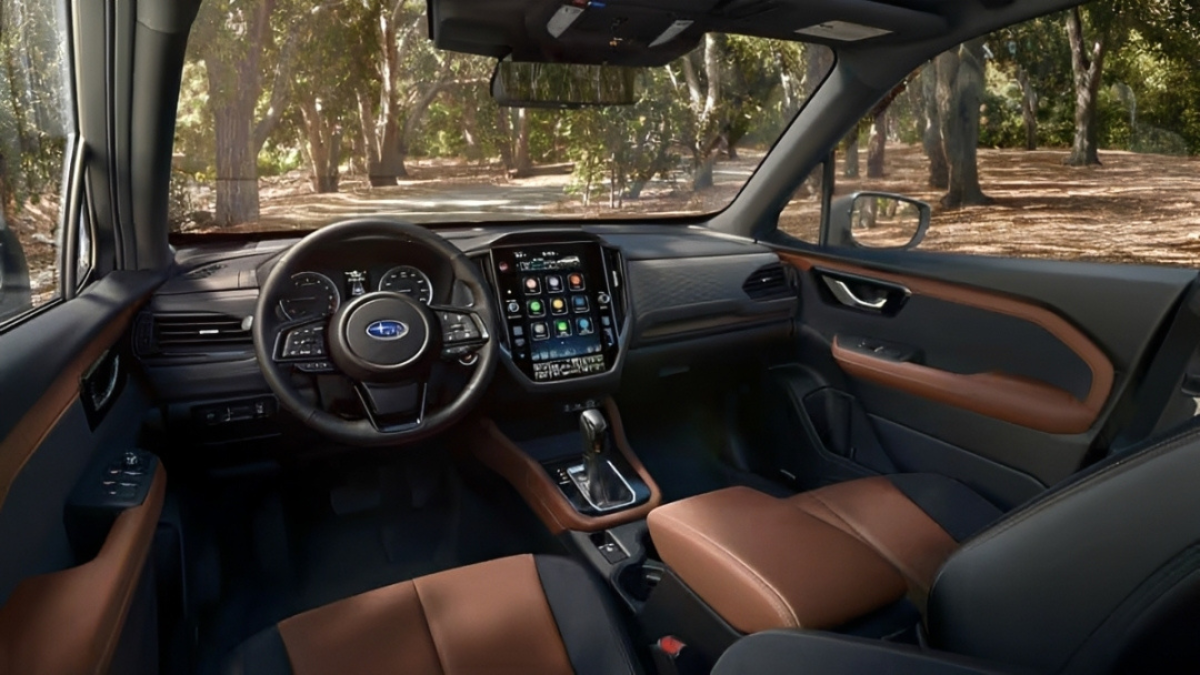
On two-day trips, the worst tech outcomes are not “missing features.” They are small interruptions: phone pairing issues, confusing menus, or driver‑assist that requires constant correction.
A reliable method is to test these three items in a single drive:
- Phone connection: connect, start navigation, and take one call.
- Driver-assist steadiness: try a 10-minute motorway segment with lane‑keeping and adaptive cruise where legal.
- Climate + audio simplicity: adjust temperature and audio without looking down too long.
This is where “easiest to live with” becomes personal. A buyer who hates screen menus may prefer the vehicle with simpler physical controls even if the display is smaller.
What changed for 2026 that matters on weekends
Two 2026 updates are especially relevant for a two-day trip shopper:
- RAV4 redesign and electrified lineup: Car and Driver describes the 2026 RAV4 as redesigned and hybrid / plug-in hybrid-only, and Toyota’s pressroom materials position the lineup as 100% electrified for 2026. That’s a meaningful “ease” shift if the goal is fewer drivetrain choices and predictable efficiency.
- Forester safety update note: IIHS notes changes beginning with 2026 Forester models to improve rear occupant safety in its updated moderate overlap front test. That does not tell you “comfort,” but it does indicate Subaru made a concrete change tied to crash-test performance.
What this means in the U.S.
For U.S. weekend trips, “easy” usually means:
- long highway stretches at 70–80 mph,
- parking lots (tight spaces, hotel garages),
- and stop-and-go near tourist centers.
In that context:
- CR‑V often feels easiest if the trip is “normal”: hotel + restaurants + one scenic drive.
- RAV4 often feels easiest if the buyer wants the clean simplicity of a redesigned, electrified lineup and expects mixed city/highway driving.
- Forester often feels easiest if the weekend plan includes weather uncertainty, trailheads, or rougher access roads, where AWD confidence matters as much as fuel.
What you can do: pick the easiest SUV in one weekend-sized checklist
Use this method to choose without overthinking:
1) Do the 4‑item packing test: cooler + two carry-ons + duffel (rear seats up).
2) Measure “reach and load”: open the liftgate, load the cooler, and note if the lip feels high or awkward.
3) Run the 10‑minute tech script: phone pairing, nav, one call, driver‑assist segment, climate/audio.
4) Decide on the stress trigger: packing, highway fatigue, or tech annoyance—choose the SUV that reduces the one that bothers most.
Bottom line
For a two‑day trip, “easy to live with” is mostly about reducing friction, not chasing a single spec. On the most checkable packaging:
- the CR‑V has the clearest, trim‑specific cargo transparency and tends to deliver the least overall friction,
- the RAV4 is compelling in 2026 because the redesign and hybrid-only posture can simplify weekend fuel planning,
- and the Forester stays a strong “confidence” pick when the trip includes uncertain weather or rougher access.
The smartest move is to validate the winner with a 30‑minute drive and one real packing attempt—because a two‑day trip punishes small annoyances more than it rewards one perfect headline number.