
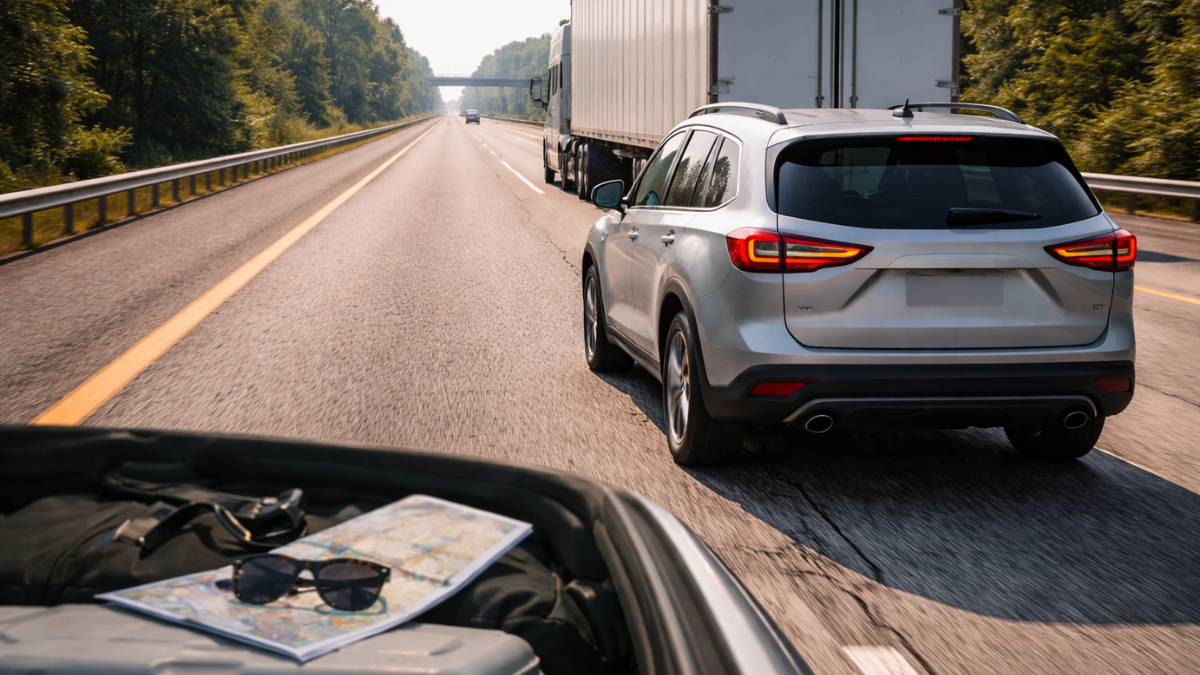
The badge on the tailgate does not answer this one. The pass does. With gas prices climbing again, the old engine debate feels less like bar talk and more like trip math. AAA said on March 26 that the U.S. average for regular had jumped to $3.98 a gallon, up $1 in a month. That puts real pressure on the question many drivers actually care about on a loaded weekend run: when a semi is eating up the right lane and the passing window is short, does a modern turbo four feel better now, or does the old V6 still make the cleaner case?
Quick takeaways
- A good turbo four often feels quicker in the first half of a highway pass because modern turbo torque arrives earlier and hits harder in the middle of the rev range.
- A good V6 often feels better in the second half of the pass because it is smoother, less strained, and usually needs less drama from the transmission.
- The best answer depends on load. Two people and bags favor the turbo four more than a full cabin, cooler, dog, and long grade do.
- Gas prices change the emotional math. When regular is back near $4 a gallon, the V6 has to justify the extra appetite with smoother, easier progress.
- The wrong engine usually reveals itself at 55 to 75 mph, not at the stoplight.
What a semi pass actually asks from an engine
This is where a lot of engine writing goes wrong. Peak horsepower alone does not answer the question.
Passing a semi on a highway usually depends on four things:
- how much shove the engine has in the middle of the rev range,
- how quickly the transmission drops to the right gear,
- how loaded the vehicle is,
- and whether the engine feels calm or frantic while doing the job.
That is why this is a better roadmapmag question than “which engine is faster?” A real weekend pass is not a drag race. It is a short burst of confidence in a vehicle that is already loaded, already warm, and already doing 60 or 70 mph.
Why turbo fours feel so strong at first
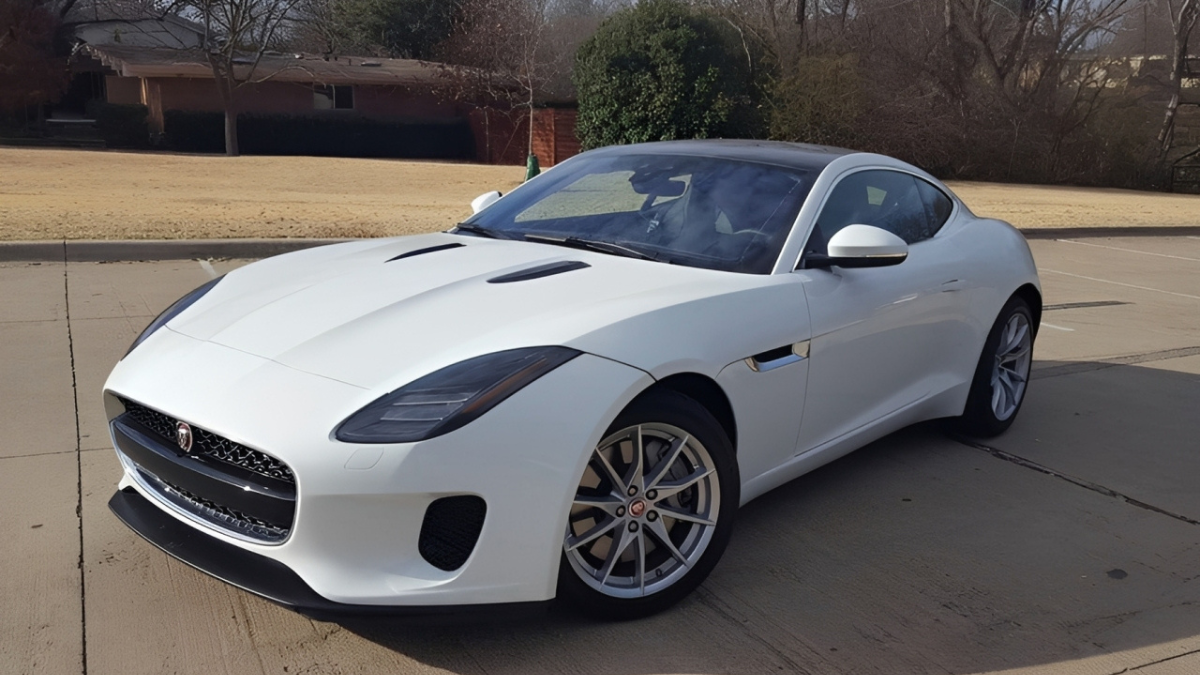
A modern turbo four often wins the first impression because the torque shows up low.
The cleanest current SUV example is the 2026 Mazda CX-50 2.5 Turbo. Mazda says it makes up to 256 hp and 320 lb-ft on premium fuel, or 227 hp and 310 lb-ft on regular. The important part for this story is not just the peak number. It is the shape of the delivery. Even on regular, that is a lot of torque for a compact or midsize crossover. Car and Driver calls the CX-50’s turbo four lively, and that word matters because it matches the passing feel. A turbo four like this tends to feel eager when the driver rolls in for a 50-to-70 move.
The same logic shows up in bigger family hardware too. Chevrolet’s current Traverse uses a 2.5-liter turbo four with 328 hp and 326 lb-ft, and Chevrolet says it replaces the old V6 with better performance and greater efficiency. On paper, that is exactly why modern turbo-four defenders feel so confident. The numbers are no longer small.
Why it works:
- torque arrives earlier,
- the engine usually feels strong in everyday passing ranges,
- and a modern automatic can keep it right in the boost.
On a light or moderate load, this can feel better than an older-school V6 because the engine gives the shove sooner.
Why V6s still feel cleaner on a real trip
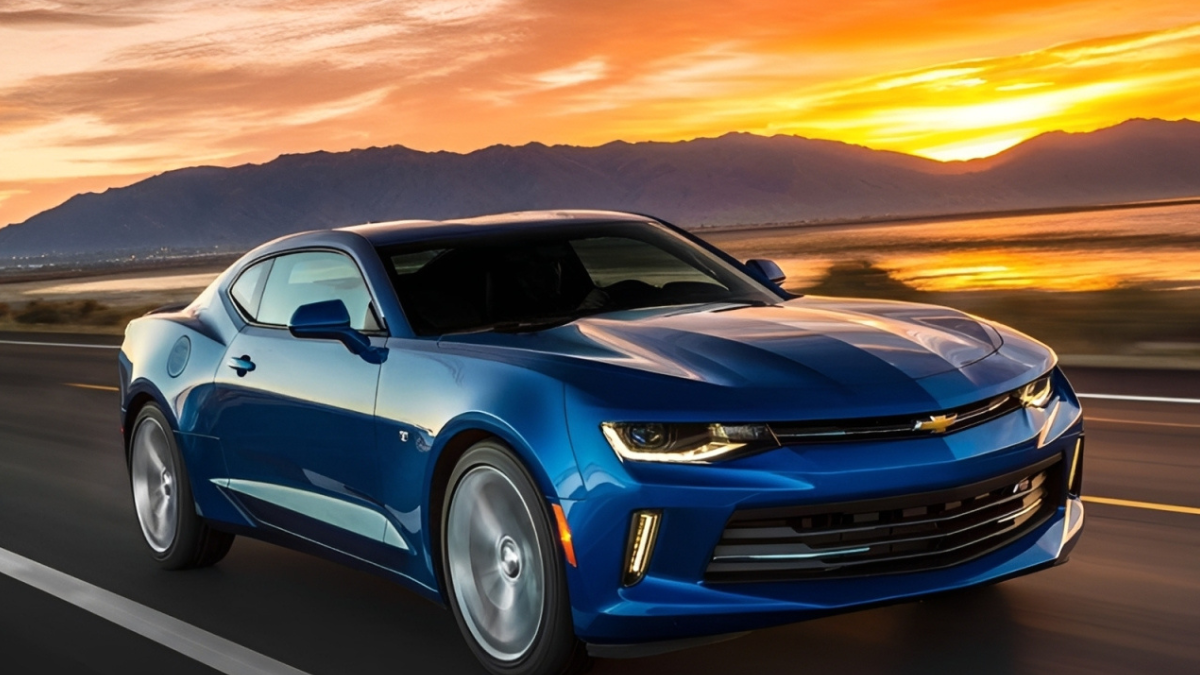
Turbo-four power is not the same thing as V6 confidence.
The 2026 Honda Pilot is the easiest current V6 case to make. Honda says the Pilot’s 3.5-liter V6 produces 285 hp and 262 lb-ft, and Car and Driver says its throttle response is linear while the 10-speed automatic shifts smoothly. Car and Driver’s updated 2026 Pilot coverage also says added sound deadening and laminated glass helped make the cabin quieter at speed. Edmunds goes straight at the use case and says the Pilot’s comfortable, composed ride keeps people happy on longer road trips.
That combination explains why V6s still win this argument for a lot of real drivers:
- the response feels smoother,
- the engine usually sounds less strained when asked to keep pulling,
- and the whole pass feels less busy.
The torque number is lower than some turbo fours. But the experience can still feel better because the engine is not leaning so hard on boost, gearbox timing, and that “now-now-now” shove that makes a turbo four feel lively at first and slightly wound up later.
A V6 usually feels best when:
- the cabin is full,
- the route includes long grades,
- the pass happens after hours on the road,
- and the driver wants calm more than drama.
Where the turbo four starts to lose the argument
This is the second layer that makes the article useful.
A turbo four usually loses ground in three situations:
1) Full-family load
Once the SUV has people, coolers, backpacks, a dog, and one long incline in the mix, the turbo four can still pass cleanly. It just tends to do it with more noise and more transmission work.
2) Repeated passes
One quick move can feel great. Repeated highway passes on a hot day start revealing the difference between “punchy” and “effortless.”
3) The buyer values calm over kick
Some drivers like the little surge. Others just want the vehicle to gather speed without ever feeling theatrical. That second group usually ends up liking the V6 more.
This is where the gas-price problem gets interesting. When fuel gets expensive again, the turbo four becomes easier to defend because it often gives more of the useful shove people care about while asking less at the pump. But if the road-trip priority is calm, loaded, repeatable passing, the V6 still feels more settled.
The broad-reader answer in 2026
The truth is that neither engine “wins” in every version.
A turbo four makes more sense when…
- the SUV is compact or midsize,
- the trip is mostly two adults plus bags,
- fuel cost matters,
- and the driver likes that quick, midrange shove.
The current Mazda CX-50 turbo is a good example of that formula. It is not a lazy engine, and the numbers back up why it feels lively.
A V6 makes more sense when…
- the SUV is a family road-trip machine,
- the cabin is often full,
- the route includes grades or long highway stretches,
- and the buyer wants the pass to feel smooth, not busy.
The current Honda Pilot is the clean mainstream example because it puts the V6 strengths in the exact place a road-trip reader would notice them: quietness, linear pull, and smooth shifts.
What expensive gas changes
This is the part that keeps the article from becoming an enthusiast cliché.
If gas were cheap, more drivers would simply buy the engine that feels nicest to them and move on. With gas climbing again, the pass has to justify the pump.
AAA’s March 26 price jump matters because it changes what buyers tolerate:
- the V6 has to feel meaningfully smoother to justify the extra fuel,
- the turbo four has to feel good enough under load to keep the mpg advantage worth it.
That is why this article is not really anti-turbo or pro-V6. It is about value under pressure.
A turbo four that feels punchy enough most of the time becomes more attractive when every fill-up stings.
A V6 that feels dramatically calmer with a full family still has a reason to exist.
The mistake is pretending those two experiences cost the same or feel the same once the road gets long.
What this means in the U.S. and Canada
This topic lands well across both markets because the real-world use case is nearly identical:
- long highway stretches,
- loaded family travel,
- mixed weather,
- and a need for enough passing confidence without overbuying engine.
In the U.S., the article lands as a fuel-cost and road-trip-math story.
In Canada, it also picks up a little more mixed-weather relevance because the “calm under load” side of the V6 can matter when conditions are less perfect.
The core takeaway does not change. The best passing engine is the one that matches the size of the SUV, the weight of the trip, and the driver’s tolerance for pump pain.
What drivers should check before buying
1) Pass at real speed, not city speed.
A turbo four can feel great at 35 mph and different at 70.
2) Bring the load in your head.
Picture the real trip: people, bags, cooler, grade, heat, and one semi in the right lane.
3) Listen to the engine.
Some drivers do not mind a little busy noise. Some hate it.
4) Notice the transmission.
The best pass is not just engine torque. It is how fast and how cleanly the gearbox gives the engine what it needs.
5) Check the highway mpg and the fuel requirement.
That is where the V6 vs turbo-four argument stops being theory.
Bottom line
If the question is which engine actually feels better passing semis on the highway, the honest 2026 answer is split. A modern turbo four often feels punchier at the start of the move because it makes useful torque lower and hits harder in the middle. A good V6 usually feels better by the end of the pass because it is smoother, quieter, and less strained when the SUV is full and the road gets long. With gas expensive again, the turbo four makes more sense for lighter, budget-conscious weekends. The V6 still makes the cleaner case for fuller, calmer, family-style road trips.