

According to the IRS, the 2026 business standard mileage rate is 72.5 cents per mile, a widely used “all‑in” yardstick that bundles fuel, maintenance, depreciation, insurance and other ownership costs into one number. AAA’s Your Driving Costs 2025 study shows why this matters: its average cost-per-mile varies by vehicle category (for example, a Small Sedan is lower than many SUVs), meaning “my car is paid off” can still hide real wear costs. Meanwhile, the FTC’s rental guidance notes that collision damage waivers (CDW/LDW) are optional products and that many credit cards offer CDW coverage only if the renter declines the rental company’s coverage. The 2026 question is not “renting is always cheaper.” It’s when the break-even line flips—distance, vehicle type, and risk tolerance—so the weekend stays low-drama.
Quick takeaways
- Use two numbers, not one: “own car cost” is not just fuel. The IRS 72.5¢/mile (2026) is a fast all‑in proxy; AAA’s cost-per-mile categories show the all‑in cost varies by vehicle type.
- The math often flips on longer miles: the more miles you add in a short window, the more wear cost matters—and the more a fixed-price rental can start to look attractive.
- The biggest rental surprise is not the base rate: it’s taxes/fees and coverage decisions. The FTC notes CDW/LDW is optional, and credit-card CDW typically requires declining the rental company coverage.
- Gas can swing fast: EIA’s weekly U.S. regular gasoline series shows it jumped from $3.015/gal (03/02/2026) to $3.502/gal (03/09/2026), which can change the weekend’s fuel math.
- Best decision method: calculate break-even miles using your expected rental total and your own car’s per-mile cost (IRS or AAA category), then decide based on risk and convenience.
Step 1: Define the weekend you’re pricing
“3-day weekend” can mean:
- a 120-mile round trip to a nearby town, or
- a 900-mile loop with long highway days.
The math flips at different points depending on mileage and what your own car costs to operate.
Start with two inputs:
1) Weekend miles (round trip + local miles)
2) Passenger/gear needs (space, AWD, child seats)
Then choose your cost lens.
Step 2: The two clean ways to price “your own car”
You have two audit-friendly ways to price what your own car costs for a weekend.
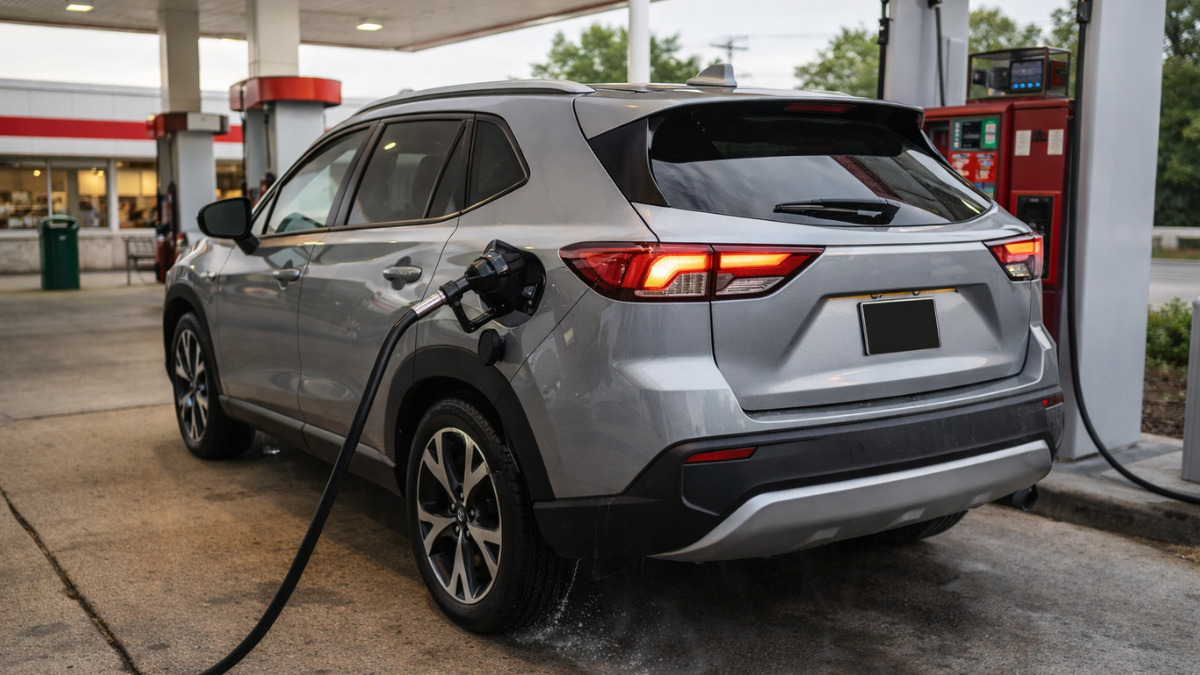
Method A: IRS all-in mileage rate (fast reality check)
The IRS set the 2026 business standard mileage rate at 72.5¢/mile. It is not “your exact cost,” but it’s a solid way to avoid the classic undercount (fuel only).
Own-car all-in estimate = weekend miles × $0.725
Example (math only):
- 400 miles × $0.725 ≈ $290 all-in
- 800 miles × $0.725 ≈ $580 all-in
Method B: AAA category cost-per-mile (more tailored to vehicle type)
AAA’s Your Driving Costs study publishes average costs by vehicle category. It shows why a small sedan can be meaningfully cheaper per mile than many SUVs, and why larger vehicles can cost more per mile even if fuel is similar.
Use this when your weekend vehicle choice is also a vehicle-type choice.
Own-car category estimate = weekend miles × (AAA cost-per-mile for your category)
Step 3: Price the rental the way it actually shows up on a receipt
A rental total for a 3-day weekend usually has four parts:
1) Base rate (daily/weekly rate)
2) Taxes and fees (airport concessions, facility fees, local taxes)
3) Coverage choices (CDW/LDW, liability, personal accident)
4) Fuel (same gallons math as your own car)
Important: the FTC explains CDW/LDW is optional, and that many credit cards offer CDW coverage only if the renter declines the rental company’s coverage. That decision changes the rental total and the stress level.
Practical approach:
- If the trip is low-risk and you have a credit card benefit you trust, rental coverage may be simpler.
- If risk tolerance is low or coverage is uncertain, buying coverage can make renting more expensive—but also more predictable.
Step 4: The “when math flips” break-even formula
This is the simplest version that stays honest:
Break-even miles = (Rental total for the weekend) ÷ (Your car all-in $/mile)
If your weekend miles are above break-even, renting can start to look cheaper.
If your weekend miles are below break-even, driving your own car is often cheaper.
Example 1 (structure only, no invented prices)
- Suppose your rental total (rate + fees + coverage you choose) is R
- Your all-in cost per mile is C (use $0.725 or your AAA category rate)
- Break-even miles = R ÷ C
This makes the decision clean even when prices change.
Example 2 (clearly hypothetical numbers to show how the flip works)
- Hypothetical rental total R = $330 for three days (all-in)
- Own-car cost per mile C = $0.60 (a vehicle with relatively low all-in cost)
- Break-even miles = $330 ÷ $0.60 = 550 miles
On a 300-mile weekend, own car likely wins.
On a 700-mile weekend, rental starts to look attractive—especially if it’s a newer, more efficient car.
Step 5: The “hidden flip” triggers that are not miles
Even when the break-even miles say “own car,” renting can still be the smarter weekend choice for non-math reasons.
1) Your car has a real reliability risk
If the car is due for tires, brakes, or has an intermittent warning light, the expected cost of a breakdown can swamp the simple per-mile math.
2) You need a different shape for this weekend
Child seats + stroller + cooler, ski gear, or five passengers can make the “wrong vehicle” stressful. If the weekend requires a bigger or more weather-ready vehicle than your daily car, a rental can lower stress even if it costs more.
3) Airport vs neighborhood pickup changes the fee picture
Airport rentals can carry additional fees. Off-airport locations can sometimes reduce the fee load, depending on the area and availability. The right decision isn’t only “rent or not,” it’s also “where to pick up.”
4) Fuel volatility changes the short weekend
EIA’s weekly gasoline series shows how quickly the baseline can move (e.g., $3.015/gal to $3.502/gal in one week in early March 2026). Fuel rarely dominates the all-in math, but it can change the feel of the weekend, especially for low-MPG vehicles.
What this means in the U.S.
In the U.S., the most common 3‑day patterns are:
- 200–450 miles of driving plus local errands, or
- one long loop of 600–1,000 miles.
That’s why there isn’t one rule. The break-even method is the stable solution: it adapts to mileage, gas swings, and rental pricing.
What you can do: the 7-minute decision checklist
1) Estimate miles: round trip + 10–20% buffer for local driving.
2) Pick your own-car cost lens: IRS 72.5¢/mi (fast) or AAA category (more tailored).
3) Get an all-in rental total: rate + fees + your coverage choice (don’t compare base rate only).
4) Compute break-even miles: rental total ÷ cost-per-mile.
5) Add one “stress factor”: reliability risk, weather, passenger load, parking complexity.
6) Choose the lower-drama option if costs are close.
7) Lock the plan: avoid last-minute changes that create fee and availability surprises.
Bottom line
The math flips when a 3‑day weekend adds enough miles that “fuel only” stops being a meaningful cost model. Using the IRS 72.5¢/mile as an all‑in proxy (or AAA’s category costs for a more tailored estimate) gives a clean break-even line: rental total ÷ your per-mile cost.
If your trip is short and your car is efficient and reliable, driving your own car usually wins. If the trip is long, your vehicle’s all‑in cost is high, or you need a different vehicle shape for weather and passengers, renting can become the lower-drama choice—even before the dollars are perfectly equal.