

According to Car and Driver’s back-to-back fuel-economy test on the same vehicle and route, a hitch-mounted carrier returned 25 mpg while a rooftop box dropped the result to 21 mpg—a gap big enough to change the “weekend math” at highway speed. Consumer Reports measured a similar direction in its own testing, finding an overall 19% fuel-economy drop with a rack and rooftop carrier installed. Add in AAA’s fuel-saving guidance to remove roof racks and special carriers when not in use, and a clear 2026 feature-trend emerges: more drivers are re-thinking roof boxes, hitch carriers, and whether fold-flat space is still the real weekend solution.
Quick takeaways
- Rooftop cargo is a highway tax. Car and Driver’s test saw 25 mpg (hitch) vs 21 mpg (roof box) on the same vehicle and route.
- The penalty isn’t niche. Consumer Reports measured an overall 19% fuel-economy drop with a rack + rooftop carrier installed.
- “Fold-flat” is being replaced by “seats-up reality.” Many weekends fail on cooler and dog space with seats up, not on max cargo with seats folded.
- Hitch carriers aren’t automatic winners. They usually hurt mpg less than roof boxes, but they still change length, parking stress, and rear-access workflow.
- Safety and stability matter. NHTSA warns unsecured loads can create road debris crashes; organization and securement are part of the feature trend.
What changed: weekend travel is more “system math” than gear bragging
This trend isn’t driven by aesthetics. It’s driven by three practical pressures:
1) Fuel sensitivity is higher.
When fuel is volatile or higher than expected, drag penalties stop being theoretical. A 3–5 hour highway run is exactly where aerodynamic drag matters most.
2) Weekends are more stop-cycle heavy.
A modern weekend often includes: grocery stop → trailhead → check-in → dinner parking. Cargo solutions that add hassle at each stop (or make the vehicle harder to park) get old quickly.
3) More households travel with “bulky rigid items.”
Coolers, folding wagons, strollers, dog crates, and wet gear are the items that expose the weaknesses of “we’ll just make it fit.”
So drivers are rethinking the whole system: What carries the load with the least recurring penalty?
Why roof boxes are being questioned first
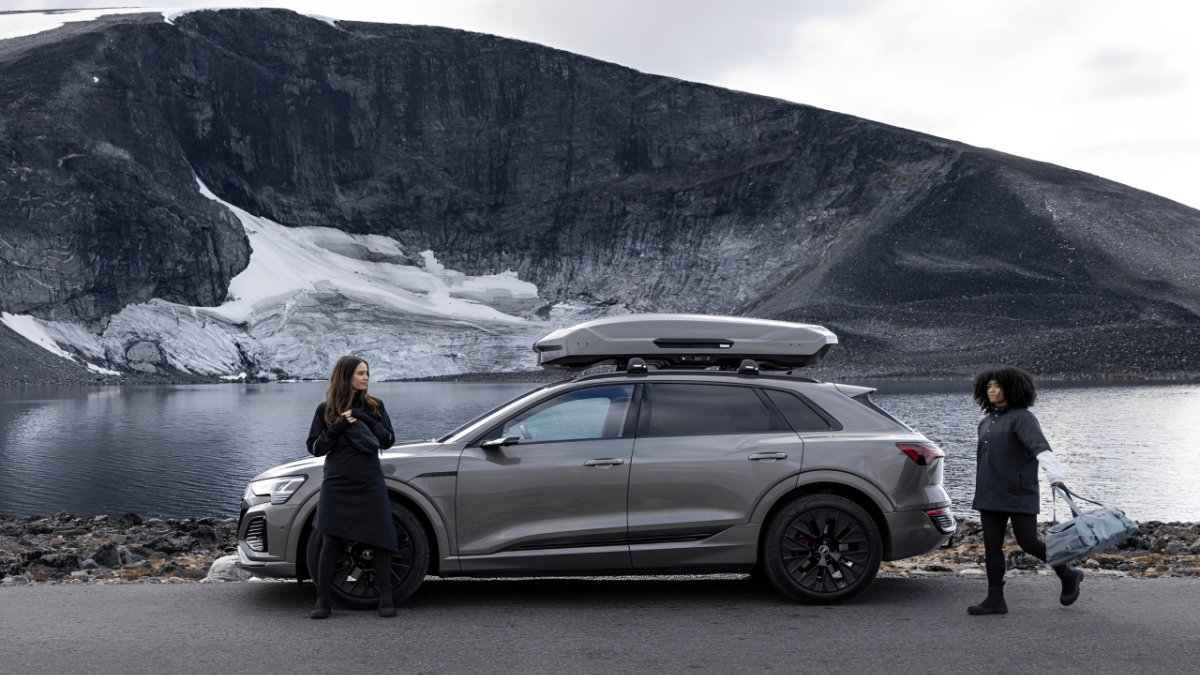
Roof boxes are popular because they feel like a clean fix: add volume without giving up cabin space.
But 2026 buyers are paying closer attention to the trade:
1) The mpg hit is measurable at highway speed
Car and Driver’s test is straightforward and memorable: 25 mpg with a hitch carrier vs 21 mpg with a roof box. Consumer Reports also measured a major drop with roof cargo installed (overall 19% in its test).
That’s the core anti-brochure truth: roof storage is often the most expensive cubic foot you can add on the interstate.
2) Roof boxes add “setup friction”
Even before the first mile, roof cargo can create friction:
- lifting heavy items overhead,
- worrying about height clearance,
- wind noise changes at speed,
- and the temptation to leave the rack on “just in case.”
AAA’s fuel-saving tips explicitly recommend minimizing roof racks and removing special carriers when not in use, because even empty racks add drag.
3) The real weekend question is: do you need it often?
If the roof box is used twice a year, it can still be a great tool. If it’s used twice a month, the mpg penalty becomes a recurring cost, and the convenience starts to look less convenient.
Why hitch carriers are trending upward (with caveats)

Hitch carriers are often the “less-bad” option for highway mpg, and Car and Driver’s test supports that direction.
But drivers are also learning the tradeoffs that brochures don’t cover:
1) Parking and length stress
A hitch carrier changes the vehicle’s effective length. On weekends, that shows up at:
- tight hotel lots,
- parallel parking,
- trailhead congestion,
- and garage ramps.
Many drivers can tolerate a fuel penalty more easily than a parking penalty—so hitch carriers aren’t a universal fix. They’re a choice.
2) Rear access becomes a workflow problem
A lot of weekend stops require liftgate access. A hitch carrier can:
- block the hatch,
- add an extra step to access bags,
- and make “grab one item” harder.
Some systems solve this with swing-away designs, but that adds cost and complexity. This is why “ease at stops” has become as important as mpg.
3) Load security is part of the decision
Cargo outside the vehicle can be secure and safe—if it’s properly mounted and tied down.
NHTSA’s “Secure Your Load” guidance warns that unsecured loads can create road debris crashes and injuries, and it emphasizes the importance of proper securement. That advice applies to hitch carriers and roof cargo alike: the best carrier is the one used correctly every time.
The surprising third player: fold-flat space is being re-evaluated

Fold-flat space sounds like the perfect answer, but drivers are rethinking it because it often fails the “Friday reality” test.
Fold-flat is great when…
- you’re moving one long item,
- you’re doing a planned load,
- and you don’t need rear seats for passengers or a dog.
Fold-flat is not the real weekend solution when…
- seats must stay up (friends, kids, dog setup),
- the trip includes frequent stops,
- and the vehicle becomes cluttered because the best space requires a seat-folding “commitment.”
This is why “seats-up packing” is replacing “fold-flat bragging.” People want a vehicle that swallows:
- two duffels,
- a medium cooler,
- layers,
- and a dog setup without needing to fold seats, reorganize, or add exterior cargo.
In other words: the feature people think they want (max fold-flat volume) is being replaced by the feature they actually use (clean seats-up space and access).
What this means in the U.S.
U.S. weekend trips often combine:
- long highway legs at 70–80 mph,
- crowded parking at destinations,
- and a stop cycle where liftgate access happens multiple times.
In that environment:
- roof boxes get rethought because the mpg penalty is continuous at speed,
- hitch carriers get considered because they can reduce drag compared with roof cargo,
- and fold-flat space gets demoted because it’s not always compatible with passengers and dogs.
The winning setup is the one that stays boring: low drag, low parking stress, and quick access at stops.
What you can do: the 15-minute “cargo solution” decision test
Before buying gear—or buying a different vehicle—run this quick test:
- Seats-up load test (6 minutes): cooler + two duffels + dog crate/barrier footprint (or a simulated footprint).
- Stop-cycle access test (4 minutes): open the rear, grab one item, close up, repeat. If it feels fussy now, it will be worse at a crowded destination.
- Highway realism test (5 minutes): if you already own roof crossbars, try one short highway run and note noise and fuel feel; remove them if you don’t need them (AAA’s guidance supports removing unused racks).
If the vehicle passes seats-up and access tests, you may not need external cargo at all. If it fails, choose the external solution that matches your weekend pattern:
- Roof box for rare, bulky-but-light trips where height and drag are acceptable.
- Hitch carrier when you need extra space often and can manage length/parking and securement well.
- Fold-flat when passengers aren’t part of the weekend equation.
Bottom line
More drivers are re-thinking roof boxes, hitch carriers, and fold-flat space in 2026 because weekends are exposing the true costs: drag at highway speed, parking stress at destinations, and the time tax of constant re-loading. Car and Driver’s 25 mpg vs 21 mpg test makes the roof penalty concrete. Consumer Reports’ 19% result reinforces that it isn’t trivial. The trend is not “ditch roof boxes.” It’s choosing the cargo strategy that matches how weekends actually work—seats up, dog in back, cooler that won’t compress, and stops that happen more than once.