

According to Toyota’s RAV4 model page, Honda’s CR-V page, Subaru’s Forester overview, and Car and Driver’s recent hybrid-compact-SUV comparison test (which also included the Mazda CX-50 Hybrid), the long-drive difference usually comes down to three fatigue factors: highway noise, ride control over broken pavement, and driver-assist that stays smooth and consistent. The RAV4, CR-V, and Forester can all handle long motorway weekends, but they deliver comfort in different ways. This guide focuses on what actually changes the experience after hour three and skips the brochure noise.
At a glance
- Most relaxing highway cruiser: Honda CR-V Hybrid in recent comparison testing for ride refinement and cabin quiet.
- Most “do-it-all” spec mix: Toyota RAV4, especially for hybrid efficiency and higher towing ratings on certain configurations.
- Best if weather or rough access roads are the constant: Subaru Forester for standard Symmetrical AWD and available X-MODE, plus Forester Wilderness clearance.

Highway comfort checklist
The three comfort levers that matter on long drives
Long drives punish the same things every time: noise, motion, and mental load.
Cabin noise at 110–130 km/h is usually the first fatigue trigger. Wind and tire roar make the trip feel longer than it is, even when the seats are fine.
Ride quality is next. Expansion joints and broken pavement don’t just feel rough; they keep the body bracing and adjusting for hours.
Driver-assist can be a real relief, but only when it stays smooth and consistent. Systems that hunt between lane lines or brake late can be more tiring than driving unassisted.
Toyota RAV4: the efficiency-forward all-rounder

Fewer stops, more daylight
Toyota’s RAV4 page highlights weekend-friendly headline specs: up to 37.8 cubic feet of cargo space behind the second row, up to an estimated 47 city / 40 highway mpg rating, and towing capacity up to 3,500 pounds. Toyota lists up to 47/40 mpg for certain RAV4 Hybrid configurations, while Car and Driver notes EPA estimates were pending and Toyota estimated 44/39 mpg for the AWD test vehicle. Those numbers are “when properly equipped” territory, so the right trim and drivetrain matter.
Where the RAV4 tends to shine on long drives is fewer fuel stops. On a full-day loop, stopping less often can feel like a bigger upgrade than most tech features.
The trade-off is that refinement can vary by setup. In Car and Driver’s recent road-trip comparison, the RAV4 Hybrid finished near the top but was noted for less polished feel under throttle compared with the winner. That does not mean it is uncomfortable. It means the CR-V felt calmer when pushed.
Choose the RAV4 if the trip plan includes big gear, frequent miles, or occasional towing where higher ratings matter.
Honda CR-V: the quiet, low-effort highway pick
Honda positions the CR-V Hybrid as a road-trip-friendly hybrid, noting a 204-horsepower system and an EPA rating line on its CR-V page (ratings depend on configuration). In practice, the CR-V’s long-drive case is less about a single spec and more about how it feels after 300 km.
Car and Driver’s 2026 hybrid compact SUV comparison test put the CR-V Hybrid Sport Touring first, citing a refined ride, quiet cabin, and comfortable interior on a road-trip route. That is the kind of advantage that shows up on the motorway: less noise, less busy suspension motion, and fewer small irritations.
Fuel economy can still be strong, but exact mpg depends on drivetrain and trim. Confirm the rating for the specific build before treating any number as universal.
Choose the CR-V if the long-drive brief is mostly paved miles and the priority is calm, quiet cruising.
Subaru Forester: the bad-weather confidence play
Subaru emphasizes a different kind of long-drive comfort: predictability in ugly conditions. The Forester overview highlights standard Symmetrical All-Wheel Drive and available X-MODE for traction management. Subaru also calls out 9.3 inches of ground clearance for the Forester Wilderness, while other Forester trims list lower clearance.
On long drives, that matters when “the last 20 km” is the stressful part: slushy mountain roads, muddy access tracks, or steep gravel approaches to a cabin. Standard AWD reduces the risk of trim-shopping mistakes if winter is part of the routine.
In Car and Driver’s hybrid compact SUV comparison test, the Forester (tested in hybrid form) placed fourth and was criticized for slower acceleration and older-feeling infotainment compared with newer rivals. The flip side is that it was praised for cabin space and practical packaging.
Choose the Forester if rough access roads or winter weather are common, and highway hush is not the top priority.
A simple decision rule for 2026 long drives
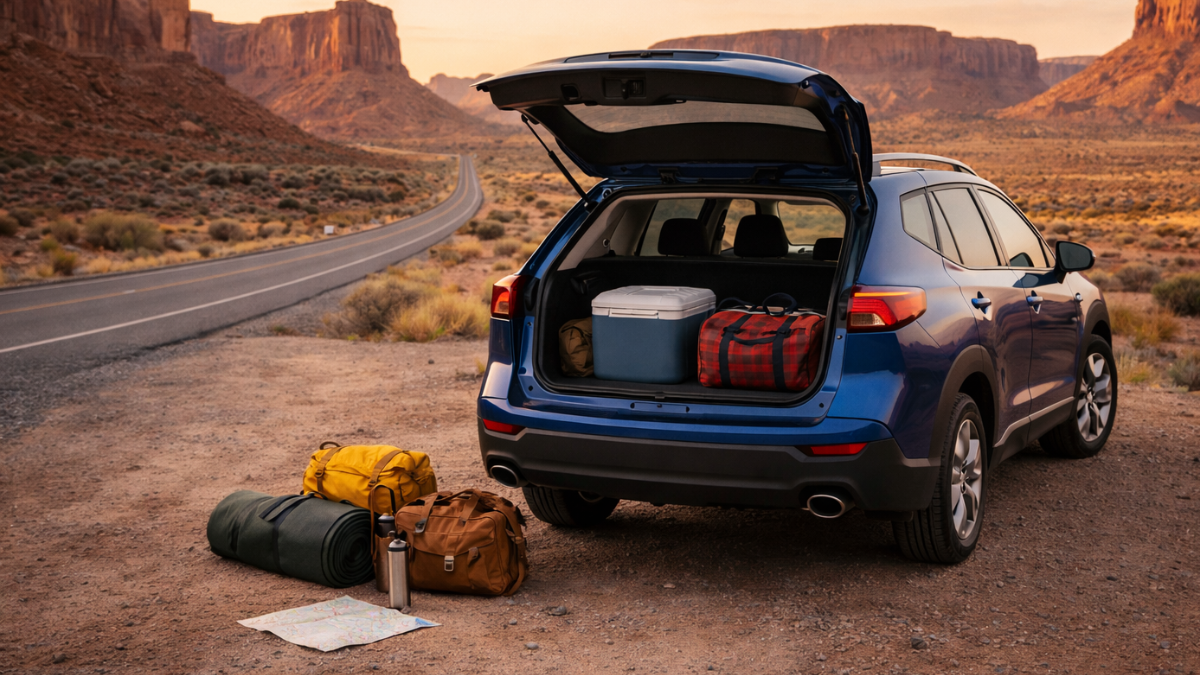
Gravel access road after rain
If the goal is the most relaxing motorway day, start with the CR-V Hybrid.
If the goal is a broad mix of efficiency, cargo practicality, and higher towing ratings on certain configurations, start with the RAV4.
If the goal is getting to places where weather and surfaces are the recurring problem, start with the Forester, especially if Forester Wilderness clearance is the point.
If you only do one thing: test-drive all three on the same stretch of highway at cruising speed and listen for wind and tire noise before comparing touchscreens.
What to watch next: final trim-by-trim ratings for the exact builds on dealer lots, since mpg, towing, and AWD details can change by configuration and market.
SOURCES