
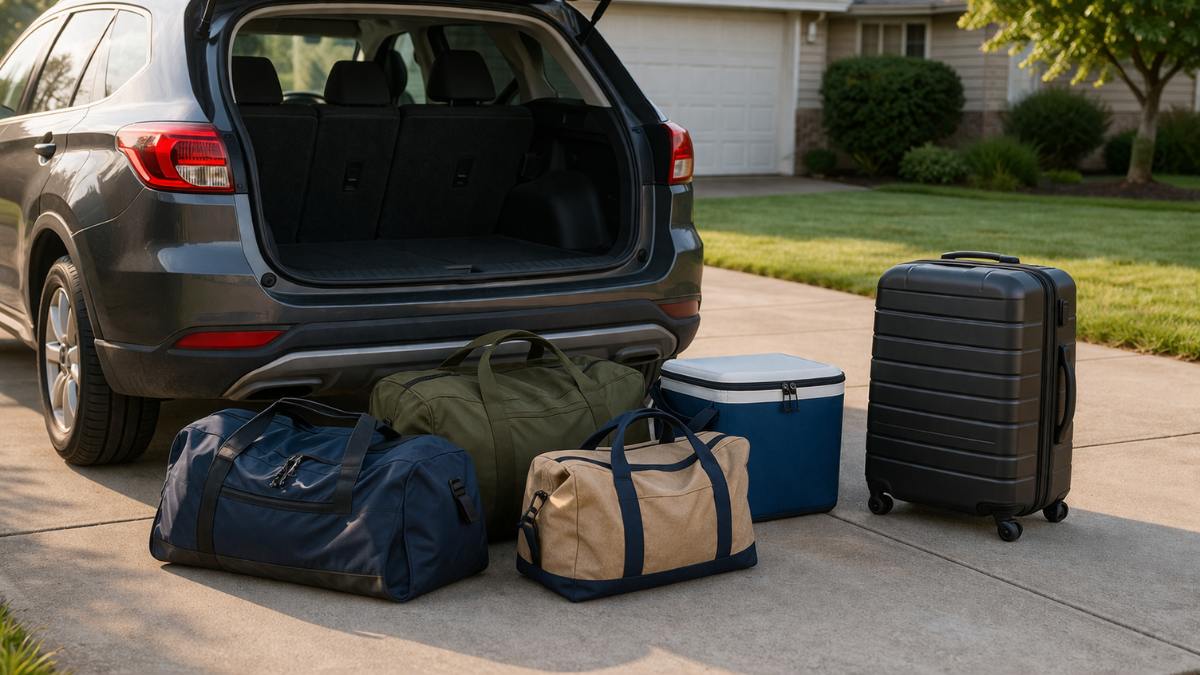
According to Consumer Reports’ luggage guidance, soft-sided bags are usually lighter, often expandable, and can flex and compress—a practical advantage when you’re packing around a small SUV’s seats-up geometry. NHTSA’s “Secure Your Load” guidance also reminds drivers that cargo must be secured so it doesn’t shift or escape the vehicle, because loose items can become hazards. Put those together and the 2-night road-trip lesson is simple: hard suitcases look tidy, but soft bags tend to fit better, pack safer, and make stops easier in the real weekend rhythm.
Quick takeaways
- Soft bags win on shape. Consumer Reports notes soft-sided luggage can flex/compress and is often lighter/expandable—exactly what small SUVs need with seats up.
- Hard suitcases waste space in the corners. Their rigid shell can force awkward stacking and block access at stops.
- Soft bags can be safer and calmer. NHTSA warns loads should be secured to prevent shifting/escaping; soft bags are easier to cinch down and wedge.
- Weekend reality is stop-cycle access. The best luggage is the one that lets you grab one item without unloading everything.
- Best method: pack for a 2-night trip in “modules”: 1 duffel + 1 soft cube + 1 small cooler, then secure the stack.
The weekend problem hard luggage creates in small SUVs
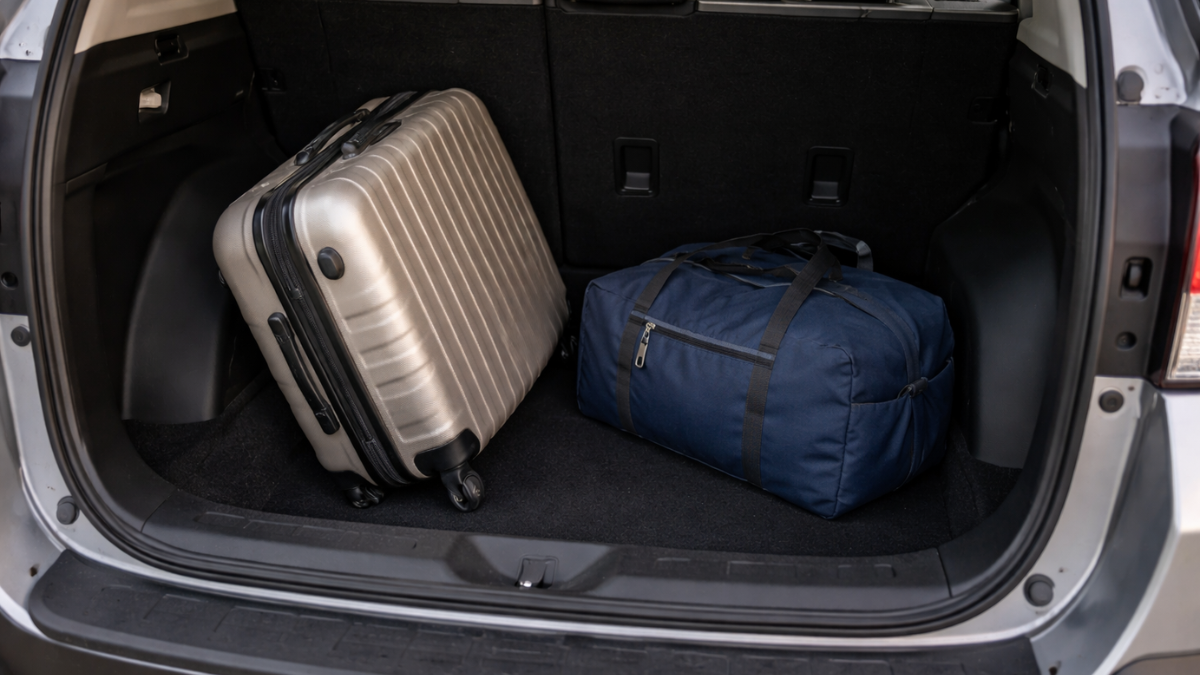
Most small SUVs can handle a 2-night trip easily—until luggage shape starts fighting the space.
Hard suitcases are built for airports:
- rigid corners,
- a tall box shape,
- and wheels/handle geometry that steals usable volume.
In a small SUV, that rigidity does three annoying things fast:
- forces “Tetris” stacking that leaves gaps you can’t fill,
- blocks the easiest reach path to the back of the cargo area, and
- makes the load shift unless it’s tightly braced.
Soft bags do the opposite: they deform around the space you actually have.
Why soft bags fit the real “seats-up” geometry
Weekend trips rarely use max fold-flat cargo. Most people keep seats up because:
- friends ride along,
- a dog uses the rear seat or cargo area,
- or the rear seats simply stay upright out of habit.
That “seats-up” setup creates a cargo bay with:
- uneven side pockets,
- a sloped hatch line,
- and corners where a hard suitcase can’t rotate into place.
Consumer Reports’ luggage guide is blunt about the core advantage: soft-sided luggage is often lighter and can flex and compress. That’s the exact behavior that makes it work in a small SUV:
- soft bags fill the shallow spaces near wheel wells,
- compress under the hatch line,
- and can be stacked without turning into a hard wall that blocks access.
Stop-cycle reality: road trips aren’t one load and done
A 2-night weekend is a stop cycle:
- gas or coffee,
- grocery/ice,
- trailhead,
- check-in,
- dinner parking,
- grab one jacket, then re-pack.
Hard suitcases turn every stop into a mini-relocation because they behave like furniture:
- they don’t squish,
- they don’t “nest,”
- they often must be lifted out to reach anything behind them.
Soft bags excel here because they can be:
- pulled out one at a time,
- squeezed to create an access lane,
- and re-stacked quickly.
That’s why people often describe soft luggage as “less tiring” even when the total volume is similar.
Safety and stability: why soft can be the calmer option
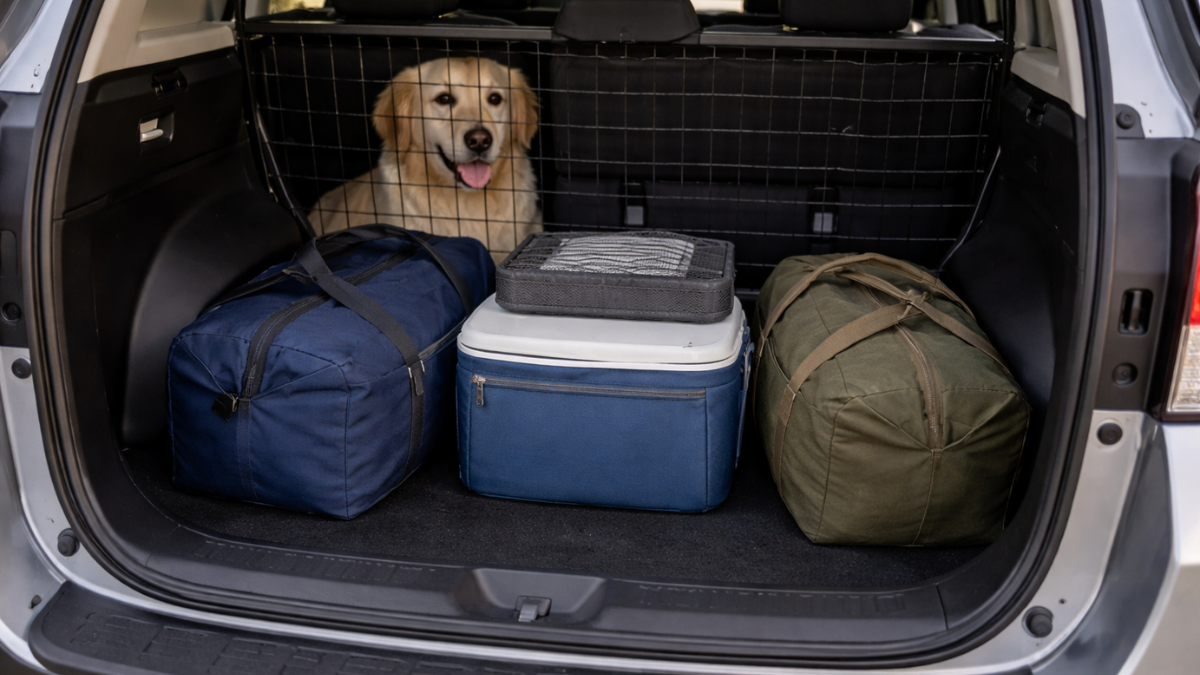
This is not only convenience. It’s also about control.
NHTSA’s cargo guidance says loads should be secured to prevent shifting or escaping the vehicle. Loose items can become road hazards—and inside the vehicle, shifting loads can become a sudden-stop problem.
Soft bags help because they’re easier to:
- wedge tightly against other items,
- cinch down with straps,
- and keep from sliding.
Hard suitcases, especially if stacked, can shift as a single heavy block. If they move, everything behind them moves too. With soft bags, the load can “lock” together more easily.
AAA’s cargo guidance (and many safety agencies) also emphasize securement and thoughtful placement—heavy items low, stable base, and no clutter that can roll forward.
The cooler interaction: the make-or-break item
The cooler is the real villain in small-SUV packing because it’s rigid and heavy.
If you combine a hard cooler with hard luggage, you create a “brick wall” load:
- little flexibility,
- awkward gaps,
- poor access,
- more shifting risk.
Soft bags pair better with a cooler because they can wrap around it:
- one duffel on each side,
- a soft cube on top,
- small items tucked into corners.
That’s the packing pattern that keeps the cabin tidy and the hatch easy to open and close at every stop.
What this means in the U.S.
In the U.S., weekend driving often includes:
- long highway legs at 70–80 mph,
- tight parking at destinations,
- and frequent stops where you need fast access.
The least stressful packing system is the one that:
- stays stable at speed,
- doesn’t block rear visibility,
- and doesn’t require unload/reload at every stop.
Soft bags are a simple upgrade because they reduce the “geometry penalty” of small SUVs without changing the vehicle.
What you can do: the 8-minute “soft bags” packing method
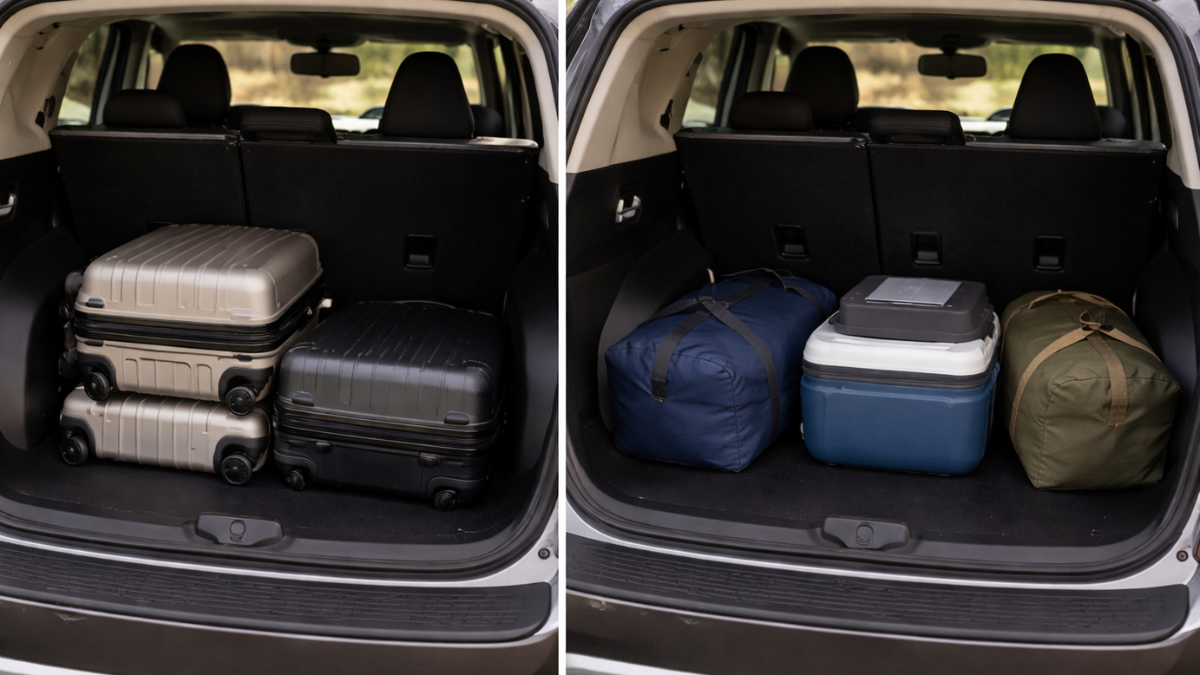
- Pick soft modules: one duffel per person + one soft cube for toiletries/layers.
- Make the cooler the anchor: cooler flat on the floor, closest to the hatch for quick access.
- Fill the corners: soft bags on both sides of the cooler, compressed to eliminate gaps.
- Lock the stack: small items in soft pouches, then strap or wedge so nothing slides.
- One-item access check: open the hatch and grab one duffel without moving the cooler. If you can’t, re-stack.
- Secure the load: follow safe-loading principles so items won’t shift.
Bottom line
Soft bags beat hard luggage in small SUVs on a 2-night trip because they match the space you actually use: seats up, cooler in back, lots of stops. Consumer Reports’ guidance on soft luggage (lighter, flexible, often expandable) explains the advantage, while NHTSA’s cargo guidance reinforces why stable, secure packing matters. The practical win is simple: fewer awkward gaps, less shifting, easier access, and a weekend that feels calmer.