
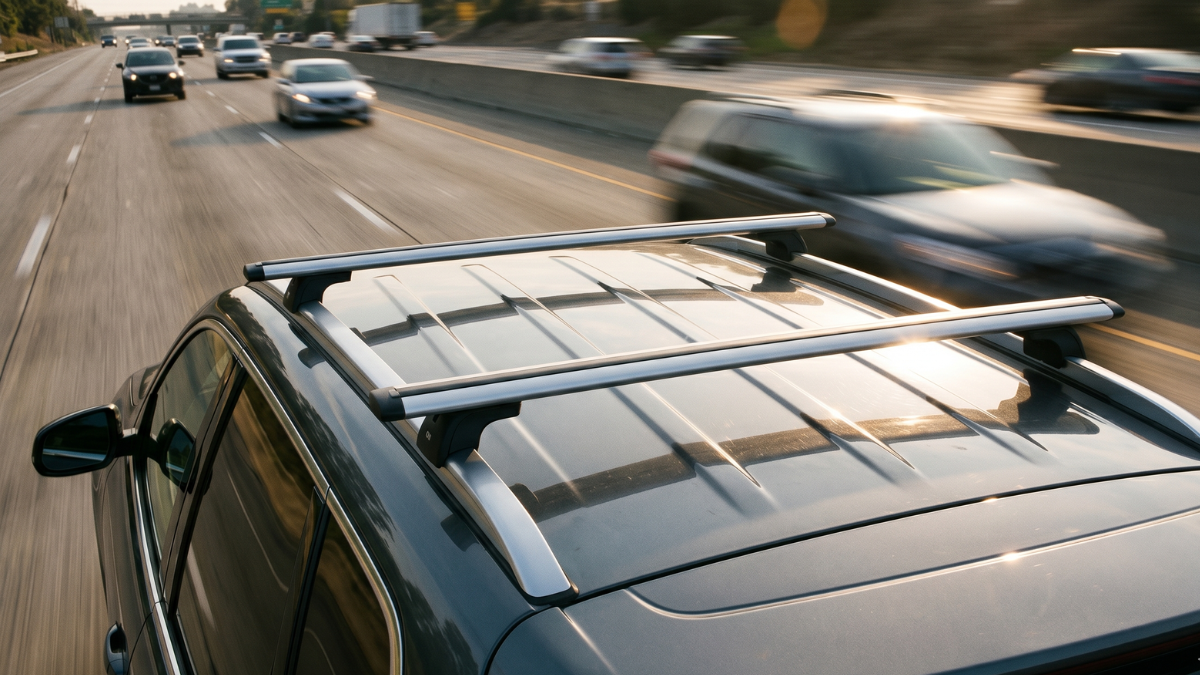
The crossbars came with the car. They were listed as a feature, photographed in the brochure against a backdrop of mountain ridgelines, priced into the trim you wanted. They look purposeful. They suggest adventure. And on the highway at 75 mph, with nothing strapped to them, they produce a low-frequency howl that builds over the first hour of a road trip, peaks somewhere around the two-hour mark as a persistent background drone, and correlates so precisely with the headache some passengers arrive with that it is worth understanding what is actually happening above the roofline.
The mechanism is not mysterious. It is called vortex shedding: when air flows past a bluff cylindrical or square-section object at speed, alternating low-pressure zones form and collapse on the downstream side, generating periodic sound waves — the Aeolian tone. SAE technical papers on crossbar design specifically address this phenomenon because it is predictable, measurable, and significantly difficult to engineer away without fundamentally changing the crossbar’s cross-section geometry. The noise arrives in the cabin as a low-pitched hum rather than a whistle, which is why it is less immediately annoying than a window crack — and more fatiguing over the course of a four-hour drive.
The fuel cost is equally real. Car & Driver’s 75 mph fuel economy test of a 2022 Kia Carnival found that removing the factory crossbars improved fuel economy by 3 mpg — a 12 percent gain, simply by taking the bars off the rails.
Quick Takeaways
- Empty factory crossbars at highway speed generate a low-frequency cabin howl via vortex shedding — the aeroacoustic phenomenon documented in SAE technical papers on crossbar noise since 2002 and specifically the focus of a 2007 SAE/Lattice Boltzmann computational study commissioned to redesign production crossbar cross-sections
- Car & Driver’s 75 mph highway fuel economy test of the 2022 Kia Carnival found a 12 percent fuel economy improvement — 3 mpg gained — simply by removing factory crossbars; at 75 mph, the bars were the factory-equipped “aero” shaped type, designed to be more aerodynamic than standard square crossbars
- Consumer Reports tested a Toyota RAV4 with an empty roof rack at 65 mph: fuel economy dropped from 41 mpg to 40 mpg — approximately a 2 percent penalty for the empty rack alone; adding a rooftop cargo pod dropped mileage further to 35 mpg, a 13 percent total loss
- A 2016 National Renewable Energy Laboratory (NREL) analysis of consumer-reported data found that 84 percent of drivers who tracked fuel economy with an unloaded crossbar rack reported penalties between 5 and 15 percent
- The fuel penalty scales with the square of speed: a crossbar that adds 2 percent drag at 55 mph adds roughly 4.5 percent drag at 75 mph — the standard weekend highway cruise speed
- Three SUVs with documented crossbar noise and penalty issues: Subaru Forester (factory crossbars consistently generate highway howl, confirmed across multiple owner forum threads; removing crossbars is a documented fix); Kia Telluride (wide squared cross-section factory bars produce pronounced low-frequency tone in upper-speed highway use); Toyota RAV4 with factory accessory crossbars (consumer-reported 5–10% penalty on highway-intensive road trips)
- Removing factory crossbars takes 10 minutes and requires only the T-bolt tool included in the factory kit; annual fuel savings for a driver doing 15,000 miles of 70% highway can reach $80–$120 at current fuel prices
What Vortex Shedding Sounds Like — and Why It Fatigues You
The sound produced by an empty crossbar at highway speed is not the sharp whistle of a window crack or the high-frequency screech of a poorly seated seal. It is lower, more diffuse, and specifically located in the frequency band that is most difficult for the human auditory system to consciously identify and filter out.
When air at 70–75 mph meets the leading face of a crossbar, it separates around the bar — above, below, and to both sides — and the vortices that form alternately on either side of the bar’s downstream face shed at a frequency determined by the bar’s cross-section diameter and the flow speed. This frequency, the Aeolian tone, falls in the range of approximately 100–400 Hz for typical crossbar geometries at highway speed: the frequency band of low bass and midrange, not high treble.
This is precisely why it accumulates rather than registers as an acute annoyance. Passengers describe the effect at the end of a four-hour drive as “tired for no reason” or “head feels thick” — symptoms consistent with sustained low-frequency noise exposure rather than the reflexive irritation of a high-frequency squeal. The sound is below the threshold where passengers instinctively say “what is that noise?” — but well within the range that occupational noise research documents as cognitively fatiguing over multi-hour exposure.
A 2007 SAE Technical Paper (SAE 2007-01-2398) specifically addressed this problem: it commissioned a Lattice Boltzmann Method computational study to identify crossbar cross-section geometries that would reduce the howl noise of production automobile roof rack crossbars. The paper’s goal was to reduce crossbar-generated noise by redesigning the bar shape — confirming that the phenomenon is documented, measurable, and considered a known design problem by automotive engineers.
The Subaru Outback forums document this pattern with specificity: one experienced salesperson notes that after noticing unusual cabin noise during a test drive, they checked afterward and found “the crossbars weren’t tucked in — they were across the car.” A Subaru Crosshek XV owner community thread documents the precise behavior: “At freeway speeds wind noise requires raising your voice above normal levels to have a conversation — but you don’t need to scream. Louder than a typical passenger car, but tolerable as long as you don’t leave the crossbars on the roof.” The Subaru Forester forum thread for a 2022 Limited owner who had the dealer inspect the noise and was told it was normal — then removed the crossbars and confirmed the noise disappeared — is representative of hundreds of identical reports across SUV forums.
The Fuel Math: What Empty Crossbars Cost per Year
The mechanics of the drag penalty are straightforward. Aerodynamic drag force rises with the square of velocity. A crossbar system that increases the vehicle’s drag coefficient by 5 percent at 55 mph produces the same absolute drag increase at 75 mph — but since drag is proportional to speed squared, the fuel required to overcome that drag at 75 mph is (75/55)² = 1.86 times greater. The crossbar penalty at highway cruise speed is not the same penalty as at suburban speeds: it is roughly double.
This is why the Car & Driver result at 75 mph (12 percent improvement from crossbar removal) is significantly larger than the Consumer Reports result at 65 mph (approximately 2 percent for an empty rack). Both findings are correct; they reflect the same physical penalty at different speeds.
Worked fuel cost calculation:
Base case: midsize SUV owner doing 15,000 miles per year, 70 percent highway (10,500 highway miles), baseline 28 mpg highway, factory crossbars installed year-round.
Crossbar penalty at 70–75 mph cruise: conservatively 5 percent reduction (lower end of the consumer-reported 5–15 percent range from the NREL study; Car & Driver’s real test at 75 mph found 12 percent, but that was with the specific geometry of the Carnival’s factory bars and may not apply uniformly to all crossbar designs).
Highway mpg with crossbars: 28 × 0.95 = 26.6 mpg
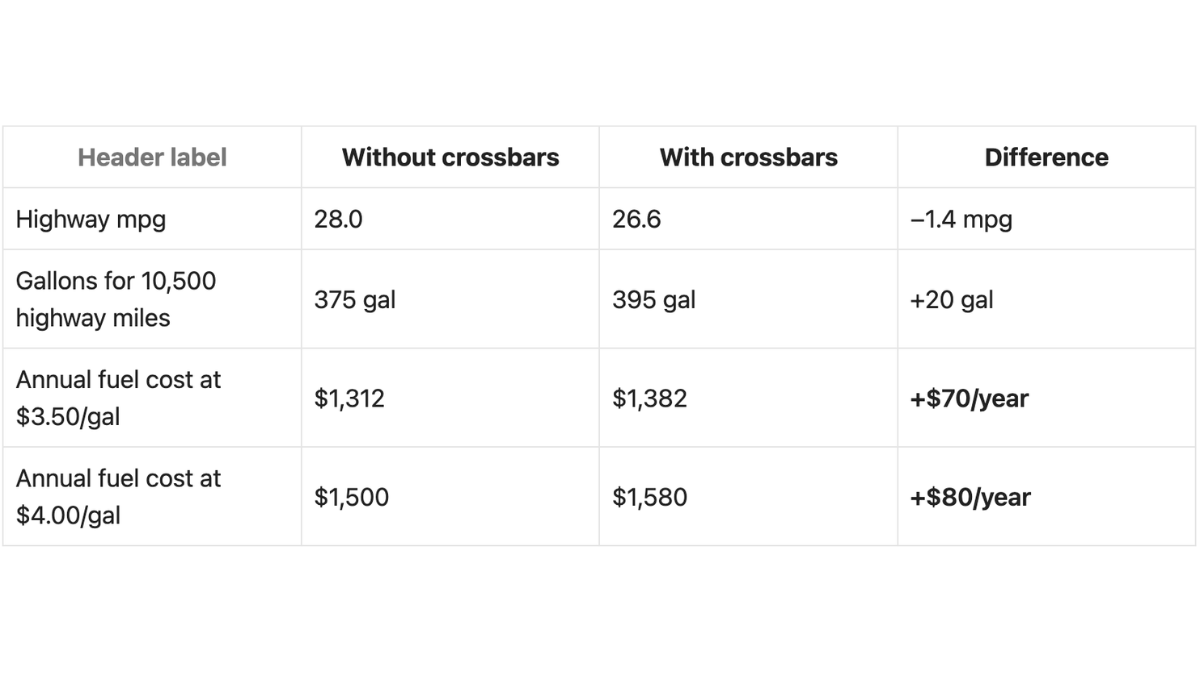
At the 12 percent penalty measured by Car & Driver (a real vehicle at 75 mph, not a model), the gap doubles: approximately $150–$175 per year in additional fuel. The realistic range for a typical midsize SUV driver is $70–$150 per year in unnecessary fuel cost from crossbars that never carry anything.
Over five years — the typical interval between major vehicle decisions — that range is $350–$750 in additional fuel, paid continuously, invisibly, by a crossbar system that provides utility approximately six days per year.
Three SUV Models Where the Crossbar Problem Is Particularly Documented
Subaru Forester (2022–2026)
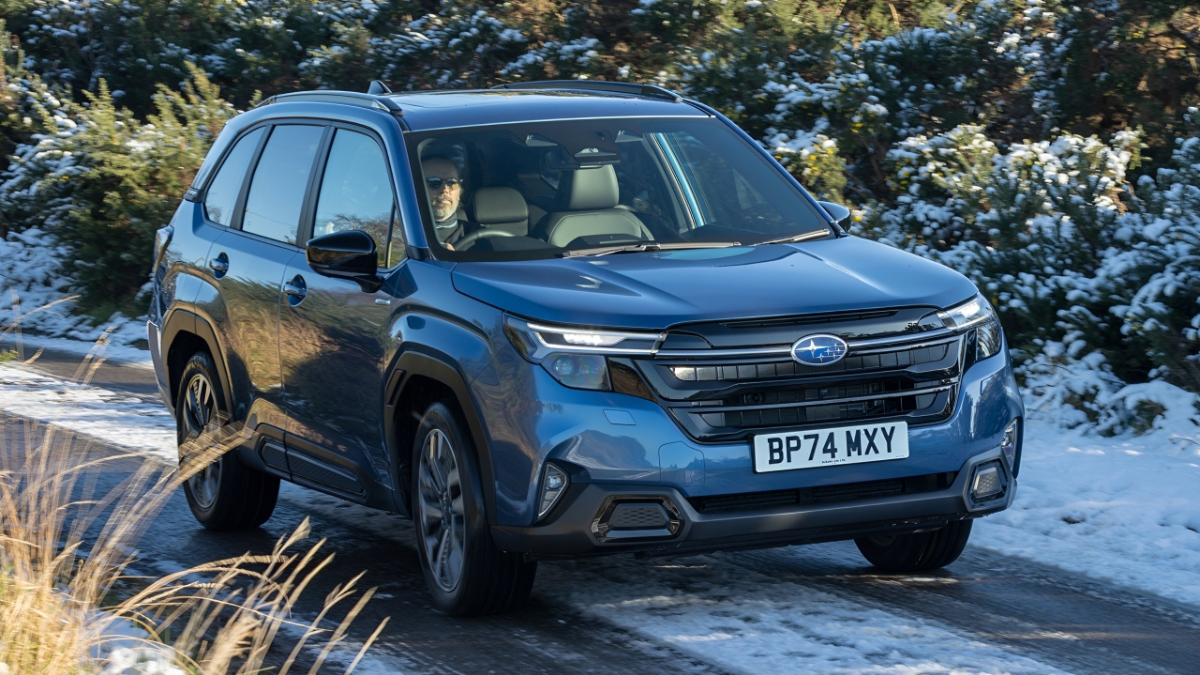
The Forester is one of the most popular outdoor-lifestyle crossovers in the U.S. and Canada, and it ships with factory-available crossbars that a significant share of buyers add at purchase. The vehicle’s upright roofline and relatively flat roof geometry — well-suited to carrying gear — also mean that crossbars mounted above the roof are exposed to clean, fast-moving air rather than sheltered in a recessed channel.
Owner forum documentation is extensive: a 2022 Forester Limited owner bought the vehicle with factory crossbars, experienced loud highway howl, was told by the dealer it was normal, removed the crossbars, and confirmed the noise “disappeared.” Multiple Subaru Forester Owners Forum threads document the two distinct noise signatures — a lower-frequency howl from vortex shedding off the crossbar body, and a higher-frequency whistle from open T-track channels on adjustable aftermarket versions (fixed by inserting foam insulation into the hollow ends of the bar’s adjustment track).
The Subaru Outback forum captures the cumulative issue clearly: “Noise is an artifact of air turbulence induced by the crossbars, and that turbulence increases aerodynamic drag on the vehicle. Airfoil-shaped crossbars can help, but they don’t eliminate the problem completely.”
Crossbar removal logistics: The Forester’s factory crossbars use four T-bolt fasteners (two per bar) with a standard T-star tool, which should be included in the factory crossbar kit. Removal and storage takes approximately 10 minutes. Factory aero bars on the 2022–2026 Forester can be stored under the rear cargo floor in their designated storage recess.
Subaru Outback (2020–2025 / 2026 redesign)
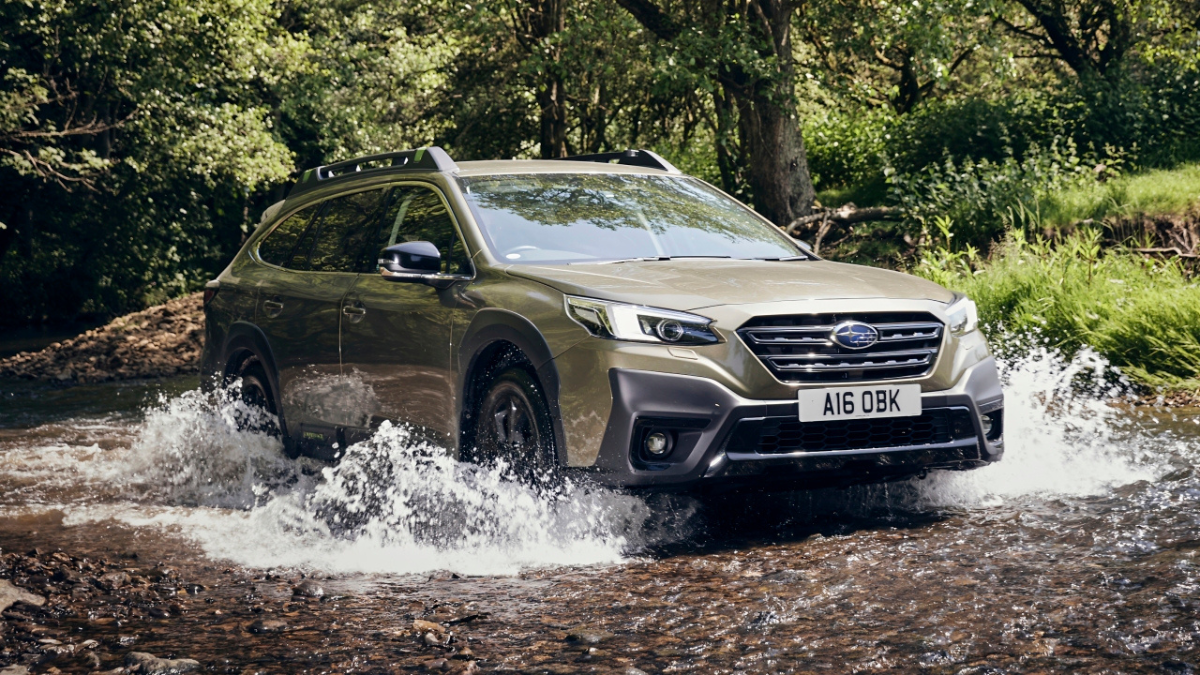
The Outback is one of the few SUVs in the mainstream market sold with roof rails standard on all trims, and dealers commonly add crossbars at sale as a zero-negotiation accessory upsell. The 2020–2025 Outback’s factory crossbars are positioned at approximately roof mid-height — not flush or recessed — making them fully exposed to the airstream at highway speed.
The Outback’s standard crossbar design has been documented as a highway noise source across multiple owner forum threads. One Subaru XV Crosstrek owner (same crossbar system, similar architecture) documented the Edmunds cabin noise measurement for the 2013 Crosshek at 70 mph cruise: 68.2 dB. With crossbars, owner reports describe the highway noise as requiring raised voices for normal conversation. Without crossbars, the same owners describe the cabin as quiet.
The 2026 Outback redesign uses a new horizontal infotainment layout and changed roofline — but crossbar-equipped configurations retain the same fundamental vortex-shedding exposure.
Note: The Subaru Forester and Outback use the same factory rail system. Crossbar removal is the same 10-minute process on both vehicles. Subaru does include the torx key tool in the crossbar packaging when purchased at the dealer.
Toyota RAV4 (with factory accessory crossbars, 2024–2026)
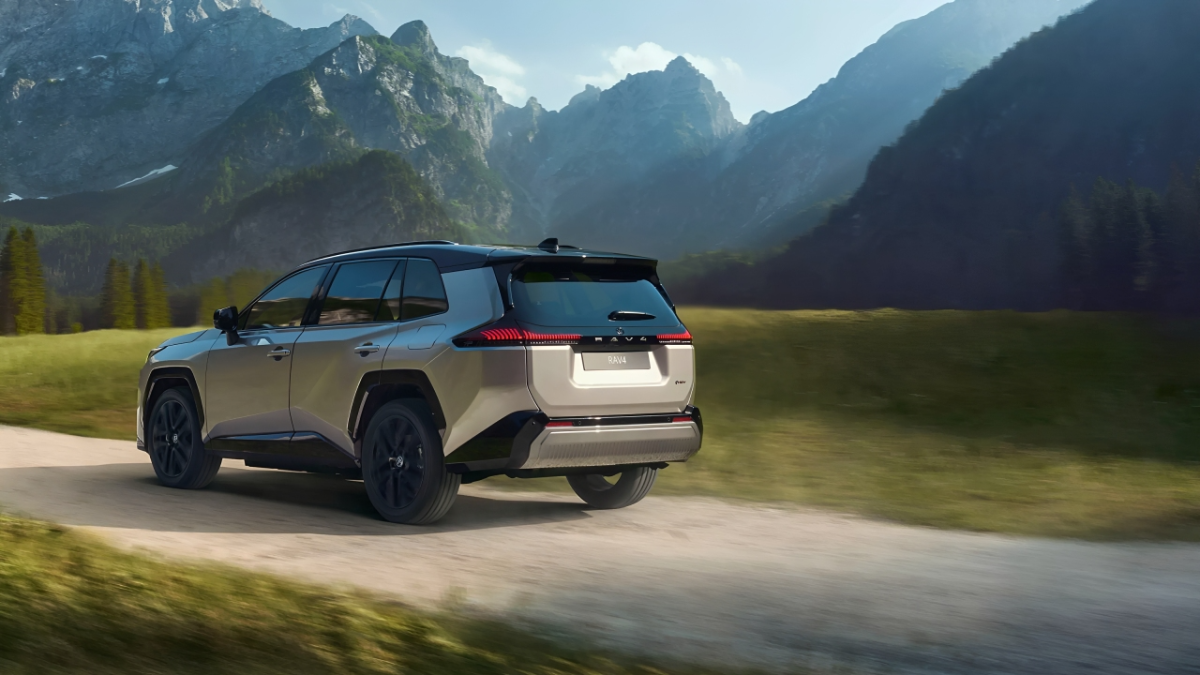
The RAV4 is the best-selling vehicle in the United States and available with factory accessory crossbars as a dealer add-on across all trims. Consumer Reports tested a Toyota RAV4 at 65 mph with an empty roof rack and measured a fuel economy drop from 41 to 40 mpg — the approximately 2 percent penalty that represents the floor of the crossbar drag range at moderate highway speed. At the 70–75 mph cruise speed typical of actual highway road trips (→ see “How Much Time Does 80 MPH Really Save” in this series), that penalty scales toward the 5–12 percent range per the NREL consumer study data.
The RAV4’s relatively aerodynamic body — lower drag coefficient than the boxy Forester — means that the crossbars represent a proportionally larger disruption to the vehicle’s designed airflow than on a bluffer vehicle. The RAV4’s optimized roofline is designed to redirect air cleanly over the rear; the crossbars interrupt that designed flow path.
The 2026 RAV4 is now hybrid-only across the lineup, which adds a specific consideration: hybrid fuel economy recovery through regenerative braking is not a substitute for preventing drag losses in the first place. The crossbar penalty at 70 mph cruise is lost aerodynamic work that regenerative braking at the next off-ramp cannot recover — because the vehicle never slowed down enough to brake significantly.
What “Factory Crossbars” Actually Means — and Why Buyers Often Don’t Remove Them
Factory crossbars fall into two categories:
Standard-equipment crossbars: Included in the vehicle’s base price and physically mounted at the factory. These cannot be dealer-swapped out at point of sale without a credit negotiation.
Factory accessory crossbars: Added by the dealer during pre-delivery preparation, typically at a cost of $300–$600, and presented at signing as part of a dealership appearance package or accessories bundle. These are dealer-installed accessories, not OEM equipment. They are removable by the buyer without voiding any warranty.
Most buyers in the second category do not remove the crossbars between trips because: they don’t think about them as items that affect the driving experience; they believe factory crossbars are specifically designed to be aerodynamic and therefore have no penalty; or they assume removal requires a mechanic.
None of these assumptions is accurate for the factory accessory crossbar category. The bars are designed for use, not for continuous display. The factory tool for removal is included precisely because the manufacturer intends them to be removed when not in use. The instruction to remove them when not carrying cargo is implicit in every manufacturer’s guidance on the topic and explicit in several OEM rack system owner supplements.
The Noise–Drag Relationship: Two Symptoms, One Cause
The cabin howl and the fuel penalty are not two separate problems from the same source. They are the same problem measured two different ways.
The aeroacoustic noise is the audible expression of vortex shedding. The fuel penalty is the mechanical expression of the same turbulence: the alternating low-pressure vortices that generate the sound also create drag force on the bar, which is transmitted through the bar’s mounting points to the vehicle, requiring the engine to provide additional power to maintain cruise speed. A quieter crossbar — one with a wing-shaped aerofoil cross-section — produces less noise because it sheds smaller, more organized vortices; it also produces less drag for the same reason.
This is why the car is quieter without the crossbars than with better-designed crossbars — and why removing them entirely is more effective than upgrading them. The engineering papers that address crossbar noise reduction (including the 2007 SAE study and the 2002 SAE paper on aeolian noise reduction through asymmetric cross-section geometry) document reductions of 40–50 percent in noise with optimized bar designs. A 50 percent noise reduction does not fully restore baseline cabin acoustics; it only halves the deviation.
Three Things to Do Before the Next Road Trip
1. Remove the crossbars. If the vehicle has factory accessory crossbars and no gear is being carried on the roof, remove them. The tool is in the glove box, the kit bag, or the cargo area. The process takes under 10 minutes. Store the bars in the garage or under the rear cargo floor if the vehicle has that provision. Put them back when needed.
2. If removal is inconvenient — position the bars correctly. Most factory aero crossbars have a forward-facing thicker edge and a tapered trailing edge (similar to an airplane wing). Installing them backward reverses the designed vortex management and substantially increases noise. If the bars must stay on, confirm the tapered edge faces rearward.
3. On a road trip with bars installed — reduce cruise speed. Drag scales with speed squared. At 65 mph, the crossbar penalty is roughly a third of what it is at 75 mph. The article on 80 mph time savings in this series establishes that dropping from 75 to 65 mph on a 400-mile run adds approximately 37 minutes to the trip (→ see “How Much Time Does 80 MPH Really Save” in this series). Whether that trade is worth it depends on the specific trip — but it is a trade that exists.
U.S. and Canada Note
For Canadian drivers on long-distance routes — the Trans-Canada through Northern Ontario, Highway 1 through the BC Interior, Route 20 across Quebec — crossbar howl is compounded by cold-weather cabin insulation limitations that are already stretched at -10°C to -20°C outside temperatures. Cold air is denser than warm air; aerodynamic drag at the same speed is slightly higher in cold conditions. More relevantly, the crossbar-generated turbulence at the forward edge of the roof in winter conditions adds to the overall cabin acoustic load at a point in the year when road noise from snow tires is already elevated and road surfaces are rougher.
The crossbar removal recommendation has additional traction for Canadian buyers who drive to ski destinations: the crossbars come off in the driveway, the ski rack goes on, the skis get loaded, the rack and bars come off in the destination parking lot. The round-trip crossbar-on miles are only the approach and departure segments — typically 30–50 miles of the total trip — not the entire route.
L/100 km note: The 5 percent conservative fuel penalty on a 16,000 km/year highway-intensive Canadian driver at 8.5 L/100 km baseline translates to approximately 68 extra litres per year — roughly $115–$125 CAD at current prices — from crossbars that are empty most of the time.
SOURCES
- Car & Driver: 75 mph highway fuel economy test, 2022 Kia Carnival with factory-equipped aero crossbars removed → 3 mpg / 12 percent improvement; factory bars were designed-aero type; removal took 10 minutes
- Consumer Reports: Toyota RAV4 at 65 mph — empty roof rack reduced mpg from 41 to 40, approximately 2 percent penalty; Nissan Altima sedan with rack only dropped 11 percent, with rack + pod 19 percent; confirms penalty scales with vehicle aerodynamics
- Oak Ridge National Laboratory: rooftop cargo box reduced 2009 Toyota Corolla fuel economy 22 percent at 60 mph; 2009 Ford Explorer SUV rooftop cargo box reduced fuel economy 6.2 percent on highway cycle; towing 3,500-lb trailer reduced SUV mpg up to 50 percent at 80 mph; study by Thomas, Huff, West — SAE 2014
- Chen & Meier, National Renewable Energy Laboratory, Transportation Research Part D, 2016: consumer-reported data showed 84 percent of 31 driver measurements reported 5–15 percent fuel consumption penalty for unloaded cross roof rack; lab tests found 1.1–2.6 percent at lower speeds; discrepancy attributed to higher real-world highway speeds and integer rounding in consumer reporting
- NREL/DOE preprint of Chen & Meier “Fuel Consumption Impacts of Auto Roof Racks”: references SAE 2007-01-2398 Senthooran et al. Lattice Boltzmann study of roof rack howl noise; references SAE 2002-01-1275 Lee et al. aeolian noise reduction via asymmetric crossbar geometry; Thomas et al. 2014 ORNL study data
- EngineerFix: vortex shedding / Kármán vortex street mechanism documented; square/cylindrical bars are “bluff bodies” triggering organized shedding at Aeolian tone frequency; aero wing-shaped bars reduce but do not eliminate the phenomenon; open T-track channels add whistle component
- Subaru Forester Owners Forum: 2022 Forester Limited factory crossbar wind noise confirmed by dealer as “normal”; owner removed crossbars and noise disappeared; two distinct noise signatures documented — low howl from vortex shedding, high whistle from hollow bar ends; “once you add them, you’re adding aerodynamic drag and that causes noise and also a drop in MPGs”
- Subaru Outback Forum: “Noise is an artifact of air turbulence induced by the crossbars, and that turbulence increases aerodynamic drag on the vehicle. Airfoil-shaped crossbars can help, but they don’t eliminate the problem completely”; salesperson reports test drive noticeably noisier with crossbars deployed
- Subaru Crosshek XV Forum: Edmunds cabin noise measurement at 70 mph cruise 68.2 dB; with crossbars “requires raising your voice above normal levels to have a conversation — tolerable as long as you don’t leave the crossbars on the roof”; crossbar removal confirmed to restore baseline cabin acoustics