
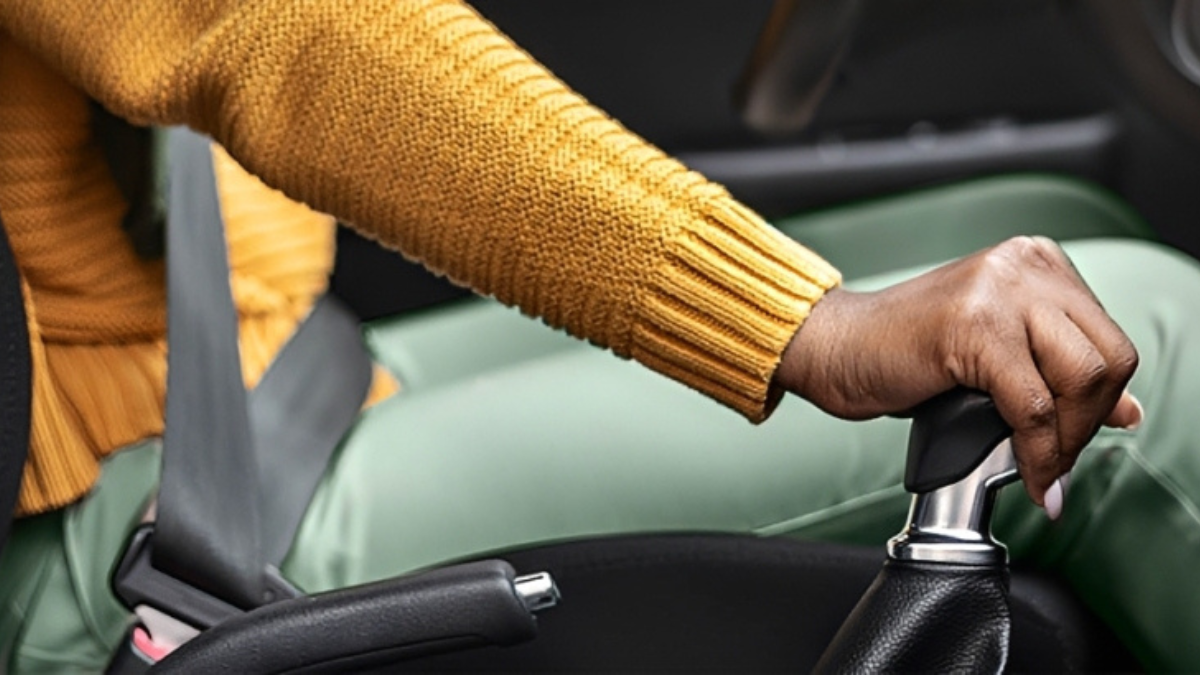
According to guidance and safety research from the National Highway Traffic Safety Administration (NHTSA), the Insurance Institute for Highway Safety (IIHS), and Consumer Reports, lane-keeping systems are designed to reduce driver workload by making small steering corrections on highways. In real-world use, especially in construction zones with unclear or overlapping lane markings, those corrections can become frequent and inconsistent. The result is a constant back-and-forth steering feel that can increase driver fatigue instead of reducing it.
Quick takeaways
- Lane assist reacts to lane markings that are often inconsistent in work zones
- Steering corrections can create a “ping-pong” feel between driver and system
- Small continuous resistance can increase shoulder and arm fatigue
- Electric power steering adds artificial feedback that the driver constantly fights
- Disabling systems mid-drive is not always simple or safe in modern infotainment layouts
Why construction zones break lane assist logic

Lane-keeping systems are built for predictability. On a clean interstate, painted lines are stable, spacing is consistent, and the system can gently nudge the vehicle back toward center.
Construction zones remove that stability.
Fresh paint, old faded lines, temporary tape, cones, and shifted lane geometry can all exist at the same time. The camera system often detects multiple “valid” paths or loses confidence entirely, then re-centers repeatedly.
Consumer Reports testing and IIHS research both note that driver-assist systems rely heavily on clear lane markings and can behave inconsistently in complex or degraded road environments.
That inconsistency is where the “ping-pong” effect starts.
The wheel moves slightly one way. Then back. Then again. Not dramatically, but often enough that the driver starts countering it without thinking.
The physical fatigue problem: it is not just steering
The discomfort does not come from big movements. It comes from small corrections repeated over time.
Most modern vehicles use electric power steering (EPS). Instead of a direct mechanical feel, EPS adds software-controlled assistance and resistance.
In lane assist mode, the system may apply subtle steering torque to keep the vehicle centered. The driver naturally resists when the road does not feel right.
That creates a low-level push-pull loop.
Over time, that loop engages the shoulders and upper arms more than expected. The body is not reacting to one strong force, but to constant micro-adjustments.
NHTSA discussions on driver assistance systems highlight a key limitation: these systems are support tools, not replacements for continuous driver input, especially in complex environments.
The result in practice is simple: muscle tension builds quietly.
Why the “ping-pong” effect feels worse than normal driving
In a normal lane, steering input is minimal. The car tracks straight, and corrections are occasional.
In construction zones:
- lane edges may not align with the road surface
- markings may overlap or fade
- lanes may narrow unexpectedly
- adjacent traffic shifts unpredictably
Lane assist tries to interpret all of this as a single path.
When it hesitates, it may correct slightly, then release, then correct again. The driver often mirrors this behavior without noticing.
The sensation is not dramatic. It is rhythmic. Small corrections repeated for miles.
That rhythm is what creates fatigue faster than expected.
Added Value: why EPS feedback drains attention
Electric power steering does more than assist turning. It also simulates feel.
In lane assist scenarios, EPS systems often add corrective torque to center the vehicle. This torque is not “felt” as a single event. It is experienced as constant resistance.
That matters because human attention responds poorly to continuous low-level correction demands.
Instead of:
- turning once and relaxing
the driver experiences:
- micro-corrections every few seconds
The nervous system stays partially engaged the entire time.
This is why long construction corridors feel more exhausting than open highway driving, even at the same speed.
Added Value: the disable problem (button vs touchscreen reality)
One of the most overlooked issues is not whether lane assist exists, but how quickly it can be adjusted.
Across modern SUVs and crossovers, two broad interface patterns appear:
1. Physical or semi-direct controls
Some vehicles keep driver-assist toggles accessible through:
- steering wheel buttons
- a dedicated driver-assist shortcut
- quick-access dashboard menus
These allow adjustment without fully diverting attention from the road.
2. Touchscreen-heavy control systems
Other vehicles place lane assist settings inside:
- layered infotainment menus
- safety submenus
- multi-step confirmation screens
In theory, this is flexible. In practice, it requires visual attention at exactly the wrong moment—such as entering a narrowed construction lane.
This creates a real-world friction point: drivers may tolerate discomfort rather than adjust settings mid-drive.
What this means on a real highway trip
On a long U.S. or Canada highway route, construction zones are not rare. They often appear in clusters during spring and summer.
A driver relying heavily on lane assist may notice:
- increased steering correction frequency
- subtle shoulder tension after 30–60 minutes
- more frequent grip adjustments on the wheel
- mental fatigue even when driving is technically “assisted”
The system is still working as designed. The road environment simply stops matching its assumptions.
When lane assist helps—and when it does not
Lane assist works best when:
- lane markings are clear and consistent
- traffic flow is stable
- road geometry is predictable
It becomes less helpful when:
- lanes are temporary or shifting
- markings overlap or fade
- construction forces frequent merges or narrow corridors
In those moments, the driver often ends up doing more work, not less.
A quieter tradeoff in modern driving
The promise of lane assist is reduced effort. On paper, that is true.
But on real highways with real construction patterns, the system can introduce a different kind of effort: constant micro-correction and attention fragmentation.
It is not a failure of the technology. It is a mismatch between design assumptions and road reality.
And on a long summer drive through active work zones, that mismatch is exactly what drivers feel in their shoulders before they notice it in their thoughts.