

According to IIHS-HLDI’s research overview on advanced driver assistance, several crash-avoidance technologies (including front crash prevention and lane departure prevention) are associated with real-world crash reductions. NHTSA research also estimates lane keeping assist can reduce certain fatal single-vehicle road-departure crashes for vehicle models equipped with it. For weekend travelers, though, the feature people end up appreciating more than horsepower isn’t “hands-free hype.” It’s smooth, predictable assistance—adaptive cruise and lane-centering that reduce workload without adding surprises.
Quick takeaways
- The feature that beats horsepower on long highway weekends is smooth, predictable driver assistance, not peak acceleration.
- IIHS-HLDI reports real-world crash reductions for several crash-avoidance technologies, including front crash prevention and lane departure prevention.
- NHTSA estimates lane keeping assist can reduce certain fatal single-vehicle road-departure crashes in models equipped with it.
- The anti-brochure truth: driver assistance only “wins” when it’s calm—no late braking, no ping-pong lane corrections, no constant nagging.
- Best decision method: test the feature the way weekends use it—20 minutes of highway, one pass, one traffic slowdown.
What changed in 2026: “more advanced” lost to “more predictable”
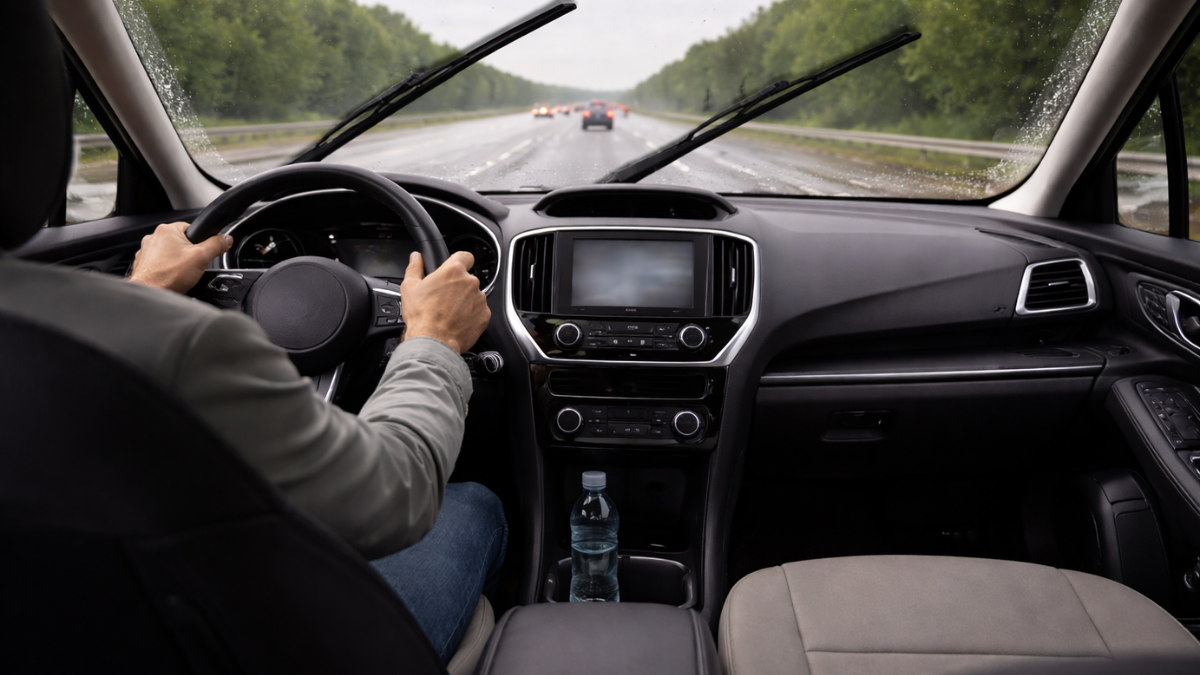
Most new vehicles now offer some mix of:
- adaptive cruise control,
- lane-keeping or lane-centering,
- and front crash prevention.
So the buying decision shifted. It’s less “does it have it?” and more:
- does it behave the same way every time,
- does it reduce workload,
- and does it feel calm at 70–80 mph?
That’s why this is a weekend trend, not a tech trend. Weekends are where you spend the most continuous time in the system.
Why weekend travel rewards assistance more than horsepower
Horsepower helps in bursts:
- merging,
- passing,
- climbing grades.
Assistance helps continuously:
- maintaining distance in traffic,
- smoothing speed changes,
- reducing the need for constant micro-adjustments,
- lowering the mental load during long, straight highway segments.
After the first hour, the trip becomes a workload problem, not a speed problem. The driver wants the cabin to feel boring.
The feature, defined: smooth assistance (not “hands-free”)
This article isn’t arguing for fully automated driving. IIHS has repeatedly emphasized safety issues raised by partial automation and driver attention, and it has criticized some hands-free systems for not doing enough to ensure drivers stay engaged.
The feature people appreciate is narrower and more practical:
- adaptive cruise that follows smoothly (no late braking),
- lane-centering that holds the lane calmly (no ping-pong),
- alerts that inform without constantly interrupting.
In other words: assistance that reduces stress without tempting the driver to disengage.
The anti-brochure angle: a “bad” system feels worse than none
A mediocre driver-assist setup can make a weekend feel longer than it should.
Common failure modes that show up after hour two:
- aggressive lane tugs that force the driver to fight the wheel,
- sudden braking that makes passengers tense,
- alerts that are too frequent in normal conditions,
- and confusing modes that make it unclear what’s active.
This is why “easy to live with” is beating “more advanced.” People don’t want to manage settings while cruising at 75 mph.
The safety reality check: benefits exist, but behavior matters
It’s reasonable to connect this feature to both comfort and safety—if you keep claims tight and sourced.
- IIHS-HLDI’s overview states several crash-avoidance technologies show real-world crash reductions, including front crash prevention and lane departure prevention.
- NHTSA’s evaluation estimates lane keeping assist can reduce certain fatal single-vehicle road-departure crashes for models equipped with it.
But there’s a second reality: how people use the tech changes the outcome. An IIHS study summary on speeding behavior found drivers using adaptive cruise control (and a similar system with added lane centering) may be more likely to speed—an important reminder that convenience can come with risk if it encourages faster driving.
So the real weekend value isn’t “the car will drive itself.” It’s that a well-tuned system reduces workload while the driver remains fully responsible.
What this means in the U.S.
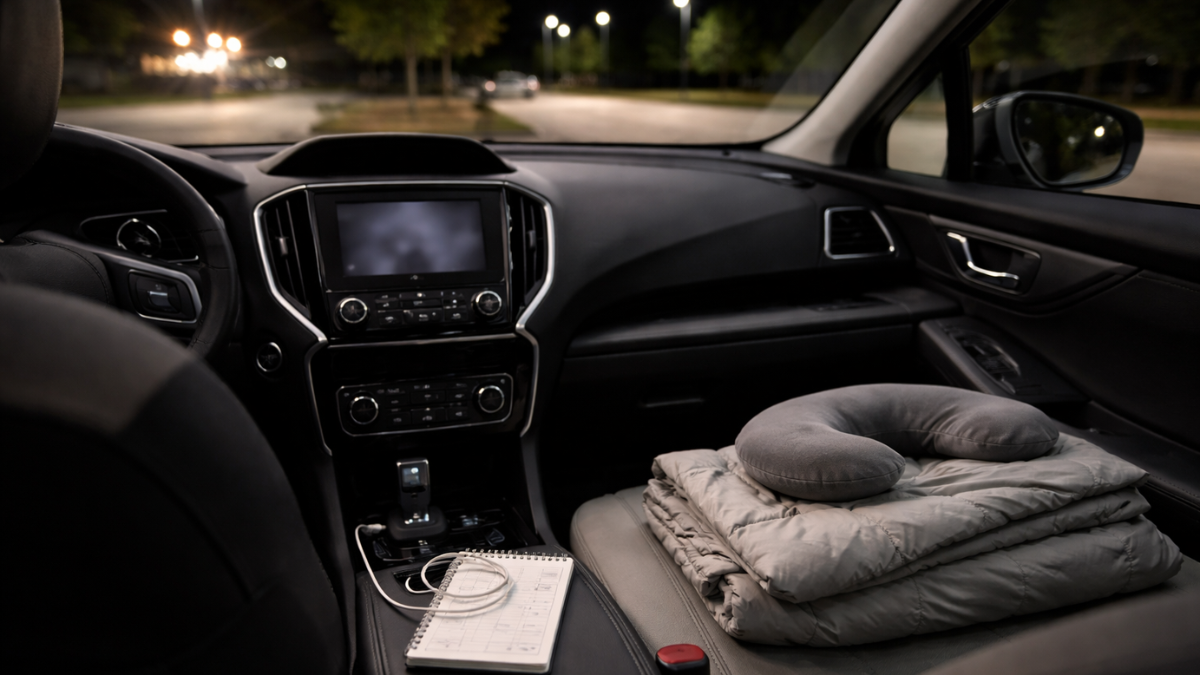
U.S. weekend trips tend to combine:
- long interstate legs at 70–80 mph,
- pockets of congestion,
- and dense parking near destinations.
That’s exactly where smooth assistance pays off:
- less stop-and-go fatigue,
- fewer constant speed corrections,
- more relaxed shoulders and hands,
- and a calmer arrival.
When travel is busier and more expensive, the feature that keeps the trip calm becomes more valuable than the feature that makes the car quick for 6 seconds.
What you can do: the 12-minute road-trip assist test
Do this test before buying (or when renting):
- Highway follow test (5 minutes): set adaptive cruise behind a vehicle. Watch for smooth following vs late braking.
- Lane-centering feel (3 minutes): does it hold center gently, or bounce between lines?
- Override test (2 minutes): can you change lanes, adjust speed, and cancel easily without confusion?
- Alert sanity check (2 minutes): are warnings occasional and helpful, or constant and stressful?
If the system feels calmer than driving manually, it’s a road-trip feature worth valuing. If it feels like extra work, horsepower won’t save the weekend.
Bottom line
The road-trip feature people appreciate more than horsepower in 2026 is smooth, predictable driver assistance. The best systems reduce workload on the long, repetitive highway segments that define weekend travel—without adding surprises or distraction. IIHS-HLDI and NHTSA research supports that certain assistance technologies can deliver real safety benefits, but IIHS also shows behavior matters (including speeding patterns with ACC). The practical takeaway is anti-brochure: choose the car that stays calm at hour two, not the one that wins a spec-sheet argument.
SOURCES
- Advanced driver assistance
- Estimating Effectiveness of Lane Keeping Assist Systems in Fatal Road Departure Crashes
- Speeding behavior while using adaptive cruise control and lane centering in free flow traffic
- Unsafe at hands-free speed: IIHS faults driver-assist systems
- New studies highlight driver confusion about automated systems