
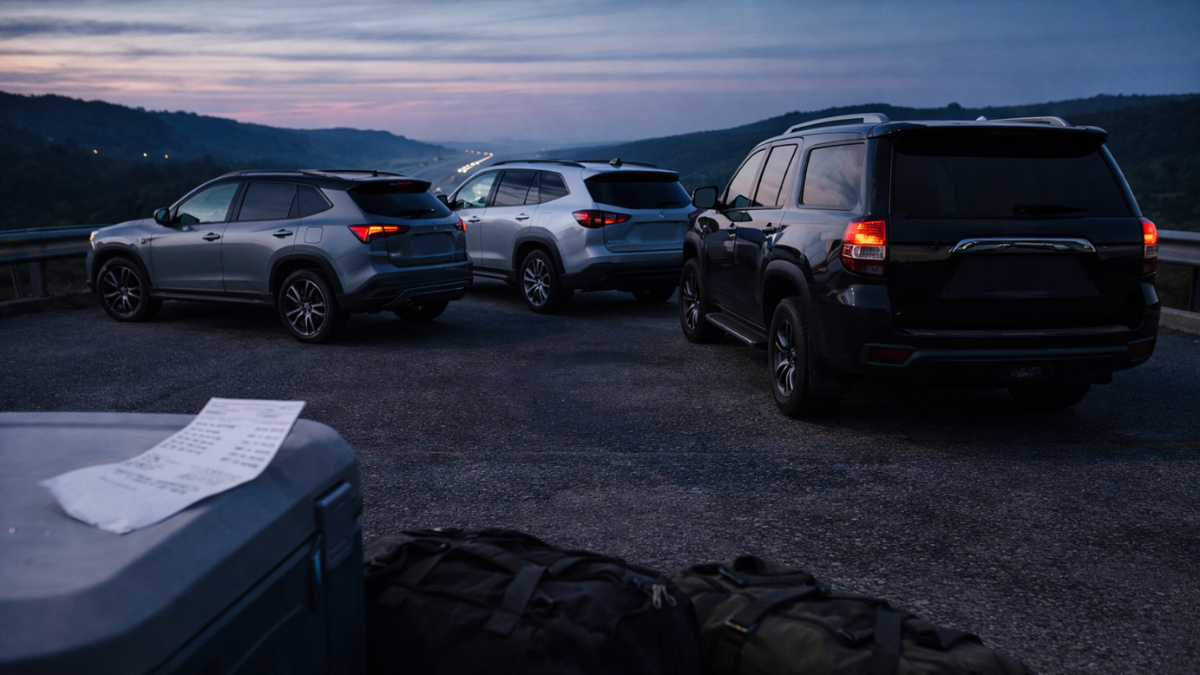
Gas is expensive again, and that changes this question fast. AAA said on March 26 that the U.S. average for regular had jumped to $3.98 a gallon, up $1 in a month, which is exactly when old engine debates stop sounding theoretical and start hitting the trip budget. The real 2026 split is not “which engine is best?” It is which one still feels right after 300 miles, a loaded cargo area, one long grade, and a few painful pump stops.
Quick takeaways
- The V6 is still the broadest sweet spot for a lot of real weekend travel: smoother than a turbo four under load, less thirsty and less oversized than a V8.
- A turbo four makes the most sense when fuel cost matters and the SUV is not doing heavy-family or towing duty every weekend.
- A V8 still feels best for effortless full-size travel, towing, and low-rpm ease. It just gets a lot harder to defend when gas jumps.
- Expensive gas changes the question from “which engine sounds coolest?” to “which one feels good enough to justify every fill-up?”
- The wrong answer gets obvious on a real trip: a strained turbo four, a thirsty V8 doing commuter duty, or a V6 that is fine but not special if you really needed heavy-duty muscle.
What changed in 2026: gas is back in the conversation
Engine debates feel abstract when fuel is cheap. They feel personal when a month of price gains lands right before spring and summer driving.
AAA’s March 26 update said the national average for regular gasoline hit $3.98, up a full dollar from February 26. That does not settle the argument by itself, but it changes the weighting. Once gas rises again, the “best” engine is no longer just about acceleration, badge value, or tow ratings. It becomes a question of:
- pump pain,
- highway fatigue,
- load feel,
- and how much engine you are carrying around on the 90% of weekends that are less dramatic than the brochure.
That is why this article is not about myth. It is about which engine feels best on a real trip now.
Turbo four: better than people remember, worse than people pretend
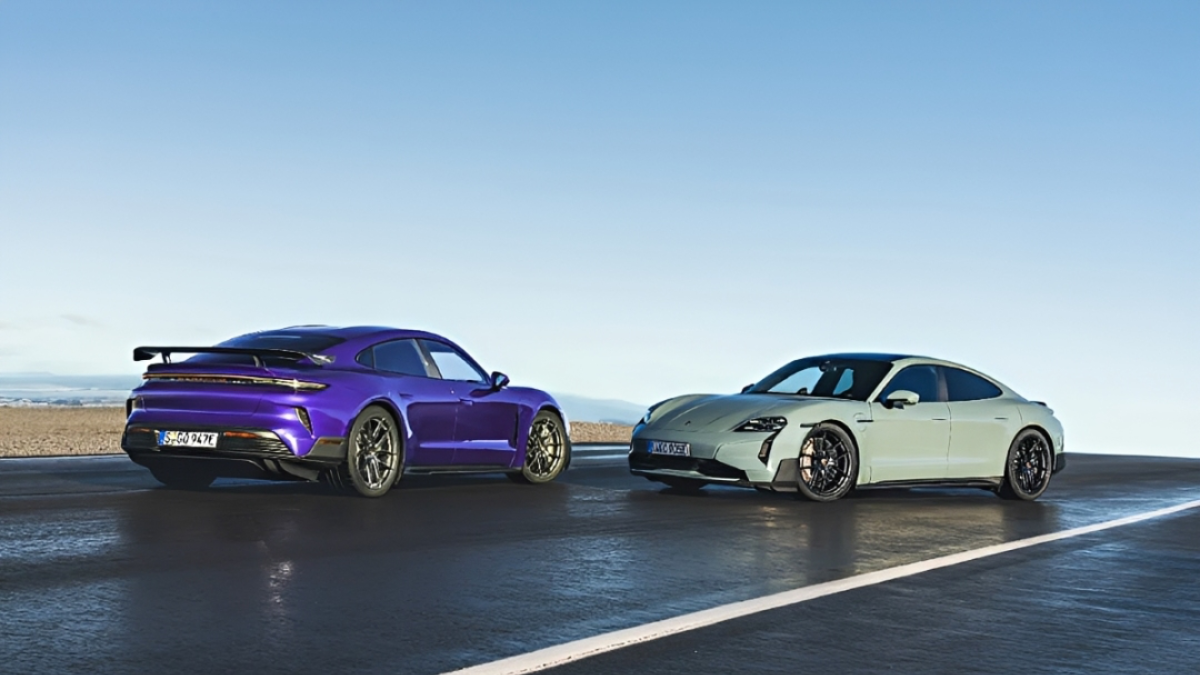
The modern turbo four is not the sad budget engine of fifteen years ago. In many SUVs, it is quick enough, lighter than a bigger engine, and usually easier on fuel.
A good current example is the 2026 Mazda CX-50 2.5 Turbo. Mazda says the turbo model makes up to 256 hp and 320 lb-ft on premium fuel. Car and Driver says the CX-50 offers a lively turbo four and playful handling. That explains why turbo-fours are so easy to like in short drives. They feel punchy, quick to respond, and often more interesting than a plain naturally aspirated setup.
The downside usually shows up later:
- more noise under load,
- more obvious downshifts,
- a busier feel when the vehicle is packed,
- and a sense that the engine is working harder on long grades or sustained high speed.
That does not make the turbo four bad. It makes it conditional.
A turbo four feels best when:
- the SUV is compact or midsize,
- the trip is mostly two people plus bags,
- fuel cost matters,
- and towing is light or rare.
It feels worse when:
- the cabin is full,
- the route has long climbs,
- or the buyer wanted “easy and effortless” more than “quick around town.”

V6: still the calm middle for real people

This is the least trendy answer and maybe the most useful one.
The 2026 Honda Pilot is the cleanest example. Honda says the Pilot uses a 285-hp V6 and a smooth 10-speed automatic. Car and Driver says the Pilot’s throttle response is linear, the shifts are smooth, the ride is comfortable, and the added sound-deadening keeps the cabin quiet. Edmunds goes even more directly at the use case, saying the Pilot’s comfortable, composed ride keeps people happy on longer road trips.
That is the V6 case in one paragraph:
- no drama,
- no fake urgency,
- no obvious strain,
- and no V8-size fuel guilt.
The V6’s strength is how little it asks the driver to think about it. A good V6 SUV usually feels:
- smoother than a turbo four,
- quieter under load,
- more relaxed with passengers and cargo,
- and less financially reckless than a V8.
Its weakness is that it can sound dull in an era where buyers are trained to chase either turbo torque or V8 character. But on a 300-mile weekend, dull can be exactly right.
This is why the V6 remains the sweet spot for broad readership. It is not the cheapest engine at the pump, and it is not the most charismatic. It is just the one that most often feels “correct” once the trip gets long.
V8: still the easiest feel, still the hardest bill
The V8 is the easiest engine here to love for the wrong reason and the easiest to defend for the right one.
Take the Chevrolet Tahoe 5.3 V8. Chevrolet says the 2026 Tahoe’s standard 5.3-liter V8 makes 355 hp and 383 lb-ft. Car and Driver’s recent Tahoe testing says the refreshed big SUV makes a “hunky-dory choice for the scenic route,” and its broader Tahoe coverage says the V8 versions land around 18–20 mpg highway and 14–15 mpg city, depending on setup.
That tells the whole story. A V8 full-size SUV often feels best because it is:
- less stressed,
- more relaxed at low rpm,
- better with towing or a full family load,
- and generally less fussy about doing heavy-vehicle things.
The price is obvious:
- fuel,
- size,
- and the sense that you are carrying a lot of engine and truck for weekends that may only need some of that capability.
This is where expensive gas changes the article. A V8 can still be the right answer. It just needs a better reason now.
A V8 makes sense when:
- the SUV is truly big and busy,
- towing is real,
- six to eight people happen often,
- or the buyer values the low-effort feel enough to pay for it.
It makes less sense when:
- most driving is commuting plus modest getaways,
- the full-size footprint is already annoying,
- and the engine is solving a problem that rarely appears.
So which one feels best now that gas is expensive again?
This depends on what “best” means.
If best means least strain
The V8 still wins. Nothing here matches a relaxed big engine in a big vehicle when the cabin is full, the road climbs, and the weekend kit is heavy.
If best means most sensible comfort-to-cost balance
The V6 wins. It is still the broadest answer for people who want an SUV that feels smooth and calm without turning every tank into an argument.
If best means easiest on the wallet without going soft
The turbo four wins, but only if the trip pattern is honest. It works best when the SUV is not constantly loaded like a three-row family hauler pretending to be efficient.
That is the real 2026 answer: the V6 feels best for the largest number of real weekend travelers, the V8 feels best in the heaviest real-duty use, and the turbo four feels best when cost matters and the load is lighter than buyers sometimes admit.
What this means in the U.S. and Canada
This topic lands on both sides of the border because the tradeoff is the same even if fuel labels and price spreads vary.
In the U.S., the pain point is usually:
- more expensive fill-ups,
- longer interstate weekends,
- and the nagging feeling that the engine choice keeps showing up at the pump.
In Canada, the same logic applies with a slightly different lens:
- more attention to fuel price swings by province,
- long regional distances,
- and more mixed-weather travel where smoothness and confidence matter as much as mpg.
Either way, the takeaway is not really about national difference. It is about how often the trip exposes the mismatch between the engine and the use case.
What drivers should check before buying
1) Look at highway mpg, not only the combined number.
Weekend travel is not stop-and-go commuting.
2) Be honest about load.
Two people and bags is not the same as kids, gear, dog, cooler, and one long grade.
3) Think about how the engine feels, not just what it makes.
Smoothness and noise matter more after two hours than brochure torque talk.
4) Do not buy the V8 for the one towing weekend if the other 40 weekends are light-duty.
That is where regret lives.
5) Do not buy the turbo four assuming it will always feel as relaxed as the V6 once the cabin is full.
That is usually where the surprise starts.
Bottom line
Now that gas is expensive again, the engine that feels best on a weekend trip is not automatically the one with the fewest cylinders or the biggest sound. For most real people, the V6 still lands in the sweet spot because it balances calm, power, and pump pain better than the extremes. The turbo four makes the most sense when budget and lighter loads define the trip. The V8 still feels best when the SUV is truly using its size, weight, and towing ability. The mistake is pretending those three answers are equally good for the same weekend.