
The showroom test lasts eleven minutes. You sit in the driver’s seat, adjust the mirrors, check the sightlines, push the seat back to accommodate your legs. The seat feels fine — better than fine, actually; firm and well-shaped. You check the rear legroom for the kids. You open the cargo area. You drive around the block.
Three hours into the first real road trip, something is wrong. Not wrong enough to pull over, not wrong enough to articulate clearly, but present enough that you are shifting in the seat more frequently than you used to in the old car. Your lower back has a vague complaint. The passenger is quieter than usual and has put in earbuds. The kids are fine, but you are not.
This is the gap between the eleven-minute test and the three-hour reality, and it shows up in almost every compact SUV category review that is never printed. The factors that determine whether a vehicle is genuinely comfortable for road trips — sustained seat support, acoustic isolation at highway speed, vibration transmission, hip-point geometry — are not visible in a parking lot and cannot be evaluated in eleven minutes. They reveal themselves at mile 180.
Quick Takeaways
- The fatigue that builds after three hours of highway driving has four main physical causes: inadequate lumbar support that requires constant low-level muscle effort to maintain posture; seat bolsters that press lateral pressure points at the hips and outer thighs; cabin noise at 65–75 mph that forces sustained auditory processing; and low-frequency vibration from the road surface that is transmitted through the seat and floorboard
- These four factors are cumulative and interdependent — a noisy cabin with otherwise good seats produces more fatigue than a quiet cabin with borderline seats, because the auditory processing load adds to the postural load
- The eleven-minute dealership test is structurally incapable of revealing any of these factors: fatigue builds through sustained exposure, not immediate perception; the dealership seat feels different on a warm showroom floor than on a cold seat after two hours at 70 mph
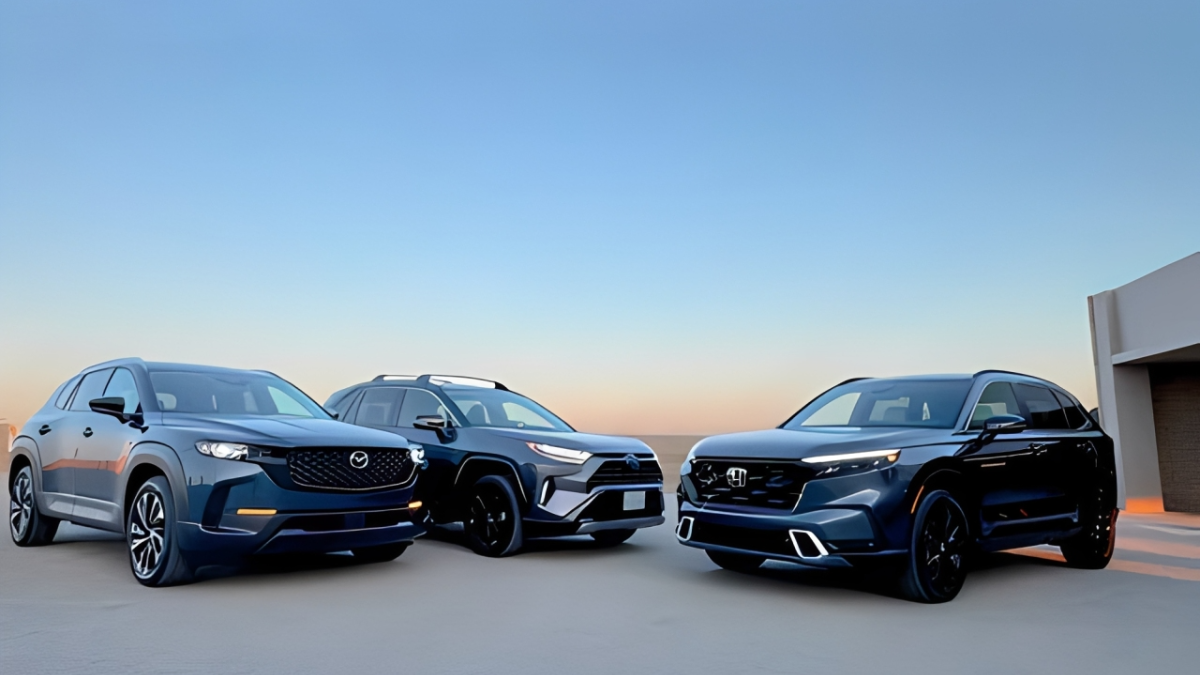
- The three compact SUVs in this comparison — Mazda CX-50, Honda CR-V, and Toyota RAV4 — represent three distinct ergonomic philosophies, and the differences become significant precisely at the three-hour mark on a road trip
- The most underrated specification for long-distance driving is not cargo volume or horsepower: it is seat cushion depth (the front-to-rear length of the seat base, which determines how much thigh support the seat provides) and lumbar adjustability — both of which disappear from most spec sheets
- The single most effective pre-purchase test: bring a highway drive. Fifteen minutes on a suburban street eliminates nothing. Thirty minutes at 65 mph on an Interstate reveals the seat’s true character.
The 3-Hour Inflection Point
Fatigue in a car is not a switch. It is a gradient, and the gradient steepens after approximately two to three hours of sustained highway driving for a straightforward physiological reason: the muscles and connective tissue that maintain seated posture are not designed for static loading. When you stand, the body shifts weight constantly — small adjustments, dozens per minute, that redistribute load among muscle groups. When you sit in a car seat at 70 mph with a seat belt restricting natural movement, those micro-adjustments are suppressed. Muscles that would normally cycle through brief rest periods are held in sustained isometric contraction instead.
The lumbar spine is the first structure to register this. The natural lumbar curve — the mild forward arc of the lower back — is maintained by the erector spinae and multifidus muscles. In a seat with insufficient lumbar support, the lower back begins to round as these muscles fatigue, shifting load to the intervertebral discs and posterior ligaments. This is the sensation drivers describe as “lower back tightness” at hour three: not acute pain, but the beginning of structural overload that the body signals as discomfort before the damage threshold is reached.
The outer thighs are the second area. Compact SUV seats frequently use bolsters — raised lateral edges of the seat cushion that help hold the driver in position during cornering. Well-proportioned bolsters provide lateral support without applying continuous pressure to the outer hip and thigh. Bolsters sized for a sporty feel in the showroom test drive can create sustained pressure on the IT band and greater trochanter (hip bone prominence) during a three-hour highway cruise where the driver’s body is pressed against them not by cornering forces but simply by the seat’s geometry.
Noise is the third factor and the most underestimated. The cabin noise floor at 70 mph in a compact SUV ranges from approximately 65 dB to 72 dB depending on the vehicle’s acoustic engineering. This is below the threshold for hearing damage and below the threshold for conscious irritation in most drivers. It is not below the threshold for cognitive load. The auditory cortex processes the cabin’s broadband noise continuously, even when the driver is not consciously attending to it. After two to three hours, this sustained background processing contributes measurably to the total fatigue load — the same mechanism that makes a long video conference more tiring than a long walk, despite the lower physical exertion.
Low-frequency vibration — typically 20–80 Hz, transmitted from the road surface through the tires, suspension, and seat structure into the body — is the fourth factor. At highway speed, the road surface’s microtexture produces continuous vibration at frequencies that resonate with the body’s natural resonant frequencies (approximately 4–8 Hz for the upper torso, 10–14 Hz for the head). A seat with insufficient foam density or a suspension tuned primarily for handling sharpness transmits these frequencies more efficiently into the occupant. After three hours, the cumulative effect is described by long-distance drivers as a kind of whole-body dullness that is distinct from muscular fatigue.
The Three Vehicles: What Each Gets Right — and Where It Falls Short
Mazda CX-50: The Road-Tripper’s Seat
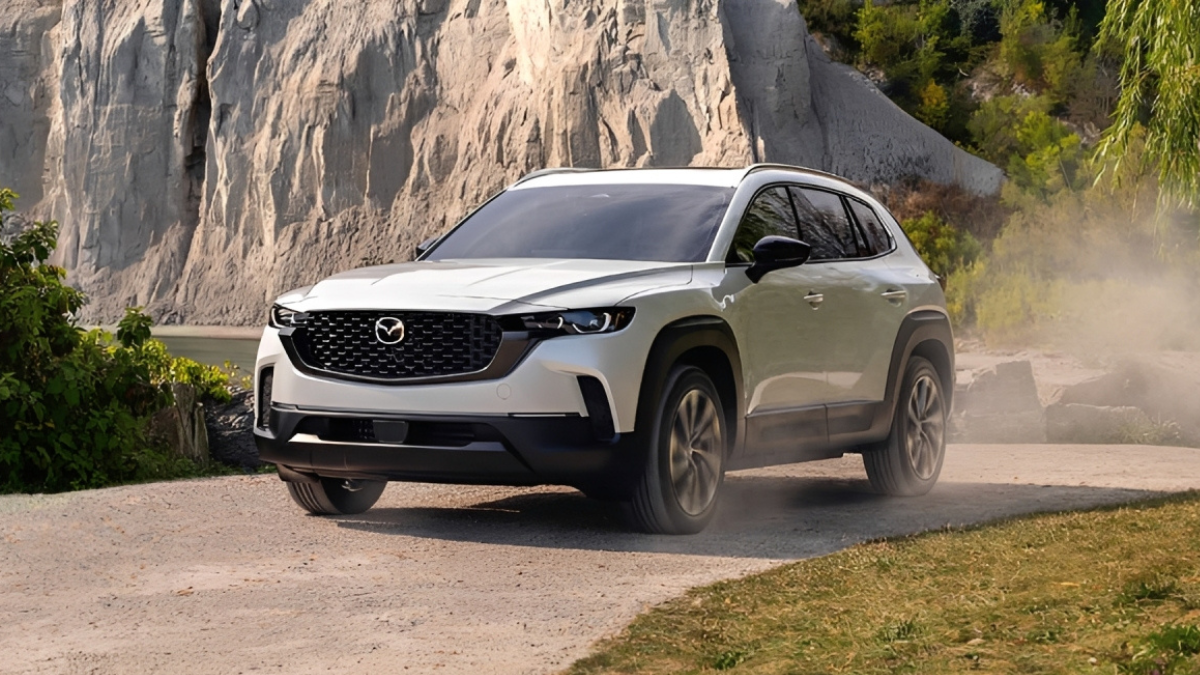
The CX-50 has the best seats in the mainstream compact SUV segment for sustained highway driving, and this is not a close call. Mazda’s approach to seat design prioritizes what the company calls “driving position”: seats engineered to support the body in its natural posture rather than simply providing a comfortable surface for a brief sit.
The front seats in the CX-50 are notable for three specific properties. First, the lumbar support is both adjustable and specifically positioned — it targets the lower lumbar region more precisely than the generic lower-back positioning common in the segment, with power lumbar adjustment available from the Preferred trim and above per Mazda’s official packaging documentation. Second, the seat cushion is longer than typical: the front-to-rear depth of the seat base supports more of the thigh, reducing the concentrated pressure at the knee crease that produces the numb-thigh sensation in shorter-cushion seats at the three-hour mark. Third, the bolsters are wide enough to provide lateral hold without creating sustained pressure on the hips — they are shaped for support, not for sporty appearance.
The CX-50’s cabin noise is also genuinely lower than most competitors at 70 mph. Mazda applied acoustic glass and additional sound deadening throughout the vehicle’s development, and the result is audible on any direct comparison: the CX-50 is quieter at highway cruise than the CR-V and significantly quieter than the RAV4.
The trade-off: the CX-50’s ride is firmer than the CR-V and RAV4. On rough road surfaces — Michigan highway, Quebec A-10 after winter, certain sections of I-70 through Kansas — the CX-50 transmits more road texture than its competitors. This is a different kind of fatigue input than seat discomfort, and it matters on poor road surfaces. The CX-50 is the best choice for good-pavement highway driving; the CR-V is better on rough roads.
Rear seat comfort in the CX-50 is adequate but not exceptional. Rear legroom of 38.3 inches falls behind the CR-V’s 41.0 inches, which matters for adult rear passengers on long trips.
Honda CR-V: The Space Optimized, Not the Seat Optimized
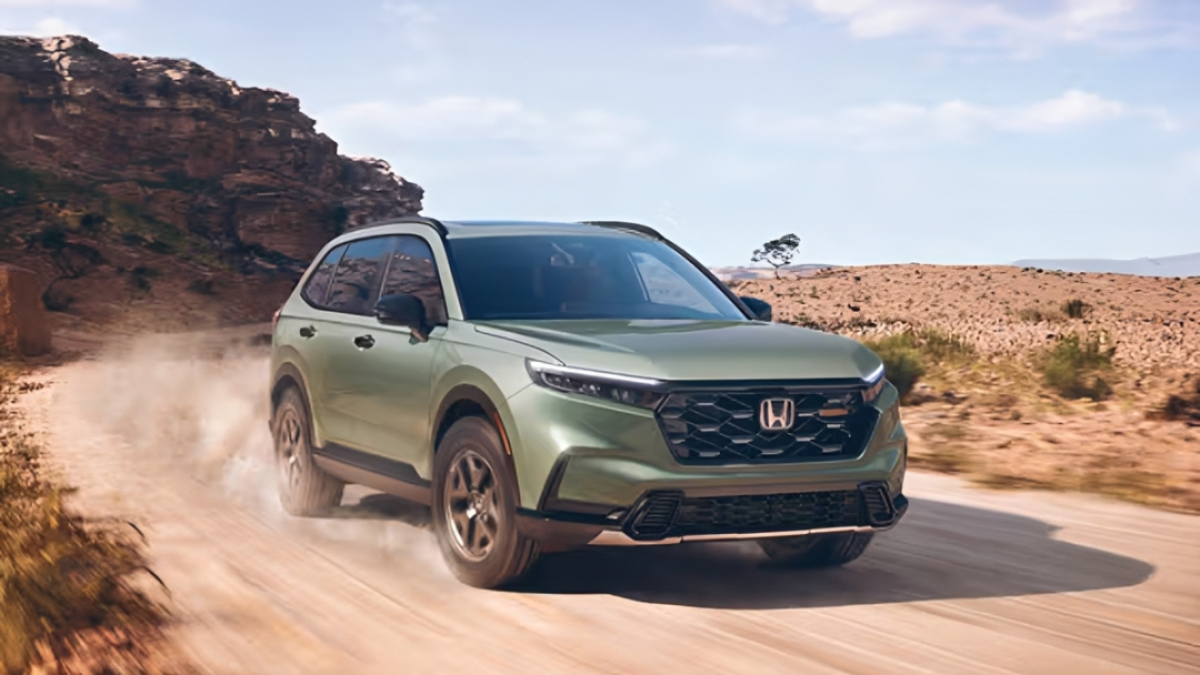
The CR-V’s case for road trip suitability begins and ends with space. At 41.0 inches of rear legroom and 36+ cubic feet of cargo space behind the rear seats, it is the most generous compact SUV in the segment for passengers and luggage simultaneously. A four-person family with weekend bags fits more comfortably into the CR-V’s rear seat — in terms of legroom, at least — than into any of its direct competitors.
The front seat ergonomics are competent but not class-leading. The CR-V’s seats are well-padded and provide reasonable initial support, but the lumbar adjustment is less precise than the CX-50’s, and the seat cushion depth is average for the segment. At hour one and hour two, this is imperceptible. At hour three, drivers who are attuned to their lumbar support begin making the micro-adjustments — shifting position, pressing their lower back into the seat — that signal the transition from support to insufficient support.
The CR-V’s highway noise floor is higher than the CX-50’s. Honda’s acoustic engineering has improved significantly in recent generations, and the 2024–2026 CR-V is noticeably quieter than the 2022 version, but it remains louder at sustained 70 mph cruise than the CX-50.
Where the CR-V wins decisively: ride quality on imperfect road surfaces. The CR-V’s suspension calibration absorbs highway expansion joints, rough pavement patches, and the concrete surface changes common on Trans-Canada Highway segments better than the CX-50. For road trips that include rough Interstate segments or provincial highways with winter damage, the CR-V’s better compliance reduces the vibration-transmission fatigue input that affects the CX-50.
The CR-V’s standard physical climate control buttons — available on EX-L and above — are a genuine ergonomic advantage on a road trip. Adjusting temperature without navigating a touchscreen while driving reduces the brief visual attention interruptions that accumulate over three hours into a form of cognitive micro-fatigue.
Toyota RAV4: The Capable Commuter That Runs Out of Character
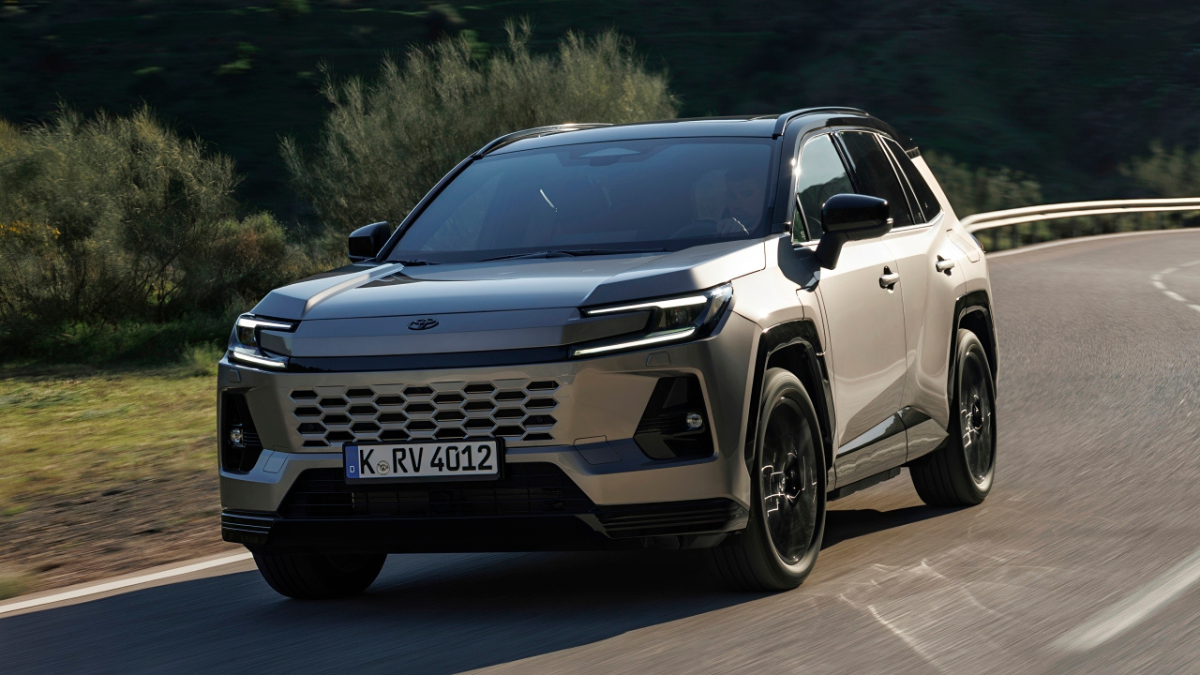
The RAV4 is the best-selling compact SUV in North America, and it earns that position through a combination of reliability, utility, and value that is genuinely compelling. For a daily commuter and urban utility vehicle, the RAV4’s ergonomics are adequate and unobtrusive. For a 500-mile weekend road trip, the RAV4 asks more of the driver than either the CX-50 or the CR-V.
The RAV4’s front seats are the softest of the three vehicles. On a fifteen-minute test drive, this reads as comfortable — the seat provides a generous, pliant surface. On a three-hour highway run, the same softness means the seat’s initial support compresses. Consumer Reports, in its RAV4 review, notes that the RAV4’s engine noise “hurts the driving experience” and that noise overall is “just average among peers” — a cabin character issue that compounds with seat fatigue over sustained driving. The U.S. News 2026 RAV4 review describes steering that is “heavily boosted and more artificial than natural,” and Motor1’s first-drive review notes the 2026 RAV4 is “still too loud for my liking” with “road noise noticeable across the lineup.” Long-distance drivers report that the softer seat cushion, combined with these acoustic characteristics, produces a cumulative fatigue load on highway trips that shorter test drives do not reveal. The seat’s initial comfort is real; the question is whether it sustains over three hours.
The RAV4’s cabin noise is the highest of the three at sustained highway speed. The 2026 RAV4’s full redesign brings improved sound insulation over the previous generation, and this is a meaningful improvement, but the vehicle remains notably louder than the CX-50 at 70 mph. The additional cabin noise adds to the total fatigue load over a multi-hour drive.
Where the RAV4 wins: acceleration and driver confidence on mountain approaches. At 236 horsepower, the RAV4 Hybrid has more power than either the CR-V (204 hp) or the CX-50 (227 hp standard, with the 2.5T providing more in higher trims). On steep grades where a passing opportunity opens briefly, the RAV4’s power delivery is more confident. This is a meaningful practical advantage on specific road-trip segments but does not address the sustained-comfort deficit.
The Pre-Purchase Test That Actually Reveals These Differences
Most buyers test compact SUVs on a 15-minute dealership loop. This test reveals: visibility, steering feel, acceleration, brake feel, and whether the infotainment is intuitive. It reveals nothing about sustained seat support, highway noise at cruise, or vibration transmission at speed.
The test that reveals these differences: request a one-hour loan for a highway test drive, or at minimum 30 minutes at 65+ mph. Specifically:
- Set the seat once and leave it. The discomfort from under-supported lumbar is not perceptible on a cold seat but becomes noticeable after 20 minutes of sustained posture. Do not adjust the seat during the test drive. Let the seat do its job and evaluate whether it is adequate.
- Find the widest section of highway and cruise at 70 mph for at least 10 minutes. Highway noise at cruise speed is the defining acoustic condition for a road trip; it is very different from suburban driving. Compare the background noise to a vehicle you have driven long distances in before.
- Bring the back seat passenger who will be on long trips. Rear passenger legroom and seat comfort are experienced by the person sitting there, not by the person loading the cargo area. Have that person sit in the back for the highway portion and report specifically on how the seat felt at the end.
- On return, evaluate your lumbar. Is your lower back in the same state it was when you sat down, or does it want to stretch? That answer predicts how it will feel at mile 180.
U.S. and Canada Route Note
The road surfaces that most expose these fatigue differences are the ones most common on American and Canadian long-distance routes: the concrete interstate slabs of I-80 and I-90 across the northern states (expansion joint frequency every 20–30 feet at highway speed produces a rhythmic vibration at 3–4 Hz — exactly the spinal resonance range); the patched asphalt of Highway 17 through Ontario’s Shield country; and the secondary routes connecting ski destinations in Colorado, Vermont, and Quebec’s Laurentians.
On these surfaces, the CX-50’s firmer suspension transmits more surface texture; the CR-V’s softer compliance absorbs more. For drivers in northern climates making regular long-distance trips on frost-heaved or patched provincial and state highways, the CR-V’s ride compliance advantage is real and worth considering alongside the CX-50’s seat and noise advantages.
The RAV4’s 2026 redesign closes some of the gap with its competitors but does not eliminate it. For buyers prioritizing fuel economy, towing, or acceleration — all areas where the 2026 RAV4 Hybrid leads the segment — the comfort trade-off may be acceptable. For buyers whose primary use case is the three-hour highway run that ends with everyone exiting the car in good condition, the CX-50 earns the recommendation, with the CR-V as the close second for rough-road routes and rear-passenger space priorities.
SOURCES
- U.S. News CX-50 review: “I found the seats to be supportive and well-cushioned with a good range of adjustment”; CX-50 rear legroom 38.3 inches; firmer ride noted; acoustic engineering praised; seat support highlighted for long drives
- Edmunds CX-50: “the CX-50 is a bit loud at full throttle but settles down nicely on the highway, with only a mild amount of wind and road noise”; firmer ride confirmed; handling praised
- Mazda USA official packaging documentation: eight-way power-adjustable driver’s seat with power lumbar support available from Preferred trim; “supportive seating front and rear” described for CX-50 Hybrid; heated/ventilated front seats and heated rear seats available
- U.S. News CR-V: rear legroom 41.0 inches; cargo space 36+ cu ft; seat comfort assessment; ride quality on rough surfaces
- U.S. News 2026 RAV4 review: steering “heavily boosted and more artificial than natural, sending little feedback to your hands”; seat comfort adequacy noted; RAV4 acceleration and power confirmed
- Motor1 2026 RAV4 first drive: “still too loud for my liking — the engine is rumblier than many of its competitors, and road noise is noticeable across the lineup”; Woodland “worst offender” for noise; compared unfavorably to Honda CR-V on steering engagement
- Consumer Reports RAV4 overview page: “the noisy engine hurts the driving experience”; hybrid version “rated its overall noise as just average among peers”; ride noted as adequate; RAV4 engine noise characterization confirmed
- Autoblog: CR-V steering more communicative; CR-V 41.0 in rear legroom vs. RAV4 37.8 in; CR-V 103.5 cu ft passenger volume vs. RAV4 98.9; RAV4 more power. Note: this review covers the specific off-road Woodland and TrailSport trims; general character conclusions apply across lineups but trim-specific specs differ from standard configurations